

Interview: Kathy St. George Talks Acting on Broadway, Understudying a Soap Star and Being Honored at Elliot Norton Awards
The 42nd annual Elliot Norton Awards to be presented June 2 at the Huntington Theatre
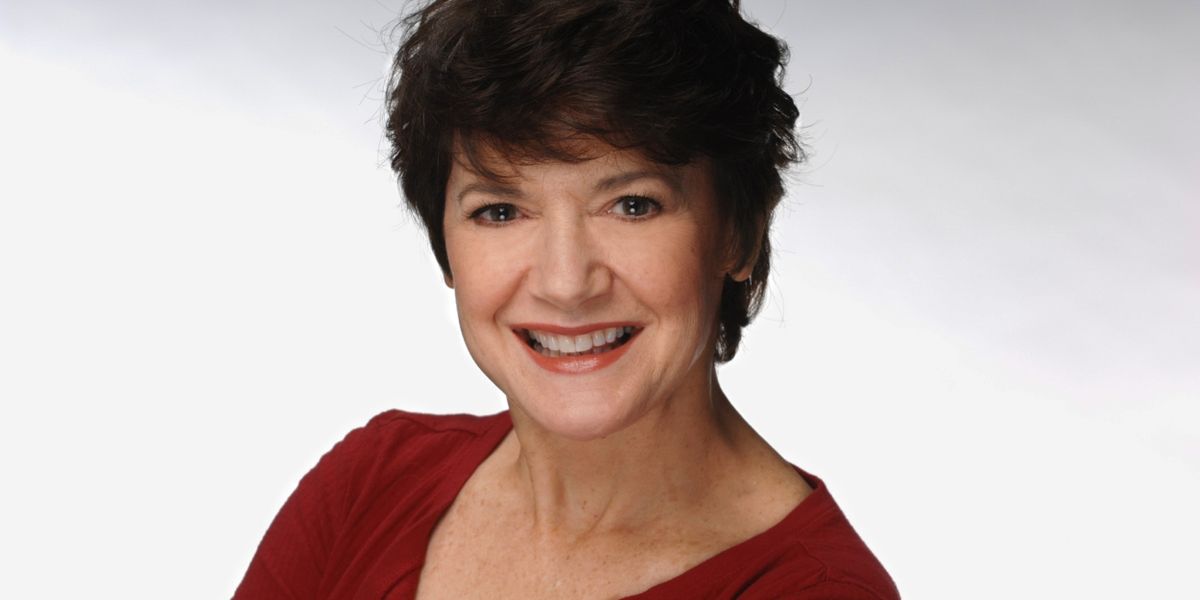
Kathy St. George – who will receive the Elliot Norton Prize for Sustained Excellence from the Boston Theater Critics Association at the 42nd annual Elliot Norton Awards on June 2 at the Huntington Theatre – is that rare breed, a show business quadruple threat.
And as anyone who has seen her in one of her many stage triumphs can tell you, St. George can act, sing, dance, and play a variety of musical instruments with the best of them.
She has, too, appearing alongside both Herschel Bernardi and Topol in Broadway revivals and touring productions of “Fiddler on the Roof” directed and choreographed by Jerome Robbins, understudying soap opera icon Susan Lucci on TV’s “All My Children,” playing a life-size Lamb Chop at personal appearances with the beloved sock puppet’s creator Shari Lewis, and bringing Judy Garland to life in not one but four different shows about the legendary singer.
Since her 1980s New York days, St. George has continued a career that has included the national tours of “I Love You, You’re Perfect, Now Change” and “Menopause: The Musical,” as well as numerous appearances in musicals and plays in and around greater Boston. Just this past season, she was seen in “The Drowsy Chaperone” at Lyric Stage Boston, “Fiddler on the Roof” at North Shore Music Theatre, and “A Man of No Importance” at SpeakEasy Stage.
The Stoneham native, who now makes her home in Lakeville with husband Kriss Kline, took time for a telephone call recently to discuss being honored at the Elliot Norton Awards, her New York days, and what she has planned for the future.
What was your first reaction when you learned you would be receiving this year’s Elliot Norton Prize for Sustained Excellence?
I had always hoped that one day I would receive this honor, but I was still stunned when Joyce Kulhawik (president of the Boston Theater Critics Association) called to say I’d won. It’s been a great year for me, and this is quite a capper. I couldn’t be more thrilled.
You have long been one of greater Boston’s most popular and prolific performers. Had you always wanted to be an actress?
I set out to be a school teacher, and when I was at Salem State, majoring in elementary education and minoring in music, I saw an ad for an accompanist on the bulletin board. I called and before long I was accompanying singer Elizabeth Alpert, who had just moved to Massachusetts with her husband Jeffrey Huberman, who became one of the founders of the Salem State Drama Department. Lizzie has passed away, but I’ll never forget her two audition songs, “Wherever He Ain’t” from “Mack & Mabel,” and “Maybe This Time” from “Cabaret.” I played both so many times.
With his place in the Drama Department at Salem State, did Jeffrey Huberman steer you toward acting?
He sure did. It was Jeff who convinced me to become an actress. He asked me to audition for a college production of “Wait Until Dark.” My immediate response to him was, “No, I can’t act.” He persisted, though, and I got the part and loved it. Later, he cast me as Sally Bowles in his production of “Cabaret.” And then I was music director for his production of “You’re a Good Man, Charlie Brown,” which has a tricky score.
My goal was still to become an elementary-school teacher and I did that, too, teaching second grade for five years at Colonial Park School in Stoneham. I was teaching by day and doing community theater with Reading’s Quannapowitt Players at night.
You received your first acting award in that era. What was that like?
I was playing Sybil in a production of “Private Lives” at Quannapowitt in the spring of 1978 when I was honored as Best Supporting Actress by the New England Theater Conference (NETC). That was my first award. I came home that night and woke up my parents, showed them the award, and said, “Mom and Dad, I’m moving to New York to become an actress.” I’ll never forget what they said: “That’s great, honey, now go to sleep.”
Were your parents supportive of your decision to make show business your career?
Yes, they both were very supportive of my career, although my father had some reservations about me giving up teaching. He was born in Dublin and was a very hardworking man. My mother was Irish, too, but born here. My father passed away when he was just 69 years old. I lost my mother five years ago, when she was 95. She came to every show I was in and we went together to other shows, too. My one heartbreak is that she won’t be there at the Elliot Norton Awards with me.
When did you leave for New York?
I received my Master’s in Elementary Education from Salem the following year. I took a leave of absence from teaching and I moved to New York in September 1979. I thought, “If not now, when?” When I first arrived, I lived at the 34th Street Y. My parents didn’t come to see me, however, until I got my first sublet.
What were those early days, before you landed Broadway, like?
Maybe because I was a pianist, I was an incredibly fast typist and I got a temp job at New York Hospital Cornell Medical Center. While there, I also booked “extra work” on an NBC soap opera called “The Doctors.” The first time I appeared on camera, I walked across the set carrying a bag of groceries with celery coming out of the top. My friends from Cornell were very sweet, though, and they held a viewing party so we could all watch that episode together.
What was it like to work with Susan Lucci on “All My Children?”
It was great. She is a lovely person and incredibly beautiful, too. If Susan, who played Erica Kane, couldn’t be there for any reason, I would do the blocking and the rehearsal. Then when Susan came in, we would sit in her dressing room and go over the blocking. I don’t know why, but there is only one line that I remember to this day. It was in a scene with Walt Willey, a very handsome actor who was playing Erica’s love interest at the time. I had to throw my hair, which was long then, around and say to Walt, “Jackson Montgomery, I wouldn’t marry you if hemlock were the only alternative.”
What kind of stage work were you getting in those early New York days?
My first year in New York, I did non-Equity roles in shows including “Candide” and “The Miracle Worker.” In the spring of 1981, I played a mechanical bird in a children’s theater production of “The Emperor’s Nightingale.” It was on that show that I got my Equity card and was able to audition for Broadway. That’s when I first landed “Fiddler on the Roof.”
What do you remember about “Fiddler”?
It was life changing for me. I went to the superintendent of schools in Stoneham to speak with him about taking another leave. When I told him about “Fiddler,” however, he said, “Go for it.” I never taught second grade again. My earliest memories of the show are when I did it on Broadway with Herschel Bernardi as Tevye. It was a joy to work with Herschel. Offstage, he was such a mensch. I played the youngest daughter, Bielke, and I also understudied the role of Grandma Tzeitel – so I played the oldest and youngest characters in the show.
What was your second experience doing the show on Broadway like?
That was the 25th-anniversary production, starring Topol as Tevye. Before we opened in New York we brought the show to Osaka and Tokyo, Japan. Topol was brilliant. He was not just a performer but also an artist, and he did two sketches of me, one as Shprintze and one as Grandma Tzeitel. They’re both still hanging in my home today. I also have a show poster from that production that I cherish. It’s signed, “You’re the Greatest Grandma Tzeitel ever, Sheldon Harnick.”
That third revival was the final one directed and choreographed by Jerome Robbins. What was he like to work with?
Working with Jerome Robbins was the highlight of my career. He was amazingly gifted. I used to sit in on rehearsals for scenes I wasn’t even in because I just wanted to watch him. Not only was he an extraordinary director and choreographer, he also provided us important background on our characters and amazing insights into the story. He gave me notes I still think of today. He told me when I’m playing Grandma Tzeitel, I should scream at the top of my lungs and then bring it down. It was perfect direction and I was very glad to receive it. What made me the happiest, though, was when he would say, “That’s good, Kathy.”
In more recent years, you’ve worked with some of this area’s best directors and choreographers. Any memories you care to share?
There are so many, but a very recent one would have to be Paul Daigneault who cast me in “A Man of No Importance,” his final show at SpeakEasy Stage Company. When I went in to read for Paul, he said, “I think we’re going to have you play the accordion.” So they brought me an accordion and I set about learning how to play it. I’d never done “A Man of No Importance” – I didn’t even know the show when Paul cast me. It was a company of actors I’d known for decades, though, and I wanted to work with them again.
When I did “Once,” as girl’s Mother. at SpeakEasy in 2019, I loved it because I got to play played the concertina, the melodica, the cajon, and piano. In “A Man of No Importance,” the emotion of the story was explored through music with people like Aimee Doherty on percussion and Sam Simahk on guitar. And getting to act with the great Eddie Shields, made the whole experience amazing.
What’s next for you?
I’ll be playing Miss Lynch, the principal at Rydell High, in “Grease” at the North Shore Music Theatre, August 12–24. And then I go into “Our Town,” a magnificent and poignant play that I’ve always wanted to do, at Lyric Stage Boston, September 19 through October 19.
What roles do you have in your sights for the future?
Bertha in “Pippin,” Fraulein Schneider in “Cabaret,” and the Old Lady in “Candide.” I hope to get the chance to play all three, and they’ll be on my wish list until I do.
Photo caption: Kathy St. George. Photo courtesy of the North Shore Music Theatre.