
Interview: Aaron Alon of THE CHOSEN ONES at Thunderclap Productions
A musical about conversion therapy starts on August 28th at the MATCH.
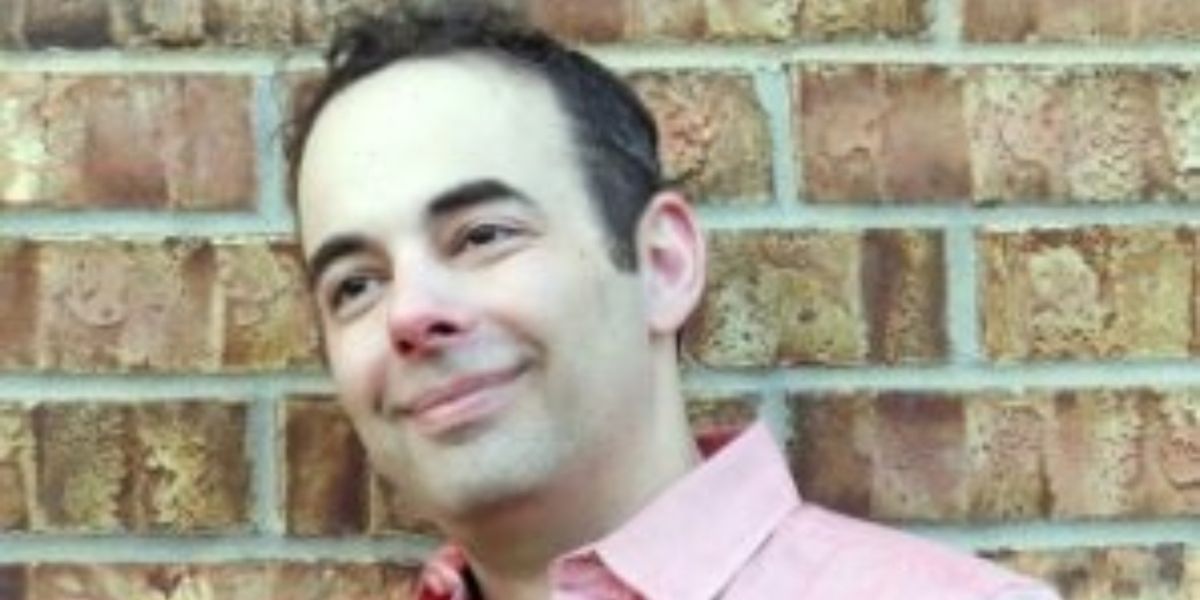
Aaron Alon helps to run Thunderclap Productions, and he is a composer, playwright, and director. The company will be presenting the world premiere of THE CHOSEN ONES, which is a riveting new musical by Aaron Alon. It's described as heart-wrenching, hilarious, and ultimately unforgettable. It follows a group of LGBTQIA+ teens in a conversion therapy summer camp. It's all led by an ex-gay minister, and it's a timely story of living authentically and finding your chosen family, even when the world tells you not to. The show is at the MATCH, in their Matchbox 3, running from August 28th through September 6th.
Brett Cullum: I recently read BOY ERASED by Garrard Conley, and so I have been thinking a lot about conversion therapy. It’s a pretty heavy subject, and one I have some personal experience with. So what made you want to write a musical about conversion therapy?
Aaron Alon: I have written two large-scale musicals, and they're incredibly exciting to write. When you write a really big show like a 40-person cast, 9-person pit orchestra kind of show. I'm very proud of those shows, but it is very hard to get those sorts of shows put on. So I wanted to focus on a small-scale musical where I could tell a more intimate story. I oftentimes start with topics that are interesting. I tend to be kind of an issue-driven writer a lot of times. So I thought about what the topic is that I think is really important, and that is sort of close to my heart. And I started thinking about conversion therapy. I had been a volunteer for nine years with Hatch, which is an LGBTQIA+ support group for queer teens in the Houston area. I saw a lot of kids struggling, who had gone through those programs, and who had parents threatening to send them to those programs. Even one kid told his mom he was going to conversion therapy so he could attend HATCH.
And I realized that this is a subject that I feel like we've stopped talking about, even though it's still a really big deal. The big national organization, Exodus, had been dissolved. And that's a really interesting story, actually, about how that ended. And they had so much more presence in the media when there was this big national group over it. They fragmented into all these different pieces. And so we don't know how many conversion therapy camps there are. We don't know where they are or how many there are. There's no licensure. Some states have banned the practice for kids, but it's still legal in the majority of the United States, including here. You look at the Republican platform for Texas, and I found conversion therapy and camps explicitly endorsed in one of the past state platforms for Republicans. They support it and use whatever the latest trend is for something that is conversion therapy, but has a different name.
I care about this issue. And I thought this could be a story worth telling, and I do that with a lot of shows. I spent about a year digging into research and learning all I could. I interviewed survivors of conversion therapy. I read different testimonials that people had put out there about their experiences with it. I tried to learn about the people who were at a high level, people who were supporting conversion therapy and creating versions of conversion therapy. How do they justify it? How do they try to make it sound rigorous and scientific? Through that process, I developed this original story about six queer kids in this camp who are all there under different circumstances, and all have their different stories. But what this one summer means to them when they all come together in this one place.
Brett Cullum: So it's really about their relationships and bonding, or rather “trauma bonding,” if you will, over this experience? Whenever something troubling or bad happens to a group, they seem to come together over it.
Aaron Alon: I definitely think that's a big part of it. Part of it is showing what conversion therapy looks like. And honestly, it's 1 of the nicer versions of conversion therapy. These are all people who really care about kids. They think they're doing good in the world. They're trying to do something that they think is loving and helpful with these kids. There are a lot worse versions of conversion therapy than that. It's to show that even in its best forms, it's incredibly dangerous and scary, but so one part of the story is about conversion therapy. The other part is what happens with these five of thesesix do not want to be there. There is one of the six kids, though, who actually had to talk his parents into letting him go there. And I, interestingly, as I've talked to different people working for this project, I've met a few of the adults who were once that kid who was so upset about being gay, very religious, really wanted to pray the gay away, and opted to go into a place like this. So there are both of those sides represented in this, and there are different types of kids here, too. There are lesbians, gay boys, there's a pansexual teen, and there's a trans teen. Who are they? How do they come together? In what ways do they support each other, scare each other, challenge each other, help each other, all of that stuff?
Brett Cullum: Well, you mentioned Exodus a little bit earlier, and they used to run the big Love and Action group out of Memphis, Tennessee, and I had some interaction with them as a young man. My parents were very interested in me going to that. But they would not accept you unless you specifically wanted to be there. They basically told me, “If you're gonna buck us, move on to the next thing.” So it's interesting that you've got this kind of dynamic going on. That you've got five kids who are not super happy to be there. But I think there is a kind of desperation whenever you end up in a conversion camp. How did you go about casting this? I mean, obviously, it's a sensitive subject. And it looks like you've got a great cast assembled for it.
Aaron Alon: Truly great cast. Yeah, we have a wonderful cast, and also great leadership at the helm. Aisha Ussery is directing and choreographing it. Philip Hall is the music director. Our production team is also incredible. We've been very thoughtful about how we put together this group of performers and this production team. We actually had multiple rounds of auditions. Now, about a year before this, even, I put out a recording of the chosen ones. So I, through my own personal production company, cast and released a recording of all the songs in the show. Three of the original six performers from then are now in this originating the roles that they sang on the recording. The other five actors are new to the project, and we had multiple rounds of auditions. In some cases, it was immediately clear. Wow! This person's going to be amazing. In some cases, we wanted to see more people and wanted to see more people until we really found someone who we're like, “Yes! This is the person who will match with this role in this cast.” And the group of people we've put together again is just truly remarkable, and we're so excited to see them bring it to life.
Brett Cullum: Well, speaking of the recording, is there a way that you can go in and listen to that?
Aaron Alon: Absolutely. So if anyone wants to just visit the chosen onesmusical.com and click on music and video, I have links there to all of the streaming services where it's available. So it's available on all the standard ones, you know, Apple, Amazon, Spotify, and Pandora.
Brett Cullum: Now, if I've got this right, you did the music, you did the lyrics. You wrote the book, and you did the orchestral arrangements?
Aaron Alon: That's right. Yeah.
Brett Cullum: When did you realize that you were this musical prodigy that could construct and create a whole thing like a one-man band kind of style, I mean, that's very rare. You’re like in Mozart or Prince territory!
Aaron Alon: You know, and it depends on the project that I'm working on, too. So I started as a classical composer. I got three degrees in classical composition. In fact, that's what brought me to Houston originally was to complete my doctorate at the Rice University Shepherd School of Music in composition. So I did a lot of training in classical composition, which, of course, includes things like orchestration. And then, basically, as soon as I finished my degrees, I realized I don't really love writing classical music. There are other things I'm more passionate about. And I went back to my earlier passions of writing plays and musicals. That was around 2009. I started writing some short plays that did really well in the competition circuit, and they were performed around the country in New York and Houston. And these were little 10-minute plays. But it improved me as a writer.
I collaborated with someone else on a new musical where they wrote lyrics, and I wrote music, and I was not a good lyricist at this point, but I was a really good editor, and it was sort of a masterclass when I worked with this really great lyricist, where he'd write lyrics. I'd send back feedback, and I'd watch how he would make revisions, and that process created stronger songs for our show that we were working on, which was never finished. But we still produced some really beautiful work, I think, but it also helped me grow. I've been involved with theater since I was a little kid, and so just a long-time passion for theater and musical theater. And then I started writing my own musicals and coordinated a musical review, a comedic musical review called DEATH THE MUSICAL. I helped co-found a theater company here, which is Thunderclap Productions, which is still going strong. I started writing additional shows. And you know the way that I grow and become stronger in the areas where I'm weaker is partially by doing, but largely by just sharing my work with other really talented people and getting feedback and doing the same for them. So I have all these wonderful other writers that I work with, and we share work with each other, and we give each other feedback, and we help each other grow. And sometimes I'll collaborate with someone on a musical, and sometimes I'll write it by myself, but I do think it's that old expression. Writing is rewriting.
Brett Cullum: I totally vibe with this. Unfortunately, I'm usually under a deadline where my writing has to just go. I put it out in the world after just a couple of rewrites. But anyway, THE CHOSEN ONES start on August 28th and runs through September 6th as a world premiere at the MATCH!
Aaron Alon: Yes, this is the 1st full production of it. In fact, this is the 1st musical of mine, a full-length musical, that's gotten a full professional production. I've had a musical film, BULLY, that was very successful in the film Festival circuit. For a couple of years, I've had shorter works done. I've had plays done things like that, but this is the 1st time a full-length musical of mine is actually being performed in a professional capacity, which is very exciting. I would like to start trying to market it to other theaters around the country. Obviously, dreams of going to things like Broadway or the West End are always a vision for anyone who writes musicals. This is a small show. I think it could do really well off Broadway. I think it could really do well in the regional theater circuit. I think it's really relevant right now. Actually, it’s more relevant than when I wrote it. It's getting worse, not better, for LGBTQIA+ people in the United States. This is becoming more relevant and more painfully necessary as time goes on, and I do hope that shows and the theaters have the ability to soften people's hearts in a way that debate and policy and activism sometimes can't, because it's not an issue. It's a story. It's a group of people. It's a group of people that you really care to love, come to love and care about in a short amount of time. I think about shows like LA CAGE AUX FOLLES being done in the eighties. Despite the incredible homophobia at the time, and all of the fear around the AIDS epidemic, people still came to the theater and fell in love with those characters and came to care. And I hope that a show like this has the potential to do that, too. I tried not to make it too preachy.
Brett Cullum: You know, I remember when Exodus actually imploded, and the head of that actually went away with his husband and moved here to Texas. No idea how that happened, and I thought that was the end of this kind of thing, and I was surprised to find out that conversion therapy is alive and well. I'm sure it is thriving in this era. I'm sure it is now aimed horrifically at the transgender community specifically. So it is an interesting topic, and it is unfortunately relevant today, which I'm surprised because I felt like we were past all of this.
Aaron Alon: That's part of the reason why I wanted to write this, because I think a lot of us felt that way. All that happened is that visibility decreased. That also means that a lot of these organizations are operating in some really with some really scary people and some really scary shadows. It's happening all across the country and not just in the U.S., too. There's a big movement in the UK against this right now. In 2021, there was a new documentary that came out called PRAY AWAY. Working on this project, when people found out what it was about, they would talk. I've had so many people say to me, “I went through that!” Some of them are very young, and it's still very much happening. And it's still shocking. But yeah, so I think a lot of these things sort of went underground a little bit more, but they're still there, and underground is a scarier place for them to be, because there are no real qualifications. There are no certifications. There's nothing. There's no organization looking over organizations like this and making sure that they're not just abusing children, even if you think conversion therapy isn't in itself abuse, and there's some scary stuff going on.
Brett Cullum: Well, it's really a misnomer, because it's not therapy, and it's not accredited by any kind of psychological or psychiatric thing. It's religion. I mean. Let's call it what it is. It's religion, and it's indoctrination, and it is absolutely one-sided on that. And that is how they've couched it. That's how they've been able to be out there - religious freedom. As long as they're supported by that, then they're going to be out there. So it is a very timely musical, and I can't wait to see what you've done with it, and how you created songs around it, and develop these relationships with these kids. It'll be a great experience to witness THE CHOSEN ONES and figure out that it's still relevant to our time.
Aaron Alon: Yeah, I wish it were not. But I do hope that this helps people learn more about it. Talk about it, really. Think more deeply about it. I'm hoping with increased awareness, there can be increasing things like oversight and state bans. The scientific consensus is absolutely not in favor of this. There are versions of it that look more scientific, that are done by psychologists and psychiatrists, and that have other types of names. There's actually an about section of the musical's webpage, thechosenonesmusical.com, and it includes a whole section on conversion therapy with some links and some more information about the different ways that you might see this referred to.
Brett Cullum: Well, starting on August 28th, take us to church with THE CHOSEN ONES at the MATCH.
Videos
|
Joseph and the Amazing Technicolor Dreamcoat A.D. Players at the George Theater (6/24-8/02) |

|
2026 Night Nation Run - Dallas, TX Texas Live! (9/12-9/12) |
|
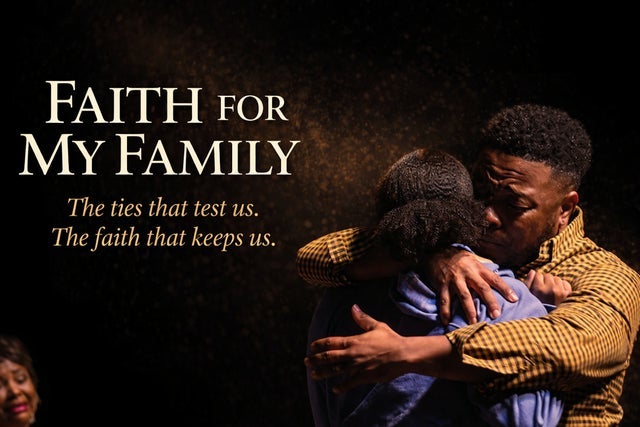
Write The Vision Productions Presents: Faith For My Family Stage Play Jefferson Theatre (9/05-9/05) |
|
Big Fish National Youth Theater (7/17-7/19) |
|
Mr. Toad's Mad Adventures Alvin College Theatre (6/23-6/25) |
|
Rocky Horror Picture Show House of Blues Houston (10/23-10/23) |

|
Wicked Hobby Center for the Performing Arts (6/23-7/25) |
|
Moulin Rouge! Hobby Center for the Performing Arts (7/14-7/19) |
|
AC/DC NRG Stadium (8/31-8/31) |
|
Frankenstein Pearl Theatre (10/30-11/02) |
| VIEW ALL SHOWS ADD A SHOW | |