


Did you Know that These Broadway Shows Are Inspired by Magazine Articles?
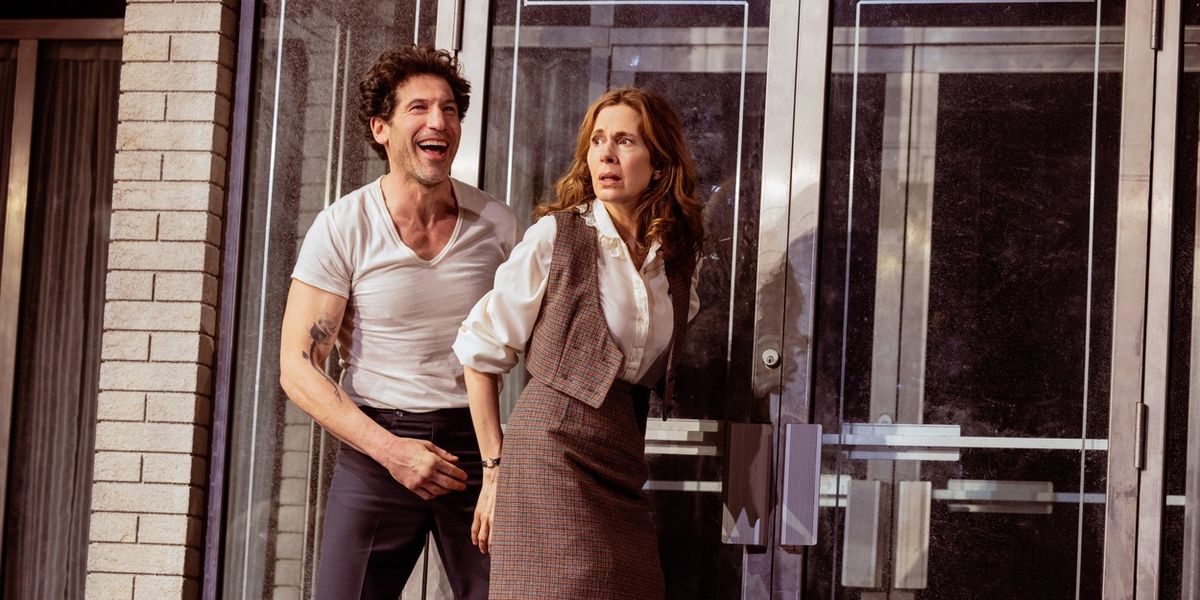
Dog Day Afternoon is running on Broadway at the August Wilson Theatre.
Do you have a burning Broadway question? Dying to know more about an obscure Broadway fact? Broadway historian and self-proclaimed theatre nerd Jennifer Ashley Tepper is here to help with Broadway Deep Dive. BroadwayWorld is accepting questions from theatre fans like you. If you're lucky, your question might be selected as the topic of her next column!
Submit your Broadway question here!
This time, the reader question was: what is the history of shows that originated as magazine articles like Dog Day Afternoon?
Musicals and plays based on movies? Many. Based on books? Also plentiful. Based on true stories? Of course.
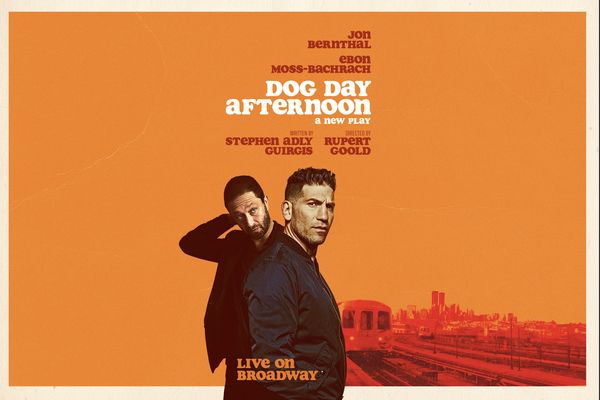
But musicals and plays based on or inspired by magazine articles? These are a rare breed. One recently opened on Broadway at the August Wilson Theatre. Dog Day Afternoon is a 2026 play based on a 1975 film which was in turn based on a 1972 magazine article about a real bank robbery in New York City. The article, by P.F. Kluge and Thomas Moore, appeared in Life Magazine and was titled ‘The Boys in the Bank'. This was a goof on the title of the play, The Boys in the Band, which had come out four years earlier and was about a group of gay men who attend a birthday party.
Meanwhile, Dog Day Afternoon dramatizes a true story about actual members of the gay community. In 1972, John Wojtowicz, a well known man in homosexual circles, led an attempted bank robbery. He claimed that his reason was to get the funds needed in order to pay for gender confirmation surgery for his wife, Elizabeth Eden. Eden was a transgender woman who had attempted suicide because she couldn’t afford the surgery. During Wojtowicz’s attempted bank heist, things went awry and he and one of his accomplices, Salvator Naturile (who he met at a gay bar) wound up holding several bank employees hostage for 14 hours. The event was televised live which turned the crime into a media circus and the LGBTQ+ elements of the story attracted more interest from citizens.
The detailed Life Magazine coverage of the robbery-gone-wrong was published a month later and inspired even more interest in what had happened at the Chase Manhattan Bank in Brooklyn. A few years later, the movie was released, directed by Sidney Lumet and starring Al Pacino and John Cazale. It was not only a huge hit—it also achieved cultural significance for its depiction of real people during an era of crime and desperation in New York City. (Wojtowicz used money he earned from selling film rights to the story to pay for Eden’s surgery.) Warner Bros., who produced the film over 50 years ago, are now giving life to the story again, this time on Broadway. The stage play has a script by Pulitzer Prize winner Stephen Adly Guirgis and stars Jon Bernthal and Ebon Moss-Bachrach, fresh off their dual success with The Bear.
Dog Day Afternoon is part of a small legacy of stage shows that were inspired by or based on magazine articles. Throughout theatre history, the rare musical or play, both on Broadway and all over the world, has been created because an artist read a piece in a magazine.
Some very prominent musicals originated as magazine articles. Best Little Whorehouse in Texas, which took Broadway by storm in 1978 and ran for four years, started its life inside the pages of a magazine. The musical, which first opened off-Broadway, has a book by Larry L. King and Peter Masterson and music and lyrics by Carol Hall. Whorehouse tells the story of a respected brothel that gets caught up in a media scandal and includes songs like “Hard Candy Christmas”. A 1982 film adaptation starring Dolly Parton and Burt Reynolds was a hit. The whole thing began as a magazine article that King himself wrote for Playboy in 1974. King investigated the real Chicken Ranch, which had been an integral part of its Texas community before getting shut down, and within the decade, his magazine piece transformed into the hit musical.
Developing in the opposite direction, Saturday Night Fever was a film before it was a stage musical—but it also was based on a magazine article. A 1976 New York Magazine cover story called ‘Tribal Rights of the New Saturday Night’ by Nik Cohn chronicled disco culture and specifically one young dancer. The magazine profile of this dancer became John Travolta’s iconic portrayal of Tony Manero in the popular 1977 film. With its soundtrack, Saturday Night Fever broke records for the best-selling album in music history. In 1999, the story came to the Broadway stage and stayed for over a year, featuring songs from the film’s soundtrack integrated into the plot. Originally thought to be a true story, Cohn revealed years later that his article had been a fictionalized version of the disco scene.
Best Little Whorehouse and Saturday Night Fever were both based on magazine articles, while West Side Story was only inspired by one. The game-changing 1957 musical with book by Arthur Laurents, music by Leonard Bernstein, and lyrics by Stephen Sondheim, was originally directed and conceived by Jerome Robbins. In 1941, Robbins read an article called ‘War Babies’, about rising gang violence among young people. He started thinking about a dance piece based on this and it was one of several sparks among the West Side Story creators that eventually led to the groundbreaking musical.
Of course, there are also shows that were inspired not by magazine articles but by newspaper articles. Camelot (1960) was born when both lyricist-librettist Alan Jay Lerner and original director Moss Hart, who had collaborated on My Fair Lady, read the New York Times book review of ‘The Once and Future King’ by T.H. White. This would eventually become the source material for their musical, Camelot, composed by Frederick Loewe, which was adapted into a film as well and became a touchstone for President John F. Kennedy’s time in the White House.
While the above are some of the Broadway musicals based on or inspired by articles, there are always new musicals being created for different, non-Broadway stages with this kind of source material. A few years ago, a musical called The ManOPause Boys was inspired by an article about male menopause. An early musical with book and lyrics by future Tony Award winner Michael R. Jackson (A Strange Loop) and music by Rachel J. Peters called Only Children was based on a Newsweek magazine article about sexual coming of age. Its original NYU production featured performances from future Tony Award winners Shaina Taub, Ali Stroker, and Brandon Uranowitz, all college students at the time.
Just as many plays have been based on or inspired by magazine articles as musicals. Several of these plays were adapted specifically from serial magazine stories. In fact, the longest running straight play in Broadway history is Life With Father, which opened in 1939 and ran for almost eight years! This kind of longevity was unheard of for a Broadway production at the time. Life With Father is currently the 20th longest running Broadway show overall; it held the #1 spot on that list until 1972 when mega-hit musicals began running longer and longer. Life With Father was written by Howard Lindsay and Russel Crouse and based on the magazine stories of Clarence Day. Day first penned his stories, about upper-middle-class family life in New York in the 1880s, for the New Yorker. The magazine pieces became so popular that they were turned into a book, and then the long-running play.
The multi-hyphenate writer Vera Caspary had a hit with her detective novel ‘Laura' (1943), which started out as a magazine serial in Colliers. ‘Laura’ was adapted for Broadway in 1947, with Caspary penning the script alongside George Sklar. The Broadway production only eked out 44 performances despite a hit film of the property that had come out in 1944. Laura featured an independent woman who bucked conventions of the time at its center.
Up The Down Staircase was another magazine story that eventually wound up adapted for the stage. Christopher Sergel adapted Bel Kaufman’s hit 1965 novel about public school teaching for the stage; the play has become immensely popular in educational settings. The book started its life as a magazine article based on Kaufman’s real-life experiences as a teacher.
More recently, in 2018, Milma’s Tale, by Lynn Nottage, premiered at The Public Theater. Nottage based her powerful play, about the spirit of a slaughtered Kenyan elephant and the dangers of human greed, on a magazine article about the ivory trade. In 1991, also off-Broadway, this time at Manhattan Theatre Club, a play called The Stick Wife opened, also inspired by a magazine article. Playwright Darrah Cloud wrote the charged piece, interrogating the lives of wives of KKK members, after first reading the story in a magazine. And Switch Triptych (2005), also off-Broadway, was inspired by a magazine piece about female telephone operators whose jobs became obsolete due to technology.

Sign up for all the news on the Fall season, discounts & more...
Powered by

|
.jpg?format=auto&width=300)





Comments
To post a comment, you must register and login.