Every Broadway Show Starts Somewhere—But Where?
Shows can start with the spark of an idea … or IP and song catalogs.
For every marquee on Broadway, there’s a show with its own origin story. Some start with a theatre writer and the spark of an idea, while other shows begin with major IP and onboard the creative team as the project picks up steam.
Exploring the development process of shows currently on Broadway doesn’t just give us a behind-the-scenes glimpse how theatre gets made. It also helps us better understand industry trends. Currently, three major drivers for shows include intellectual property (IP), song catalogs, and theatre writers themselves. So, what’s the origin story for some fan-favorite shows, and how does that reflect the current state of the theatre industry … and its future?
Writer-driven Broadway projects
The first, quintessentially Broadway origin story is the writer-driven creation story. For these shows, writers had the first idea for the play or musical and started putting words to the page, eventually enlisting producers and other creatives to bring the show to life. Usually, these writers shepherd their projects through many rounds of development before gaining enough momentum to actually get the show into a Broadway theatre.
Often, writer-driven shows are developed by a set of collaborators. Consider one of Broadway’s most dependable juggernauts, The Book of Mormon. The musical traces its beginnings to a chance encounter: Two South Park writers, Trey Parker and Matt Stone, were in the audience of Avenue Q the same night its writer Robert Lopez was at the theatre. They admired each other’s work and decided to write a musical together, settling on the idea of a comedy about the LDS church. The collaboration was a success: Book of Mormon recently reached 15 years on Broadway, breaking its own house record this summer with a top weekly gross of over $2.2 million.
Other, newer fan favorites are also the product of writer-driven collaborations. Maybe Happy Ending writers Hue Park and Will Aronson developed the musical together for many years, landing smaller scale productions in both English and Korean before coming to Broadway. Now, Maybe Happy Ending is the Belasco Theatre’s longest-running show. Classmates Toby Marlow and Lucy Moss wrote Six, which traces its roots to a university student club. (For a full refresher on the history of Six, check out BroadwayWorld’s interactive timeline.) The writers of Two Strangers Carry a Cake Across New York met even younger, as childhood friends, before teaming up to write in their 20s.
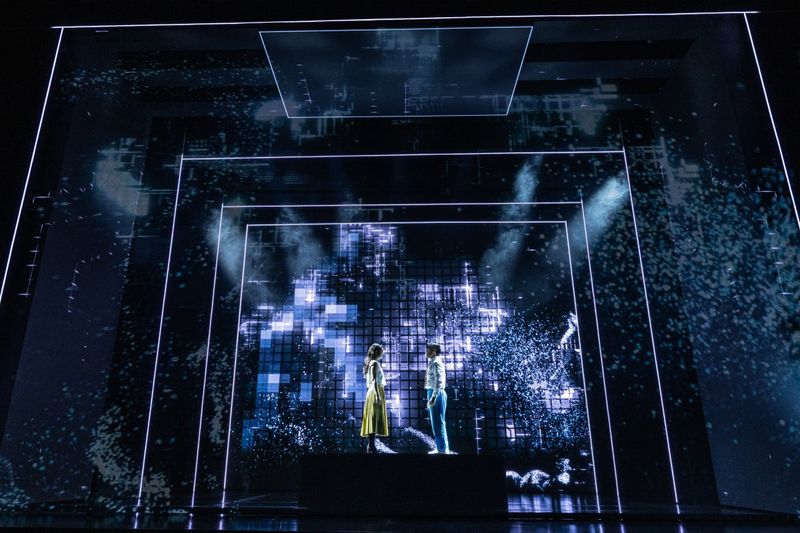
A few hit shows are the brainchild of one single, dedicated writer. While Lin-Manuel Miranda’s record-setting Hamilton is the most famous example, the success of Oh Mary! by Cole Escola proves that a show written (and promoted) by an auteur-like creative is a sustainable model for plays as well as musicals.
Granted, the sole-writer road can be long and lonely: Hadestown by Anaïs Mitchell took over a decade to go from a small-scale production in Vermont to one of Broadway’s most popular shows. But the solo writer route can have a big payoff: Hadestown: The Musical recently became the highest-grossing live capture in history, breaking a record previously held by another musical with a solo writer at its helm: Hamilton.
When IP paves the way to Broadway
Another proven business model for Broadway starts with Intellectual Property (IP). For these shows, while the writers still remain crucial to the process, they aren’t necessarily the instigating force behind the show’s creation. For big-name IP holders, like the producers behind Harry Potter and Stranger Things, Broadway and the West End offer additional ways to monetize existing brands.
For major titles, the underlying rights holders are usually closely involved in the production, at least financially. Take, for example, Stranger Things: The First Shadow, produced alongside Netflix. Matt and Ross Duffer, who wrote and executive produced the Stranger Things TV show, were approached by the director Stephen Daldry with the initial idea of producing a stage play. The play was later written by Kate Trefry, a writer on the TV show.
Although First Shadow had private workshops, the show was able to skip out-of-town tryouts and landed on the West End as a fully fleshed out, multi-million dollar spectacle. The development process of First Shadow is a far cry from the much more winding path to Broadway taken by shows with less powerful backers.
.jpg?format=auto&width=800)
One of Broadway’s biggest IPs is Harry Potter and the Cursed Child. The show has been considered a creative success, winning an Olivier Award, but it’s difficult to argue Rowling is a theatre writer in the traditional sense since she’s not the credited playwright. (Rowling shares credit for the play’s story). Instead, the show falls more neatly into the “IP-driven” category.
As per the show’s official site, Rowling’s theatrical holding company owns the play’s publishing and theatrical rights, while the characters, names, and trademarks are held by Warner Bros. With these powerful producers, Harry Potter and the Cursed Child had enough financial backing to skip smaller developmental runs and debut on the West End, just like Stranger Things. Now, theatre brings in a lot of cash for Rowling: As of 2023, she had made over $10.5 million in dividends from the stage show.
One key Broadway player is practically in a league of its own: Disney Theatrical Productions. What makes Disney’s approach to IP different is that Disney Theatrical has created a theatre ecosystem that supports and develops multiple properties throughout the theatrical lifecycle, from Broadway to school plays. Aladdin plays at the New Amsterdam Theatre, which Disney essentially owns. (Technically, Disney holds a 99-year lease, but who’s counting?) The Lion King holds the record for second-longest running show currently on Broadway.
Notably, Disney is willing to follow a more traditional development path and send its shows through out-of-town tryouts before hitting Broadway or the West End. Lion King had its first stage production in Minnesota, and Aladdin started in Seattle.
Songwriter catalogs as starting points
What do & Juliet, MJ, and Just in Time all have in common? All three musicals showcase the catalog of a central songwriter. The end result is a jukebox musical, but from a development perspective, it’s often more useful to think about who owns the featured songs’ copyrights.
Building a jukebox around a single songwriter’s catalog offers a major boost in the development process: the songwriter has a vested financial interest in seeing the show get to Broadway. Whoever owns the publishing from a jukebox musical’s catalog stands to make money from every performance of a show. For example, MJ and Just in Time are both bio-musicals about a musician whose estate holds a stake in the show’s music copyrights. Max Martin co-wrote the wide range of pop songs featured in & Juliet.
If a jukebox is a hit, the royalties attributable to the underlying songs can be quite lucrative. When Michael Jackson’s estate sold half his music publishing to Sony in 2024 for a reported $600 million, the deal specifically excluded royalties from MJ and any theatrical productions, per reporting by Billboard. If the Jackson estate decided to keep the rights for MJ, then control of the jukebox music rights presumably provides a valuable income stream the estate prefers not to split with Sony.
For the Bobby Darin bio-musical Just in Time, the songs’ publishing rights aren’t nearly as cut-and-dry because Darin was not a credited songwriter for two of his biggest hits, “Mac the Knife” and “Beyond the Sea.” However, many other songs in the show, like “Splish Splash,” were written by Darin himself. So, the musical offers the Darin estate another income stream for music publishing income beyond traditional routes like radio play or TV sync deals.
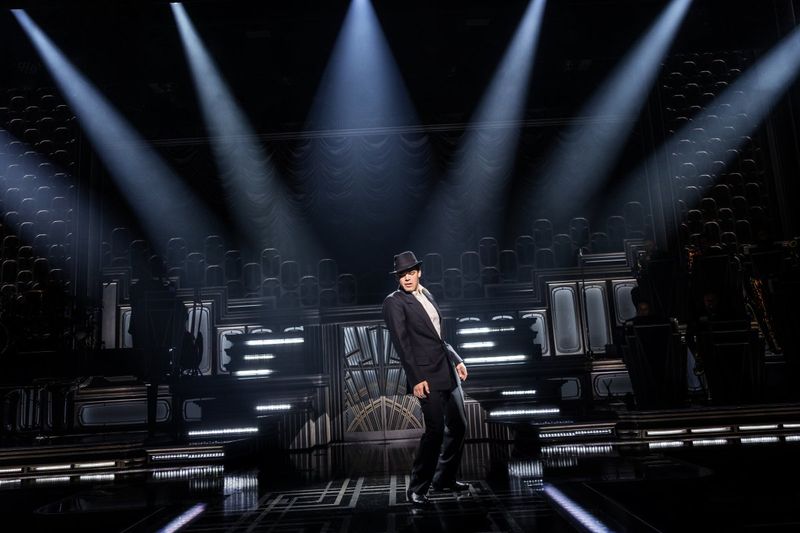
Of course, not all jukeboxes feature a central songwriter. Buena Vista Social Club is centered around a group and an album, not a songwriter. Still, from a development perspective, it’s easier to get a show to Broadway when the people who own the songs’ publishing rights not only are willing to work with you but also have a vested interest in getting the full show off the ground.
There’s no single roadmap for a successful Broadway show
Does a show’s origin reliably predict success or failure on Broadway, either commercially or critically? At first glance, it might seem like big IP should reliably bring in bigger box office receipts than shows without well-known source material. But, the instinct simply doesn’t match the data.
Looking at year-to-date box office grosses as of August 2026, the top shows have wildly different development histories. Hamilton (writer-driven) has brought in the highest grosses this year so far, but its box office is just barely higher than Harry Potter and the Cursed Child (IP-driven). While Stranger Things does make it into the top ten grossing shows, the prequel play has brought in less at the box office than either MJ (jukebox) or Ragtime (revival).
Yes, big-name IP might be a ticket for shows to skip the usual years of development purgatory before hitting the biggest stages, but hit source material isn’t a bulletproof route to Broadway success. Three Tony Awards for design haven’t been enough to launch Stranger Things to the stratosphere; both the Broadway and West End productions have announced closing dates after this holiday season.
Perhaps the traditional iterative development route, still common with Disney and writer-driven shows, is tried and true for a reason. Out-of-town and developmental runs allow productions to figure out what elements actually work in front of theatre’s best barometer: a live audience.
Where is Broadway headed? It’s anyone’s game
When you look at the totality of Broadway’s 41 theatres, you’ll find a well-rounded mix of current shows. Even if original shows aren’t coming to Broadway as often these days, some of Broadway’s most financially successful productions started with little more than a theatre writer and an idea.
Massive conglomerates might keep backing screen-to-stage because they own the IP, but on the flip side, Broadway is finding new success in movie theatres via live captures like Hadestown. The future of theatre, and what kinds of shows will find success in the industry, is anything but predictable.
Consider the origins of the shows announced for the upcoming 2026-2027 Broadway season. The next year features a little bit of everything: new plays, original musicals, big-name revivals, jukeboxes, and IP-driven productions. Lin-Manuel Miranda is back with a brand-new show, and Paddington will grace the stage a few blocks over from Dolly Parton’s bio-musical. Which new productions will be the new long-running success stories, or the unexpected flops? We’ll find out over the next year, as Broadway history keeps getting written.
Sign up for all the news on the Fall season, discounts & more...
.jpg?format=auto&width=300)