
A Beautiful Noise: Heidi Kettenring on Honoring Neil Diamond's Legacy
Performing this week at the Saenger Nov. 11-16
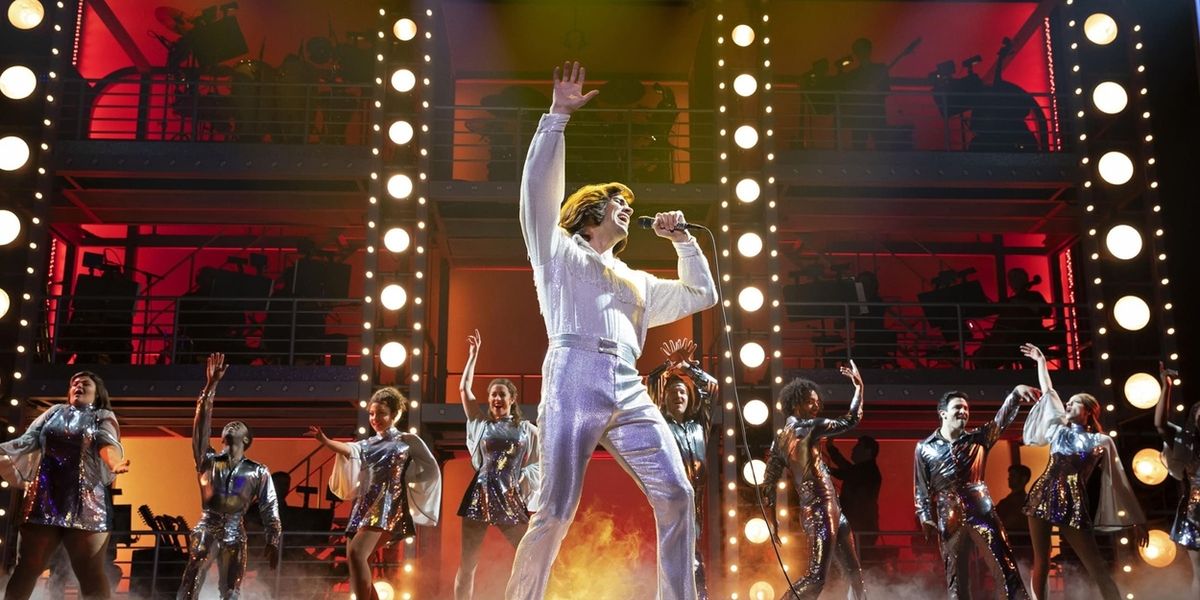
Heidi Kettenring has been a Neil Diamond fan since childhood, and now she's bringing his story to life on stage in A BEAUTIFUL NOISE THE Neil Diamond MUSICAL playing both his mother Rose and legendary songwriter Ellie Greenwich. Ahead of the show's run at the Saenger Theatre in New Orleans, Kettenring sat down with BroadwayWorld.com to discuss portraying two remarkable women, the responsibility of telling real stories and her excitement about performing in her family's hometown.
BroadWayWorld.com: What was your relationship with Neil Diamond's music before joining the show?
Kettenring: When I was about nine or 10, I did that thing from the 80s and earlier, where you could get 10 records for a penny from the Columbia House record company. And my very first selection from there of the 10 was Neil Diamond, The Jazz Singer. So, I've been a huge Neil Diamond fan since I was a little kid. I live in Chicago, and my favorite radio station is this fun fatigue radio station that plays all kinds of stuff, but they play Neil Diamond all the time. So, Neil Diamond has been a constant in my life.
BWW: Which songs resonate with you most now?
Kettenring: Right now, the ones that really affect me nightly are Shiloh. I really love the song Shiloh, I love the song Holly Holy a lot, and Solitary Man.
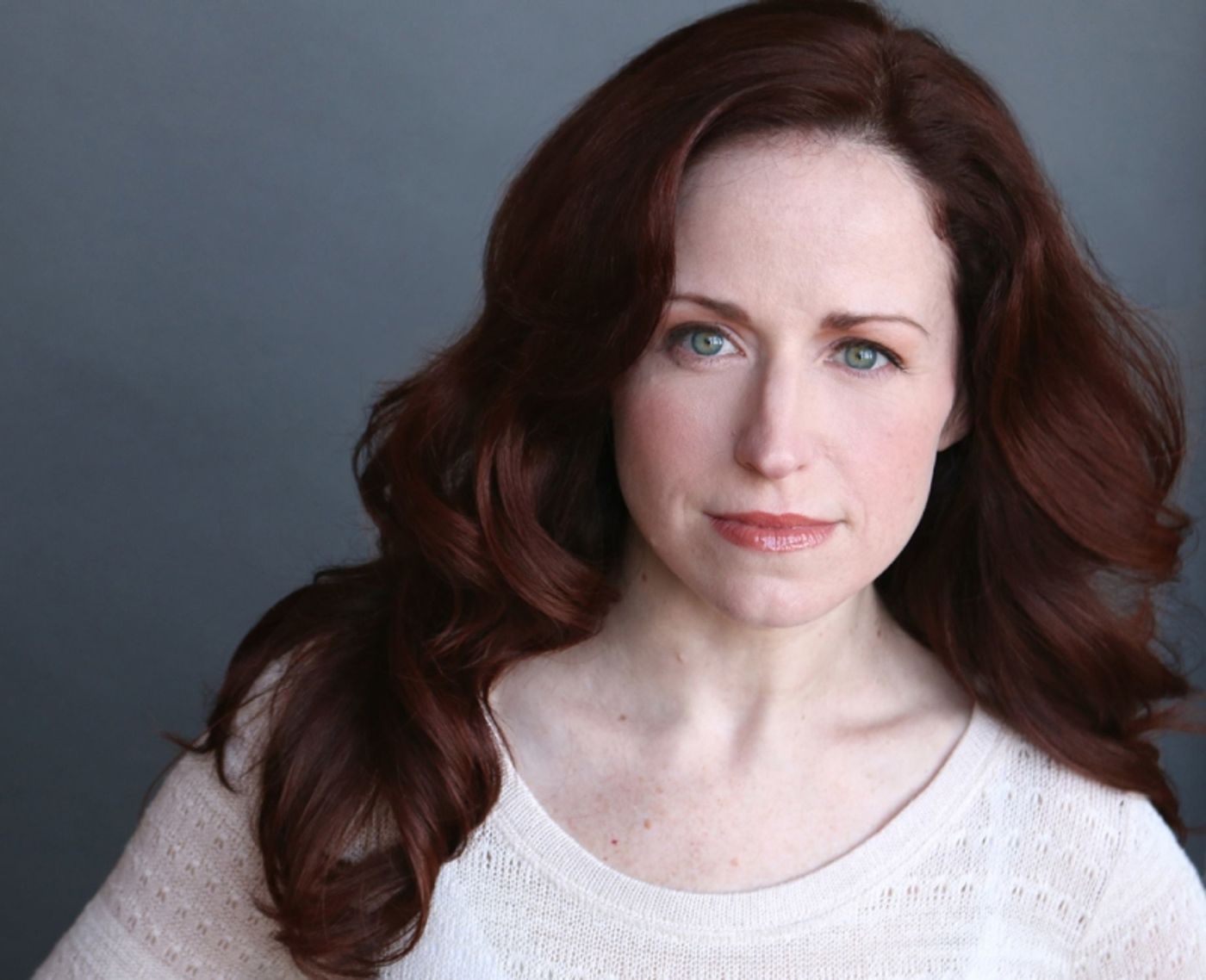
BWW: You play two very distinct characters—Ellie and Rose. How did you approach creating these different women?
Kettenring: What's been hard about this is that they are women—they're vastly different women, but in a lot of ways, they're very similar, because they're both very strong. They both had very strong New York, Brooklyn accents, so differentiating them vocally and energetically was an interesting challenge. So instead of kind of focusing on that, I really wanted to focus on what makes them different, which is how they approach stuff.
At one point, Neil is talking to his mother, and he says, all this noise, all this anxiety, and her response to that is, we're anxious people. We're Jews, of course, we're anxious. How could we not be? You don't see bad things a moment away? So, she sort of comes at her nurturing of Neil from an anxious place wanting to protect him.
And Ellie, she comes from a place of seeing—she sees this diamond in the rough, this man who truly had no idea of his innate star quality, and wants to help bring him to the world, bring him to the business of music, and she does it by sort of pushing him out there. So, it kind of created almost naturally a difference physically, that Ellie stands confidently. She walks into a room and Rose just as an anxious person, she walks a little bit quicker. She talks a little bit quicker.
BWW: What kind of research did you do on Rose and understanding the Brooklyn Jewish immigrant experience?
Kettenring: With her, it was a little bit harder because she wasn't a public figure. She was his mom. But I did do a lot of research into the immigrant experience, the Jewish immigrant experience of that time. The scene in particular that we're portraying was in the 50s, and World War Two had just happened—it was really not that far away. So, a lot of looking into what that was like for American children of immigrants, immigrants from that time watching these atrocities happen to their people. That was something that was very important to me to look into.
With Ellie, it was easy. I mean, she was famous. She was a singer songwriter, a producer, a trailblazer, really. So, there's just a lot out there.
BWW: Did you feel a particular responsibility in portraying Ellie Greenwich, who was a real-life music pioneer?
Kettenring: Yes. What's so fascinating about her is that here you have Neil Diamond, who is one of the most famous performers ever—he outsold Elvis Presley during the time. And that wouldn't have happened in a lot of ways without Ellie.
Among the many things about Neil Diamond that I love is that he's a collaborator in creating this musical. And he makes it very clear, I became who I am because I went to the Brill Building and I met Ellie Greenwich, and she stopped and talked to me and listened to me and listened to my music.
One of my first lines in the scene in the Brill Building is, okay, okay, let's get started. Time is money, people. But then in the same sentence, she looks at Neil, who walks in with his wife, and she lovingly says, oh, Jay, why don't you go sit over here so that you can have a good view. So she, with purpose, walked into rooms and made things happen. She's one of those people who so many people have no idea who she is. So, it thrills me that my friends who come to see the show are like, I'm so excited to go home and look this woman up.
BWW: The show employs the unique device of past Neil and present Neil. How do your characters interact with the different versions of him?
Kettenring: Older Neil—we lovingly call them Neil now and Neil then—Neil now is present all night long. He's on stage all night because this is told from his perspective. I like to think of it as a play, and then a musical happens around the play. And the play is Neil now and his doctor, and they're trying to get to the root of his problems, and they go back to his life.
Most of my experiences are with Nick Fradiani, who plays Neil then. But then there's a really beautiful moment in act two, where Bob Westenberg, who plays Neil now, steps forward, and I get to actually do a scene with him. Even though technically I am talking to a 12-year-old, I get to talk to this 70 something year old man in his mind. And it's a just exquisitely beautiful moment as an actor.
BWW: What do you hope young artists, especially young women artists, take away from the invisible labor of producers and songwriters like Ellie?
Kettenring: I hope that they continue to cling on to the fact that the power that we have is the power that we have. And we are powerful by making our—sometimes we have to open our own doors in that regard. And it is beautiful and important to do that, to open those doors, and to sometimes fling open those doors.
It wasn't necessarily important to Ellie to have her name on the top of it. She just wanted to make art. She wanted to make art in any way that she could. There’re so many ways to make art and to be a part of art. Your voice is as important as everybody else's voice, so keep making sure that your voice is heard in the way that you can in that room, collaboratively, either out front or behind or to the side or however you can sort of mesh your way into the art that you are wanting to make.
BWW: Having starred in Wicked and Beauty and the Beast, what's the biggest difference in connecting with an audience in a story based on real history versus fantasy?
Kettenring: I carry a bit more of a responsibility and a joy of like, not only am I entertaining people and making them think on an artistic level, but I actually want them to leave and want to go download a Neil Diamond album. I want them to want to go home and look up Ellie Greenwich and see all the things that she did.
At the end of the play, we sing the song America during curtain call. There's something so thrilling about singing that to the audience. They're singing it back to us. Watching how those words are resonating with them now—it's really exciting.
BWW: For folks who think they don't like jukebox musicals, how would you pitch this one?
Kettenring: Some jukebox musicals try to find a story where we can create a story, and then all of a sudden, this song kind of fits the moment. This one is a beautiful book. It's just a beautiful play, and the music is an integral part of that.
When I saw it on Broadway, I went to see it because a friend was in it, and I love Neil Diamond, so I knew that I was going to have an awesome time. What I did not know is that I was going to be moved to literal tears several times during the play. And all of my friends who have seen it have said the same thing, like I had no idea the depth of feeling and the depth of emotion and the depth of his journey, what that was going to do for me as an audience member.
BWW: You mentioned you've never performed in New Orleans before, even though it's your family's home base.
Kettenring: I was born in New Orleans, and my whole family, both sides of my family, have been in New Orleans, really, since the mid-1700s. My dad moved back to New Orleans maybe about 25 years ago. So that's home base for me now. The idea of getting to perform at the Saenger next week—to say that I'm excited about it is a vast understatement. My whole family is there. I mean, all of my aunts, uncles, cousins, my brother, my nephew, everybody.


|
The 39 Steps Westwego Perf Arts Theatre (3/05-3/21) |
|
Sweeney Todd Westwego Perf Arts Theatre (11/06-11/22) |
|
42nd Street Rivertown Theaters for the Performing Arts (3/05-3/21) |
|
Grease Rivertown Theaters for the Performing Arts (5/07-5/23) |

|
Pilobolus Mahalia Jackson Theater (10/17-10/17) |
|
The Rocky Horror Picture Show (minors must be accompanied by a guardian) Mahalia Jackson Theater (10/29-10/29) |
|
The Addams Family Sullivan Theater (7/17-8/02) |
|
Tootsie Westwego Perf Arts Theatre (5/07-5/23) |
|
|
My Fair Lady Westwego Perf Arts Theatre (9/25-10/11) |
|
|
A Mardi Gras Carol Westwego Perf Arts Theatre (12/04-12/13) |