


Review Roundup: What Did Critics Think of MRS WARREN'S PROFESSION?
Mother and daughter Imelda Staunton and Bessie Carter star at the Garrick Theatre

|
|
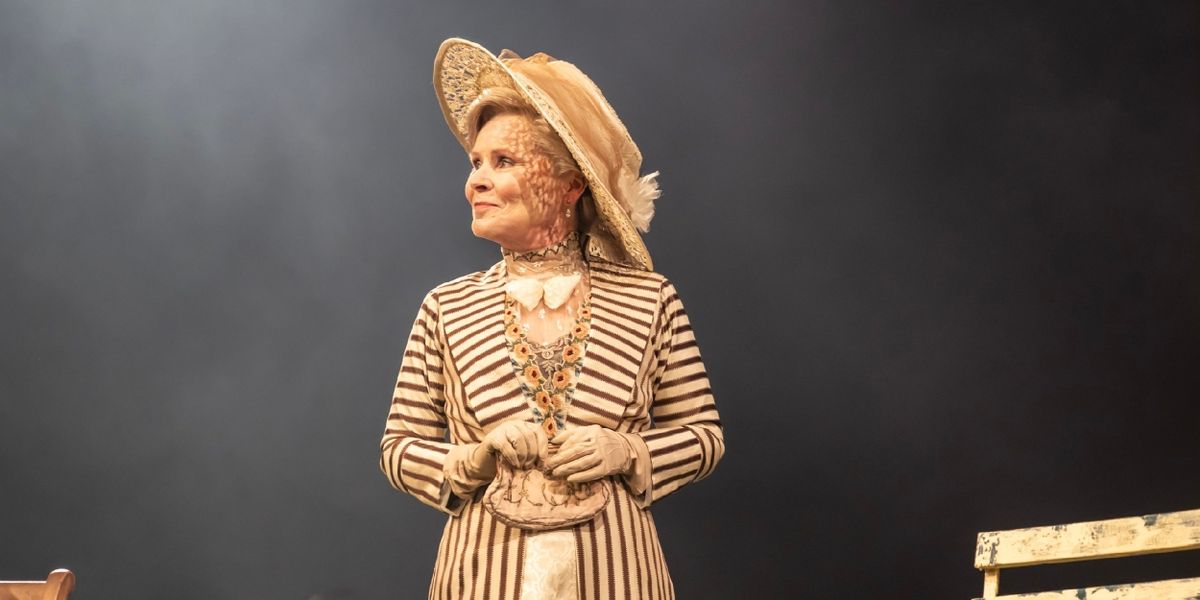
Vivie Warren is a woman ahead of her time. Estranged from her wealthy mother, she delights in a glass of whisky, a good detective story, and is determined to carve herself a sparkling legal career in an age ruled by men. Her mother, however, is a product of that old patriarchal order. Exploiting it has earned Mrs. Warren a fortune and paid for her daughter’s expensive education – but at what cost?
Four-time Olivier Award winner Imelda Staunton joins forces with her real-life daughter Bessie Carter for the very first time, reuniting with director Dominic Cooke to bring George Bernard Shaw’s incendiary moral classic crashing into the 21st Century.
What did the critics think?
Mrs Warren's Profession is at the Garrick Theatre until 16 August
Photo Credit: Johan Persson
 Alexander Cohen, BroadwayWorld: Cooke’s swift touch direction gently dials up the heat with the gentleness of a paintbrush, but with the momentum of punch to the stomach. It starts garlanded with bucolic pageantry, a Chelsea Flower Show vision of a green and pleasant land, only for a ghostly coterie of Mrs Warren’s prostitutes to maraud between scenes, stripping it back layer by layer, flower by flower, until the stage is empty. The grim truth can fester in its place, and the fist clenched morality is ready to take a flamethrower to everything.
 Arifa Akbar, The Guardian: It feels abidingly faithful but moves stiffly at times, carrying the sense of a dusted down drama despite Chloe Lamford’s shining set, an island of flora and fauna bobbing like an eternally fragrant English garden against a bare black backdrop, before being stripped of its naturalism. The period dress strangely mutes the play’s shocks while, in an awkward touch, lugubrious ghostly figures in undergarments (Victorian sex workers?) crowd around the edges and act as stagehands.
Dominic Cavendish, The Telegraph: Well, at the risk of sounding like an ingrate, I’d say Dominic Cooke’s briskly efficient, interval-free revival courts seeming a bit anodyne, especially given the PR promise that Cooke and co are bringing this once contentious, long-banned 1894 work “crashing into the 21st century” (they don’t). That said, few should pass up the opportunity to see Staunton on stage. Even laying aside the fact that she has been the Queen in The Crown, she qualifies as revered acting royalty.
Tim Bano, The Standard: It’s Staunton doing what she does well, and has done before. Staunch, slightly terrifying. Every line a masterclass in technical precision, in full commitment. And here, it doesn’t work. She’s in a melodrama while everyone around her is in a pleasant garden comedy. She tramples over the humour, the fun, and that means the serious bits don’t stand out. She tries to make us care too deeply before we’ve even got to know her. That’s partly a problem with Cooke’s sharp scissors, which have removed a lot of Shaw’s bloat, but have also stopped us from spending enough time with the characters to ease into them. And even despite the excisions, the play still manages to drag.
Clive Davis, The Times: The problem now, of course, is how to make this period piece speak to a modern audience. “Speak” being the operative word, since, like so many of Shaw’s plays, you often feel you are being addressed by a writer who turns every other conversation into an Oxford Union debate. The torrent of words beats you into submission. Even with a text that has been cut down and clarified by Cooke himself, you still sense Shaw’s hectoring presence.
Sam Marlowe, The Stage: Designed by Chloe Lamford, the production presents some striking stage pictures, often buttressing moments of peak tension. But there’s a mechanical quality both to the staging and to some of the acting, and it never feels as if there’s enough at stake. And although real-life mother and daughter Imelda Staunton and Bessie Carter are focused and meticulous as Kitty and Vivie Warren, and while there’s plenty of gristle to chew on here, there’s somehow a lack of bone, blood and, ultimately, heart.
Sarah Crompton, WhatsOnStage: But the great virtue of the production is it allows the women to shine. Staunton’s Kitty is a close relation of her Mama Rose, monstrous in her own way, but more understandable and with more pathos. The little moue of her mouth as she speaks with bitter distaste of the poverty of her upbringing is hugely suggestive and invites compassion. Yet for all Staunton’s command, it is Carter who drives the piece, charting with rigorous clarity Vivie’s journey from big-hearted, stuck-up innocent to a knowing woman who might just have a chance of making her own way in a world that will always be against her. She brings to the stage an honesty, a clarity of expression and thought.
Marianka Swain, London Theatre: There are a few too many Shavian speeches which pull you out of the drama, though the arguments remain compelling – whether the comparison between sex work and transactional marriage dressed up as romance, or the passionate defence of a woman’s right to find purpose and self-respect through a career. In that latter respect, Mrs Warren and Vivie are actually very similar, but, via the excellent performances here, you deeply feel the tragedy that there is as much to drive them apart as bring them together.
Average Rating: 65.0%
- To read more reviews, click here!
- Discuss the show on the BroadwayWorld Forum
Sign up for all the news on the Summer season, discounts & more...

.jpg?format=auto&width=365)





Reader Reviews
To post a comment, you must register and login.