


Review: MAZEPPA, Grange Park Opera
David Pountney’s new production is unsettling and powerful
 Even ardent opera fans may struggle to recall the story or the score for Mazeppa. Based on a poem by Pushkin, Tchaikovsky's opera has been unjustly overshadowed by his Eugene Onegin. Last staged at the London Coliseum in 1984, Grange Park Opera have landed a coup by engaging the English National Opera orchestra to play for David Pountney’s excellent new production.
Based on historical fact, Mazeppa was a regional leader who rose up against Tsar Peter the Great in the hope of freeing his country from Russian rule. Tchaikovsky adds in Mariya, Mazeppa's goddaughter, who abandons her family to run off with him. In true operatic style, this betrayal leads to her father's execution and her own decent into madness.
There is no reference to Ukraine's struggle against Russia today; no blue and yellow to signify solidarity. Pountney chooses to focus on the figure of Mazeppa himself; a man with no redeeming characteristics whatsoever, the embodiment of toxic masculinity.
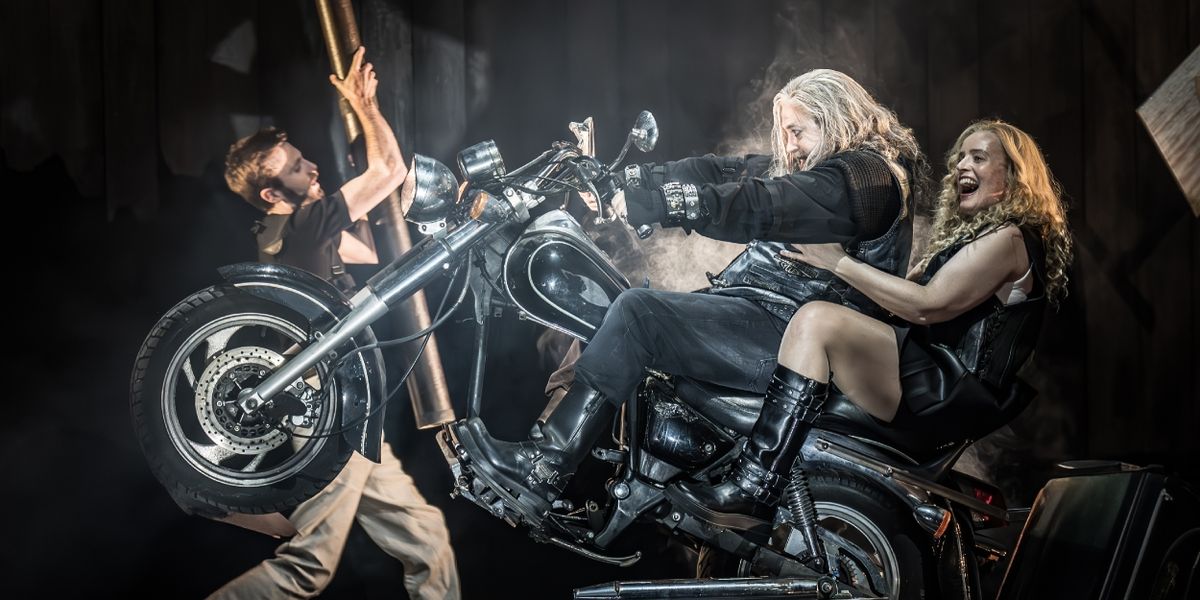
Baritone David Stout, complete with an amazingly flowing wig, is excellent as the antihero Mazeppa. Clad in black leather, looking every inch the creepy Hells Angel he shows assured control and excellent acting skills.
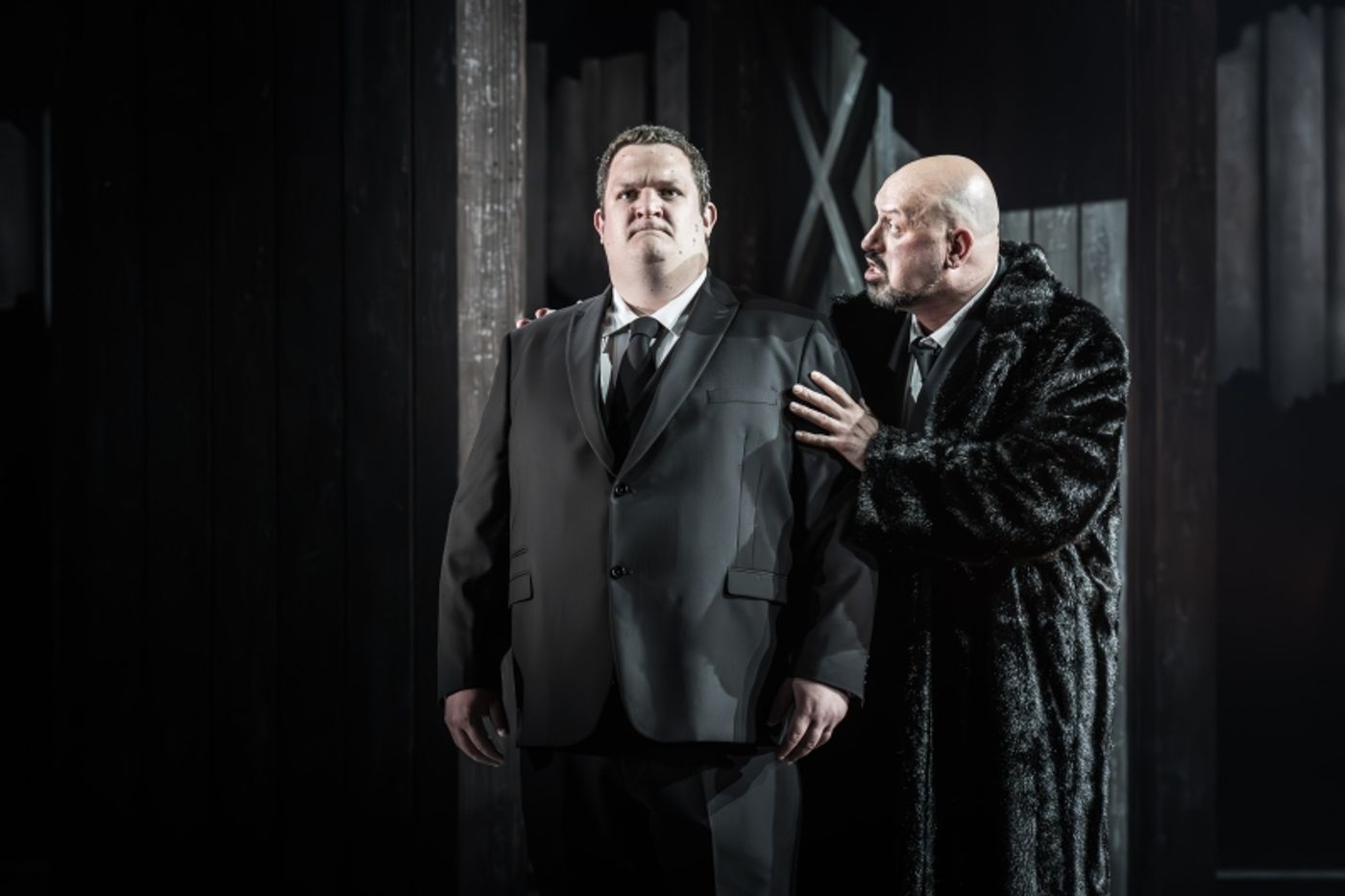
Photo Credit: Grange Park Opera
Tenor John Findon gives Mariya’s childhood sweetheart Andrei huge heart and soulful longing. Croatian Luciano Batanic is a standout Kochubey; intense and full of emotion as he fights against the loss of his beloved daughter and again when he is tortured and killed.
Rachel Nicholls demonstrates clarity and brightness in her soprano as Mariya. The highlight of her performance is undoubtably her final lullaby, which is brimming with feelings of loss and despair. An excellent performance.
Conductor Mark Shanahan pushes through the slightly plodding start of the production to deftly brings out all the power of the score, while retaining the textures and drama of the quieter moments. The English National Opera orchestra is on top form, particularly during the battle scene and during the tremendously rousing sections where the chorus is in full flow. Tchaikovsky's melodic vibrancy is on full display in this score, begging the question why this opera is not more well known.
Pountney’s production gives us huge variety; romance and light at the start with the cast dressed in white. There is also time for comedy in an amusing scene where the lovers embark on a mad cross country motorbike ride, passing various signposts such as a stop sign complete with illustrations of Russian dolls before stopping at a hotel for a bit of afternoon delight. Darkness quickly descends with death and torture at every turn.
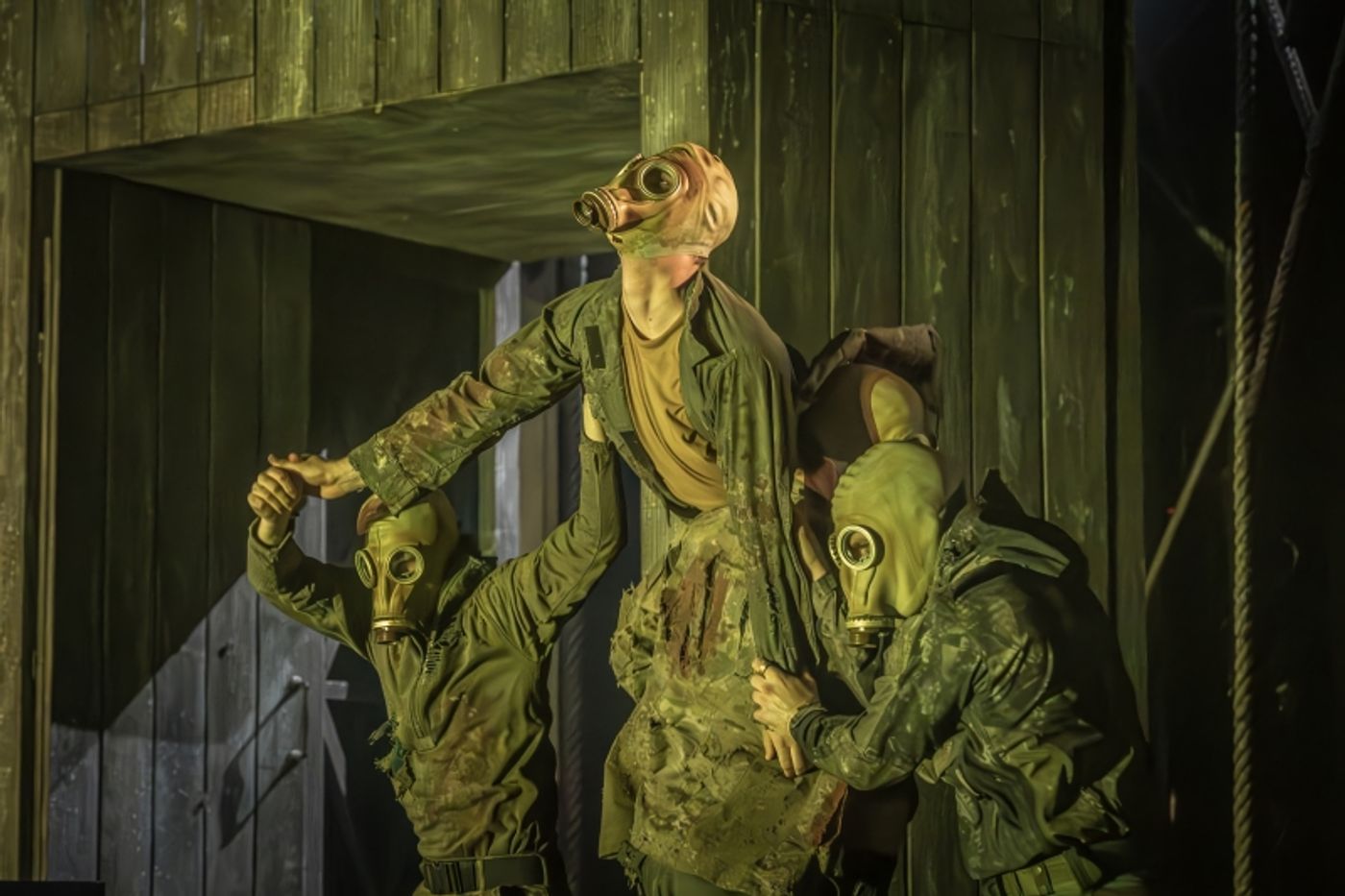
Photo Credit: Grange Park Opera
There are some clever staging decisions throughout. As the reality dawns that Mariya has abandoned her family, they ceremoniously burn her childhood photos and toys in a coffin. The battle of Poltava, where Mazeppa’s Cossacks fight Peter the Great’s army is conveyed as a contemporary dance, where gas masked soldiers fight and die, rising from a series of black coffins wheeled onto the stage to Lynne Hockney's powerful choreography.
Francis O’Connor’s movable set is incredibly flexible and Tim Mitchell’s stark lighting reflects much of the emotion within the score.
Bravo to Grange Park Opera for making the hard choice to stage a relatively unknown opera to brilliant effect. Dark and discomforting, let's hope it's not another four decades until it is seen again.
Mazeppa is at Grange Park Opera until 6 July
Photo Credit: Grange Park Opera

.jpg?format=auto&width=365)
Reader Reviews
To post a comment, you must register and login.