


Review: FAYGELE, Marylebone Theatre
Shimmy Braun's testament to Ultra Orthodox queer teenage life makes its world premiere
 Content Warning: This review contains references to suicide
Sometimes, an entire life hinges on a single word. That’s the case for Ultra Orthodox Jewish teenager Ari, whose father offhandedly calls him a faygele – a faggot – just before his bar mitzah ceremony.
Pivotal though that scene may be in the Chicago-based playwright Shimmy Braun’s semi-autobiographical work Faygele, Braun deftly refuses to imbue it with any kind of soapy histrionics – the slur slips out of Ari’s father’s mouth offhandedly, and the photo-taking carries on as normal.
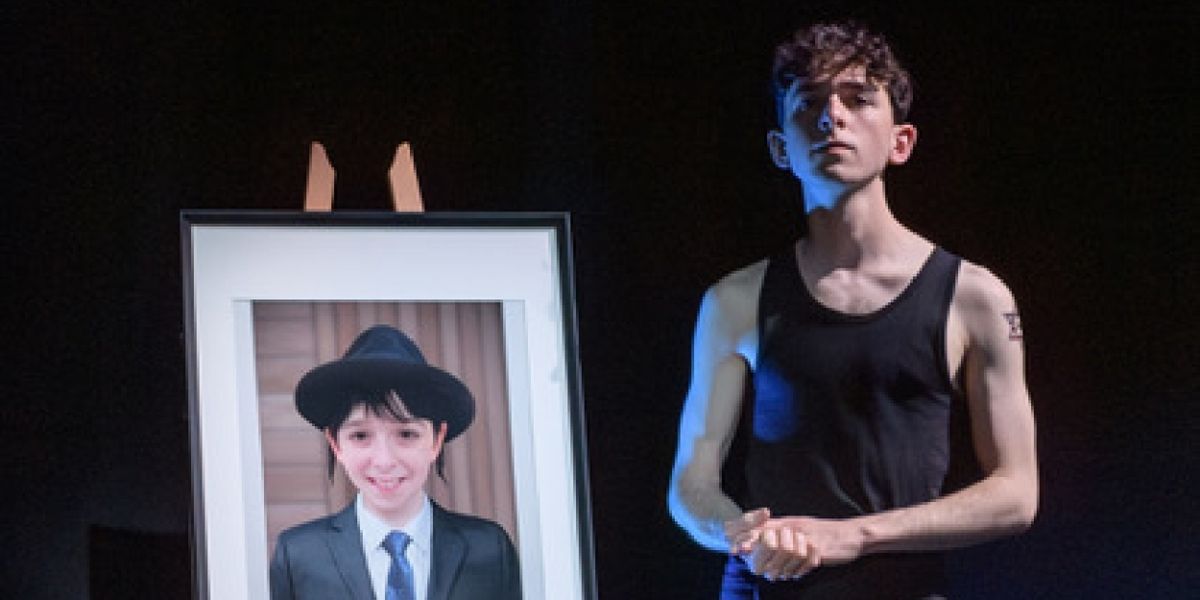
What follows is a trajectory free of any inspirational moments of redemption for Ari’s abusers (“make no mistake, this is a punch to the gut”, we are told early on) tragically, inevitably, lurches towards Ari’s suicide at the age of eighteen. We begin at Ari’s funeral, the set (by David Shields) bare save for wooden chairs, a photo of Ari at his bar mitzvah, and a coffin.
Faygele brings freshness to age-old questions of faith, sexuality and identity through its structural inventiveness. Ari observes his own funeral as a ghost, often breaking the fourth wall as the narrative forks off into a series of vignettes explaining how we got here. Ari’s ghost can also read the minds of his family as they attend the funeral, granting him a perspicacity most of us will only achieve after death.
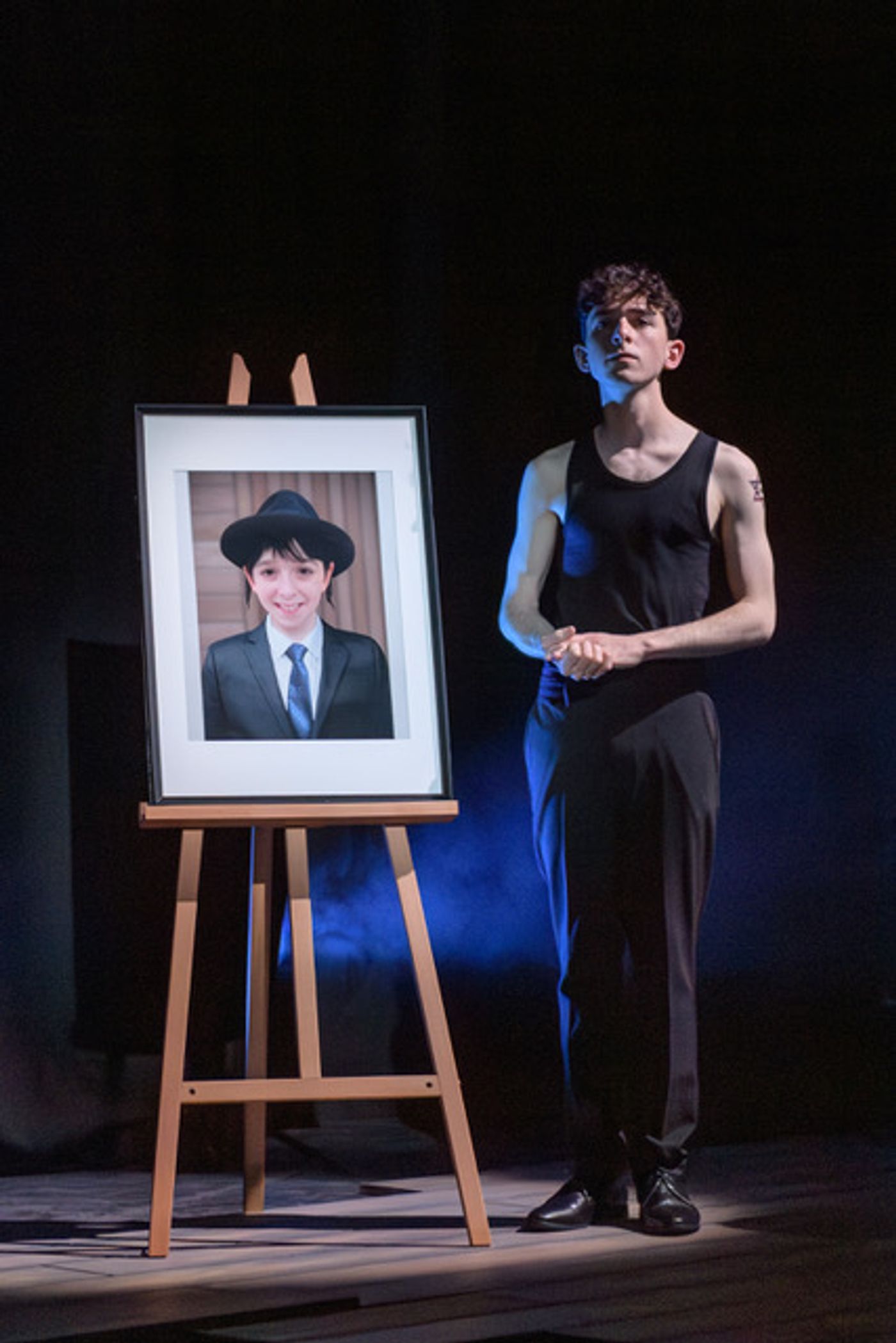
Photo credit: Jane Hobson
The non-linear narrative also affords Ilan Galkoff (The Tattooist of Auschwitz) the opportunity to make Ari intriguingly multi-faceted. His ‘ghost’ is able to crack jokes at the Jewish concept of hell, or his father’s porn addiction (this is a script certainly unafraid of dark humour), but in life he quivered with anxiety when confronted with his family’s early rejection. Galkoff has the physical and emotional dynamism to quickly and believably transform from sardonic to quiveringly anxious, from brashly flirtatious to solemn.
Galkoff is backed up by strong performances from Ben Caplan and Clara Francis as Ari’s parents, who grant their characters rich inner lives outside of their relationships with Ari. Both characterisations are scripted in a way that earns them empathy, without forgiving them their heinous mistakes.
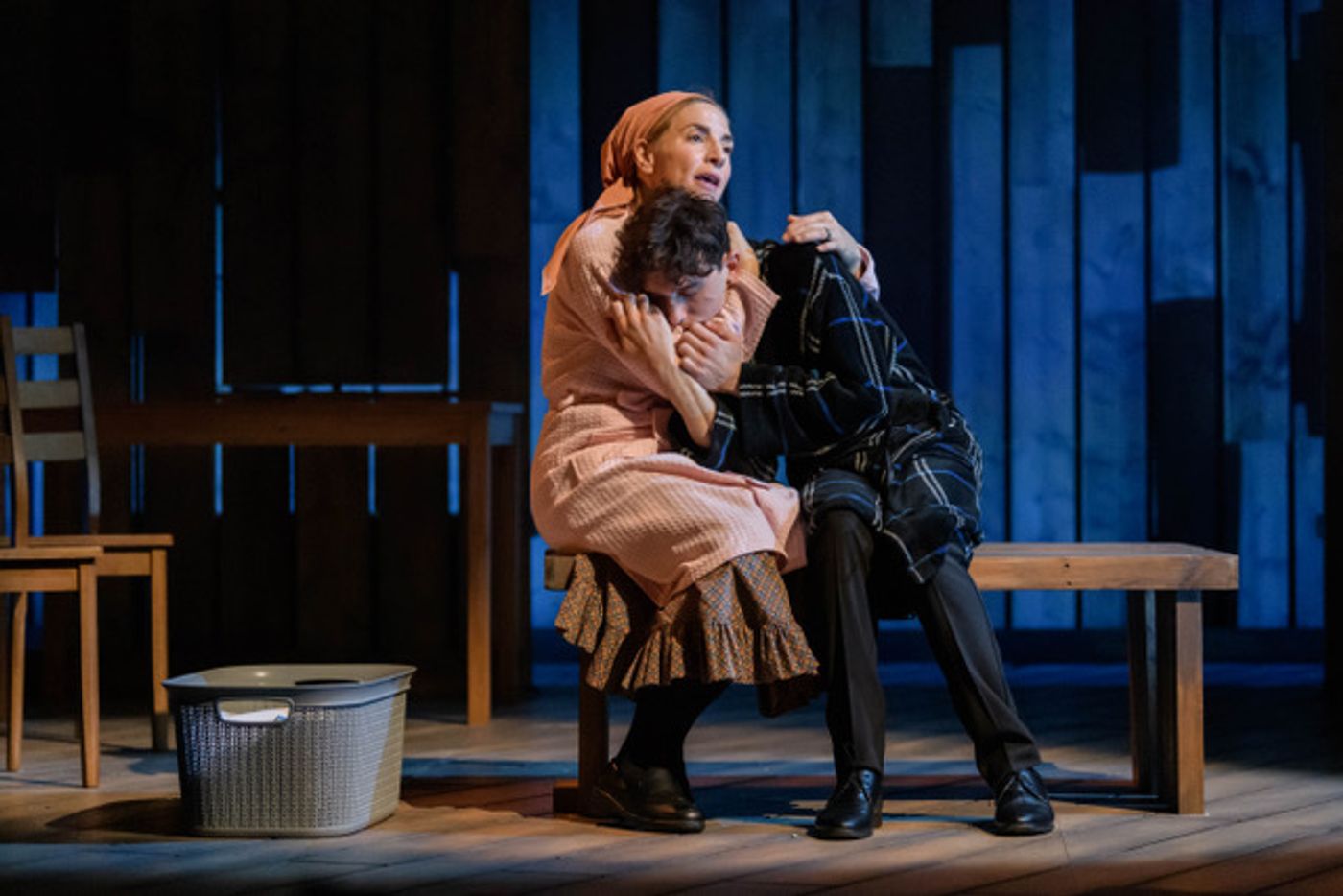
Photo credit: Jane Hobson
Braun walks this tightrope particularly elegantly with Ari’s father’s characterisation. Caplan’s performance is laced with generational trauma, as a man raised secular by an abusive father, who lost friends to AIDS complications, but who preaches conversion therapy in his psychology practice and is steadfast in his rejection of his own son.
The structure here is ambitious and imperfect – the character of Sammy (Yiftach Mizrahi), an older gay member of the community who counsels Ari, is disappointingly underdrawn. His arrival in the third act breaks the rhythm of the vignette structure, and makes the crucial scenes leading to Ari’s suicide feel a little overstuffed. Braun also struggles with consistent characterisation of the kindly Rabbi Lev (Andrew Paul), who flutters between ‘well meaning older person’ and ‘Leviticus quoter’ in his attitudes to the LGBTQ+ community, as and when the plot demands it.
Still, though, Braun’s play deserves credit for its empathy, and how it can resonate with those both within and outside the Jewish and queer communities. This is a show that celebrates Ari’s life as well as mourning his death, and in doing so grants those lost to suicide the chance to write their own, complex and unflinching, narratives.
Faygele runs at Marylebone Theatre until 31 May
Photo credits: Jane Hobson






Reader Reviews
To post a comment, you must register and login.