Interview: 'It's Important That Theatre Differentiates Itself': Director John R Wilkinson on Accessibility, and Perspective in New Play, THE LAST PICTURE
John R. Wilkinson on his genre-defying new project, Catherine Dyson's play The Last Picture
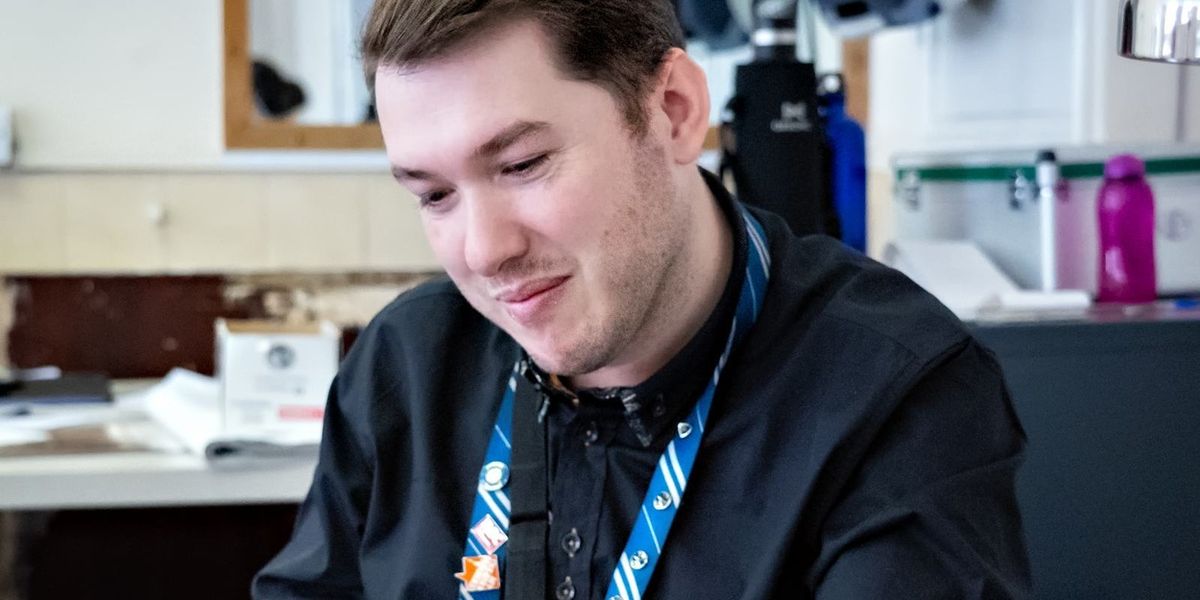
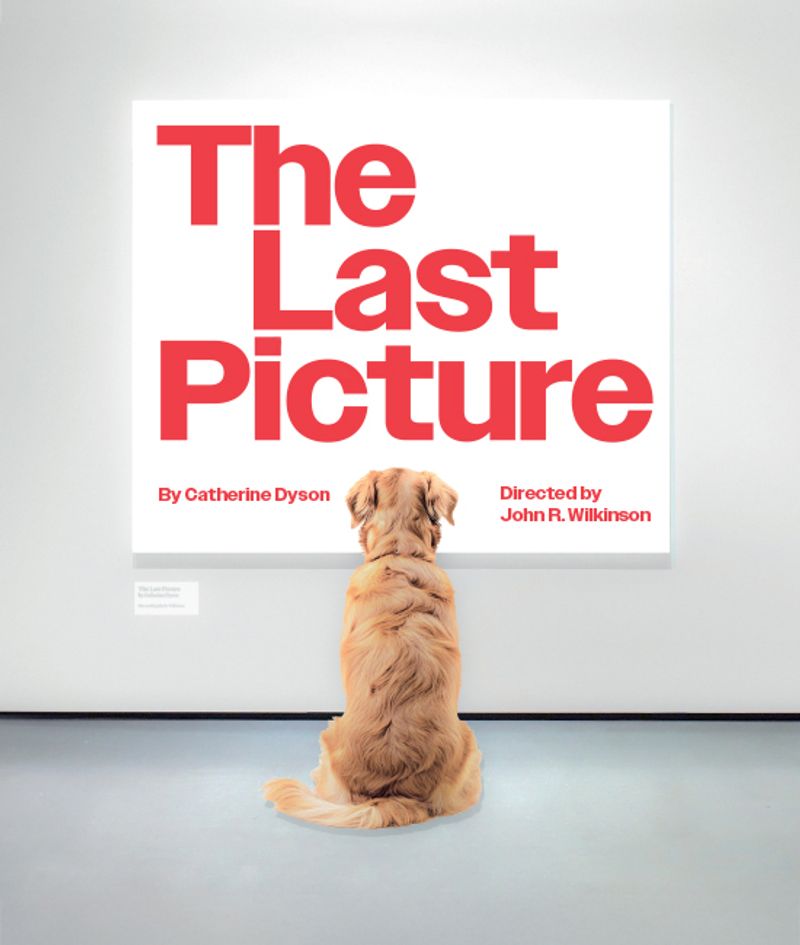
Award-winning director and dramaturgist John R. Wilkinson has just opened the world premiere of his latest work, The Last Picture. The show stars Robin Simpson as Sam, an emotional support dog who guides a group of school children through a museum exhibit on Europe in 1939 - offering a gripping exploration of empathy, imagination, and collective memory from an unexpected perspective.
John spoke to BroadwayWorld about the show, trusting your audience, and how he feels theatre shouldn't compete.
Congratulations on directing the world premiere of The Last Picture, John! Can you tell us a bit about the piece, and what drew you to it?
Thank you very much! So in 2023, we, the York Theatre Royal has a partnership with the RSC and The Last Picture was one of their 37 plays winners, and we directed three rehearsed readings for them, and I got to do this one. I really connected with Catherine and her style of writing, it's very... anti-literalism and we have a shared love of the abstract!
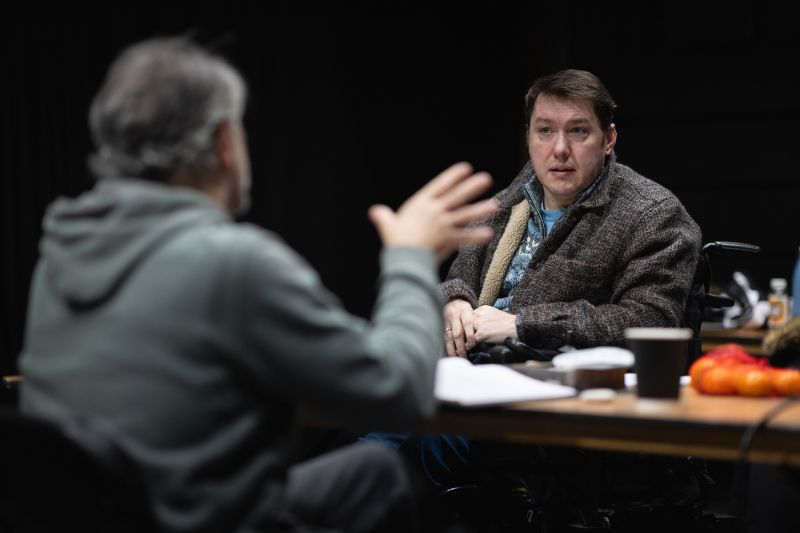
Photo Credit: James Drury
It’s an intriguing premise, and it must rely a lot on the imagination and the connection between Sam and the audience. How has it been exploring that dynamic in rehearsals?
It's quite hard to describe where The Last Picture sits in terms of genre - it'd be very easy to compare it to performance storytelling, to multi- rolling, to something like (the work of) Chris Thorpe or Tim Crouch, those sort of one person shows. But I think the great thing about Catherine's voice is that it's slightly different, it's not quite any of those: it's a bit softer, as you say it relies on imagination... it believes in not letting the audience off the hook and engaging that "imagination muscle." I think it's really important that theatre differentiates itself for what it's good at, which is we shouldn't be trying to compete with cinema and sofas - we should be showing all our best bits: dreaming, our imaginations and using our inner eyes a little bit.
Have you found your reaction to and interpretation to the play changing and developing as you’ve gone through that process?
I think it's natural to evolve how you think about it as you go, but I had a very clear sense of what The Last Picture was, what it should and might be when I read it, and what it's not. You naturally find things in rehearsals when you've got a great actor to bounce off and lots of different brains in the room, bringing different things, you might have an idea or the writer, but then everyone comes on board and it's about listening to everybody in the room, and not hamstringing yourself to one line of enquiry!
As an immersive piece of theatre, how do you hope to draw audiences into the production?
I think we need to be very careful with that phrase, immersive theatre, although I know what you mean - but I think this is written as a conversation with the audience, one of very few stage directions is that the performer has to be talking to the audience all the time; it's more accurate to talk about it from the point of view of it being a very particular point of insertion for an audience. We're playing in four different spaces; it's not written to be in the round, but end or thrust staging, so you get that communal experience.
You’re no stranger to directing a world premiere, having had award-winning success with Mugabe, My Dad & Me in 2022. What is it about new work that strikes a chord with you, and what are the ingredients you think can help new work find its feet and hopefully, its audience?
That’s a really good question, and if I knew the answer, I’d be a very rich man! [laughs]. I trained as a dramaturg, so I’ve always had a literary brain and the opportunity to explore new voices and rearticulate the world in different ways excites, and these two pieces appealed to my sensibilities! Giving me a new musical or a melodrama might not work, you have to have that connection with the style and the validation of your own tastes as well, I think.
As for what makes successful new work, for me, there are two things: there’s something in that uniqueness of voice and the way… it can let you sit in the difficult bits – that’s what so brilliant about The Last Picture, Catherine’s written a very tricky subject matter in such a clever way, and you work it out for yourself. It’s not accusatory, it’s not pulpit-ing… you trust the audience.
There’s also something in variants of language for me, theatrical language, that goes back to what we were saying earlier about flexing those different muscles!
The Last Picture deals with a particularly harrowing period of history, yet couples that with the importance of connection, memory and empathy. How do you find the “balance”, and is that what excites you as a director?
People are quite capable of dealing with and sitting with difficult stuff, as long as it's gifted to them in a way that's done really conscientiously. That's a large part of the brilliance of this script - through the vehicle of Sam, and it's so important that it's not just "an actor playing a dog", it's the actor coming on at the top and choosing to use the vehicle of the dog, to cushion the audience into this story, which then allows us to go to these tricky places. I think we're in danger from the assumption that audiences don't want to experience certain things, we want to challenge people as far as they want to feel challenged, and we hold them in that really wholehearted, conscientious way.
You have cerebral palsy-how does this influence and inform your work?
It does two things, I think: it gives me a really useful degree of perspective, of "otherness", you can sit outside of things, notice things, and bring that into what you make. That's the very, sort of theoretical side but also practically: you put a lot of trust in people. York Theatre Royal, ETT and An Tobar and Mull Theatre have been really supportive and their access has been great, all the team understand my needs.
Having worked in the industry for some time, do you feel that inclusivity and accessibility has improved in that time?
I think it's improving all the time- it's always a journey, a massive journey and the issues stem from the fact that different organisations are at different points in that journey, and we have to give a degree of grace for that when we challenge barriers. As long as we keep the voices up, the pressure up, we get there. We're at a point, maybe, where people are afraid to get stuff wrong, and I think we need to reiterate that, as long as the impetus is there and the impulse to improve, we have to move with that, not let people off the hook and keep pushing.
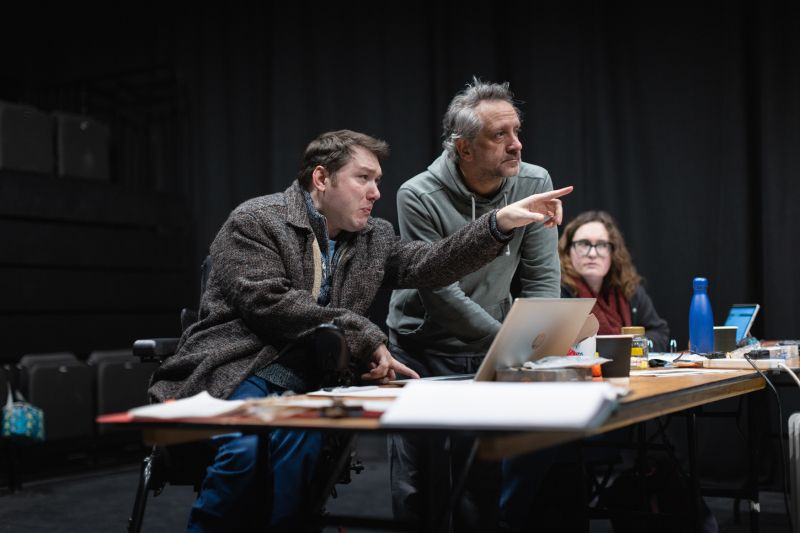
Photo Credit: James Drury
You’ve also been involved in dramaturgy in your career as well as direction. Are there skills or learning you’ve taken from one area that have helped serve you well in the other?
Well, I didn't have any directing learning experience before I started directing, it was all dramaturgy based! I say that slightly tongue in cheek (laughs) What the dramaturgy gives you is a really good theoretical grounding, and then the practical stuff... you get mentored by brilliant people and you build, you observe. There are certain staging techniques that existed way before you or I were doing things, so you pick up on them, you research, see if they're any use and filter them into what you do.
What do you hope audiences take away from The Last Picture?
What's really good about this play, the majority of it is set in a museum - there's an expression in museums, exhibitions, collections, all those sorts of things; they use the term: paddlers, swimmers and divers, and basically what they mean by that is people experience them in different ways.
It's all about experience-seeking and these museums are structured so that they can't guarantee when a visitor has a really intense reaction, or when they have a soft reaction, but what they can do is realise that. And I mentioned that because part of how Catherine's written this is that the audience is allowed to experience it on those terms, they can "sit" in it. I'd like them to sit and enjoy connecting with their imaginations, with Robin's imagination, with what we've done and see if there's a conversation there!"
The Last Picture runs at York Theatre Royal until 14 February, before continuing on tour to Manchester, Bristol and Guildford until 7 March
Main Photo Credit: Ant Robling
See more BroadwayWorld in Google
Our stories show up more often in Top Stories and Google’s AI answers.
Breaking Broadway alerts by text
Get the biggest stories sent straight to your phone.
Sign up for all the news on the Fall season, discounts & more...