


Review: MERRY WIVES at Harman Hall
STC opens their 40th Season with Merry Wives, pulling one of Shakespeare’s lesser known plays into modern day Harlem while retaining all the impact of the original.
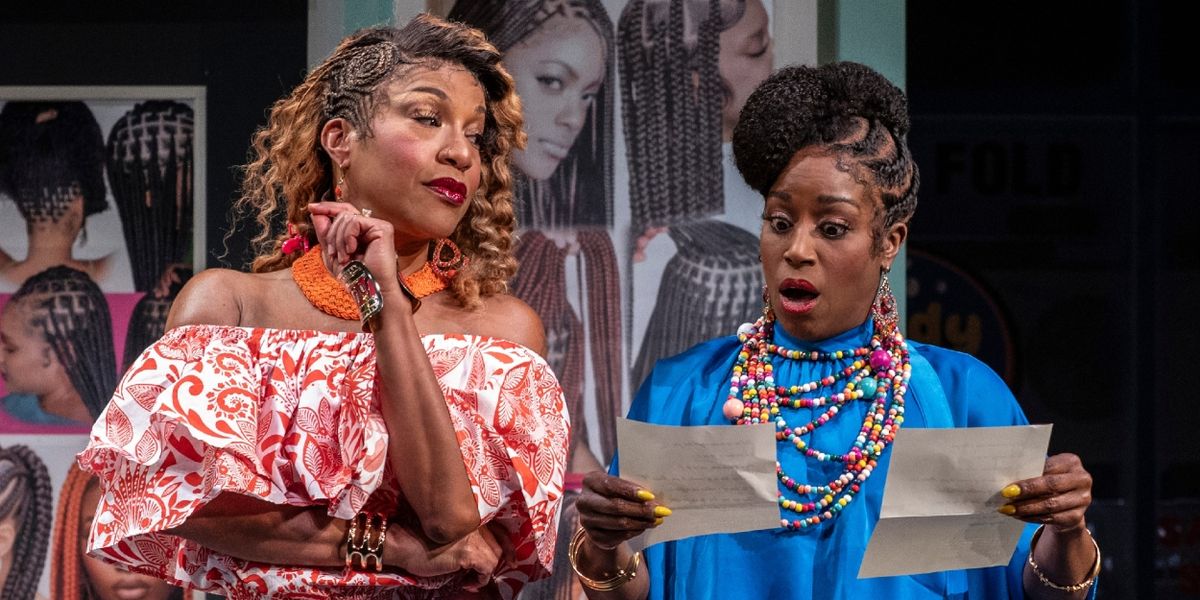
Shakespeare Theatre Company is opening their 40th Season with Merry Wives, pulling one of Shakespeare’s lesser known plays into modern day Harlem while retaining all the impact of the original work.
The Merry Wives of Windsor, first published around 1602, stands out in Shakespeare’s canon for a few reasons and is uniquely suited for the modernizing treatment. It’s a kind of spin off from his far more sober Henry IV plays. After seeing those, rumor has it, Queen Elizabeth specifically requested a play about the character Falstaff because she wanted to see him in love.
This is a fascinating insight into the queen’s personality if true. I’d like to think it endeared her to Shakespeare and that’s why he came up with an unusually lighthearted tale. Regardless, The Merry Wives of Windsor is a variation from Shakespeare’s usual style. Many of his best-known staples are still present: the tragicomedy of human frailty is at center stage, relationships (both of trust and trickery) drive the plot, and empowered and interesting female characters play a major role in the action.
But The Merry Wives of Windsor is Shakespeare’s only play set in contemporary times and the only one set in a real place: Windsor. His text even includes references to real landmarks the audience would have known well. It’s also his only work with a cast of regular, middle-class people. No heroes, royals, or mythical creatures, just people. The most dramatic plot line - one of young love, of course - is both very serious and very minor. The center of all the fun and action in The Merry Wives of Windsor lies with the grown-ups and their everyday, regular, real lives. Nothing more, nothing less.
Perhaps even more remarkably, the play maintains a warm glow around these common, everyday themes. Most Shakespeare, even his comedies, deals with complex moral questions and decisions that change the trajectory of a life or even a nation. Again, even in the comedies, themes of betrayal, fear, and dishonesty dramatize the events and raise the stakes. In The Merry Wives of Windsor, this dark side is almost entirely missing.
This results in a celebration of things we don’t often see celebrated: female friendship, a trusting and happy marriage, the power of shared values in a community. The conflict comes from Falstaff’s ill-advised attempts to violate these traditional institutions for his own self-gain. He is thoroughly thwarted, and, at the end, having been sufficiently chastised, welcomed back into the community.
Similarly, Madame Ford’s jealous husband learns his lesson, is chastised, and recognizes that he should have trusted his wife all along. The young Anne Page also questions tradition by deceiving her parents to avoid marrying the suitors they have chosen for her and choose for herself instead. But she does so for love, not for self-advantage, and so easily wins her parents and the rest over to her perspective. Even her jilted suitors are happy with their assigned replacement spouses. Everyone wins, and everything retains that warm glow.
Jocelyn Bioh’s new adaptation resists the temptation to moralize or politicize this story. She deserves her own standing ovation for achieving the rarest possible accomplishment in today’s theater climate: refusing to Make A Statement. 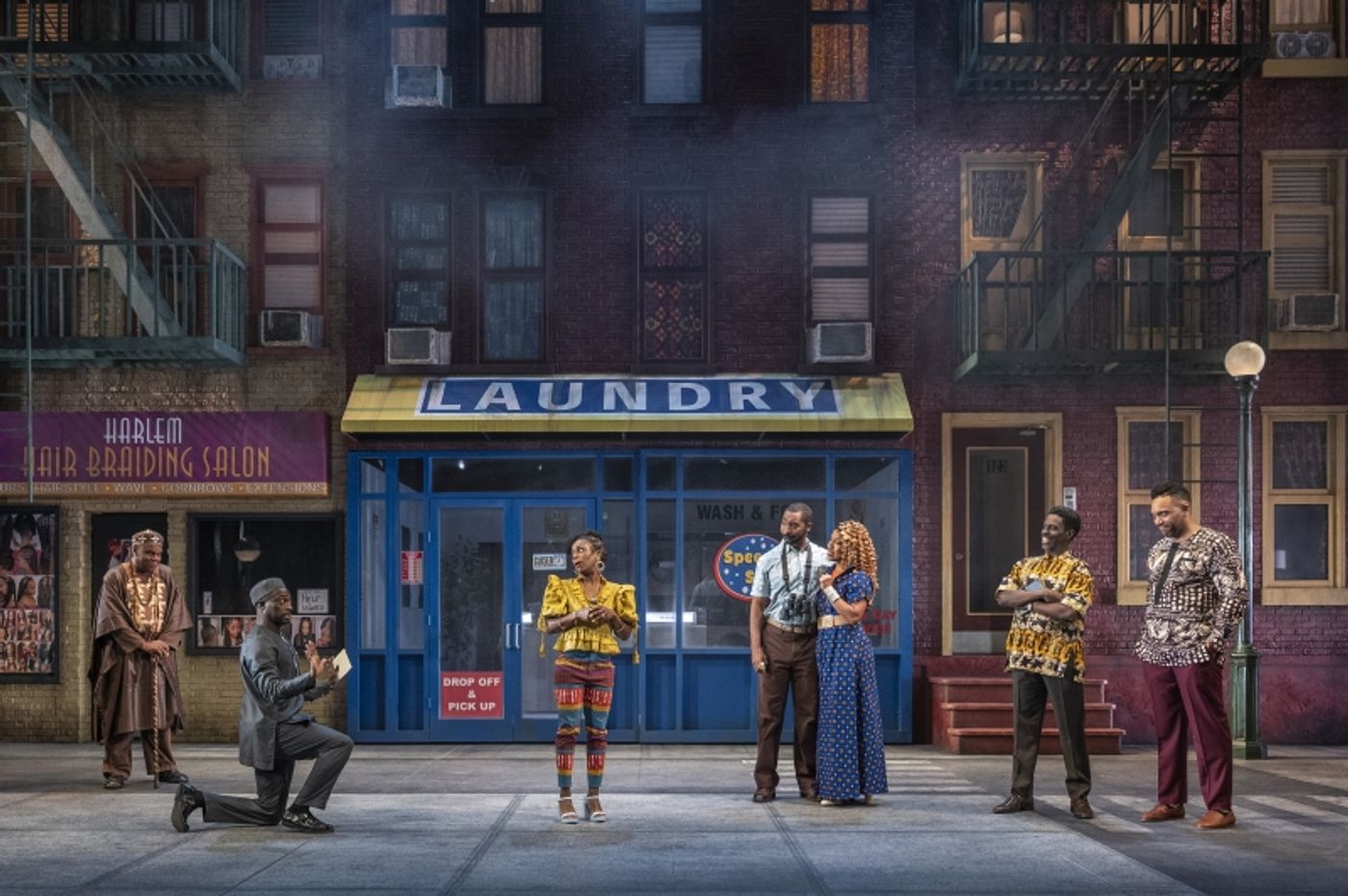
Bioh transports the story to modern-day New York City, where she herself was born and raised. But she maintains the particularity of the location - 116th Street, Harlem. It’s unmistakably, authentically New York. As instantly recognizable to us as the town of Windsor would have been in 1602.
The same is true for her treatment of the characters. Bioh’s own parents immigrated to the city from Ghana, and she no doubt drew from personal experience when morphing the characters into an eclectic group of African immigrants. Each one has a unique background. The titular merry wives and their husbands are Nigerian and Ghanaian business owners. Falstaff is the friendly New York con-man out to make a buck. Even the minor characters are full of specificity - Doctor Caius is a satirically flamboyant Senegalese Francophone, Evans is a grandfatherly Liberian pastor, and Simple is a Gen Z Bronxer always on her phone.
It’s hard to imagine a more different setting from an Elizabethan England town than Harlem, but Bioh, like Shakespeare, understands that these two places are not so different as they may seem because some things, and some people, never change. Bioh maintains 90% of the text as Shakespeare wrote it. It’s a testament, not only to Shakespeare, but to Bioh, director Taylor Reynolds, and the entire cast that somehow, in a setting where thous and therefores should seem entirely out of place, lines written centuries ago feel perfectly natural.
The cast deserves special credit on this point. The mark of a talented Shakespeare actor is their ability to deliver ancient lines in a way modern audiences can understand. They’re almost speaking a foreign language and relying on non-verbal cues, rhythm, and pacing to get the meaning across. This is no easy task. On top of that, actors in this show have to blend another accent - whether bronx, french, or ghanan - into their delivery. Miraculously, they pull it off. 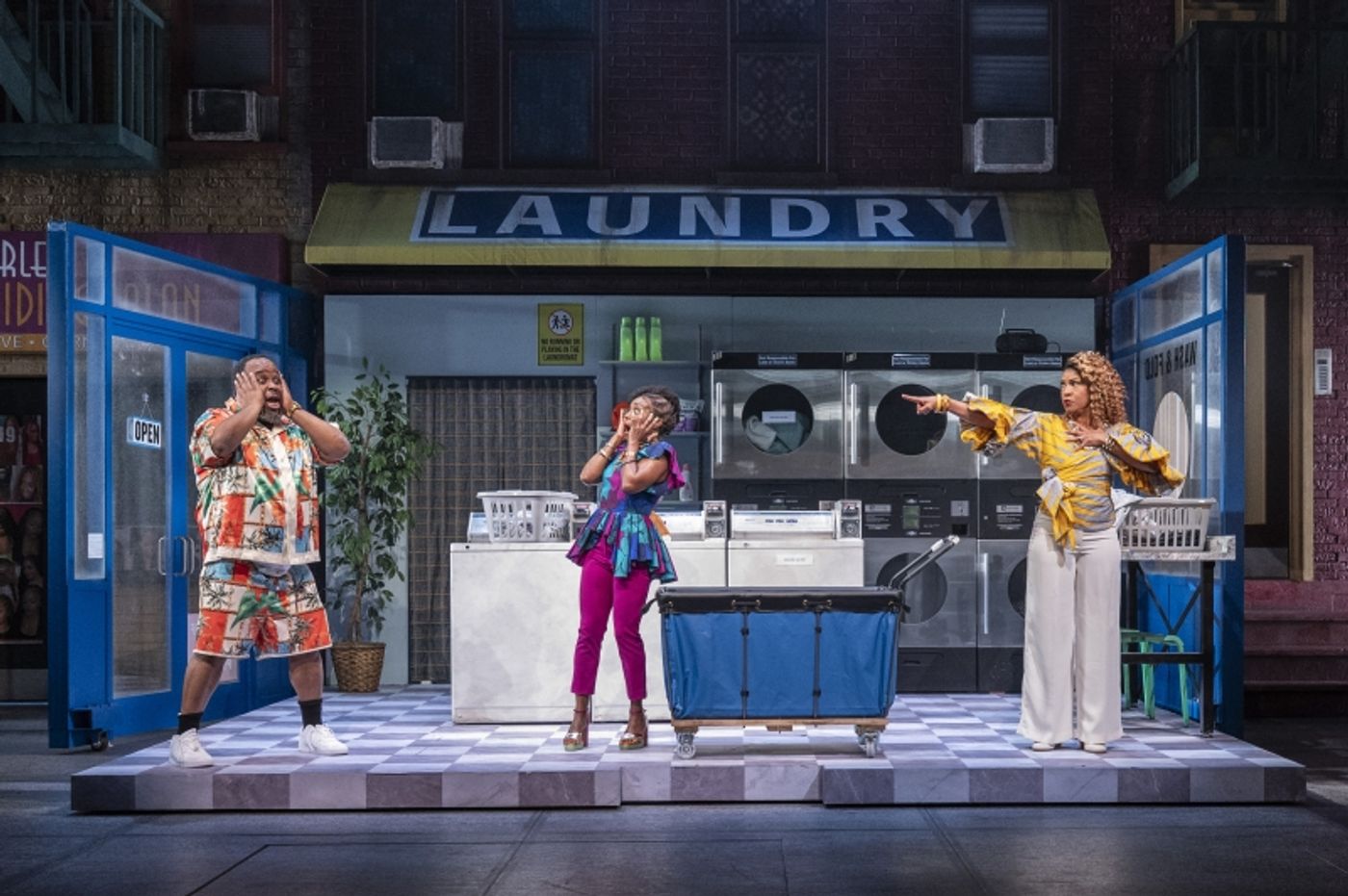
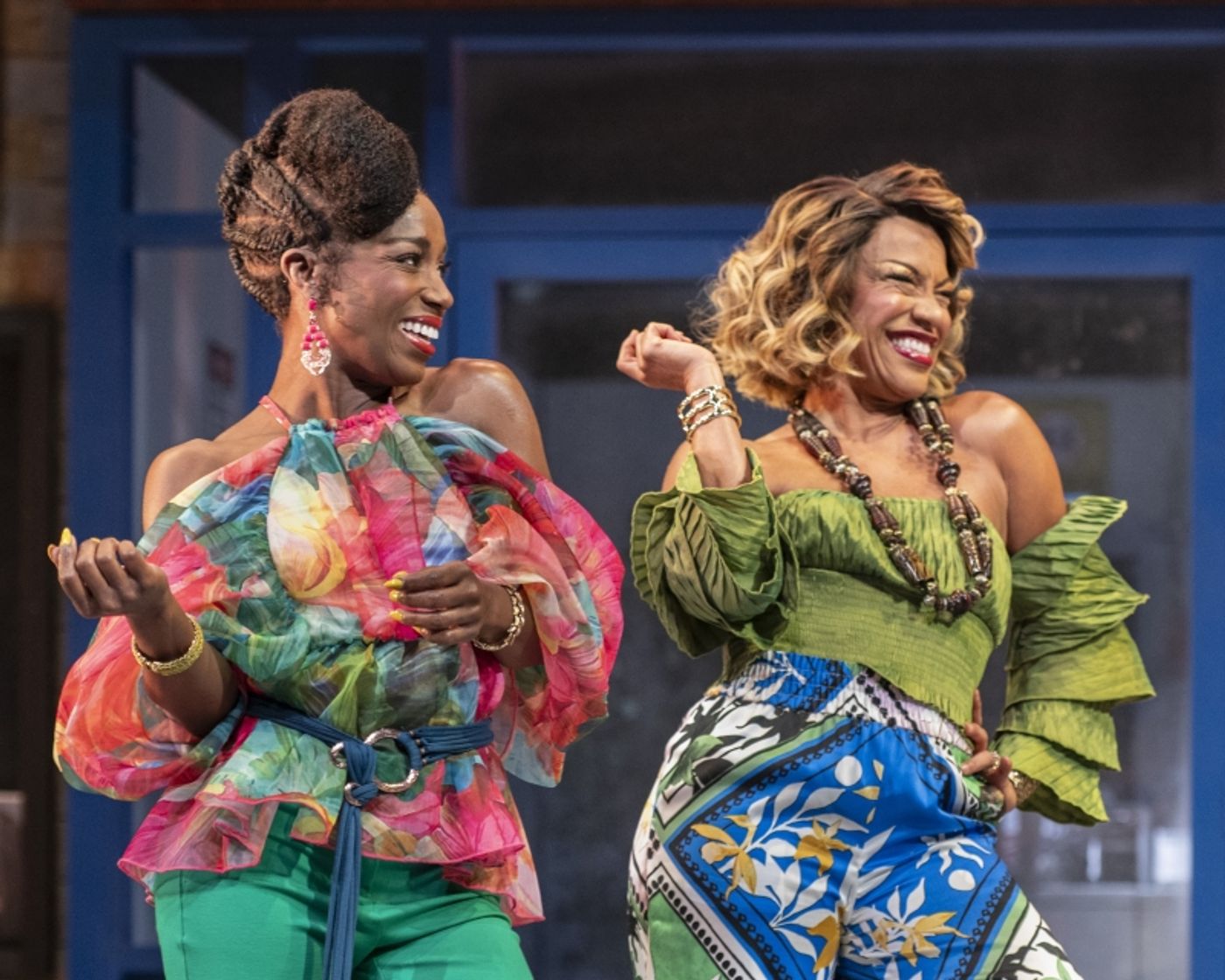
Jacob Ming-Trent as Falstaff feels like any city guy chatting you up on the street. The two merry wives, played by Felicia Curry as Madam Ford and Oneika Phillips as Madam Page, are hilarious and exaggerated just to the point of not overdoing it.
I was impressed, too, with the crew and the production. The set captures the feeling of the city and the theater at the same time. It’s fitted out with NYC staples - a subway stop entrance, store fronts topped by fire escapes and apartment windows with AC units hanging out. Backdrops and props move in and out dynamically - coming up from ground, out from the backdrop, down from the ceiling, and in from the sides.
The lighting, the costumes, and especially the music are not only strong in their own right but actively contribute to the overall effect. Most of all, Reynolds creates masterful transitions. She leaves out an intermission to keep the show whole, puts dancing and drum breaks between scenes, and plays walk out songs when major characters are introduced, helping the audience track important people and immediately understand their personality.
To call the production seamless is not quite right. It’s more like a patchwork quilt where each individual element combines to create a more interesting whole. All together, you have a show that is fun, thought-provoking, impressive, and as relevant and unique as it was 400 years ago.

|
Misery Aldie Mill Historic Park (8/20-8/30) |
|
Hamilton (Angelica Company) National Theatre (12/15-2/07) |

|
BAD KREYÒL Mosaic Theater Company (5/20-6/13) |
|
The Dinner Detective Murder Mystery Dinner Show The Dinner Detective Washington DC (8/15-8/15) |

|
Ma Rainey's Black Bottom Round House Theatre (9/09-10/11) |
|
Josh Groban Wolf Trap (8/22-8/22) |
|
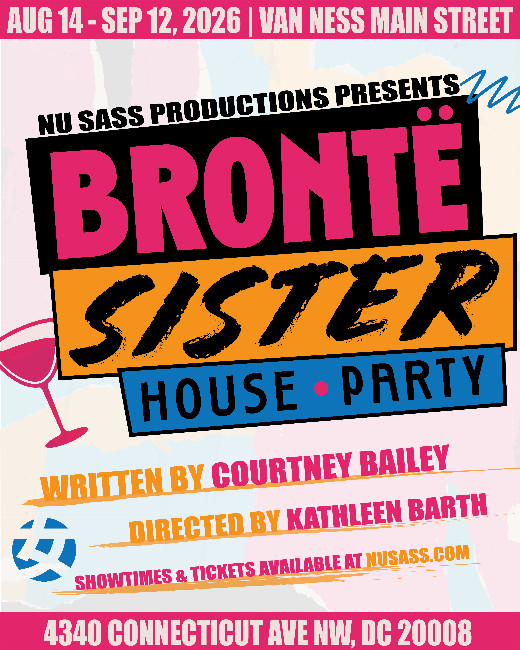
Brontë Sister House Party Van Ness Main Street (8/14-9/12) |

|
Rockville Musical Theatre presents "Caroline, or Change" F. Scott Fitzgerald Theatre (10/31-11/15) |

|
Natural History Mosaic Theater Company (1/21-2/07) |
|
Victorian Lyric Opera Company presents "Pirates of Penzance" F. Scott Fitzgerald Theatre (6/11-6/20) |
Reader Reviews
To post a comment, you must register and login.