


E.B. White's Charlotte's Web has remained a staple of children's literature since its publication in the '50s, illuminating themes of grief, friendship, and altruism. It has been adapted countless times for film, television, and, of course, the stage, an iteration of which is now playing at Adventure Theatre in Glen Echo.
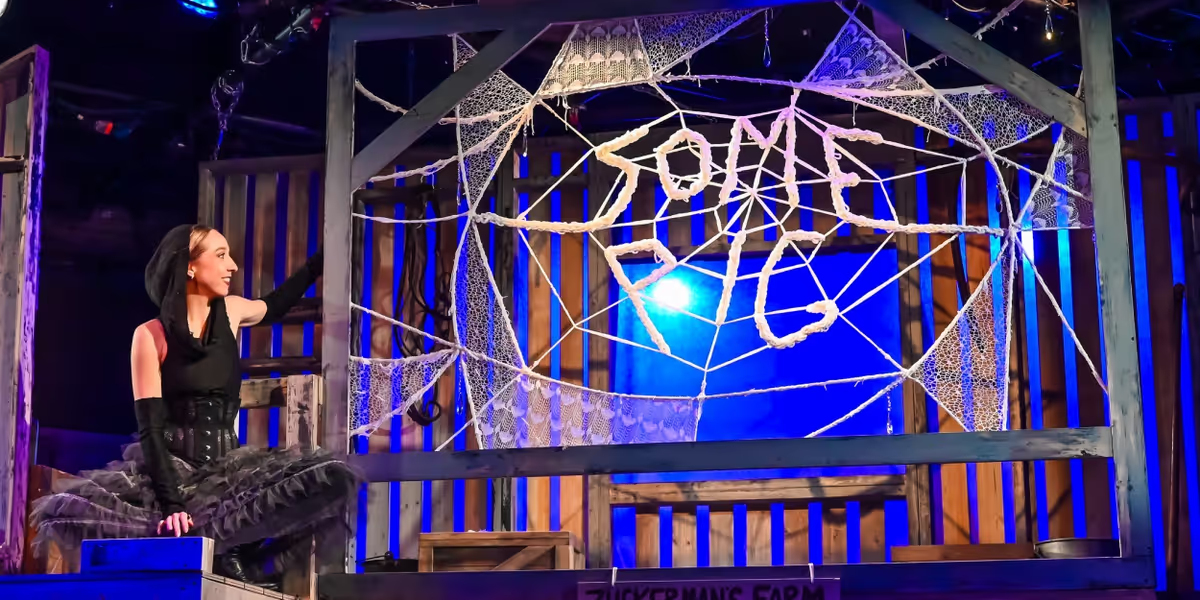
Upon entering the cozy theater at Glen Echo Park, audiences are immediately greeted with Megan Holden's set design—the interior of a barn with a loft. Hay bales and hay strewn across the floor evoke a lived-in feel, and slatted textures and wooden beams immerse the audience in the rural space. One's attention, however, can not help but immediately fixate on the loft, on which a massive spiderweb is displayed. The spider web rests in a large wooden frame and is made of rustic and homespun-looking yarn/textiles. There are varying patterns of lace in sections, and small dangling crystals, evoking perhaps dew, or how spiderwebs catch the sunlight at certain angles. It's a rather prepossessing image, and one used to great effect throughout the show. Those familiar with the story know that Charlotte (Irene Hamilton) stitches words into the web, and these words were presented in this web in a clever and charming way. Hamilton would remove the center of the web, revealing it to be a unique piece of knit or crochet work, and replace it with a similar web center, adorned with stitched words.
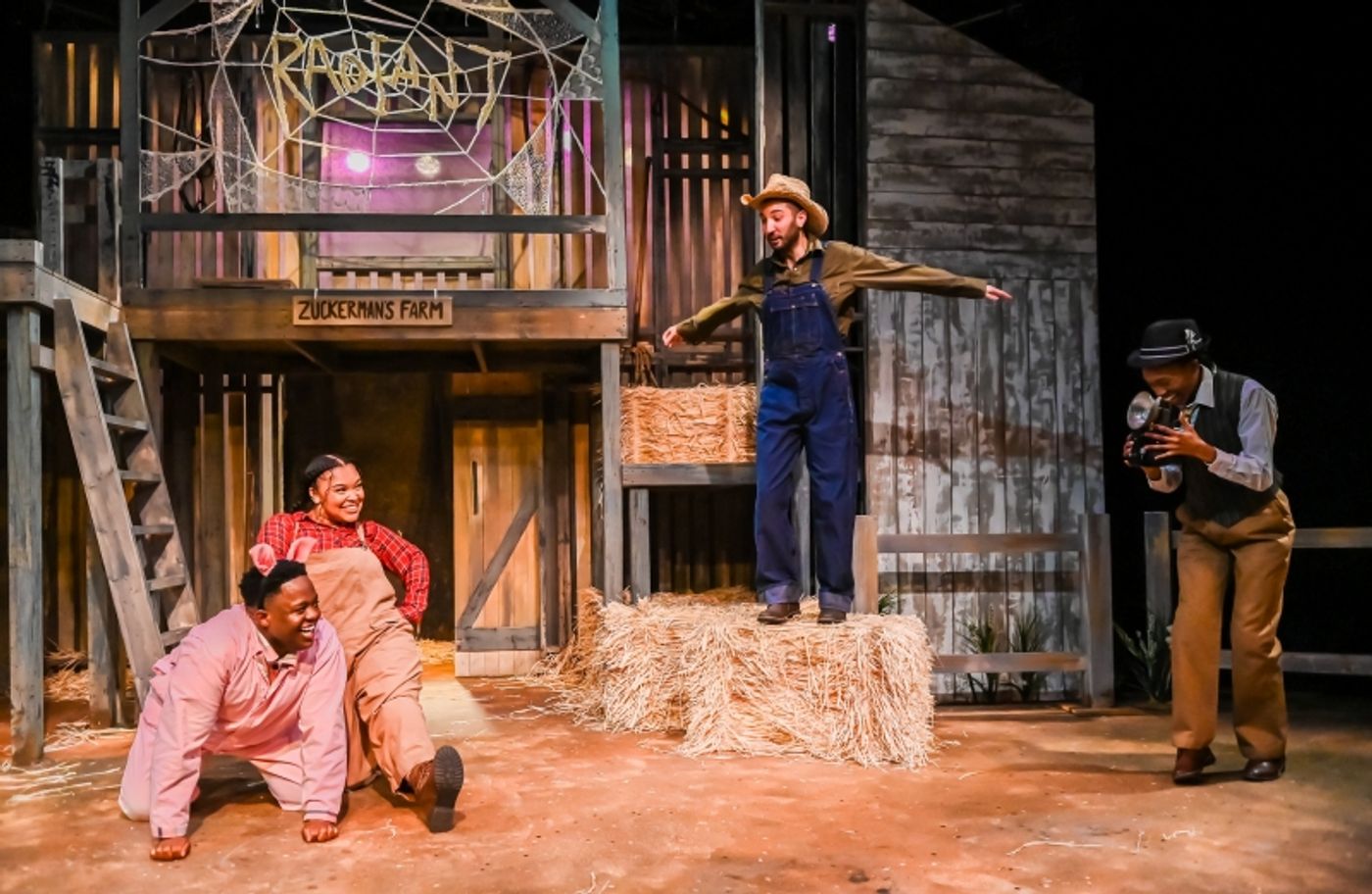
After audience members take in the set and the show starts, they are instantly greeted with another design aspect of the show—the costumes. Paris Francesca's animal costumes are endearing, effective, and compelling, and seemingly a continuation of her great work in Petite Rouge at Imagination Stage this past winter. They reference the biology and appearance of the animals, as well as the textures, patterns, and garments of a rural 1950s visual culture.
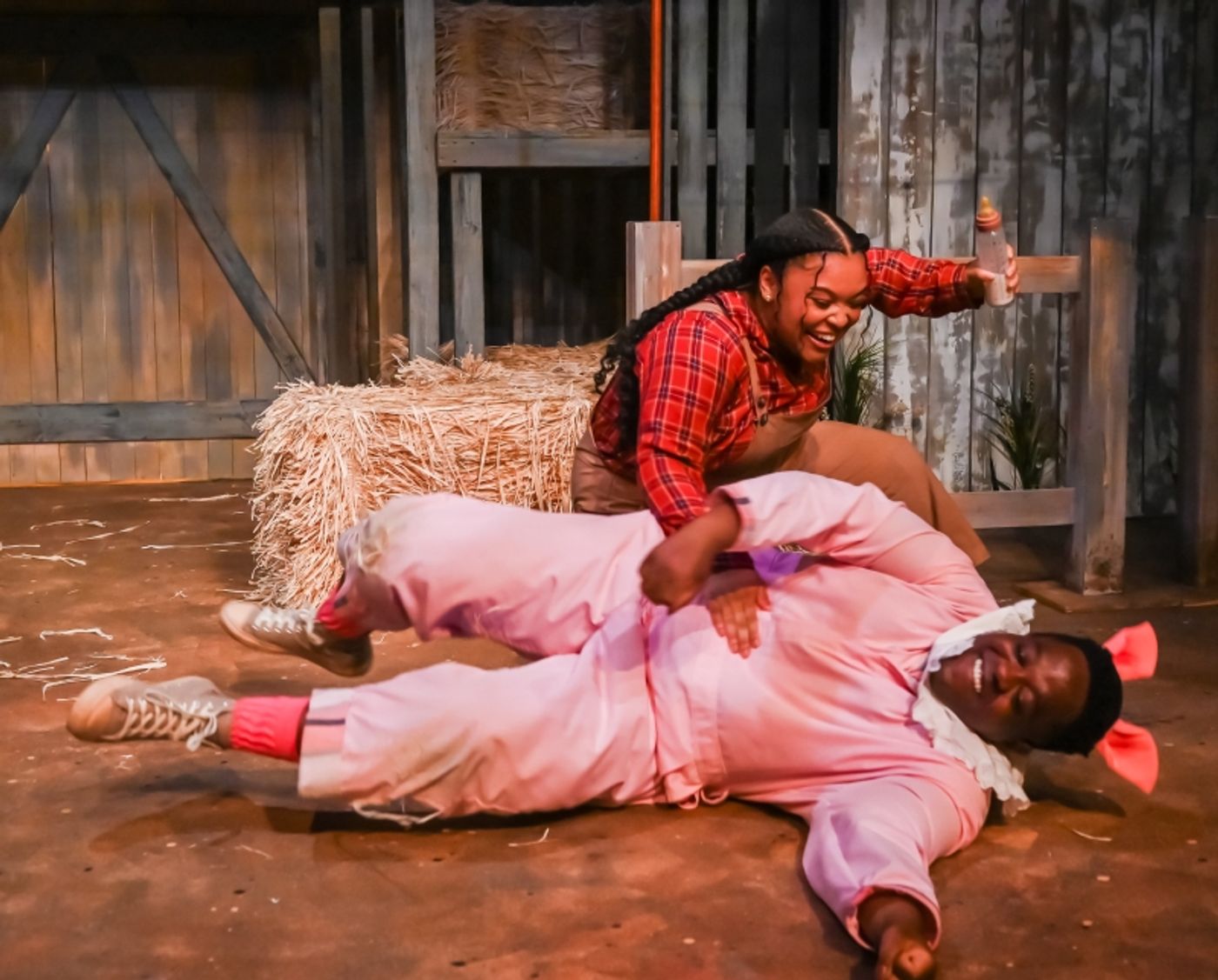
Wilbur (Deimoni Brewington) is the protagonist and the first animal theatergoers meet. The whole cast, but Brewington in particular, does a great job of balancing animal work and conventional acting. Clancey Yovanovich implements some clever directing to extend this balance in the show and highlight the script. The animals, when humans are around (save for perhaps Fern, played by Jordan Leah Embrack, another Petite Rouge alum), for the most part, do not speak or overly personify themselves. With each other, however, they stand on two feet, speak, and otherwise act "normally." It's a fun and satisfying implementation of the text.
Speaking of fun, a standout performance comes by way of Dylan Toms' Templeton. The sassy and selfish rat is a great foil to the more wholesome Wilbur and Charlotte, and Toms' physical comedy and expressions were the cause of many a young giggle, and even more mature guffaw.
The piece admirably tackles a lot of heavy concepts and themes for young theatergoers. Firstly, realizing one's own mortality. In a macabre manner, Wilbur is confronted by his imminent death throughout the show, reminded by those around him that he will be fattened up and eaten. It's scary and jarring and Wilbur struggles with his loss of innocence, forced to think about the future, and its end, for the first time—a traumatic experience all young people go through eventually.
He is, however, aided by Charlotte, who volunteers to save the young pig. Through Charlotte children are shown ideals of selflessness, sacrifice, and acts of love. Her role in saving Wilbur comes at great expense to herself, and is a good potential reagent for adults and their young ones to have conversations about caretaking, or even activism (and even further, activism through art).
Charlotte also presents the harsh reality of life cycles. She teaches Wilbur, and in turn theatergoers that life is fleeting. The show is very direct and explicit in reminding us that we all have limited time, and that one day we will die. As already mentioned, it's quite heavy, but not inappropriate for the young audiences, if anything, necessary. They learn that the beauty of life lies in its impermanence, and that perhaps if we help each other, and are good friends, we are able to lift ourselves up a bit in the grand scheme of things, and effect change for those who come after us. Perhaps more perceivable by the non-adolescent minds in the audience, there is a lot in the show about parenting. We are born and are (ideally) taken care of and raised by one or multiple adults, who make sacrifices for us and eventually die. We then do the same or similar for a younger generation, in some way or another, and eventually leave them to continue the cycle. It's appropriately bittersweet.
The climax of the show, and the highlight of these themes occur when Charlotte passes. She leaves her egg sack in the care of Wilbur and the barn animals. They eventually hatch, and in a whimsical and moving display of twinkling lights (designed by Lynn Joslin) that flow through the theater and out into the world. Much to the delight of Wilbur and the other farm animals, three hatchlings decide to stay. As Charlotte took care of Wilbur, so will Wilbur take care of her children.
The piece has the advantage of timeless themes, while also coming at a time where its lessons about kindness and allyship are apt and more than necessary. The fact that its an adaptation serves the production too, educators or parents and guardians can introduce their young ones to the literature, and get them excited about live theatre reciprocally. Additionally, most adults also grew up with the story in some way, and probably already feel warmly toward it in some way or another.
It's a heartwarming and bittersweet show, that for $25 is well worth the price. Information on tickets can be found at Adventure Theatre's website. The show runs through May 25th, and is around an hour long with no intermission. It is recommended for ages 4 and up.
Production photos by Alan Kayanan.

|
Misery Aldie Mill Historic Park (8/20-8/30) |
|
Macbeth Three Notch Theatre (8/06-8/15) |

|
No Exit by Jean-Paul Sartre ARTfactory (9/11-9/20) |

|
The Dinner Detective Murder Mystery Dinner Show The Dinner Detective Washington DC (9/12-9/12) |
|
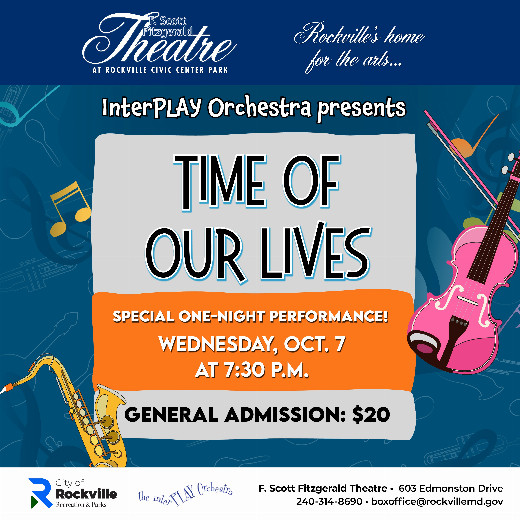
Interplay Orchestra presents "Time of Our Lives" F. Scott Fitzgerald Theatre (10/07-10/07) |
|
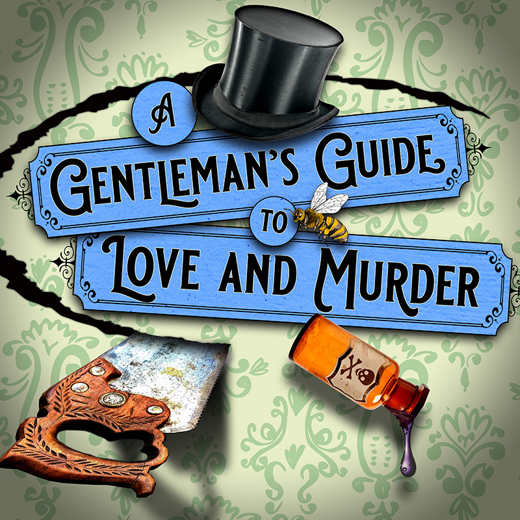
A Gentleman's Guide to Love and Murder Olney Theatre Center (7/02-8/23) |

|
Josh Groban Wolf Trap (8/22-8/22) |
|
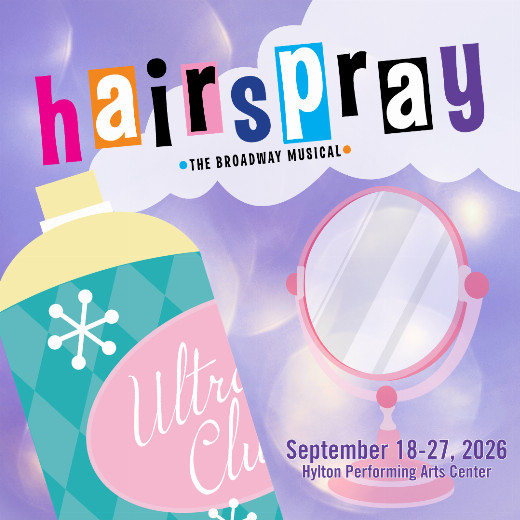
Hairspray Hylton Performing Arts Center (9/18-9/27) |

|
Hamlet Folger Shakespeare Library (3/02-4/11) |

|
Rockville Musical Theatre presents "Caroline, or Change" F. Scott Fitzgerald Theatre (10/31-11/15) |
Reader Reviews
To post a comment, you must register and login.