


Interview: Theatre Life with Elizabeth Bruce
The co-creator and co-host of the Creativists in Dialogue podcast on her literary and artistic lives and more.
.gif)
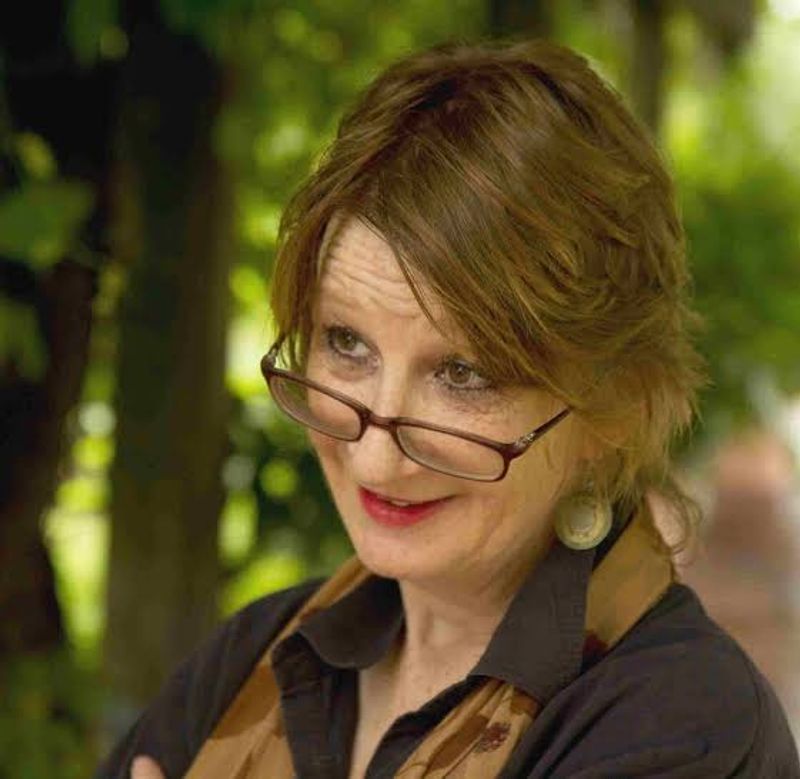
Today’s subject Elizabeth Bruce is currently living her theatre life as the co-host and co-creator of the Creativists in Dialogue podcast. A series that covers a variety of topics as they relate to creativity. The series can be heard on Substack and Spotify.
Elizabeth Bruce along with her creative and life partner Michael Oliver have been a part of the DC theatre and literary communities for many years now. Those of you from back in the day will remember their theatre company called Sanctuary Theatre Company. The company produced at Capital Fringe a number of times with such productions as Legal Tender (written by Elizabeth), Song of Myself, and Howl among others.
Ms. Bruce is also an accomplished author with a novel and a collection of short stories to her credit.
As if that were not enough, she is also an educator. She teaches a workshop entitled Acting for Writers and for many years she was helping to shape young minds as part of the staff of Centro Nia.
If You have listened to the Creativists in Dialogue podcast before, you know that Elizabeth’s warm cheery personality is the perfect compliment to Michael Oliver’s lovable curmudgeon personality which is why they are a great team on air and off.
Find your inner creativity and give a listen to the Creativists in Dialogue podcast featuring Michael Oliver and Elizabeth Bruce. She is an artist who truly lives her theatre and literary lives to the fullest.
At what age did you have an idea that you were going to do something creative for your career?
Well, as a small-town Texas girl growing up in the 1950s and 60s, I began—even as a child—dreaming of living an artistic life. As a kid, I hadn’t really picked out an artistic discipline, though I was first drawn to visual art. I was always a voracious reader, and loved stories about adventurous, independent girls and women, like Pippi Longstocking, Jo in Little Women, Nellie Bly the Reporter, and later stories and films about Paris in the 1920s, etc. As an emerging hippie teenager in the 1960s, I was glued to the Dick Cavett and David Frost Shows on late night TV and Pauline Kael’s film reviews in The New Yorker, and whatever other contemporary cultural content I could get my hands on in small town Texas. All I ever really wanted was to go out into the wide world as a creative person, to live and work among other bohemian artists and intellectuals, and to enjoy the respect of my peers. I never wanted to make a lot of money or have a big house or fancy clothes or such—and I must say I’ve been wildly successful at not making a lot of money!
I was paralyzingly shy until I was at least 16—even though as a child I was the devoted sidekick of my best friend Gladys, who was the wildest kid in town, and we were definitely minor delinquents. I really didn’t get over my shyness until I was 25 and I got into theatre as an actor when I was living in Colorado. And then my artistic life really began, and the rest, as they say, is history.
Where did you receive your training?
I have a what I call my “sweet little BA in English” from a great liberal arts college (The Colorado College), which has enriched my life immeasurably. I have also taken a motherlode of continuing education or professional development courses in acting, theatre management, creative writing, child development, arts education, community organizing, non-profit management, and other areas of expertise. Among the most noteworthy of these were my post-baccalaureate theatre studies at Metropolitan State College in Denver, as well as workshops with an Actors’ Co-op in Denver, writing courses at the Writers’ Center in Bethesda, and fiction writing seminars or residencies at university or literary settings with esteemed authors Richard Bausch, John McNally, Liam Callanan, the late Lee K. Abbott, and Janet Peery. I also worked with Ernie Joselovitz at DC’s Playwrights Forum. Mostly, though, I garnered my theatre or literary skills by just doing it.
Michael—aka Robert Michael Oliver, the podcast’s Co-Host and Co-Creator, has two terminal degrees—an MFA in Directing from Virginia Tech and a PhD in Theatre and Performance Studies from the University of Maryland, as well as a BA in English and Theatre also from Virginia Tech. He is a lifelong humanities and theatre educator who’s created and taught scores of courses at the secondary school and university levels. He too has decades of professional development and continuing education in theatre, poetry, playwrighting, multiple intelligence theory, Essential School Pedagogy, brain development, and other educational fields. He also worked with Ernie Joselovitz’ Playwrights’ Forum, and most recently he did a screenplay writing course with The Sundance Institute.
What was the impulse for beginning the Creativists in Dialogue podcast?
Michael and I are longtime artistic as well as personal life partners, from our Sanctuary Theatre days onward, and we began discussing how we could nurture both our own and the larger community’s embrace of creativity as common ground in our increasingly fractured world.
We believe that creativity is a vital force in everyone’s lives, and we wanted to nurture that vital force and the willingness it brings to change and create anew.
As I’m sure you would agree, the creative process—challenging as it is—can be profoundly healing; our Creativists in Dialogue podcast emphatically asserts that we all have creative dimensions within ourselves, be it in a discipline traditionally recognized as “art,” or in a huge variety of other dimensions, be it parenting, education, gardening, healing, business, chess, Double Dutch, etc.
We have been extremely fortunate to have received funding from the DC Commission on the Arts & Humanities for all three of our four seasons, and from HumanitiesDC for our “Theatre in Community” season. We are also so grateful to all of our paid subscribers, as well as our free subscribers, and to our small but mighty current and previous Production Team of Translation Editor Morgan Musselman, and previous Social Media Manager Erinn Dumas of Dumas83.
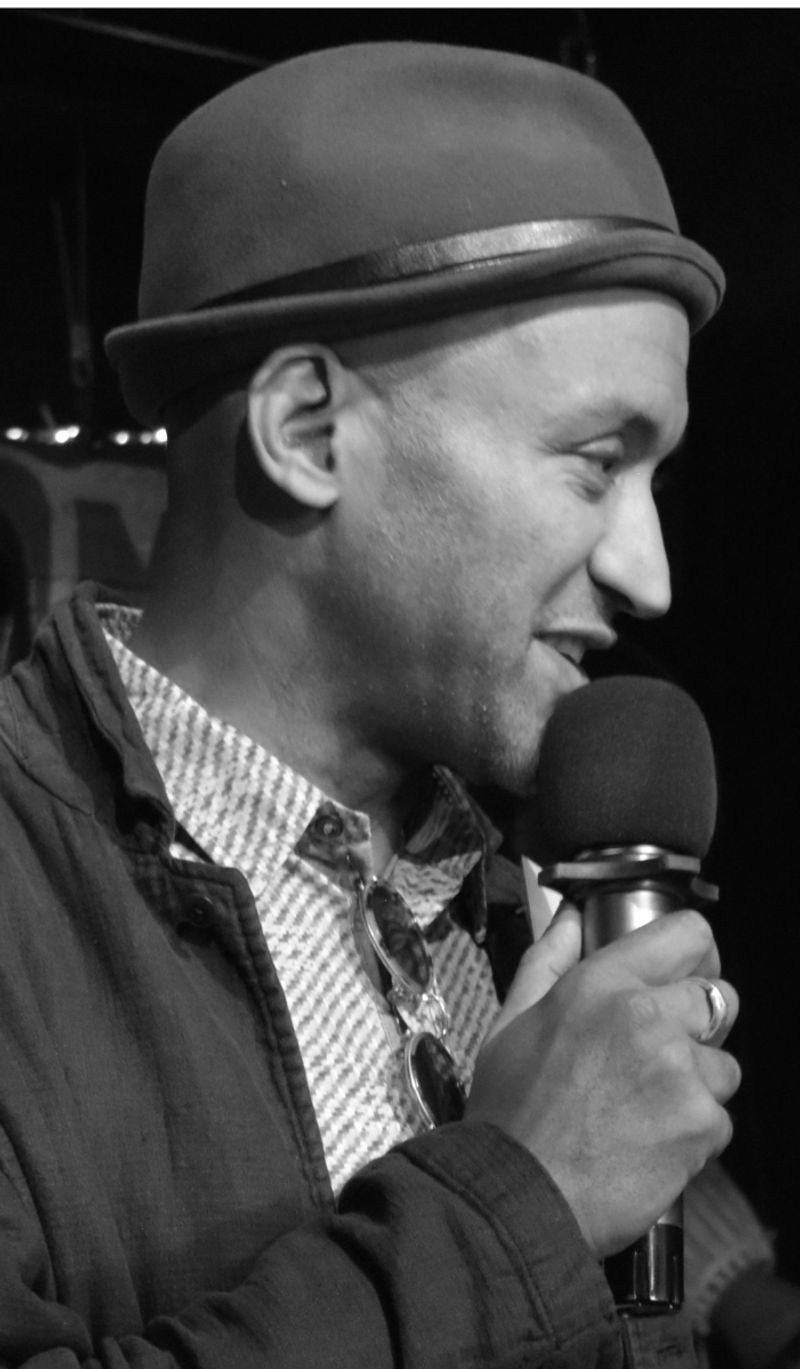
Photo by Alan Wallace Design.
Each season of the podcast has a different theme. How do you decide what those will be?
We’re in our 4th Season: Season One launched the Creativists in Dialogue podcast, Season Two focused on “Theatre in Community” and did a deep dive into the history of DC from 1970 to @2019. Season Three focused on “Innovators, Artists & Solutions,” and Season Four focuses on “Creativity & Difference.”
Michael and I spend a lot of time dialoguing about where we’d like our conversations with interviewees to go next. We’re very influenced by insights from previous interviewees, community members, and colleagues. We try to zero in on nuanced dimensions of our larger explorations of how creativity has shaped the lives of interviewees, and the potential creativity has to nurture and sustain equilibrium for individuals and the larger society. We also think about who we’d love to interview, people with different kinds of experiences and insights that bring unique perspectives. We’re committed to dialoguing with people from all walks of life who have as many different perspectives as possible.
You ran Sanctuary Theatre Company for many years. A lot of the independent theatre companies have gone away over the last few years. If you were just starting Sanctuary Theatre Company up today, do you think it would be harder to sustain than it was years ago?
Oh, I think it would be much, much harder today than it was in the early to late 1980s in DC. So much is different.
At the raw financial level, the costs of space, rent, cast and crew, design elements, etc., have exploded. When we started Sanctuary in 1983, we got free space for a year in this desperately poor inner-city church in exchange for doing some fundraisers. And even when the theatre began paying rent, it wasn’t a lot of money. Michael and I lived in a junker, basement apartment in Adams Morgan that cost $300 a month.
DC had not yet become an Equity town so, while we did have some Equity actors who worked on contract, we mostly paid the cast and crew small stipends from box office, grants, or donations.
But probably as important—maybe more important—was that the theatrical aesthetic in DC had not yet become so monied, so high-gloss, so 5-star hotel-ish as it now. You could still do what Peter Brook called “Rough Theatre” or something similar to what Grotowski called “Poor Theatre” and be taken seriously artistically, at least by some portion of the arts community. You didn’t have to have a $100,000 set, with a rotating turntable and state-of-the-art projections, etc.
I mean, we were in this poor church, sharing our space with the late Mitch Snyder’s CCNV—the Community for Creative Nonviolence’s “Free Food Store,” which, back in the 80s meant these really radical advocates against homelessness dumpster dove for food from behind the Safeways and brought all this wilting lettuce into the old sanctuary of the old church—which was also our theatre space—and gave it away to desperately poor people who lined up every Tuesday and Saturday.
We also shared the space with an Ethiopian Coptic Church that used a lot of incense on Sundays. There was the Latin Connection Boxing Club in the basement—Maurice Blocker trained in that building. Then there was a charismatic, Spanish-language Christian congregation that spoke in tongues. The church was a home base for Central American refugees fleeing the civil wars in El Salvador, Guatemala, etc., The church also rented out its Fellowship Hall for parties and celebrations, so sometimes it was really noisy. Sometimes there were homeless people sleeping in the choir loft of the church’s main sanctuary—which was next to our dressing room.
There was no air conditioning in the theatre, and we had to install a toilet opening night in the one vaguely First World bathroom in the entire church. Our lighting board was this old, giant, super heavy autotransformer that was donated by Arena Stage.
During the day, it was pretty quiet; the early childhood learning center, which became CentroNía, kept things pretty orderly, but at night it was wild. There was reggae music pumping in from next door, and street people who showed up during rehearsals or performances. One time in the neighborhood some guy chopped off some other guy’s hand with a machete, and there was a huge search on Columbia Road for the missing hand. Outside there was always “the ambient noise of Adams Morgan”—we had to call ourselves an Adams Morgan theatre because nobody would cross 16th Street into Columbia Heights in those days.
We rented out our space a lot to other theatre companies or groups of actors or music producers—the space became known for the “straight edge” organization Positive Force’s punk rock concerts that happened there late at night.
Initially, during the first Reagan Administration, we called ourselves “A Theatre of Conscience” even though everyone was horrified that we’d actually identify ourselves so politically. Then we transitioned to being a “transcultural theatre.” From the very beginning, we cast every show non-traditionally—even before that was a term—and then we began producing shows by master playwrights from around the world whose work had not been widely produced in the English-speaking North America.
But somehow, even with all these challenges, we were still able to produce serious theatre, to be reviewed by the Washington Post and City Paper and other review sites; we were interviewed on NPR’s Morning Edition and even got picked up by the Associate Press for our production of Egyptian playwright Tawfiq al-Hakim’s The Tree Climber. Future Nobel Laureate Derek Walcott came down to see our production of his “Ti Jean and His Brothers.” Author William Hinton, whose world-famous book Fanshen about the Chinese Revolution was adapted into a play by David Hare, invited us to visit his farm in Pennsylvania. We were funded by the DC Commission on the Arts & Humanities, the Cafritz Foundation, and the Common Capital Foundation. We were members of the League of Washington Theatres, and the Helen Hayes Awards once they began, and we were good buddies with most of the other small theatres in DC.
However, I absolutely do NOT think a small theatre in DC could produce under such austere, developing-world-like circumstances today and be taken seriously. DC has become ten times more the “bourgeois town,” to quote the late, great blues musician Lead Belly (nee: Huddie William Ledbetter). Audiences—and theatre folk—expect a level of pristine performance conditions and creature comforts when they attend—or work in—a theatre.
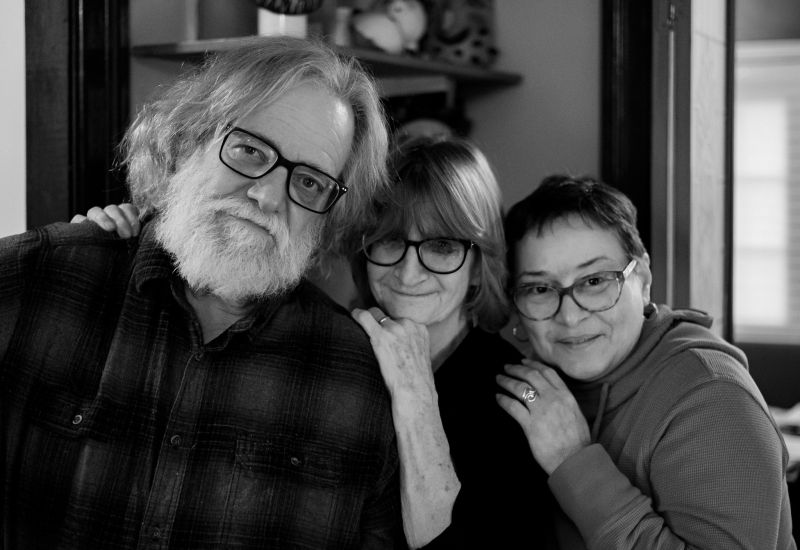
past interviewee and guest co-host Naomi Ayala.
Photo by Truth Thomas.
What does the Creativists in Dialogue podcast have in store for its listeners this season?
We’re continuing our Season 4 “Creativity & Difference” series in which we interview individuals and organizations about how different perspectives, insights, experiences, etc., shape one’s creativity and endeavors. We’ve interviewed such esteemed authors as Marita Golden (with Co-Host Dine Watson) and Truth Thomas (with Co-Host Naomi Ayala) and have interviews about the resurgence of the Irish language, the addiction recovery movement, stand-up comedy, spy craft, psychiatry, and other areas of interest. I’ve also interviewed Michael, and he’s also interviewed me about our own creative journeys.
We’re applying for additional funding for Season 5: “Creativity Across DC Generations,” which will be a series of interviews (also with notable co-hosts) with native and long-term Washingtonians about how a host of pivotal events in local history affected them and their creative and life journeys. So, check us out at either Creativists.Substack.com or Creativists in Dialogue Podcast | Podcast on Spotify, available free or as a paid subscription.
Besides the podcast, are you working on any other projects?
Well, as you know, Michael and I are both creative writers. My story collection, Universally Adored & Other One Dollar Stories, was recently published by the Athens, Greece-based Vine Leaves Press so I’m still promoting it and trying to sell books. I’m also closing in on a first draft of a novel-in-progress entitled “I Will Read Ashes to You,” that’s set in a fictitious diner in the Gulf Coast petrochemical town of Texas City (which is next to my hometown) in 1980, and deals with the lingering effects of the horrific 1947 Texas City Disaster, which is still the deadliest industrial accident in US history. This novel brings together about 10 characters from my recent story collection and plunks them down together at this diner. The author-read audiobook of my debut novel, And Silent Left the Place, is now available on Audible, Spotify, and elsewhere. I am also working on a chapbook of flash fiction/prose poems that includes an illustration collaboration with a longtime visual artist friend Kevin Oehler. And, come late August I’m going off to the Virginia Center for the Creative Arts/VCCA for a short residency.
Michael has multiple creative writing projects going, including shopping around his absurdist novel manuscript, “The Green Man in the White House,” which is about an old man who starts turning green. He’s also pitching his latest book of poetry, “Prison Memoir,” about growing up on a maximum-security prison farm in central Virginia. He also recently published a book of poetry, The Dark Diary: in 27 refracted moments (Finishing Line Press), and is working on a novella that draws on his years of teaching high school.
Plus, of course, we have our happy lives as the elders of two awesome adult children and their partners, and our new baby granddaughter. As well as staying in touch with other extended family members, doing some home improvements, and trying to stay healthy.
Theatre Life logo designed by Kevin Laughon.
Sign up for all the news on the Fall season, discounts & more...
|
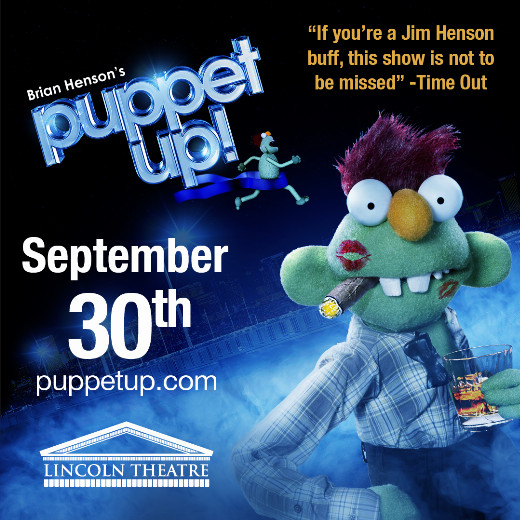
Brian Henson's Puppet Up! Lincoln Theatre (9/30-9/30) |

|
Mr. Burns: A Post-Electric Play Clarice Smith Performing Arts Center (10/09-10/18) |
|
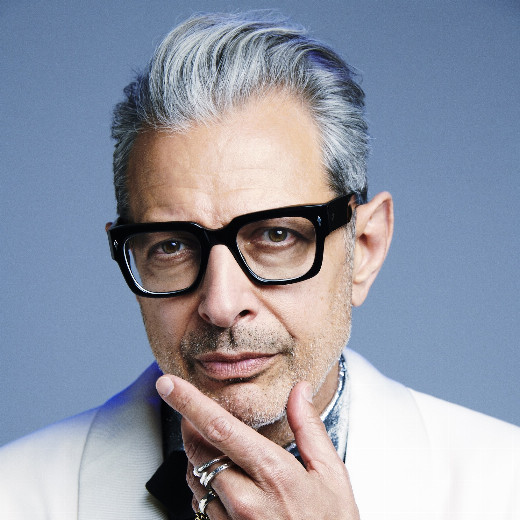
Special Event: ARTS By George!: Jeff Goldblum and the Mildred Snitzer Orchestra Center for the Arts (10/03-10/03) |
|
The Score Shakespeare Theatre Company (9/11-10/25) |
|
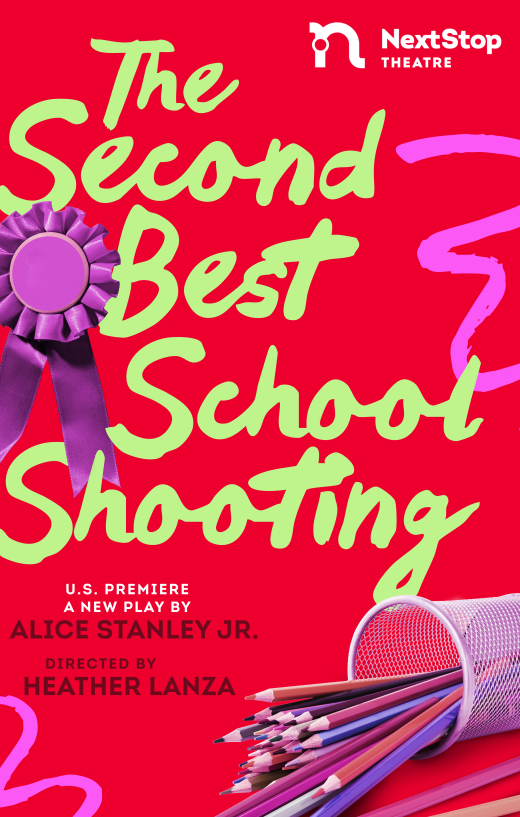
The Second-Best School Shooting NextStop Theatre (9/17-10/11) |

|
Coming to America: An Immigrant Cabaret ExPats Theatre (9/30-10/18) |
|
Monsters of the Villa Diodati Creative Cauldron (10/08-11/01) |

|
Some Like It Hot Bernard Family Theatre, Olney Theatre Center (9/18-11/08) |
|
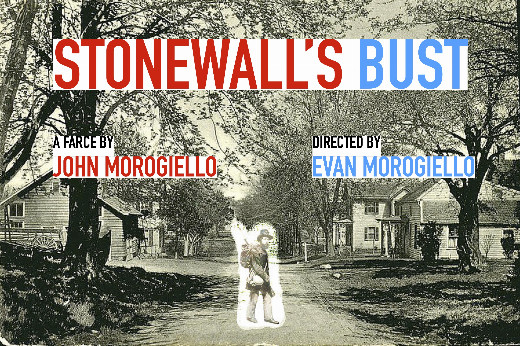
Stonewall's Bust The Writers Center (10/09-10/25) |
|
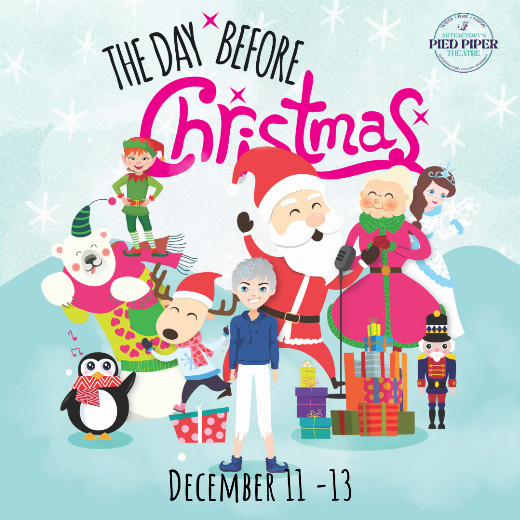
The Day Before Christmas ARTfactory (12/11-12/13) |
