


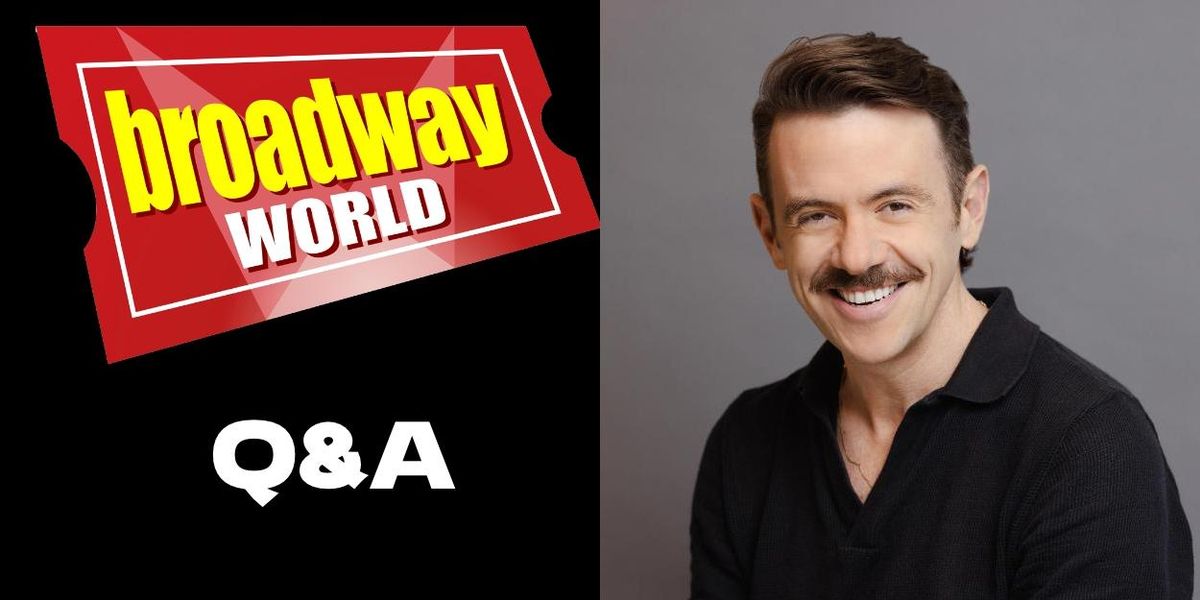
BWW Q&A: Nick Westrate of THE WILD DUCK at Shakespeare Theatre Company
The production runs at STC’s Klein Theatre in Washington, D.C., from October 18 through November 16.
 Click for Tickets!
Shakespeare Theatre Company will present Henrik Ibsen’s “The Wild Duck,” adapted by David Eldridge and directed by STC Artistic Director Simon Godwin, in association with Theatre for a New Audience. The production runs at STC’s Klein Theatre in Washington, D.C., from October 18 through November 16.
Nick Westrate plays Hjalmar Ekdal. The cast also features Melanie Field (Gina Ekdal), Alex Hurt (Gregers Werle), Robert Stanton (Håkon Werle), David Patrick Kelly (Old Ekdal), Matthew Saldivar (Relling/Captain Balle), Katie Broad (Pettersen), Mahira Kakkar (Mrs. Sørby), Bobby Plasencia (Mr. Flor), Maaike Laanstra-Corn (Hedvig), and Alexander Sovronsky (Jensen).
Westrate returns to STC after starring in “Frankenstein,” with prior stage credits on Broadway including “Bernhardt/Hamlet,” “Casa Valentina,” and “A Moon for the Misbegotten.” His screen work includes “Turn: Washington’s Spies” and “Mildred Pierce,” and he is a Juilliard graduate and NYTW Usual Suspect. In the conversation below, Westrate discusses approaching Hjalmar’s contradictions, the play’s open questions, and collaborating with the ensemble on this new STC/TFANA production.
What drew you to the role of Hjalmar Ekdal in "The Wild Duck"?
Simon Godwin introduced me to "The Wild Duck." I had never read it or seen it before. What interested me in Hjalmar are all of his contradictions. He's caring, rash, creative, depressive, artistic, stubborn — I had no idea what was driving him. He was like a puzzle to me that I knew I couldn’t begin to understand until I started playing the scenes with other actors.
What has been the most challenging aspect of this role?
The most challenging aspect of the play is how much is left unexplained by Ibsen. He gives these clues to the past, but leaves oceans unsaid. It is challenging but also fertile for the actor imagination. There is so much history between the characters, and that gives us so much terrain to roam with each other. At first this was daunting, but now it is such a gift.
How would you describe the dynamic between Hjalmar and Gregers, and how does Gregers influence Hjalmar?
Gregers and Hjalmar are childhood friends. They hold each other in that way that we do with our earliest and longest friends: with reverence, joy and an almost innate trust. It is that trust that allows Gregers to change the coarse of Hjalmar’s life forever.
Is this your first Ibsen, and what do you find most interesting or unique about the playwright’s work?
This is my first professional Ibsen, though I did his play "Rosmersholm" while a student at Juilliard. These plays are icebergs. You can only see the very tip, but there is a continent of ice beneath the surface. So much is unsaid, and the history of the characters is so deep, rich, and left by Ibsen to be explored and created by the actors. There is always more to find, and so we get to keep exploring every single performance, and it only gets richer. You could perform this play for 10 years and still never get to the bottom of what each of them are going through.
What has been the highlight of playing this role in this production, so far?
The highlight of playing Hjalmar is getting to collaborate with this ensemble of actors. The cast Simon assembled is filled with the most remarkable artists. I love learning from them daily.
You’re returning to STC after last season’s “Frankenstein.” Do you find any similarities or differences in these two characters?
Hjalmar and Victor Frankenstein are both inventors! Creators! Scientists and artists! But they actually couldn’t be more different. The main difference being that Victor was the catalyst in "Frankenstein," whereas Hjalmar is really acted upon in "The Wild Duck." I think dramaturgically, Victor Frankenstein has more in common with Gregers Werle.
How do you expect D.C. audiences to receive the show, compared to the run in New York?
I hope audiences in DC enjoy and connect to the show as much as folks in New York did. I don’t find a big difference in audiences geographically. When you’re telling a story as universal as this one, all people can be moved by it deeply.
Why is “The Wild Duck” a show audiences should see?
This play should be seen because it is the most incredible story: you never know where it is going. It’s funny, and mysterious, tragic and comic. It’s about family and class and creation and ambition and money and fraud and nature and love and sex and growing older. It keeps you guessing constantly- and moves you emotionally in ways you’d never expect. This is why it is considered one of the greatest plays ever written. It is Ibsen’s masterpiece because it is his most human, domestic drama. The Ekdals could be anyone’s family— and that’s why the play has continued to move audiences for almost 150 years.
Sign up for all the news on the Summer season, discounts & more...

|
Brian Henson's Puppet Up! Lincoln Theatre (9/30-9/30) |
|
GARBO: EL ACTOR QUE SAVÓ AL MUNDO (Garbo: The Actor Who Saved The World) GALA Hispanic Theatre (9/03-9/27) |

|
Mr. Burns: A Post-Electric Play Clarice Smith Performing Arts Center (10/09-10/18) |
|
Special Event: ARTS By George!: Jeff Goldblum and the Mildred Snitzer Orchestra Center for the Arts (10/03-10/03) |

|
The Second-Best School Shooting NextStop Theatre (9/17-10/11) |

|
Coming to America: An Immigrant Cabaret ExPats Theatre (9/30-10/18) |

|
Some Like It Hot Bernard Family Theatre, Olney Theatre Center (9/18-11/08) |

|
Stonewall's Bust The Writers Center (10/09-10/25) |
|
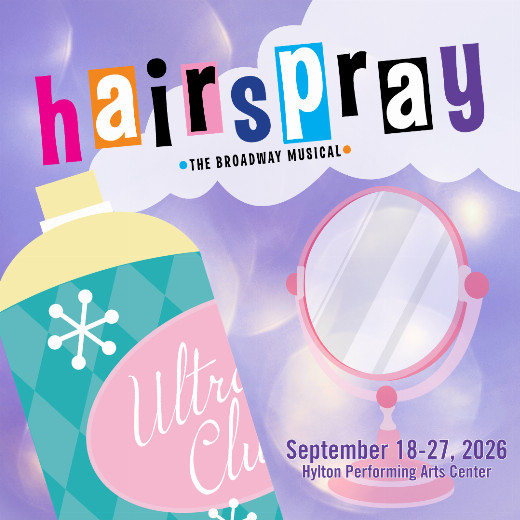
Hairspray Hylton Performing Arts Center (9/18-9/27) |

|
Sleepy Hollow Olney Theatre Center (10/07-11/01) |
