


BWW Q&A: Rob Colletti Talks GUYS AND DOLLS at Shakespeare Theatre Company
Performances run December 2nd through January 4th, 2025.
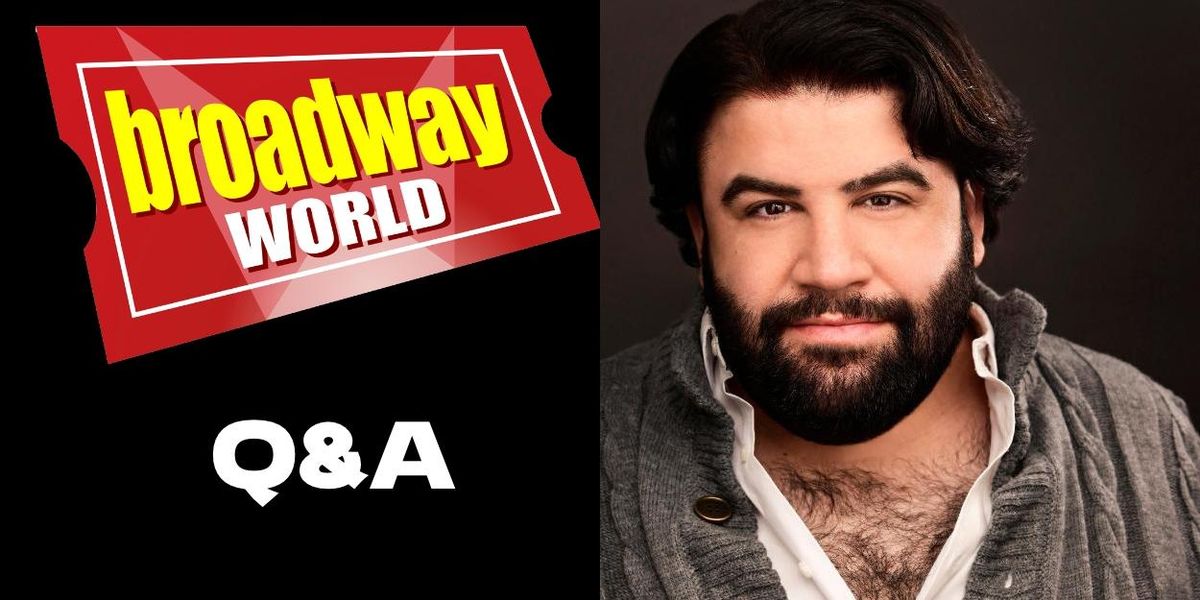
Rob Colletti makes his Shakespeare Theatre Company debut as Nathan Detroit, the loveable gambler in Guys and Dolls, on the hunt for a place to host the "oldest established permanent floating crap game in New York."
Colletti originated the role of Lester Bangs in the Broadway musical adaptation of Almost Famous, and toured as the lead in National tours of Book of Mormon and School of Rock.
Guys and Dolls is a classic American musical with themes of generosity and redemption, perfect for a family friendly holiday spectacular.
The musical is directed by Washington National Opera director Francesa Zambello.
The oldest established permanent floating crap game in New York just got busted and Nathan Detroit needs cold hard cash to get it up and running again. Enter high-roller Sky Masterson, who Nathan wagers can’t get a date with the straightlaced Sarah Brown, a Save-A-Soul missionary trying to rescue them all from sin. Directed by Washington National Opera Artistic Director Francesca Zambello and choreographed by Joshua Bergasse (Smash, Bull Durham), dance the night away to “Luck Be a Lady,” “Sit Down, You’re Rockin’ the Boat,” “A Bushel and a Peck,” and more classic tunes in the must-see show of the holiday season.
How does it feel to make your debut with the Shakespeare Theatre Company?
So exciting! I’m incredibly honored to get an opportunity to play such an iconic role at such a storied theatre, specifically one with such a fantastic reputation for doing some of the best stage work in the nation. From the rehearsal hall to Harman Hall, you can feel the history and prestige, cultivating some of the country’s most bold and celebrated productions ever produced. STC is truly the pinnacle company in the United States for putting up classic theatre and they’re leaving no stone unturned in continuing that tradition for the biggest musical they’ve ever produced in the history of the theatre!
Can you tell us a bit about your character, Nathan Detroit, in Guys and Dolls?
Nathan is a lot of things… he’s a very anxious person, he’s a loving partner, he’s forgetful and can be a bit scatterbrained at times, though a lot of that comes from his desire to be a people pleaser, which he strives to do at length (particularly for Adelaide and his closest confidants). And despite being an outlaw, he’s a very honorable man, even if he falls short of his own standards from time to time. He stands by his word and risks his own personal safety for those in his community.
And as most people probably know him from pop culture, he can be read as a bit of a goofball too. But I think it’s worth noting that above all of those things… more than anything else, he’s a revolutionary. He really leads a life of complete and utter honesty, totally true to who he wants to be. He always acts in a way that gets him what he wants in his life, even if that sometimes means he gambles with his own personal life by proxy—or even by osmosis. And he fights for his love with Adelaide even if he doesn’t fully understand how to quantify or explain it. Despite his flaws, he’s an incredibly lovable and caring person who leads with his heart and shows in the story that just because someone lives outside of the law doesn’t mean that they have to abandon their integrity.
How have you prepared for the role of a lovable gambler?
That’s sort of the rub, isn’t it?! He’s written that way for a reason. I spent a great deal of time working with our intrepid director Francesca Zambello to ensure that we let the material inform how he is portrayed in our production. By definition, yes: he is a gambler, and he acts in a way that makes him lovable.
And we came into this production with those elements of his character at the forefront, but we also were in complete agreement that playing into the tropes of this character—particularly when it comes to how he is historically viewed when it comes to relationships between men and women—would be extremely detrimental to telling this story the way we want to tell it: for a modern audience and through a lens of renewed understanding on how this character can be portrayed. Nathan isn’t just a smart guy, he’s inherently good. Ironically, he accidentally becomes the moral compass for the entire show. Historically and unilaterally, most productions of “Guys and Dolls” utilize archaic, outdated humor to paint Nathan as a ne’er-do-well who only succumbs to marriage because he’s afraid to be alone, which—while can make for some decent sight gags in performance—completely misses the chance to explore his depths as a human.
It’s very easy to overlook his neuroses as authentic and just play for laughs, but the humor is in the text. My job as an actor is to bring the most authentic version of Nathan to the story, and in our production, he truly loves Adelaide and fights for her as thoroughly as he fears the commitment that attaches itself to the act of marriage. And that’s where we’ve decided to divert from history in our analysis of the character and the story. Rather than play into that lazy allegory, we are creating a Nathan who is simply fighting his own demons rather than Adelaide.
We contextualize this decision by making the distinction that Nathan isn’t avoiding an advancement in his relationship with Adelaide because he actually doesn’t want to marry her, he’s simply against the institution of marriage as an act of defiance to the society that refuses to accept him for who he is. As I said before, he’s a revolutionary. He sees the world differently than most. To him, signing a legal document is almost a betrayal of his way of life. It has absolutely nothing to do with his feelings about Adelaide.
In fact, that’s the most clear way we could justify as storytellers that he would stay with and fight for Adelaide even after finding out that she’s been lying about him to her mother for years. There’s simply no justification for playing into the clichés of the past to get some extra laughs if it ignores the humanity that he and Adelaide have to represent for their love story to have stakes—and for us to root for them at all.
Otherwise it’s just another series of corny jokes about how men secretly hate their wives and only get married for appearances. Nathan wouldn’t sing “Sue Me” and declare his love for Adelaide over and over when she’s finally offering him a way out if he actually wanted the relationship to end. He loves her more than anything and we are centering his journey around him coming to that realization so that we feel his pain and celebrate their various reconciliations when they happen throughout the story.
How does your character fit into the overall story of Guys and Dolls?
This is a great question, but it’s honestly dependent upon the interpreter. As I said, there are plenty of people who see Nathan as a joke, and use him solely for that purpose. Of course Damon Runyon, Frank Loesser, Jo Swerling, and Abe Burrows wrote an incredibly, timeless piece that is interwoven with copious layers of humor, heartbreak, and everything in between. But Nathan is so often only seen on the humor end of that spectrum.
There is so much reason to read his story as flirting with tragedy, and when he’s viewed in that context, the stakes around the story are that much more engaging. That’s why we see Nathan in our production as an exploration of this story’s true pathos. In a way, he’s provides the real heart of our heroes’ respective journeys. He’s also the one who shows Sky what love can really do for someone when they are lucky enough to have it in their lives. There should be a sense of urgency in Nathan’s story, otherwise we have difficulty feeling it for Sky when he realizes what Sarah really means to him.
This helps us really feel a sense of fear that if the mission closes, it’s not just another closed door in New York City where another business will pop up… it’s our heroine’s journey having meaning and purpose. We should really want to make sure it matters to the audience that the mission stays open, even as these gamblers take the focus away from it in Act 2. Otherwise, it becomes more about the crap game than the whole, overarching story coming together. Furthermore, we should also really fear what Lieutenant Brannigan and Big Jule bring to the stasis of our world.
If the corrupt Brannigan, who’s clearly in the pockets of these gamblers, succeeds at shutting down the game now that he’s no longer getting money of the top from the struggling Nathan, he’s not just betraying the system he partakes in himself, he’s upending the ecosystem of Nathan’s livelihood and the friends we meet along the way who also benefit from it. Likewise, if Big Jule comes into the picture and robs everyone blind—including Nathan—he would break down an establishment that the audience should want to see survive. If they are both seen as extensions of witty commentary on the time, we’re missing out on the fact that they should serve as the nemesis for the story we’re witnessing.
They are the villains of the story (even if they eventually come to their own versions of redemption) and they should feel as such. All this to say, Nathan plays a pivotal role in keeping those high stakes afloat on one side of the story arc until it runs into Sarah and Sky’s arc at the end of Act 2. Nathan, who is a criminal by all accounts, can’t just be some patsy we use to get laughs while we look down over our noses at his life choices. We need to see him as a hero in this community and this story so that we root for Lt. Brannigan to fail at his attempt to stab Nathan and the Crap Shooter Crew in the back.
And also that we root for Big Jule to leave the community he attempts to overrun in a better state than when we find it at the start of the story. And this goes back to my point about Nathan’s integrity and humanity needing to be the true heart of the story. If he doesn’t lead by example (even if just by accident at times), Sky doesn’t get a chance at love, Sarah doesn’t realize she can actually change lives for the better in the one place she’s told all along she’ll never be able to succeed, and Adelaide doesn’t get to see the positive impact she’s had on this lost soul for all these years and help him to become the best version of himself.
Unironically, Nathan is as affable as he is honorable, and when he’s treated as such, the humanity of all the characters shines through, which allows us to tell the most meaningful, honest, and (perhaps most important) interesting version of the story.
What are some unique challenges you've faced while preparing for this role?
Aside from avoiding the aforementioned tropes and clichés that are easily overused when portraying someone who everyone just reads as goofy, we (Francesca and I) wanted to make sure he didn’t come across as a clown who is doomed to fail, then accidentally stumbles into a happy ending with little or no autonomy.
Nathan should really struggle to come to balance everyone’s happiness and to come to his own realizations, otherwise he comes across as insincere at best or disingenuous at worst. And perhaps no one is more true to themselves in this story than Nathan. Every character has to walk a line of dishonesty in one way or another—Sky with his pursuit of Sarah, Sarah with her persuasion of the General to keep the mission open, Adelaide to convince her mother that her relationship is healthy, even Nicely Nicely Johnson has to grow the courage to lie to help save the mission. And of course Nathan has to convince both Adelaide and the Lieutenant that the crap game isn’t happening.
But by the end of the story, Nathan shows every one of those characters (inadvertently or otherwise) that being true to yourself is the real gift in life. We’ve been striving at great length to make sure that comes across as authentic. In reality, anyone dealing with that level of pressure (and the emotional toll that would accompany it) would feel stress and fear the consequences of those decisions unraveling in the wrong way.
So one of the biggest challenges has certainly been to make sure we honor that element of the character so that we’re honoring the story in a way that makes us care deeply about every different storyline’s various outcomes. But at the same time, it’s also been the most rewarding element of working on this masterpiece.
How do you think audiences will react to Guys and Dolls as a family-friendly holiday spectacular?
There is no doubt that "Guys and Dolls" is a rollicking, joyous, infectious, and unforgettable piece of American theatre that anyone at any age will find something to love about, but the timing of our production feels particularly serendipitous.
At a time when the world around us often feels like it’s crumbling down and in the community at the center of our country’s current struggles and strife, visiting this fantastic Christmas story right in time for the holiday season is like a balm for the soul. Every day, we find ourselves smiling ear to ear in the rehearsal hall, getting ready to give the gift of this show to Washington, D.C. audiences.
We think the theatre community here in this city, which is one of the finest in the entire world, will receive an unforgettable rendering of this classic production that people will talk about for years. It’s worth nothing that every artist working on this production, from the cast and crew to the creative team and the management at Shakespeare Theatre Company, are giving everything they have to this piece—and I think audiences will see and feel that when they come to see the show. "Guys and Dolls" is an uplifting, heartwarming tale of love, redemption, commitment, and the gamble we take to balance all of those things in our work, relationships, and lives.
But it’s also a classic story that reminds us about the importance of love and how it serves as an antidote to the very problems we often forget how to prescribe the solutions to for ourselves. And what better message is there to be reminded of during the holidays than that?
What are you most excited for audiences to see in Guys and Dolls?
There is so much about this production that I think audiences will be floored by: the incredible costume design by the brilliant Constance Hoffman, the enormous orchestra brilliantly playing one of the greatest scores in musical theatre history, the stunning choreography designed by the legendary Joshua Bergasse and delivered by one of the most impressive ensembles on any stage in the United States of America, the stunning and expansive set which was ingeniously conceived and constructed by lauded scenic designer Walt Spangler, and of course the remarkable cast I am lucky enough to share the stage with. In particular, my co-stars Julie Benko, Jacob Dickey, Hayley Podschun, and Kyle Taylor Parker are all delivering tour-de-force performances that would individually be considered “star turns” if they were being performed on Broadway.
I simply cannot wait for D.C. audiences to experience the genius that will be gracing the boards at Harman Hall this holiday season and I’m humbled to watch every single performer in this production work every single day. But perhaps above all else, I’m most excited for audiences to witness our director Francesca Zambello’s innovative, intelligent, and electric staging of a piece that is far too often taken at surface value.
Francesca came to us at the start of rehearsals with a conceit for the show that is unlike any production of "Guys and Dolls" ever before staged or performed, using visual storytelling elements to connect this classic story vividly to the contemporary world it will one day lead into. With the way things are in modern times, Francesca has shrewdly found myriad ways to illuminate how we’ve ignored these lessons from the previous century without sacrificing the story in any way. She understands that while this story is being told through the lens of stock, archetypal characters in the zeitgeist of our understanding of this show, they’re actually so much more—and that has allowed for the actual story be that much deeper and richer than any production of Guys and Dolls I’ve ever seen before.
She developed this production to honor the revolutionary spirit and deep humanity that these characters possess (and that the authors made so inherent to the story itself), but are so often and easily overlooked in favor of spectacle and/or cheap laughs. Something Francesca said that has really remained engrained in my mind since we began this process is the idea of the “haves” and “have nots” in the story, and thereby in the world today. The specter of that theme haunts the entirety of our production despite it being a comedy. And rightfully so! That idea remains, tragically, as resonant as ever in America today. And in our production, the Save-A-Soul Mission Sarah fights to keep alive and operating in New York… operates as a modern day thrift store, like those in big cities and small towns all across present day America.
Every character plays a role in this space, and the space itself morphs and transforms seamlessly from scene to scene into our story’s locales and habitats, all while remaining a constant reminder of the world the characters in this story will eventually come to inhabit decades into the future. Her vision and commitment to honor both the story and the characters within it has proven to be a stroke of genius. I think audiences will come to the theater and experience one of the most fun nights out you can possibly have, and also leave feeling inspired and moved to enact and implement the lessons of this story into their own personal lives here in the modern day. But more than anything else, I hope that it brings audiences as much joy as it has brought all of us in making it.

|
Misery Aldie Mill Historic Park (8/20-8/30) |
|
Hamilton (Angelica Company) National Theatre (12/15-2/07) |
|
BAD KREYÒL Mosaic Theater Company (5/20-6/13) |
|
The Dinner Detective Murder Mystery Dinner Show The Dinner Detective Washington DC (8/15-8/15) |

|
Ma Rainey's Black Bottom Round House Theatre (9/09-10/11) |
|
Josh Groban Wolf Trap (8/22-8/22) |
|
Brontë Sister House Party Van Ness Main Street (8/14-9/12) |
|
Rockville Musical Theatre presents "Caroline, or Change" F. Scott Fitzgerald Theatre (10/31-11/15) |

|
Natural History Mosaic Theater Company (1/21-2/07) |
|
Victorian Lyric Opera Company presents "Pirates of Penzance" F. Scott Fitzgerald Theatre (6/11-6/20) |