

Review: OUR COSMIC DUST, Park Theatre
A visually stunning yet muddled translation of a hit Japanese production
By: Clementine Scott Jun. 07, 2025
 Where do we go when we die? How do we, as children, conceive of a world where our parents aren’t there? Our Cosmic Dust is the latest in a long line of Japanese cultural products, from 1927’s Ginga Tetsudo to My Neighbour Totoro, that attempts to answer these questions.
An English translation of Michinari Ozawa’s acclaimed 2023 production in Tokyo, Our Cosmic Dust is a tale of a young boy named Shotaro coping with the death of his father, his mother’s attempts to drag him out of a long period of social reclusiveness, and the quirky townspeople dealing with their own various bereavements as they try to help Shotaro.
There aren’t many ideas here that haven’t been explored before, but it’s a delicately handled catalogue of all the different ways one can conceive of the afterlife (or lack thereof), and Shotaro’s eventual revelation is a realistic balance of childish hopefulness and mature compromise.
British-Japanese translator Susan Momoko Hingley has also translated Brecht plays, and the German dramatist’s influence is easy to see. For much of the play, Shotaro is represented by a puppet (operated onstage by actor Hiroki Berrecloth) with a distinctly unearthly design (by Mikayla Teodoro); unable to speak for himself, his emotions are filtered and interpreted by his mother (Millie Hikasa) and other characters. This Shotaro-but-not-Shotaro robotically goes through the motions of grief, his soul not entirely at one with his body, the puppet a kind of barrier between the audience and the young boy’s true feelings.
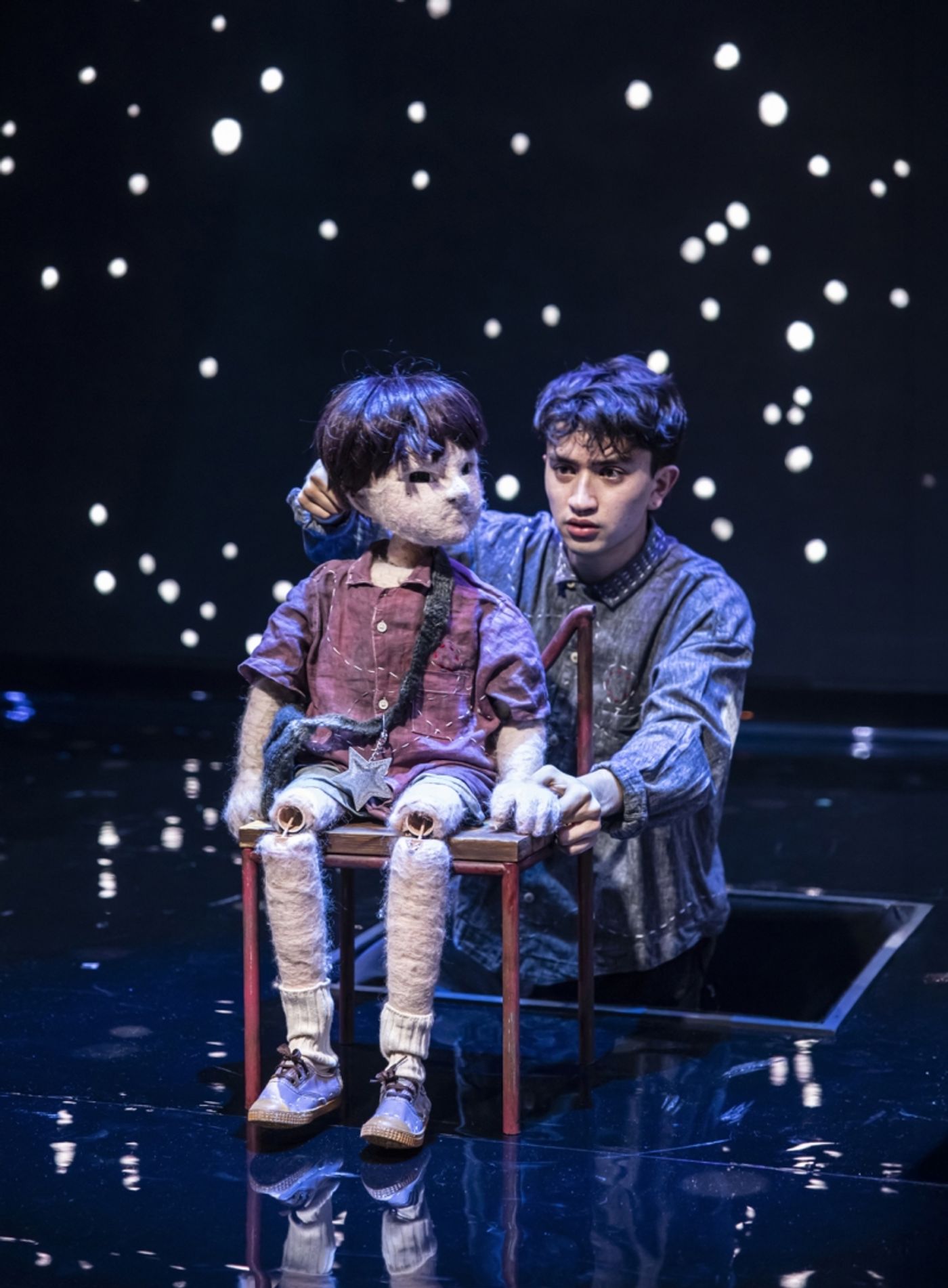
Photo credit: Pamela Raith
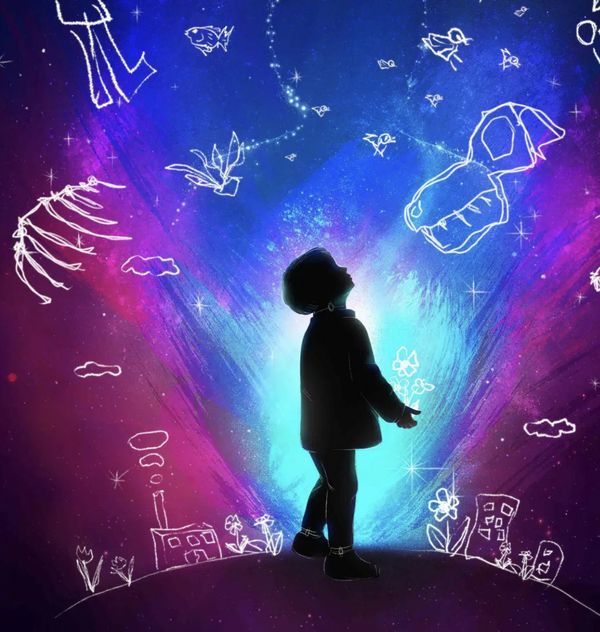
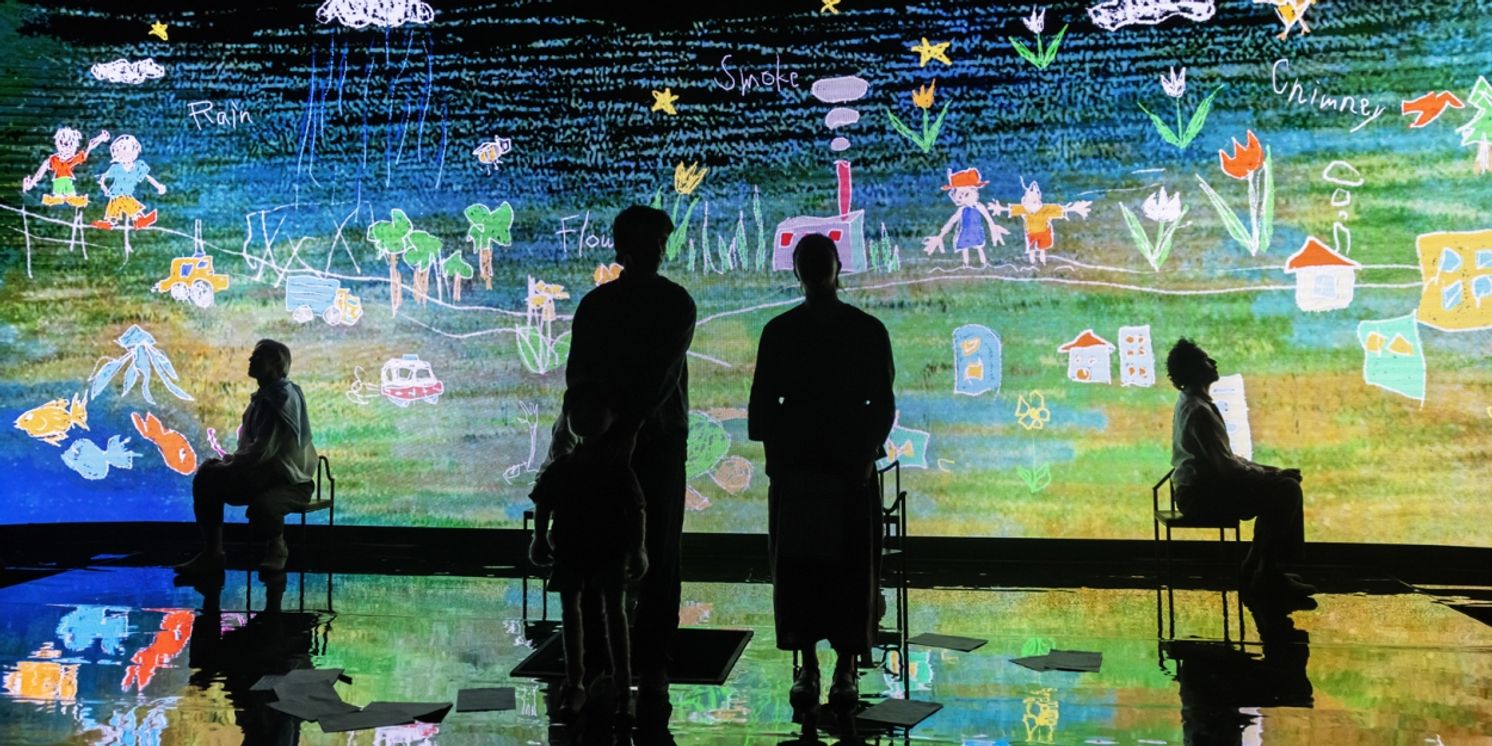
There’s more Brechtian influence to be seen in the show’s visual design, where we’re signposted every step of the way by exquisite graphic projections, as Shotaro maps out his thought process in scribbled sketches. Shotaro and his father bonded over outer space, leading his mother to tell him his father had become a star, and video designer Eika Shimbo has explored the full visual potential in this. In her hands, space is at once terrifying, expansive, and a space in which anything seems possible, with a memorable scene involving the characters sketching out their own constellations with the help of an eccentric elderly planetarium guide.
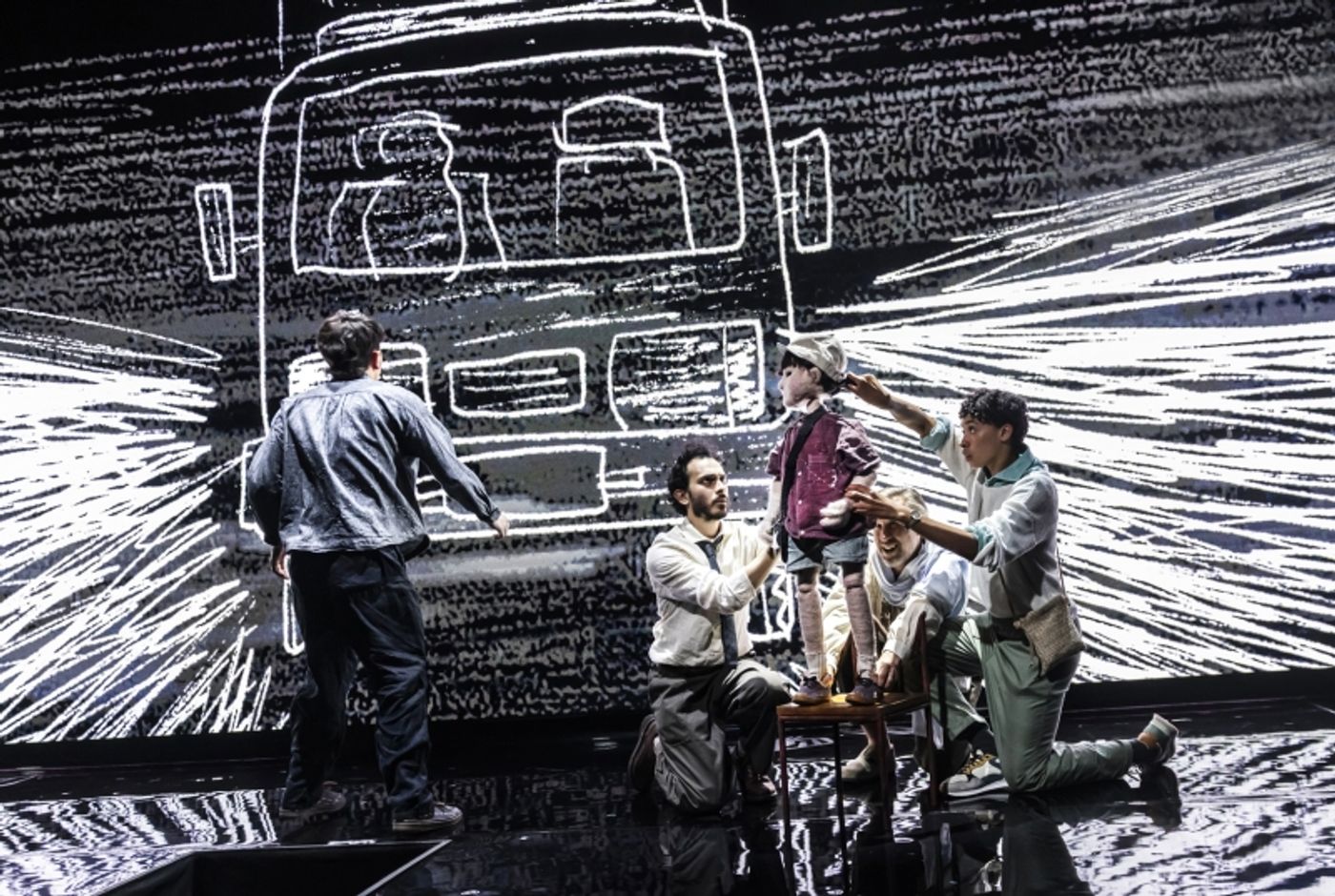
Photo credit: Pamela Raith
This is not just a linguistic translation of the original Tokyo production, but an attempt to adapt the story and characters for a British audience, and sometimes Hingley shows her working a little too much. The supporting characters from the town – a nurse (Nina Bowers) who keeps only a false tooth from her late mother, and a crematorium worker (Hari MacKinnon) who obsessively visits a park beloved of his deceased dog – fall slightly too easily into the awkward, self-deprecating stereotypes typical of classic UK sitcoms, which can undermine the tender poetry of the rest of the script. There’s also sometimes an overreliance on physical theatre, as though we aren’t trusted to grasp these characters’ grieving psyches through their words alone.
Our Cosmic Dust is telling a universal story, so potentially didn’t need to be presented in translation at all, and could have instead taken advantage of the growing normalisation of surtitles. Sometimes the Brechtian veers into the over-literal, but there is still clarity and catharsis to be found in Shotaro’s (and the adults around him) newfound understanding of life and loss.
Our Cosmic Dust plays at the Park Theatre until 5 July
Photo credits: Pamela Raith

Reader Reviews