


Review: ARLINGTON, Tron Theatre
Enda Walsh's dystopian love story still has much to say, nine years on
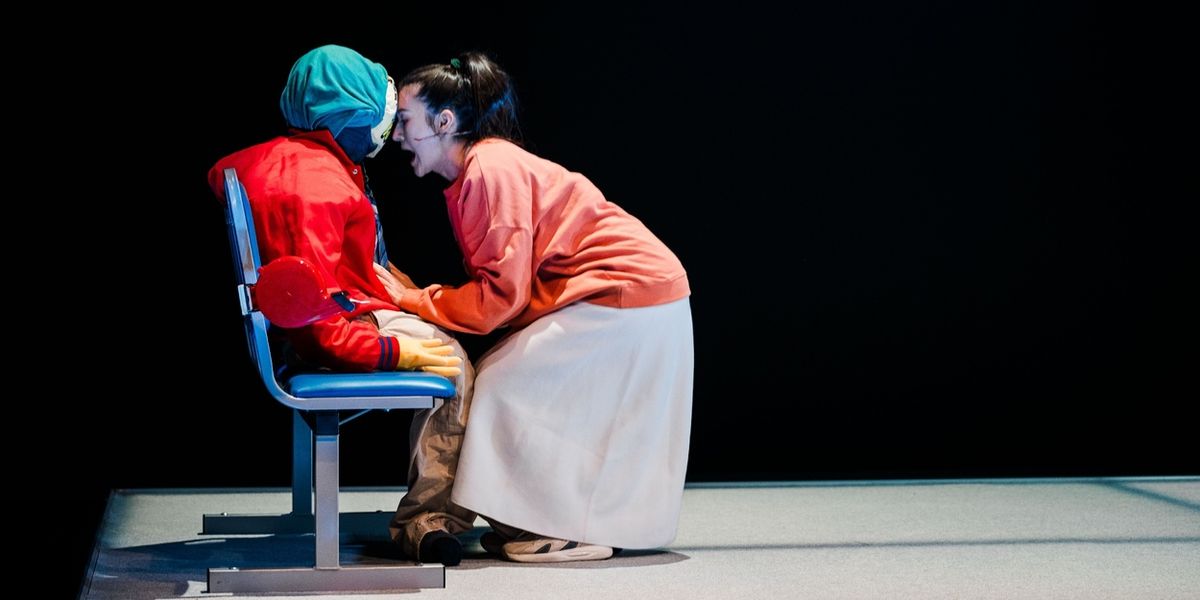
 Enda Walsh’s 2016 hybrid of drama, dance and video lands differently in 2025, but, I would argue, with even more force.
The post-war planners’ dream of streets in the sky had long since soured when Ben Wheatley’s film High Rise was released in 2015, itself based on JG Ballard’s 1975 book of the same name. Roll in the appalling fire at Grenfell Tower in 2017 (and the disgraces of what happened earlier to cause it and what has happened since) and one feels a little punched out with the tower block as a metaphor for a dystopian society. Paradoxically, that fatigue may actually deepen the play’s impact.
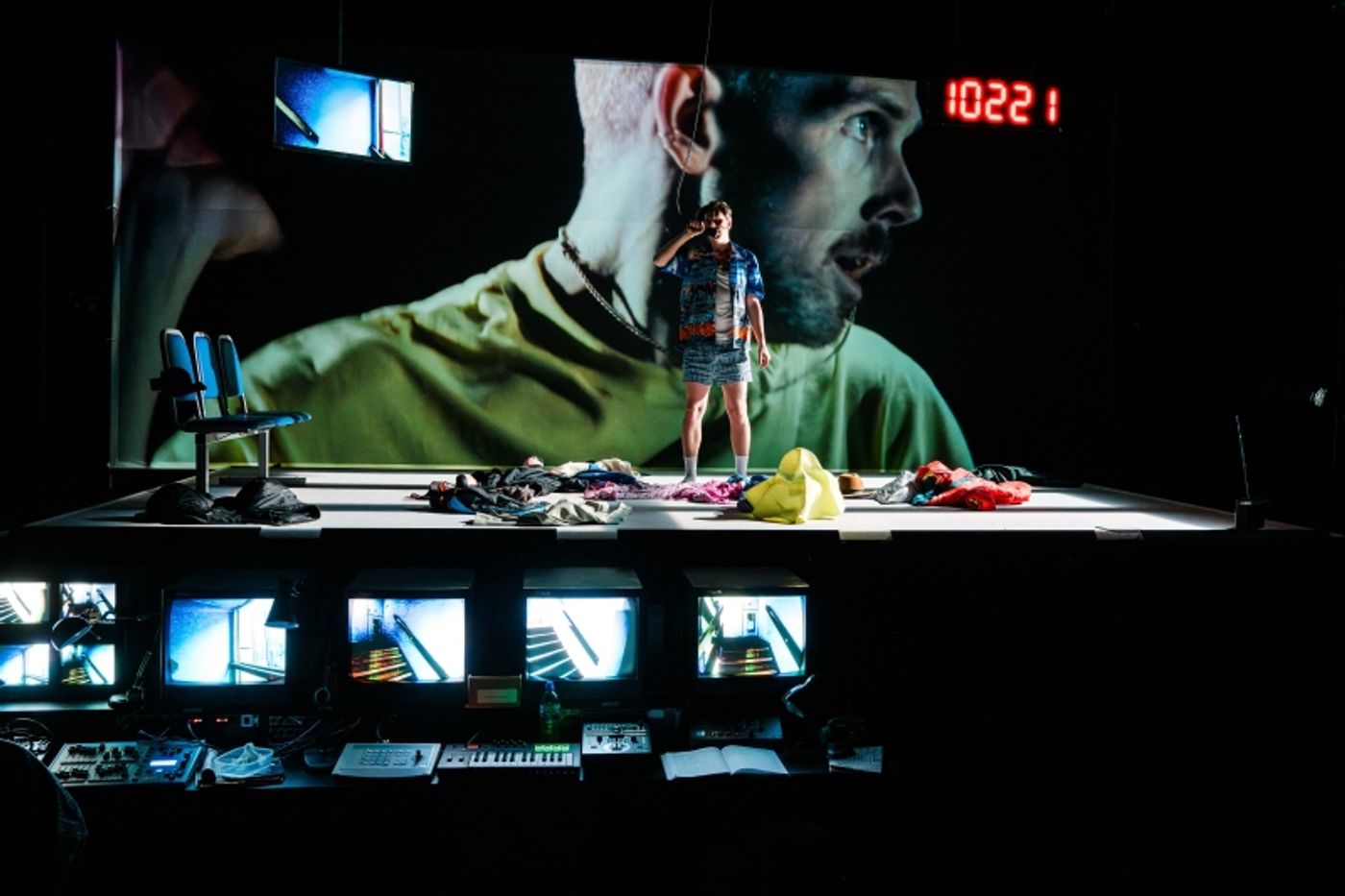
We open on a young woman in a bleak, almost bare space. Three bolted together seats, a ticket dispenser, a television and a digital display board (red LED that hurts the eyes) and a pile of clothes is pretty much all there is. She talks to a guard, anonymous, invisible behind a bank of monitors, and tells him stories of an outside world she imagines, but does not know. That world has disappeared in a social and environmental catastrophe, only prison-like towers remaining.
Aisha Goodman lends Isla, the woman waiting for her number, a girlish charm, flirtatious but assertive. It slowly seeps into our consciousness (especially in a wonderful scene in which she dances with a man made of rags to The Ramones’ “Baby I Love You”) that she is lonely more than anything in her incarceration. And so is Alex Austin's security guard, who tentatively reaches out to her via the microphone and inevitably, some time later, finds himself in another, identical room.
In-between, Jack Anderson uses the space as a floor for contemporary dance, a physical expression of the spirits of the woman and man whose freedom has been compressed into imaginings, fantasies mediated by electronic communications. The interlude feels a long time for an audience who have just been hooked by the narrative, but also too short a time for an audience more interested in interpretive movement - a problem of balance faced by any hybrid work.
Directed by Lucy Ireland and Jim Manganello, the work is, for all its innovation in storytelling, a dystopian love story set in a future suffused with alienation. And they all seem to be much the same whether on stage, page or screen.
That said, there’s a thread of love that runs through the evening (it might have been a bit too cheesy to hear “All You Need Is Love” playing after the curtain, but it was surely tempting). The redemptive power of human contact - messy though it is psychologically, physically, sexually - is underlined repeatedly and that is critical. Many of the high-rises built in the post-war period have gone, but the loneliness and isolation remains, the joys of sharing physical lives increasingly left unexplored by fear of the costs of building them and the temptation of the ersatz compensation of online relationships.
It’s a frightening thought to think that we have to look to dystopian narratives like this to find a way to show young people a better world. Isla and her guard took their chance and might just make it - I hope so. And I hope many more follow in their footsteps.
Arlington at Tron Theatre until 25 October
Photo images: Brian Hartley





Reader Reviews
To post a comment, you must register and login.