


BWW Q&A: Louis Reyes McWilliams Talks SHERWOOD: THE ADVENTURE'S OF ROBIN HOOD at The Repertory Theatre of St. Louis
We talk to Louis Reyes McWilliams about Sherwood: The Adventure's of Robin Hood at The Repertory Theatre of St. Louis.
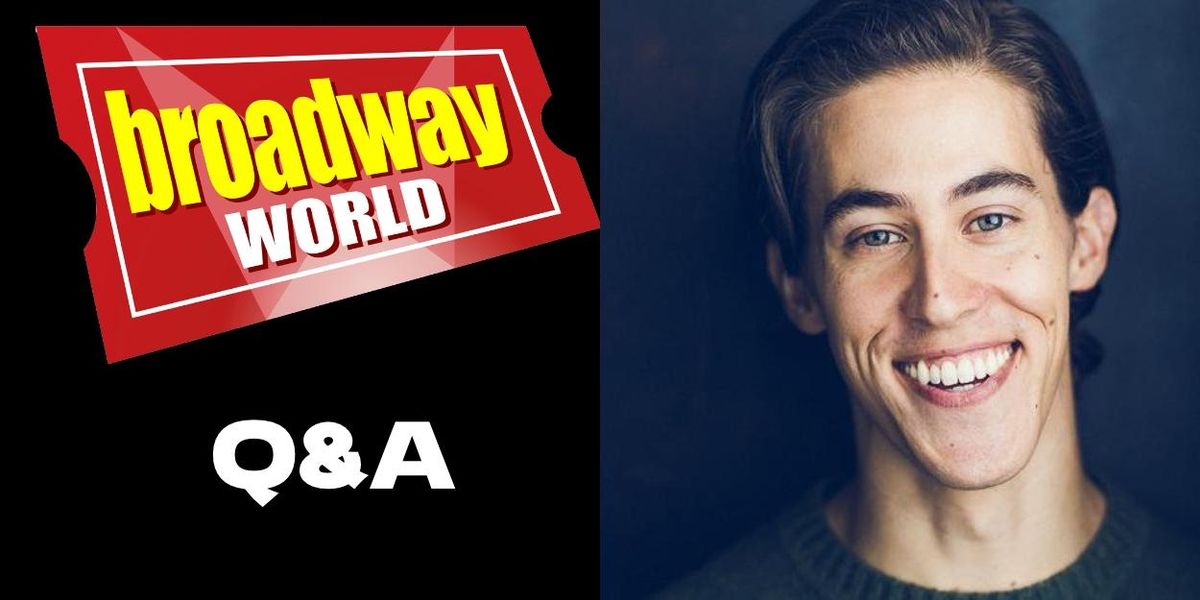
The Repertory Theatre of St. Louis is currently presenting Ken Ludwig’s Sherwood: The Adventures of Robin Hood through April 13, 2025, at the Loretto-Hilton Center on the campus of Webster University. Kate Bergstrom makes her directorial debut as The Rep’s Augustin Family Artistic Director bringing the legend to life in this riotous, heart-filled romp. As Robin turns from boy to man, he flees to the forest with his medieval band of merry men to fight for kindness, caring and justice to a corrupt kingdom. Filled with daring escapades, mischievous humor, and a dash of romance, this timeless tale of justice and camaraderie is a swashbuckling adventure the whole family will cheer for!
Sherwood: The Adventures of Robin Hood is directed by Augustin Family Artistic Director Kate Bergstrom with set designer Lindsay Mummert and Courtney O’Neill (Moby Dick, The Rep), Costume Designer Dottie Marshall Englis (Pride and Prejudice, The Rep), lighting designer Christina Watanabe (It’s A Wonderful LIfe: A Live Radio Play, The Rep) sound designer Amanda Werre (Dial M for Murder, The Rep), composer Colin McLaughlin, fight and intimacy choreographers Rachel Flesher and Zachariah Payne and stage manager Shannon B. Sturgis.
Louis Reyes McWilliams, who plays Robin Hood, is an actor, writer, and director based in Los Angeles. Born in New Jersey, Louis grew up in California and Massachusetts before attending Stanford University, where he attained a BA in Theater & Performance Studies and Political Science. He went on to earn his MFA from the Brown University/Trinity Rep Program in Acting & Directing.
Louis' theater credits include Off-Broadway, Shakespeare in the Park with The Public Theater, and regional productions with Berkeley Rep, Dallas Theater Center, the Huntington, The Old Globe, Pasadena Playhouse, Studio Theatre, Trinity Rep, Woolly Mammoth, and the Williamstown Theatre Festival.
As a writer, Louis has had two features in the top 15% of the Academy Nicholl Fellowship, and his screenplay Color & Light, a surreal biopic of the composer Claude Debussy, is currently a ScreenCraft Finalist. His pilot Mr. Amazing recently placed second in the Stanford in Entertainment All Write Now! TV Script Competition. His stage plays have been produced at the Williamstown Theatre Festival, Trinity Repertory Company, and Stanford University, and his play Heartland was a finalist in the 2021 ScreenCraft Stage Play competition, among other placements. Samples available upon request.
When he’s not creating, Louis enjoys running, playing tennis, and keeping tabs on his favorite New York sports teams.
What inspired you to pursue a career in the theater arts?
Growing up, I was an only child, and I think all that time on my own led to having a really active imagination. I loved movies and books (big solo activities), but when I started doing school plays, I suddenly felt like I was actually getting to live inside those stories with other people rather than just watching them or reading them or dreaming them up on my own. It was the most fun I’d ever had. That said, it wasn’t until I took an acting class in high school and we were assigned to watch Paul Newman’s Inside the Actor’s Studio (which became an obsession for me) that I started to seriously consider pursuing theater. He said something that really stuck with me, which was that he never felt he was very good at acting, but he worked at it, and eventually got to the point of being pretty good. Paul’s humility aside, that was a revelation to me. The idea that this was a practice that you could dedicate yourself to and get better at? That it wasn’t just some gift you were born with? That was so exciting. This blend of theater as both craft and adventure spoke to every part of me. And from that point, I was fortunate to have supportive parents and incredible teachers, from high school speech team through college and into grad school, all of whom encouraged me and pushed me. I owe my career to their hard work and passion as much as to my own. Anyway, that’s a long way of saying movies, school plays, and Paul Newman.
How has your experience been playing the iconic role of Robin Hood?
Oh my gosh, such a blast. Not every play feels like the adventures I was imagining up as a kid, but this one sure does. There’s a bit of everything: combat, slapstick, big speeches, romance. Plus I get to wear a cape?? I feel like Indiana Jones or Superman or something. And what I love about our show in particular is that behind the adventure and the comedy, there’s a real message to it. Ken’s adaptation in particular imagines a version of Robin as a young man in a position of privilege who awakens to the suffering and oppression of his fellow countrymen. I think so many of us can relate to that. But then – and this is the genius of the Robin Hood story – Robin does something pretty extraordinary. He takes action. He’s sort of the opposite of a Hamlet type character. There’s no indecision about what happens next. He sees a wrong in the world, and he immediately goes about trying to make it right. It’s such a timely story. In the face of injustice, how can we engage? Resist? Act? Or even, as Robin says, “preserve”? And not just throw our hands up in despair or outrage or worse, apathy. It’s quite a courageous thing that Robin’s doing, and I think it’s perhaps why the story is so timeless, because there’s something so admirable about a person who takes decisive action against cruelty and unfairness. At times, I think we all wish we had a little more Robin in us.
Can you share some insight into the fight choreography involved in the production of Robin Hood?
Sure – it’s intense! It’s the most athletic show I’ve ever worked on. I stretch every day before half-hour, and intermission looks a lot like the locker room at halftime of a football game – lots of water and sweat and lying down to stretch. It’s taxing, but fun, and thankfully the Rep has been generous enough to offer physical therapy for the cast to keep things in working order. As for the fights themselves…I’ll be honest, initially I was intimidated by the sheer number of them. But we have great fight directors (Zack Payne and Rachel Flesher) who broke every sequence down piece by piece and created some really exciting, unique choreography. And once you know the moves, it’s like learning a dance with a partner. You take it slow, and then you keep repeating it until you can pick up the pace and start to make it look dangerous, all while keeping each other safe. We’re creating the illusion of danger, and then, because it’s Robin Hood, adding in a healthy dose of fun. There’s play and mischief in our fight sequences, especially for Robin, as much as there’s stakes and intensity. Young Robin yells out to Marian near the top of the play, “I want adventure!” And that to me was the last step. Discovering the adventure, the exhilaration, in the fighting. That’s when Robin comes alive. I had to allow my delight in playing Robin Hood to be present even within, or perhaps especially within, these fights and moments of violence.
How do you approach comedic timing in your performance?
Oh, man. This can be so mysterious! I try not to think about it too much because it changes with every audience. I’ve found that if I’m focused on timing up a joke, it’s probably not going to land. It’s a bit of an actor-y answer, but it’s really about being present and playing the truth of the moment. I had a voice teacher in grad school who talked about “the symphony of the room.” Being open to all the sounds around you, even in a quiet room, and speaking in accompaniment with them. I think comedic timing is a bit like that. You’re in concert with the room. You’re listening to the audience, your scene partner, yourself, and allowing all that to inform the truth of the moment. And then comedy emerges when you invest in that reality. Is that the most unfunny answer to a question about comedy? Maybe! But I guess that’s part of it. Investing in the unfunniness, the stakes, and not thinking of it as “being funny.”
How has Kate Bergstrom's direction influenced your portrayal of Robin Hood?
Enormously. Kate is sort of a genius in that she’s always finding ways to make things more human. From the beginning, we talked about Robin as this flawed young man as opposed to this legendary figure. How does this wealthy, privileged kid become the leader of a movement who steals from the rich and gives to the poor? What would that cost him? How can we understand that today? Despite all the hijinks and romance of our show, Kate was always looking to ground me, and all of us, in truth and action. Action is huge with Kate. I remember the first time I worked with her, she would literally stop me in a scene and say “what are you doing right now? What are you playing?” Having to name that can be frustrating, but it forces you to be specific. Even after you’ve done your prep, there’s always places to go deeper or risk the bolder choice. She’s tenacious about naming it, about getting to the bottom of what it is you’re really doing in a scene. And the final thing I’ll say about Kate is that she invites you into the mess. She’s not a director who comes in knowing all the answers. She’s got curiosities and inklings, but she’s the first one to say “I don’t know” to a question about the play. That kind of energy, coupled with her willingness to laugh at almost everything, makes an actor feel so safe in the room to experiment and fail and explore.
In what ways does the set design contribute to the storytelling of this production?
I love our set! The idea that this show emerges from a pop-up book, and we’re these 3D characters materializing out of that is such a wonderful invitation. It sets this sort of Princess Bride tone for the audience. We’re here to tell you a story, and it’s larger than life, so get excited. And then as an actor, it gives you permission to live inside the fantasy, to act in this mythic way and not get too caught up in naturalism. The story wants to feel as epic as it did when you were five years old listening to someone recount it while you were tucked under the covers, hanging on every word. And I think our set really lays the groundwork for that to happen.
What can audiences expect when they come to see Ken Ludwig's Sherwood: The Adventures of Robin Hood at The Repertory Theatre of St. Louis?
Our play feels like a theme park ride inside a Monty Python revue. There’s thrills, laughs, romance, and because of Ken’s writing and Kate’s brilliant direction, the audience is right at the center of it all. We’re entering around them, we’re talking to them, and they’re not passive either – they’re on the ride with us, booing, applauding, even firing a bow and arrow or two in our version. And I think that’s the great gift of the show, the kismet of form matching function – if the Robin Hood story is one of taking action against injustice, we’re putting the audience in the driver’s seat. Their participation is the only way the play works, and I think that’s sort of what we want to leave them with. Be a participant in the story we’re all creating together. Be an actor in the fight against injustice. And let’s have a rollicking good time doing it.
Sign up for all the news on the Summer season, discounts & more...

|
Anastacia Florissant Performing Arts Center (10/02-10/11) |
|
The Mercy Seat Gaslight (9/11-9/27) |
|
COCA Live & Unscripted! Staenberg Performance Lab at COCA (11/21-11/21) |
|
Wicked Fox Theatre (5/12-5/30) |
|
Cinderella Opera Theatre of Saint Louis (6/05-6/27) |
|
Rockin Chair Kirkwood Performing Arts Center (9/25-9/25) |
|
Mamma Mia! Fox Theatre (3/30-4/04) |
|
Amadeus Gaslight (2/05-2/21) |
|
The Nutcracker COCA - Catherine B. Berges Theatre (12/11-12/13) |
|
The Book of Mormon (Non-Equity) The Fabulous Fox Theatre (2/02-2/07) |
