


BWW Q&A: Ann Beyersdorfer on MURDER FOR TWO at STAGES St. Louis
Set designer Ann Beyersdorfer shares how she built the playful, flexible world of Murder for Two at STAGES St. Louis, where two actors bring 13 characters to life.
In Murder for Two, now playing at STAGES St. Louis as part of its 39th season, two actors hilariously portray 13 characters—plus the piano—in a 90-minute musical sendup of classic murder mysteries. When famed author Arthur Whitney is murdered at his surprise birthday party, Officer Marcus Moscowicz seizes the chance to crack the case before the real detective arrives. Directed by Michael Kostroff, the show is a fast-paced blend of music, comedy, and theatrical sleight of hand.
For this production, NYC-based set designer Ann Beyersdorfer (art director for Saturday Night Live’s Film Unit and Broadway associate on Company, Anastasia, and more) created a set that supports rapid character shifts and playful visual storytelling while anchoring the audience in Arthur Whitney’s Victorian-inspired estate.
BroadwayWorld spoke with Beyersdorfer about her design process, her inspiration for Murder for Two, and how the set helps shape the experience of this killer musical comedy.
How did you approach designing a world where two actors play 13 characters—including a detective and all the suspects?
From the start, Michael and I knew the actors wouldn’t rely on elaborate costume changes to differentiate characters. Instead, each transformation would happen through shifts in physicality, voice, and presence. That choice deeply influenced the set design. We wanted to create a space that clearly grounded the story—in this case, Arthur Whitney’s drawing room, where a surprise birthday party is about to unfold—but we also kept the environment intentionally pared back. The design offers just enough detail to spark the audience’s imagination, while remaining flexible and open-ended, mirroring the fluidity of the performances. Just as the actors invite the audience to believe in rapid character shifts, the set invites them to fill in the gaps and actively participate in building the world of the play.
What visual or spatial tools did you use to support rapid character transitions and help the audience follow the storytelling?
Doors became one of our most valuable storytelling tools in this production. We used two main doors that are always present, and a third that occasionally flies in, to create comic rhythm and facilitate character entrances and exits. The actors often re-enter through a different door with a completely new energy, posture, or vocal tone, and it’s both clear and hilarious. In a show like this, where quick transitions are essential, even something as simple as a doorway becomes a portal for transformation. We also embedded small, character-specific props throughout the set so the actors could easily grab a hat, a remote, tambourine or a teacup to punctuate a shift. But truly, the set is there to support the brilliance of the performances. Our actors do extraordinary work with just a shift in physicality or voice, so the design’s role was to give them structure without ever getting in the way.
What was your creative inspiration for the Murder for Two set? Were there any particular films, artists, or aesthetics that influenced your work?
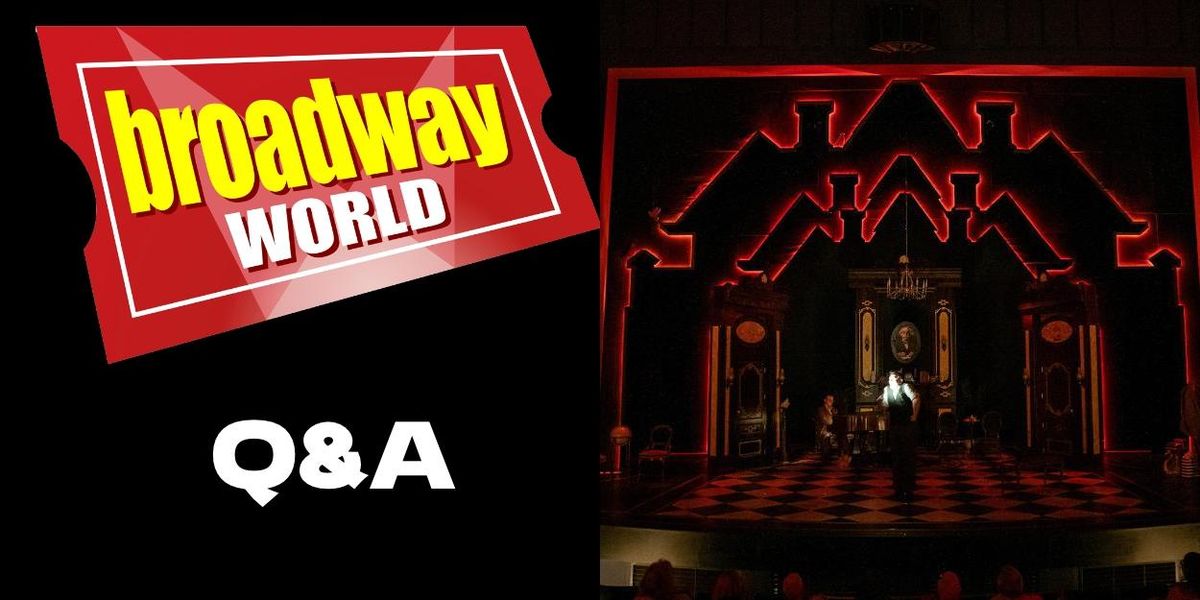
Our inspiration came from a combination of Victorian interiors and classic film noir aesthetics. We spent time studying ornate drawing rooms and parlors, and spaces filled with detailed moldings, dark woodwork, and richly patterned chinoiserie wallpapers often adorned with exotic birds. That visual language gave us a sense of elegance, formality, and even a little quirkiness with the fascination of birds, which felt just right for Arthur Whitney’s manor. At the same time, we pulled from the stark, high-contrast world of noir films. The dramatic lighting and shadow play in those movies helped us think about how to use light and negative space to shape mood and guide focus. For example, negative space helped influence our silhouetted roofline portals. The result is a set that feels a little heightened and theatrical, which felt right for a murder mystery that doesn't take itself too seriously.
How did you incorporate elements of classic mystery or noir into the design without making it too literal?
We wanted to nod to the classic murder mystery aesthetic - think grand drawing rooms and shadowy suspense - but without overloading the space or locking it into realism. The set includes two dark-stained, towering doorways and a central fireplace, all detailed with Victorian-inspired molding to evoke the elegance and weight of a traditional manor. But beyond those key elements, we let the space breathe. The architecture is suggestive rather than complete, leaving room for imagination and transformation. One of the more stylized features is a glowing portaling system that traces the silhouette of the manor’s roofline above the stage. It subtly shifts in intensity and color to reflect tone and mood, while also directing the audience’s focus toward our two actors at center stage. The floor design adds another layer of reference. It’s loosely inspired by the "Clue" board game, featuring a black-and-white checkerboard pattern with two smaller “rooms” defined purely by floor treatment rather than walls. We also collaborated closely with our lighting designer, Sean, to bring in noir-inspired lighting, especially in flashback moments, using sharp contrasts and strategic shadows to hint at the genre’s tension without ever becoming too on-the-nose.
Given that the show relies on two actors, one piano, and no traditional orchestra, how did that minimalism influence your set choices?
The show is inherently minimal : two actors, one piano, and no traditional orchestra. So, the set needed to reflect that same spirit of minimalism while still anchoring the audience in a specific world. While "Murder for Two" absolutely also works on a bare stage, for this production, Michael and I felt it was important to give the audience a strong sense of place right from the start. We chose to root the action in Arthur Whitney’s estate, drawing inspiration from the architecture of Victorian parlors and studies. That said, we didn’t want the set to feel heavy or overly realistic. The actors do so much with so little: transforming from one character to the next through subtle shifts in mannerism and voice, etc. We designed a world that mirrors that action and intention theatricality. The set suggests detail and structure without becoming rigid, and it includes a few hidden surprises to support the show’s fast-paced, madcap energy. It’s all about striking a balance: giving just enough to set the scene, while leaving space for imagination and performance to do the rest.
How did you find a balance between supporting the show’s fast-paced comedy and grounding it in a cohesive visual world?
It took several design iterations to find the right balance. We wanted the set to be playful and responsive enough to support the show’s rapid-fire comedy and physicality, while still creating a visual world that felt specific and cohesive. The solution came in layering just enough architectural detail to establish the tone and setting without overwhelming the space or restricting the actors’ movement. We kept the structure intentionally flexible and suggestive, so that it could adapt to the quick shifts in character, time, and tone. At the same time, we integrated subtle visual cues and period elements to ground the action and give the audience a stable frame of reference. In many ways, the set mirrors the performances: precise, heightened, and theatrical, but always rooted in clarity and intention.
What was it like collaborating with director Michael Kostroff and the rest of the creative team on this production?
It was a hilarious, collaborative, and constantly creative experience! This show is a comedic rollercoaster, so the process naturally invited a sense of play. Michael and I were in constant conversation, often texting back and forth with new gags, surprise moments, or wild ideas to build into the set. That kind of ongoing, open dialogue made the design process feel like an extension of the show’s spirit: fast, funny, and full of invention. The entire team at Stages was incredibly game and supportive. Every time we pitched a new trick or visual joke, they leaned in and helped find a way to make it work. It really felt like a shared sense of humor and imagination was driving the collaboration, which made the process not only effective, but also a lot of fun.
Any unique challenges or joyful moments during the design and build process?
One of the most joyful, and absolutely over-the-top ridiculous moments in the design process was creating the scene shift into Dahlia Whitney’s big number "Step into the Shadows". Dahlia, the late Arthur Whitney’s wife, has been dying for her moment in the spotlight, and when she finally gets it, we go all in. We designed a full spectacle: DJ-style lights on a flown-in truss, oversized speakers, a mirror ball, a sparkly rain curtain and even a a flash dance confetti moment. The best part is that all of it is triggered by Dahlia herself, using props hidden in plain sight. She opens secret compartments in the set that reveal microphones and remotes, the same set the audience has been watching all evening. There are at least three surprise reveals built into the scenery for that moment. Michael, the team and I had a blast dreaming up how far we could push this sequence. We were laughing constantly during those conversations.
Is there a particular element or Easter egg in the set that you’re especially proud of or hope audiences will notice?
Definitely! The Arthur Whitney portrait is a little piece of storytelling that I think is a really fun addition. Although Arthur is central to the plot, we never actually meet him as a living character onstage since the murder happens right at the beginning. The portrait, and a few other subtle decor Easter eggs scattered around the manor, serve as a playful way to give the audience a glimpse into who Arthur was and what kind of man he might have been. If you look closely, you’ll notice some fun details in the portrait, like his expression, what he's wearing and hinting that he was ambidextrous, which is just a fun little character trait. And there’s a special “wink” hidden in the portrait’s final moment that I hope audience members catch. It's just another way we invite viewers to engage and have fun with the world we’ve created.
Why must audiences come and see the show?
"Murder for Two" is an absolute blast from start to finish. The cast’s quick wit and incredible talent will truly blow you away as they effortlessly switch between characters in a fast-paced comedic whirlwind. More than anything, it’s the kind of show that offers a joyful escape. It's a chance to forget the challenges of the “real world” for a little while and just laugh. So come join us, and share in the fun. We promise you’ll leave with a smile! :)
|
Guys And Dolls Kirkwood Pac (7/24-8/23) |
|
JOB New Jewish Theatre (NJT) (8/06-8/23) |
|
Wicked Fox Theatre (5/12-5/30) |
|
Ludo The Pageant (10/24-10/24) |
|
Parsons Dance Touhill Performing Arts Center (4/10-4/10) |
|
Mamma Mia! Fox Theatre (3/30-4/04) |
|
|
Mamma Mia! The Fabulous Fox Theatre (3/30-4/04) |

|
AMY SPEACE & BETH BOMBARA: WOMEN OF AMERICANA Kirkwood Performing Arts Center (KPAC) (8/15-8/15) |
|
The Book of Mormon (Non-Equity) The Fabulous Fox Theatre (2/02-2/07) |
|
Rob Zombie & Marilyn Manson Morton Amphitheater (9/10-9/10) |