


Interview: Jonathan Spector of EUREKA DAY at Marin Theatre
Eureka Day will be performed August 28 – September 21, 2025 at Marin Theatre.
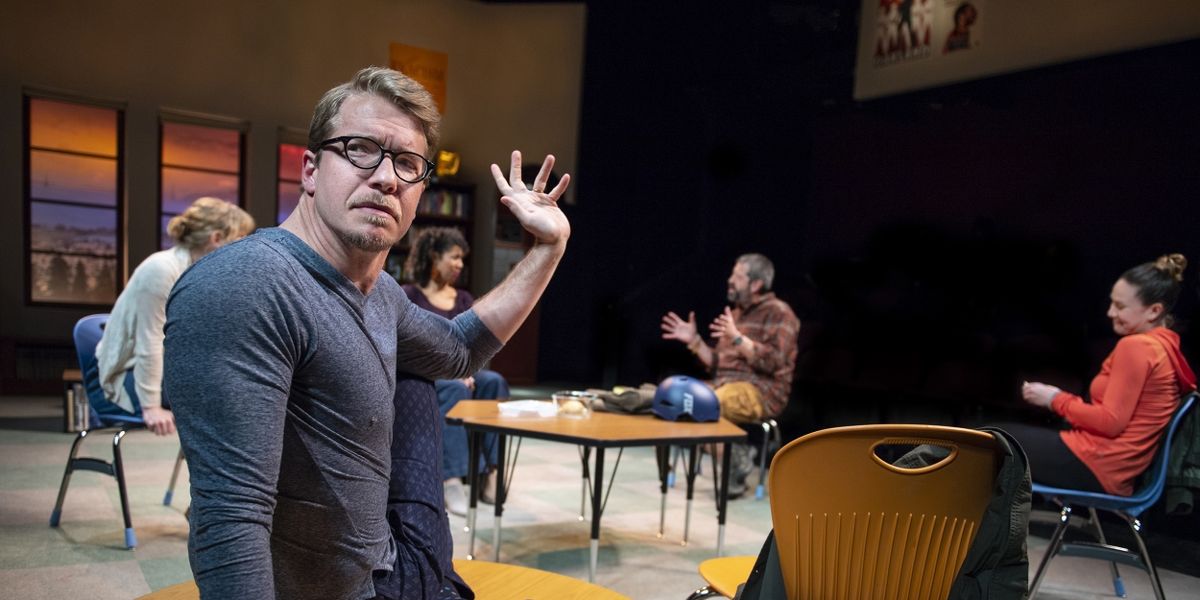
I don’t know that it’s possible for a playwright to be any more prescient than Jonathan Spector. Back in 2016 when Berkeley’s Aurora Theatre Company commissioned him to write a play, he created Eureka Day, a seriously funny drama about a progressive private school where a mumps outbreak kicks the debate over vaccine policy into overdrive. The 2018 world premiere at Aurora had a well-received run which led to other productions around the country, including off-Broadway, and that was presumably that. Then COVID hit and the issue of vaccination took on a whole new currency and urgency. What had once maybe seemed like an almost parochially Berkeley kind of play now resonated throughout the entire world. A new production opened on Broadway last December, garnering raves and winning Spector the 2025 Tony Award for Best Revival of a Play.
Now it seems that every theater company in the country wants to present Eureka Day and Spector is especially thrilled that the original production is being remounted locally at Marin Theatre with most of its original cast and creative team intact. I caught up with him by phone recently to talk about the unique trajectory his play has enjoyed, his excitement over bringing it back home to the Bay Area, how he manages to write such complex characters whose world views are different from his own, and what it’s actually like to win a Tony. Spector is a natural raconteur who excels at blending erudition with self-effacing humor, the kind of person who can make even the most complex topics fun, interesting and easily relatable. The following conversation has been condensed and edited for clarity.

What’s it like to have Eureka Day coming back home to the Bay Area?
Oh, I’m so excited. About a year ago, as part of a fundraiser for Aurora Theatre, we did a reading with the original cast and it was so lovely and really felt like coming home, so the original idea was to revive it with everybody from that cast. Two of them, unfortunately, were not able to do it, but we have three of the actors who’d originally done it, and I think all of the designers and Josh who directed it, so it feels like a wonderful full-circle moment.
It looks like Eureka Day may well be the most frequently produced play across the country in the coming year. When you set out to write it in 2016, did you have a hunch you were onto something that would resonate so broadly?
Oh, no, not at all. I mean, with every play you just assume it’s terrible. [laughs] But then once we were in process at Aurora and had it in front of an audience, there was certainly a feeling that people were really responding to the play. But it was very hard to tell how much of that was just because people enjoyed seeing themselves so specifically reflected onstage, cause it’s their community. I really didn’t know to what degree, if at all, it would resonate beyond the Bay Area with other communities and audiences. So it’s been pretty amazing to see it, not just on Broadway, but I saw it in London, I saw a production in German at the Burgtheater, which is the national theater of Austria, it’s been in Australia, so it’s really had quite a journey.
I saw the Broadway production and found the audience response very interesting. At the beginning, I could feel them laughing with a bit of condescension toward the characters, like it was just a satire of “those crazy Berkeley types.” But by midway through, it had changed to more of a laughter of recognition, like “Oh, crap, this play is about us.” Have you found that Eureka Day resonates differently in different parts of the world?
Oh, definitely, and I think it’s so hard to separate what is the different community and what is the shift in the cultural moment. There were some critics in London, even who really liked the play, that said something like “but of course nobody really acts this way in real life,” like these are obviously exaggerations. So I think a key distinction is between the Bay Area and some other communities where people would be “Oh yes, of course this is how we are” versus assuming it’s more of an exaggeration.
But the other thing that’s changed so much is the cultural place that this kind of lefty way of being holds now. I feel like in 2018 and 2019 when it had a few productions outside the Bay Area, people knew that “Oh, this is how people in Berkeley maybe do things.” And they might think that’s a little goofy, but it didn’t hold any greater meaning. Whereas I think now, especially after the re-election of Trump, there’s so much agita and discussion and fighting over what that means, and what we have been doing and what has been successful or hasn’t. So I just feel like people are carrying all that into how they’re responding to it in a different way. Not to mention, obviously, the very different experience we all now have in terms of vaccines and viruses and all of that.
Speaking of which, I’m hardly the first person to note that the play feels so timely it’s hard to believe it was written pre-COVID, let alone the current measles outbreaks. Have you made any changes to the script in the intervening years?
I made some what, to me, feel significant but to an audience might not be noticeable changes to the script, but not because of COVID, just about making the story clearer. The only real change I made because of COVID is the addition of the final line of the play as it currently exists, but nothing else. I guess I take that back - there were a couple of little things that I cut just because we all understand some of this terminology now. You know, we didn’t need as much explaining of what herd immunity means and things like that.
But it would be a very different play now. Part of the impetus of writing it in the first place was that at that time vaccinations were one of the few very contentious issues that didn’t really have a political valence to them. There were a lot of people in very liberal communities who didn’t vaccinate their kids or were skeptical about vaccinations, and also some very conservative people, but they kind of got there for different reasons. Just knowing the fact that somebody didn’t vaccinate their kids didn’t in and of itself tell anything about their politics at that time. Whereas now it increasingly does, and so that just scrambles all of it.
One of the things that makes the play so effective is that it feels like it was written with insider knowledge about what goes on behind the scenes with private school boards. How did you come by that knowledge?
I don’t know… I’m not on a board. My wife is a teacher and has worked in a number of progressive private schools and so I guess you sort of talk to people and pick things up. I did some interviews and sat in on a town hall meeting at a private school. And then - you’re kind of making it up. But that’s true of everything you write, and it’s always nice when people tell you that it feels accurate to their experience.
When it premiered at Aurora, did anyone come up to you and say, “This is really about my school, right?”
Oh, yes, people would say that a lot. But it’s sort of an amalgamation of several schools that I was thinking of.
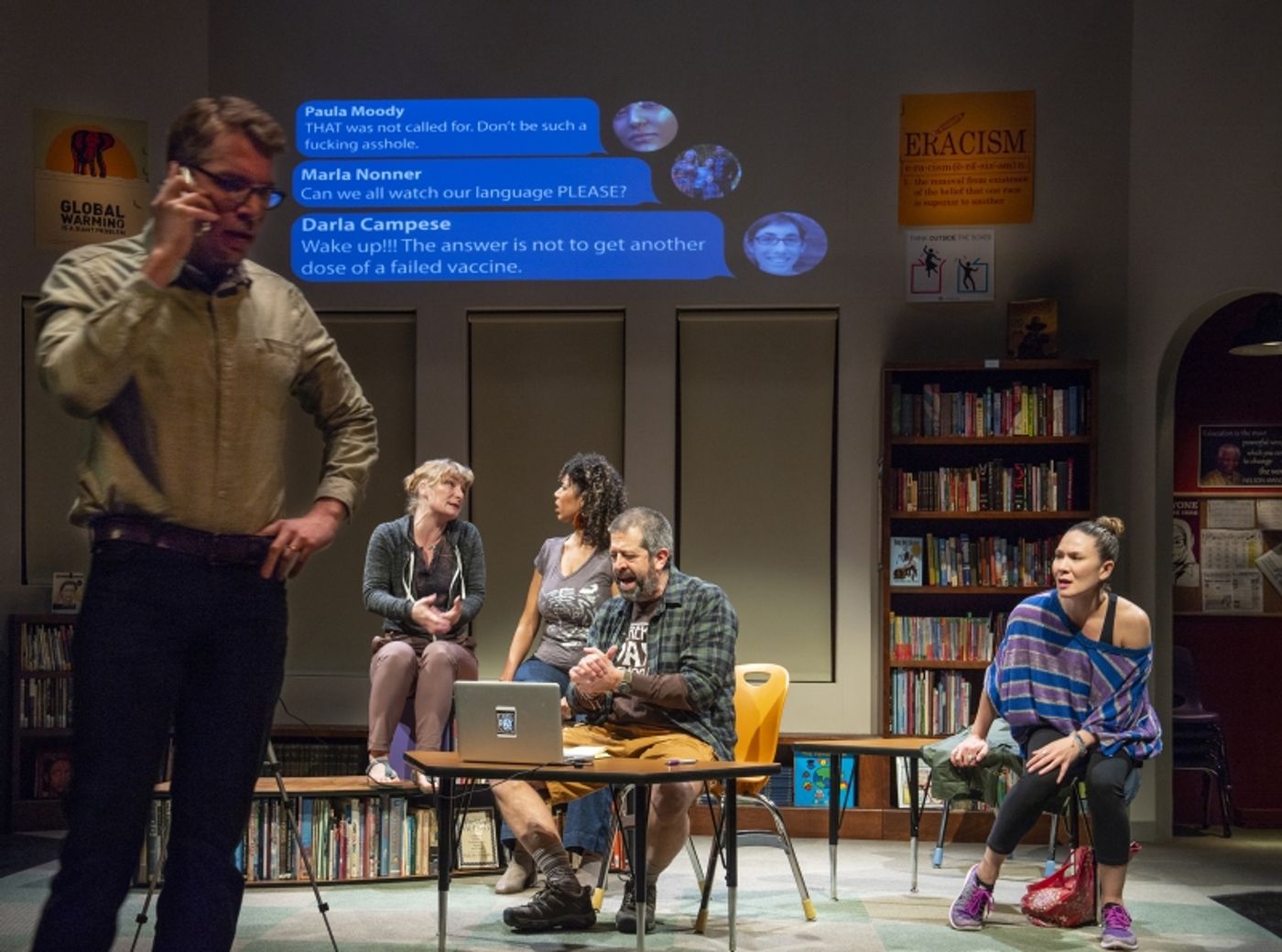
in Aurora Theatre Company's World Premiere of Eureka Day (photo by David Allen)
The scene that always brings down the house is the Zoom meeting, and I’ve never seen that device used so skillfully. The scene is so funny and mortifying, with peaks and valleys that feel organic. Was it a challenge to get the dynamics and rhythms of that just right? Did you go through a lot of revisions once you had it in front of an audience?
Oh, yes, it was very iterative and very tedious. We did a lot of development workshops just even trying to figure out how it was going to work. It’s kind of a cliché that you don’t really understand a play until you get it in front of an audience, and that’s especially true for that scene, which I thought was funny but had no idea would get the kind of response it got. Then once I realized that, I had to continue to rewrite it to accommodate the laughter and be sure that anything in the scene that is important in terms of the story is said at a point where there’s either no comment or the comments are not funny.
Even before COVID, it would get a very big audience response, but people relate to it in a much more personal way now that almost everybody has been stuck on a meeting like that. It wasn’t Zoom when we first did the play, I think it was Facebook Live we were referencing, but now everybody is thinking of Zoom when they encounter it. And the other difference is now, from the moment it begins, everybody in the audience knows this is gonna go off the rails. In 2018-2019, not everybody knew that because we hadn’t yet all had that experience.
It’s a scene that I continue to tweak with every production. I have never done standup comedy, but I imagine it’s like being a standup comic. You have some new jokes and you’re like “Oh, what if I reordered these, how will that affect how the laughter builds?” It’s impossible to work on without an audience because until you see the response, you don’t know.
I love how you grant every character their own humanity, even the ones whose positions I would guess you don’t agree with. How do you manage to write so authentically for characters whose opinions you don’t share, without patronizing them or tipping your hand?
You begin with just trying to find your way into making characters as rich and human as they can be. Most people are not evil. They have reasons for believing what they believe, even if you think it’s wrong. You know, it’s much more interesting to write people you disagree with than to write people you agree with. And it’s always a balance of wanting to be fair and also wanting to be careful that I don’t feel like anybody is walking out of the play with some kind of misinformation that is gonna lead them to not vaccinate their kids or something, but I worry about that less and less. It’s very difficult to change someone’s mind about this stuff, so I don’t think a play is likely to do it. [laughs]
The hard part about this moment in time for writing anything, really, is that we’re all so exposed to so much opinion and so many ideas and so many arguments, all the time. So it’s really trying to find a way to shut that out and find your way into something that’s gonna be specific. If you begin writing from an impulse of “I have this thing and I really believe it strongly and want to communicate that,” it won’t get you very far because ultimately plays are about people. You’re creating some other character who is not like you in some way, and the more rich and dynamic and specific you make that person, the less they’re going to be you.
They’re not gonna think the thing you think and they’re not gonna argue the thing in the way you would, because they’re not you, they’re somebody else. Even if you set out to be like “I’m gonna write a play so I can make everybody have to listen to the thing I wanna say,” you can’t be successful doing that. The only way to make a drama successful is to have characters who are specific and real and interesting.
What was it like to win the Tony?
It was completely surreal. It’s kind of a monthlong marathon of events leading up to it so it’s less like that night than the whole experience of the awards season. It’s obviously thrilling and incredible to be recognized, but also there’s this way in which you feel like you’re an actor in a play. You’re dressing up in this costume and standing there and doing all these things, so it feels a little like an out-of-body experience as well, even while it’s happening. It's an incredible culmination of the 7-year journey of the play and the many, many people who were supporting it and contributing to it and kind of lifting it up along the way. I feel so appreciative.
And you’re a writer, not a performer, yet there you are onstage at Radio City Music Hall on national television. Did it feel like “How did I get here?”
Yes, especially because of course they put the most famous people in the front row, so I look up and there’s like Oprah and Keanu Reeves and I had to look away because otherwise I’d freeze. It was very strange. But so lovely. Through all the different events and phases, everybody was so wonderful. In various speeches I heard people give over the course of that month, there really was this feeling of community. They’re very generous and welcoming and celebratory, and it was a real gift to have gotten to be part of that.
As well as – I feel like particularly if you live in New York there’s just more of a general awareness of theater. If you live in the Bay Area and you tell someone you’re a playwright, they assume you’re a hobbyist or a dilettante, you know? So there is a way in which I feel like a lot of people knew in sort of a cursory way that I write plays, but now they’re like “Oh, a Tony Award! You’re serious about this.” So that’s kind of interesting.
Does the Tony win come with any added pressure to write something really great next because now people expect that from you?
When I next sit down to start something new, I’m sure it will. I feel very lucky because I already have a couple of different projects moving along in various stages. I have one that, whether it will get to Broadway or not, who knows (as I have learned, there are always so many factors out of your control about that), but it’s certainly aiming for that and I have a really wonderful producer. So that’s already in process and I have other plays in various stages so it felt very good going into all of this knowing I wasn’t gonna wake up the next day and be like “Oh, what am I gonna do now,” staring at a blank screen. I already have things I’m working on and excited about, so that feels good.
(Header photo of Teddy Spencer and the cast of the Aurora Theatre Company world premiere production of Eureka Day is by David Allen. )
---
Eureka Day will be performed August 28 – September 21, 2025 at Marin Theatre, 397 Miller Avenue, Mill Valley. Tickets are available at MarinTheatre.org or by calling 415-388-5208.
|
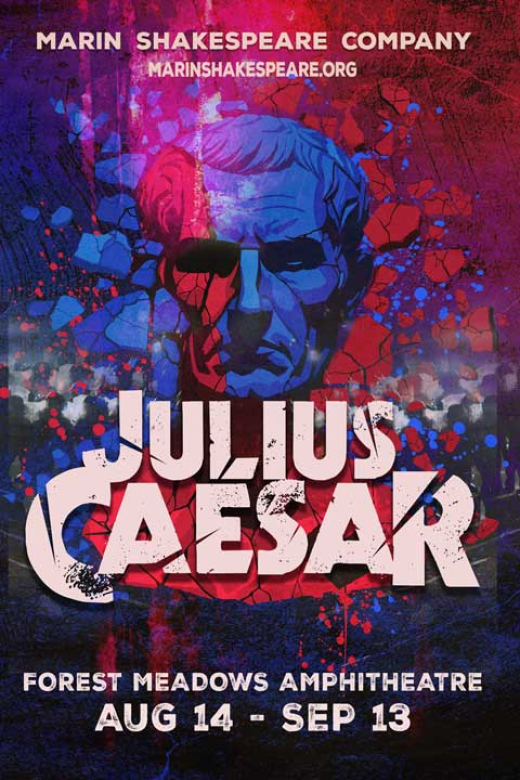
Julius Caesar Marin Shakespeare Company (8/14-9/13) |

|
Pickleball Hillbarn Theatre (8/20-9/13) |

|
Pearl Louise’s Lovin Jaleal The Marsh (8/14-8/16) |
|
Fences by August Wilson Santa Cruz Shakespeare (7/28-8/28) |
|
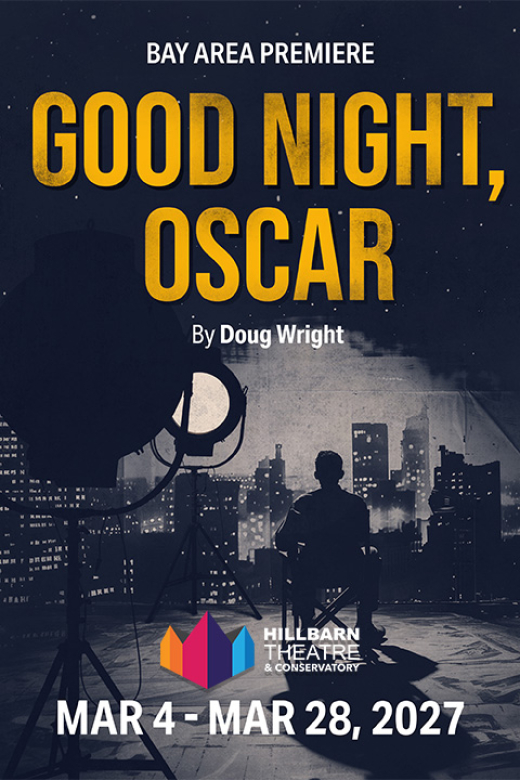
Good Night, Oscar Hillbarn Theatre (3/04-3/28) |

|
Based on a Totally True Story City Lights Theater Company (1/21-2/14) |
|
Merola Grand Finale War Memorial Opera House (8/15-8/15) |
|
The Phantom of the Opera San Jose Center for the Performing Arts (10/07-10/18) |
|
Natacha Ruck’s Death & Dad Jokes The Marsh Berkeley (8/20-8/23) |

|
Ride the Cyclone City Lights Theater Company (7/16-8/23) |