


BWW Q&A: Sam Helfrich on HOUSE OF MCQUEEN at The Mansion at Hudson Yards
House of McQueen is flamboyant, unflinching, and achingly human - a requiem for a man who turned beauty into a weapon and fashion into art.
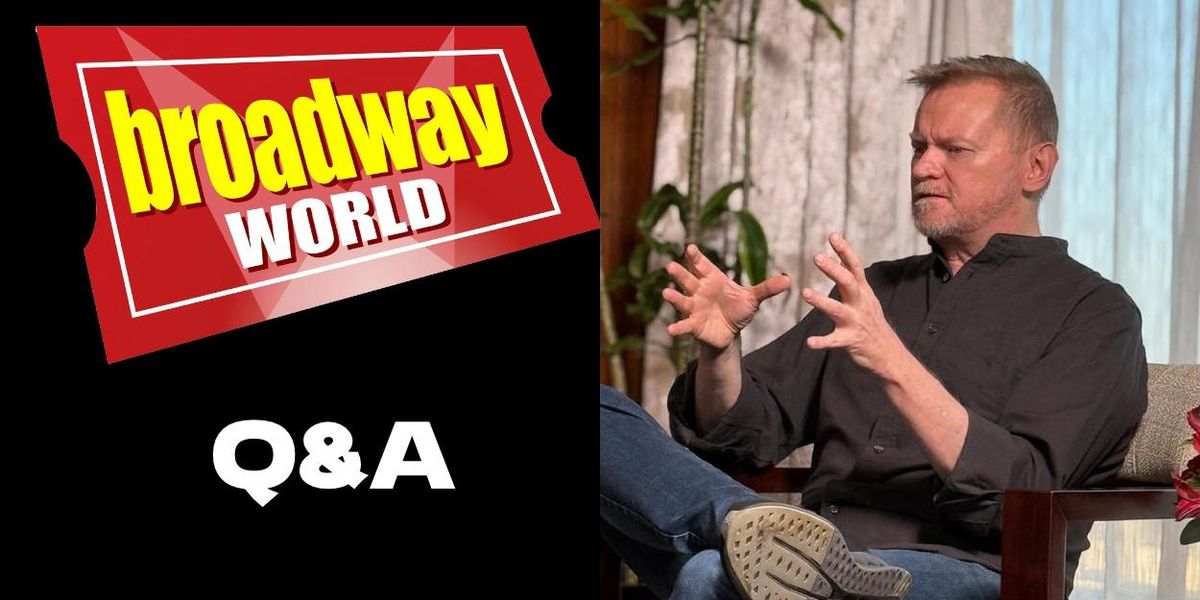
House of McQueen is a bold Off-Broadway play illuminating the life and legacy of visionary designer Alexander McQueen told through his daring, defiant, and unorthodox lens.
From a boy in London’s gritty East End to head designer at Givenchy and founder of his own legendary house, McQueen transformed hardship into beauty. He sought inspiration in life’s darkest shadows - poverty, homophobia, depression - crafting garments that empowered women and provoked society. His runway shows were breathtaking theatrical spectacles, captivating the world’s most celebrated figures.
Battling the machinery of fashion titans, McQueen remained fiercely provocative, tearing down convention to rebuild it in his fearless image. Yet the same fire that fueled his artistry led to his undoing.
What attracted you to the story of Alexander McQueen for this production?
Alexander McQueen's story is unique and dramatic. I knew a bit about McQueen before the project came my way, but once I started reading the script and researching the historical background, I became fascinated with both the details of McQueen's life and also his creative work. As a theater artist, what most attracted me was the theatricality of the runway shows, particularly the shows "Voss" and "Deliverance." The first time I watched "Deliverance," I felt like I was watching an amazing dance performance. I was reminded of Pina Bausch and William Forsyth, but at the same time, it was pure McQueen, with his sense of humor and, of course, his clothing designs. That show will always stand for me as a work of pure theatre on its own.
How did you approach the process of translating McQueen's unique story and aesthetic to the stage?
From the beginning, I knew one of the challenges would be in representing Lee's work onstage. Clothes that are designed to be worn by models on runways never look the same afterwards -- neither on dress forms nor on other humans. In addition, the way people watch runway shows is very different from the ways we watch theater, in which clothes are part of a much larger contextual world rather the focal point of the audience experience. I thought about this a lot, and ultimately decided that we WOULD represent some of Lee's work onstage, through the character of Isabella Blow, who historically wore a lot of his designs, and wore them like ordinary clothing as well, in ways similar to actors in a play. Beyond that, it was also important for me to work with the playwright to craft a theatrical experience that went beyond the biographical details of McQueen's life. I wanted the production to emphasize the creative process, and the ways in which the past, childhood passions and traumas, and the experience of given and chosen family, affect creative work. Many historical details are in the play, but I think we're presenting something that goes deeper into McQueen's mind and into the psychology which manifests in his work and designs.
How has your background in opera influenced your approach to directing this piece?
Some people say this story is operatic in scale. And indeed it is the story of a human who seems at times larger than life, and of a tragedy that unfolds with details rivaling some of the great operas. One thing about directing opera is that you are constantly guided by the music, which is not true with a play. But in fact the play DOES have a rhythm; it is musical in many ways. Also, I think working in opera is often about scale, and even though this theater is smaller than a typical opera house, myself and the designers envisioned the play on a grand scale, with gigantic walls of digital content and a sweeping movement of bodies across the stage.
How does the venue, The Mansion, contribute to the overall appeal and experience of the production?
The raw space, before it became the Mansion, was an invitation to create something different and new. Its location near Hudson Yards also, I think, creates a sense of surprise for folks who don't come to this part of town to go to the theater. But most of all, the challenge of creating a scenic design for a new space meant simultaneously designing the stage and the environment, so the process for us (myself and the designers) was very unique in that regard. We really loved the challenge of constantly testing our theatrical ideas against the space itself in ways that you don't in a tried and tested theater space. Finally, the space is a giant concrete block of a warehouse, begging to be filled with an event, and even though "House of McQueen" is a play, it's also an event.
How is the use of technology, such as LED screens, enhancing the storytelling in this production?
I don't know if technology enhances storytelling, or if it's just a different way of telling a story, but here we decided early on that we wanted the projection design to represent the inside of Lee's mind rather than locations or scenic gestures. That's not a hard fast rule for the production, but visually, I think the projection constantly asks the audience to imagine what's going on in McQueen's head and how that affects his art. This also circles back to an earlier question. When you direct opera, the music is as much a part of the script as the text. You design and direct to the sound of the orchestra as much as to the vocal lines of the singers. Often, the music represents subtextual and psychological aspects of a situation which the characters don't speak about. Here, I wanted to imaging the technology as something akin to a musical score, so that we were creating a production which responds to the possibilities that projection represents, and could be treated a subtextual psychology at any moment.
As the director, how do you hope the audience will react to 'House of McQueen'?
Of course I would love for the audience to walk away feeling curious about McQueen and his work, but perhaps even more so, I would love for the audience to leave thinking about life forces like tragedy, sadness, joy, pain, love, and how those things make us who we are and make a creative artist who they are. How those forces become the thing that the artist creates. How all of those experiences and emotions and events become the foundation of someone's work. There's a moment in the play, one of my favorites, where McQueen is suddenly haunted by the specter of a violent abuser from his childhood. As he follows the specter across and off the stage, he returns with a collection of feathers in his hands which become the final touch on one of his most famous creations. I love the idea that the haunting can turn directly into a design for a dress.
How does 'House of McQueen' balance between entertainment and sending across a powerful message?
I don't think there's a balance between these two things. Rather, they should coexist. One of my favorite plays, "A Streetcar Named Desire," is loaded with meaningful messages and ideas to carry home and think about it, but in the best of productions, you can also just watch and invest in the characters for a couple of hours and feel their joy and pain and then leave it behind. The best entertainment happens in the moment: you are transported to another reality and another set of lives for awhile and then it's over. I hope people will be thoroughly engaged by the beauty of the story and the production, and then the lingering questions and the deeper, more powerful messages will follow.
Why must audiences come and see the show?
I think McQueen has had an immense impact on popular culture, so there is something valuable in learning more about him and his work through a theatrical production, but for that there are also documentary films and books. I think people come to the theater for the immediacy of live performance. We have an exceptional cast, headed by Luke Newton as McQueen and Emily Skinner as his mother, Joyce, but also including 9 other incredible actors supporting the playwright's vision. I think audiences will get to witness some authentic and riveting performances while they learn details of McQueen's life and also get to experience a theatrical collage of ideas about creativity and human experience.

|
Bailey Swilley's Gimme A Sign! Soho Playhouse (9/20-9/20) |
|
A Baby For Me? No Thank You, Please! Soho Playhouse (9/18-9/19) |
|
LA CASA DE BERNARDA ALBA Repertorio (11/15-12/31) |

|
EN EL TIEMPO DE LAS MARIPOSAS Repertorio (1/07-12/31) |
|
13 The Musical Griffin Theatre (8/14-8/23) PHOTOS |
|
LA GRINGA Repertorio (2/08-12/31) |

|
Bailey Swilley's Gimme A Sign! Soho Playhouse (9/17-9/17) |