
Thank you to everyone who attended The Seasons of Inwood Concert last week! What a gorgeous night for some beautiful music inspired by YOU, our friends and neighbors. Special thanks to Leadlights Ensemble, Randy Mason, and Jamell Ogbonna for sharing your amazing music and to all the crew who kept the show running! The Seasons of Inwood is an original composition by Leadlights Ensemble member Evelyn Brandes, created as a result of a year-long project "Inwood Haven" where Evelyn held workshops, conducted interviews, and did historical research to find out from our Inwood community "What does Inwood sound like?" And another thank you to Buunni Coffee for donating tea and coffee for us to enjoy and to Kimberly Kolbert for lending us her awesome photography! Music: The Seasons of Inwood - Summer by Evelyn Brandes Inwood Haven is made possible by the New York State Council on the Arts with the support of the Office of the Governor and the New York State Legislature. The Seasons of Inwood is made possible in part with funds from UMEZ Arts Engagement, a regrant program supported by the funding agency Upper Manhattan Empowerment Zone Development Corporation (UMEZ) and administered by LMCC.
Dyckman Farmhouse Museum
Museum · Inwood
Location
4881 Broadway, New York, NY 10034 · Get Directions
Dyckman Farmhouse Museum Videos
Inwood Library is teaming up with Dyckman Farmhouse Museum Alliance (DFMA) to bring you a free, in-person community livestream and discussion of both Talking About Race Matters lectures this March! Talking About Race Matters (TARM) is a two-part virtual lecture series where notable scholars share their groundbreaking work on cultural history and social justice. This month, TARM lectures will explore the cultural and political contributions of Black women musicians in America. To kick off the series, Dr. Tammy Kernodle will explore pianist and harpist Alice Coltrane's role in pushing forward the avant-garde jazz aesthetic during the years immediately following the death of her husband and collaborator John Coltrane. She will examine the symbiotic relationship between the music from her early solo albums and the broader idea of freedom that fueled the rise of the Black Power and Black Nationalist Movements. This is "The Song of Our Freedom: Black Music in America" in celebration of Women's History Month and the 250th anniversary of the signing of the Declaration of Independence. Date: Wednesday, March 18, 2026 Time: 4:30 - 6 PM Cost: FREE Registration Required? YES, link in the bio! Register via Zoom for remote viewing or RSVP on Inwood Library’s website for an in-person community livestream and discussion! 50 seats available. Location: Virtual via Zoom or 2nd floor Community Room at Inwood Library Dyckman Farmhouse Museum Alliance's programs are made possible by the New York State Council on the Arts with the support of the Office of the Governor and the New York State Legislature. Talking about Race Matters is supported, in part, by public funds from the New York City Department of Cultural Affairs, in partnership with the City Council.
A man thought to be a Muslim from Morocco and a German barmaid fleeing poverty are hardly the images we have of New York’s founders. This presentation will introduce the seventeenth-century immigrant couple Anthony and Grietje in all their complexity as both outsiders and colonizers. Married in Amsterdam, they crossed the Atlantic to the newly colonized Lenapehoking. Dutch authorities in New Netherland attacked Anthony for being the Muslim he was not, while crude harbor denizens branded Grietje a whore. The rebellious couple was eventually banished to the “frontier,” to what is now Gravesend Brooklyn, where they and their four daughters farmed and seized land from Native Americans while fighting English colonists from the north. Though now mostly forgotten, the rowdy couple’s descendants include some of the most distinguished names in American social and political history, among them the Vanderbilts and President Warren G. Harding. Date: Thursday, August 13, 2026 Time: 4:30pm-6pm Cost: FREE RSVP Required? Yes! Register here on Zoom to tune in virtually or register on NYPL's website to attend in-person Location: Virtual via Zoom and the 2nd floor Community Room at Inwood Library Alan Mikhail is the Chace Family Professor of History at Yale University. He is the author of six books, most recently Newcomers: The Story of Anthony and Grietje and the Founding of New York. In addition to numerous scholarly articles, he has written for the New York Times, Washington Post, Wall Street Journal, and Los Angeles Times. His work has been translated into over a dozen languages.
Join Jhanique Lovejoy and Kat Thompson for a discussion about family archives as living repositories of Black history, memory, storytelling! Hosted by Dyckman Farmhouse Museum Alliance, this conversation brings together Jamaican-American artists Jhanique Lovejoy and Kat Thompson for an intimate discussion about Lovejoy's exhibition, Soon Come, Likkle More at Dyckman Farmhouse Museum. Working across photography and textiles, they will reflect on the ethics and significance of incorporating family archives into their respective artistic practices. Together, they will explore how domestic archives and ephemera preserve the shared histories and cultural memory of the Jamaican diaspora. Jamaicanisms: Jhanique Lovejoy & Kat Thompson in Conversation invites the community into an inspiring and thought-provoking dialogue about the histories we inherit and the stories we choose to carry forward for generations to come. Jhanique Lovejoy (b. 2001) is a New York imagemaker whose practice engages with multiplicity through the lens of race and culture. Lovejoy is known for her deeply intimate portrayals of her relationships as a queer Jamaican-American artist, encompassing both familial and romantic connections. Utilizing alternative processes, collage, and insights from her musicological studies, she explores themes of family archives, love, and the preservation of Black family history. By delving into the complexities of recollection, Lovejoy's work serves as a testament to the multifaceted nature of Black Caribbean womanhood. She received her Bachelor’s in Photography and Ethnomusicology from Swarthmore College in 2023. She has shown her work at the Kolaj Institute, Soho Photo Gallery, List Gallery, Kitao Gallery, Sotheby’s, International Center of Photography, Smack Mellon, and The Cooper Union, and more. Kat Thompson (b. 1991) is a lens-based artist and educator based in Virginia. Her interdisciplinary practice spans photography, video, textiles, sculptural collage, and installation. Through layering and material juxtaposition, she examines how images and objects function as vessels for memory, history, and identity, with a particular focus on the African Diaspora. Her work considers the construction of Black selfhood, exploring how cultural memory, ancestral inheritance, and lived experience converge across personal and collective narratives. She is a 2023–2025 Hamiltonian Artists Fellow. Thompson holds an MFA in Photography & Film from Virginia Commonwealth University and a BFA in Photography from George Mason University. This program is supported, in part, by public funds from the New York City Department of Cultural Affairs in partnership with the City Council. Soon Come, Likkle More by Jhanique Lovejoy is made possible by the New York State Council on the Arts with the support of the Office of the Governor and the New York State Legislature.
Nearly 250 years ago, Dyckman was consumed by warfare. In November 1776, thousands of British and Hessian soldiers attacked the hillsides and overwhelmed the American defenses there. Occupying forces sucked the area dry, leaving behind a countryside devoid of natural resources and pockmarked with wrecked farmsteads and roads for the next seven years. This was a defining moment in Inwood's past. Using primary sources and rare images, we will relive the events that led up to the Battle of Fort Washington in 1776 and learn about the Dyckman family’s role in trying to protect Inwood and their home. With the Don Rice's expertise, let's discover if anything still remains from those tumultuous times. Date: Wednesday, July 22, 2026 Time: 6pm-7pm Cost: FREE RSVP Required? Yes! Use the link in the bio to register on Eventbrite! Location: Dyckman Farmhouse Museum (on the corner of 204th Street and Broadway) Don Rice was the former board president of the Dyckman Farmhouse Museum Alliance. In 2009, he founded “Lost Inwood," a series of popular local history lectures and, nearly a decade later, co-authored a book of the same name with fellow local historian Cole Thompson. In 2019, they published "Lost Inwood," a visual history of Inwood, Manhattan from c. 1890 and onwards. He’s lived with his family in North Manhattan for more than 25 years and is retired from a career in the Broadway Music field. These programs are supported, in part, by public funds from the New York City Department of Cultural Affairs, in partnership with the City Council. Dyckman Farmhouse Museum Alliance's programs are made possible by The Cowles Charitable Trust and by the New York State Council on the Arts with the support of th
Learn about the historical and cultural significance of Pinkster with Lavada Nahon, the Interpreter of African American History at NYS Office of Parks Recreation and Historic Sites! Connected to New York’s Black history is the oldest African celebration in the nation. During Pinkster celebrations, enslaved and free Africans gathered around the colony and state to rest, renew family and friendship ties, and reconnect to a European faith that had been transformed in West Central Africa. Choices made by the Black community as they moved from property to people lessened Pinkster’s importance but did not erase its historic significance. Reclaiming Pinkster with Lavada Nahon is an hour-long, in-person lecture that will dissect what Pinkster was, and why celebrating it expands the humanity of the enslaved and the lives of their descendants. Date: Thursday, May 21, 2026 Time: 6pm-7pm Cost: Free Registration required? Yes, register via Eventbrite! Location: Dyckman Farmhouse Museum (on the corner of 204th Street and Broadway) Lavada Nahon is the Interpreter of African American History for the Office of Parks Recreation and Historic Preservation, Bureau of Historic Sites. A position she has held since its inception in 2019. With nearly 30 years of public history experience, she focuses on New Netherland and New York, 17th through 19th centuries, specifically, the lives and cultures of Africans and their descendants, enslaved and free. As a culinary and cultural historian, she has worked for a wide variety of historic sites and organizations around the tri-state region. Her mission is to bring history to life by giving presence to the Africans and people of African descent enslaved and free, in New Netherland and New York in whatever way possible. This program is supported, in part, by public funds from the New York City Department of Cultural Affairs, in partnership with the City Council. Dyckman Farmhouse Museum Alliance's programs are made possible by The Cowles Charitable Trust and by the New York State Council on the Arts with the support of the Office of the Governor and the New York State Legislature.
More in Inwood
More Museums
Dyckman Farmhouse Museum News

Frog & Peach Theatre Company to Host 2025 Tinkerbell Live at Dyckman Farmhouse Museum
Frog & Peach Theatre Company's 2025 edition of Tinkerbell Live will be coming to Dyckman Farmhouse Museum. Learn more about the event and see how to attend!

The Overlook Quartet Will Present Grand Finale of Inaugural Music Festival At Morris-Jumel Mansion
The Overlook, a string quartet formed during the pandemic by four accomplished uptown string players, will present the grand finale of “If the Stars Align,” a community-focused music festival that explores four centuries of music by Black composers, with a spotlight on living composers.
The Overlook Presents String Quartet Festival To Spotlight Black Living Composers
The Overlook, a string quartet formed during the pandemic by four accomplished uptown string players, will present “If the Stars Align,” a music festival that explores four centuries of music by Black composers, with a spotlight on living composers. The free, community-focused concerts will take place outdoors at historic locations in upper Manhattan: the Dyckman Farmhouse Museum, Hispanic Society of America, and the Morris-Jumel Mansion. Special guests include composer Trevor Weston and multi-disciplinary artist Tanya Birl-Torres.
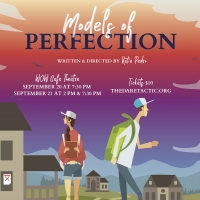
The Dare Tactic Presents MODELS OF PERFECTION
The Dare Tactic presents Models of Perfection written and directed by Katie Pedro. Performances will take place September 20 at 7:30pm and September 21st at 2pm and 7:30pm, at WOW Cafe Theatre, tickets available at thedaretactic.org
Summer Evenings in the Garden, Interactive Tours and More Set for Merchant's House Museum, May-June 2014
Merchant's House Museum has announced a full lineup of fun and interesting events to kick off summer in May and June 2014.
Summer Evenings in the Garden, Interactive Tours and More Set for Merchant's House Museum, May-June 2014
Merchant's House Museum has announced a full lineup of fun and interesting events to kick off summer in May and June 2014.
Dyckman Farmhouse Museum Frequently Asked Questions
- What are the closest subway stops to Dyckman Farmhouse Museum?
-
The closest subway stops to Dyckman Farmhouse Museum at 4881 Broadway are the 207th Street station on the A and 1 lines.
If you're coming from downtown Manhattan, you can take the A train uptown to the 207th Street station. From there, it's just a short walk to the museum.
If you're coming from other parts of the city, you can take the 1 train to the 207th Street station and walk to the museum from there.
Please note that subway schedules and service changes can vary, so it's always a good idea to check for any updates before your trip. You can find the most up-to-date information on the official website of the Metropolitan Transportation Authority (MTA) at www.mta.info.
While you're in the area, I recommend exploring the beautiful Inwood Hill Park, which is just a short walk from the museum. It offers scenic views of the Hudson River, hiking trails, and even a small nature center. It's a great place to relax and enjoy nature in the midst of the bustling city.
I hope you have a wonderful time visiting Dyckman Farmhouse Museum and exploring the surrounding area!
- What's the best way to get to Dyckman Farmhouse Museum by bus?
-
The closest bus stops to Dyckman Farmhouse Museum at 4881 Broadway in New York City are:
1. Broadway/W 204 St: This bus stop is served by the M100 and Bx7 buses. You can check for updates on the M100 bus schedule [here](https://bustime.mta.info/m/index?q=M100) and the Bx7 bus schedule [here](https://bustime.mta.info/m/index?q=Bx7).
2. Broadway/W 207 St: This bus stop is served by the M100 and Bx7 buses as well. You can check for updates on the M100 bus schedule [here](https://bustime.mta.info/m/index?q=M100) and the Bx7 bus schedule [here](https://bustime.mta.info/m/index?q=Bx7).
Please note that bus schedules may vary, so it's always a good idea to check for updates before your visit. Enjoy your time at Dyckman Farmhouse Museum!
- How much time should I plan to spend at Dyckman Farmhouse Museum?
-
The ideal length of time to plan to spend at Dyckman Farmhouse Museum in New York City is about 1 to 1.5 hours. This will give you enough time to explore the museum's exhibits, learn about the history of the farmhouse, and appreciate the preserved 18th-century architecture. The museum offers guided tours, which can provide a more in-depth experience and usually last around 45 minutes. Additionally, you may want to take some time to wander around the surrounding gardens and grounds, which are lovely to explore. Overall, allocating an hour or so should give you a fulfilling visit to the Dyckman Farmhouse Museum.
- Can I bring food and drinks into Dyckman Farmhouse Museum?
-
The Dyckman Farmhouse Museum in New York City does not have a food or drink policy. However, please note that the museum is a historic site, and it is always a good idea to be respectful of the space and its artifacts. If you do bring food or drinks, please be mindful and clean up after yourself. Additionally, there are plenty of wonderful cafes and restaurants in the surrounding area where you can enjoy a meal or a drink before or after your visit to the museum.
- Does Dyckman Farmhouse Museum offer luggage storage?
-
The Dyckman Farmhouse Museum does not have luggage storage facilities on-site. However, there are several options available nearby. One option is to use a luggage storage service such as Vertoe or LuggageHero, which have multiple locations throughout the city, including in the vicinity of the museum. These services allow you to securely store your luggage for a few hours or even a full day. Another option is to check with your accommodation if they offer luggage storage for guests, as many hotels and hostels do. Lastly, some transportation hubs like Penn Station or Grand Central Terminal may have luggage storage facilities available for a fee. It's always a good idea to plan ahead and check the availability and pricing of these services before your visit to ensure a smooth and hassle-free experience.
- Is Dyckman Farmhouse Museum a good place to visit for foreign travelers who are not native English speakers?
-
Yes, the Dyckman Farmhouse Museum is a great destination for visitors from other countries and non-English language speakers. While the museum primarily offers tours in English, they also provide printed materials in multiple languages, including Spanish, French, German, and Italian. These materials offer translations of the exhibits and provide a comprehensive understanding of the history and significance of the farmhouse.
Additionally, the museum staff is friendly and knowledgeable, and they are always ready to assist visitors with any questions they may have. Whether you're a history enthusiast or simply interested in experiencing a piece of New York City's past, the Dyckman Farmhouse Museum is a cultural gem that welcomes visitors from all over the world.
- What ages are appropriate for Dyckman Farmhouse Museum?
-
The Dyckman Farmhouse Museum in New York City is a great destination for visitors of all ages! While it may be particularly interesting for history buffs and those with an appreciation for architecture, the museum welcomes visitors of all ages to explore and learn about the city's rich past. Families with children can enjoy the museum's exhibits and interactive displays, which offer a glimpse into what life was like on a working farm in the 18th century. So whether you're a history enthusiast or just looking for a unique cultural experience, the Dyckman Farmhouse Museum is definitely worth a visit!