Landscape architects and 2025 National Design Award winners TERREMOTO discuss their newly released principles of radical gardening, a practice-wide commitment to creating “omni-positive” gardens that are deeply empathetic, ecologically restorative, and thoughtfully designed to support all living things at every scale. TERREMOTO is a landscape architecture design studio with offices in Los Angeles and Berkeley, California founded in 2012 with the intention of building gardens and landscapes that were explorations and investigations into ideas and culture. They create site-specific landscapes that respond to client needs while challenging historical and contemporary landscape construction methods, materials, and formal conventions. Spanning projects of diverse scales and typologies, TERREMOTO’s portfolio reflects a belief that gardens can respond to the needs of all, and that this expansiveness gives rise to novel forms of beauty. Kasey Toomey and Story Wiggins from TERREMOTO is joined by Billy Fleming, interdisciplinary scholar of climate justice and design, for a conversation about how they translate their values into practice through landscapes that embrace process-based stewardship, closed-loop systems, and care for both human and non-human communities. Together, they will explore how gardens can serve as powerful tools for imagining a radical future built and tended with love. More about National Design Awards: https://www.cooperhewitt.org/national-design-awards/ Biographies: Kasey Toomey is a landscape architect and principal at TERREMOTO, where he co-leads the studio’s Bay Area practice. His work is shaped by an interest in where materials come from, local ecologies, and how much—or how little—is needed to make a place meaningful. Trained in landscape architecture and sculpture, he works across gardens, public spaces, and objects with a focus on hyperlocal plants and materials. He values resourcefulness over refinement and collaboration with the people who build and care for gardens. Kasey believes in non-human centric design solutions and iteration. He received a BSLA with Distinction in Research from Cornell University and an MFA in Sculpture from the University of Pennsylvania. Story Wiggins is landscape architect with a background in historic preservation and land stewardship. As a principal at TERREMOTO, she leads projects of various scales and types, including residential, commercial, institutional, and agricultural. Through her intuitive approach to design, she aims to honor the land, exercise restraint, and allow for evolution through stewardship. Her recent work has explored design illegibility within the cultural landscape of the Sea Ranch, and bioregional and cultural specificity with Ohlone leaders at the mak-warép Land Conservancy. She has also led TERREMOTO’s ‘Land and Labor’ internal working group, which advocates for the building and gardening trades and the tradespeople that make design tangible. Story received an MLA from UC Berkeley and a BA in Historic Preservation and French from the College of Charleston. Billy Fleming (moderator) is an interdisciplinary scholar of climate justice and design. He is founding codirector of the Climate and Community Institute, a progressive think tank focused on climate and political economy, and assistant professor of landscape architecture at Temple University’s Tyler School of Art and Architecture in Philadelphia. Fleming was the inaugural Wilks Family Director and founder of the Ian L. McHarg Center at the University of Pennsylvania and an urban policy advisor to the Obama administration. He is the author of Building Postcarbon Futures: Land, Justice, and Energy Transitions (2026) and coeditor of Design with Nature Now (2019) and A Blueprint for Coastal Adaptation: Uniting Design, Economics, and Policy (2021).
Cooper Hewitt, Smithsonian Design Museum
Museum · Upper East Side
Location
2 E 91st St, New York, NY 10128 · Get Directions
Cooper Hewitt, Smithsonian Design Museum Videos
Graphic and information designer Ladislav Sutnar designed the visual identity and store graphics for Carr’s shopping plaza in New Jersey in 1956. Through color, symbols, movement, and paper cutouts, Sutnar shows how play can spark creativity and guide the design process. Explore Cooper Hewitt’s Archives and discover how designers bring ideas to life through creative strategies like play, tweak, repeat, simplify, show off, and transform. The Archives contain sketches, prototypes, drafts, and other materials that reveal the creative process behind 20th-century American design. These records span many disciplines such as architecture, graphic design, furniture, industrial design, interior design, lighting, textile design, and wallcoverings. Music: TolsetMusic - Jazz Trio (Piano Jazz Background Music), Free Music Archive TolsetMusic - Jazz Trio (Piano Jazz Background Music), Free Music Archive
In 1967, graphic designer Roger Cook and his firm partner Don Shanosky worked with the Department of Transportation and the American Institute of Graphic Arts to create universal symbols for airports and train stations ahead of the U.S. Bicentennial. Cook’s design process is especially visible in the many versions of the Lost and Found symbol. These drawings show how the symbols we use every day have been refined through experimentation, countless iterations, and small tweaks. Explore Cooper Hewitt’s Archives and discover how designers bring ideas to life through creative strategies like play, tweak, repeat, simplify, show off, and transform. The Archives contain sketches, prototypes, drafts, and other materials that reveal the creative process behind 20th-century American design. These records span many disciplines such as architecture, graphic design, furniture, industrial design, interior design, lighting, textile design, and wallcoverings. Music: TolsetMusic - Jazz Trio (Piano Jazz Background Music), Free Music Archive PulseBox - Piano Jazz, Free Music Archive
Join MTA Arts & Design and Cooper Hewitt, Smithsonian Design Museum for a special conversation celebrating the opening of MTA Arts and Design’s In Service: MTA Photographs by Christopher Payne and the closing of Cooper Hewitt’s Made in America: The Industrial Photography of Christopher Payne. Photographer Christopher Payne will discuss his process and share stories behind his explorations of the New York transit system, offering a behind-the-scenes look at the craft, curiosity, and precision that define his work. Fascinated by complex systems and spaces of making and doing, Payne captures the choreography of labor and machinery that usually happens out of sight. Payne will be joined in conversation by MTA Arts & Design Director Tina Vaz, and Cooper Hewitt Chief Curator Michelle Millar Fisher, will moderate. The program will take place in the In Service gallery space at Grand Central. Don’t miss this opportunity to learn more about this new body of photographs and see a featured selection of images from the exhibition.
In this guided tour of Made in America: The Industrial Photography of Christopher Payne, photographer Christopher Payne will take visitors through the exhibition, highlighting some of his original photographs of industrial manufacturing across the United States. From candy to pianos to humanoid robots, Payne’s photographs capture the ingenuity and diversity of products made in America, and the skilled workers who make them.
In conjunction with Made in America: The Industrial Photography of Christopher Payne, join Cooper Hewitt for an illustrated talk on the critical role photography has played at MillerKnoll across the histories of both Herman Miller and Knoll. Whether documenting manufacturing processes or creating images for advertising, photographs of MillerKnoll’s furniture and textiles have shaped our understanding of American design for over seven decades. Amy Auscherman, MillerKnoll’s Director of Archives and Brand Heritage, will share how the company continues to adapt to rapid changes in labor, materials, and technology, with an eye toward the future. Following the lecture, Auscherman will be joined by Christopher Payne for a conversation about Payne’s recent work photographing the manufacture of MillerKnoll’s iconic Eames Lounge Chair, and what documenting this company means to him within the larger context of his project to capture the history, present, and future of manufacturing in the United States. The conversation will be moderated by the curator of Made in America, Susan Brown.
More in The Upper East Side
More Museums
Cooper Hewitt, Smithsonian Design Museum News

MAD ABOUT THE BOY, B-SHERT to Headline Tom Gold Dance's 2026 Summer Engagements
Tom Gold Dance announced summer engagements including a Fairfield County Dance Festival debut in Connecticut and a return to the Berkshires at Shakespeare & Company in Lenox, MA, with performances of B-SHERT and MAD ABOUT THE BOY.

HAAS BROTHERS: UNCANNY VALLEY To Open At Museum Of Arts And Design
This spring, the Museum of Arts and Design (MAD) will present Haas Brothers: Uncanny Valley, a wildly imaginative mid-career survey that plunges visitors into the exuberant, uncanny worlds of twin artists Nikolai and Simon Haas.

Rufus Norris’s First Directing Job Since the National Theatre Will Open In Turkey Today
Rufus Norris will return to directing this evening as his production of Arthur Miller's Death of a Salesman premieres at Zorlu PAC in Istanbul. Learn more here!

AJAX Comes to Boise Contemporary Theatre
The World Premiere of AJAX by Habib Yazdi and directed by Kareem Fahmy will come to Boise Contemporary Theatre next month. Performances run April 22-May 9, 2026.

Jim Saltzman Appointed Dean Of Jazz Arts At Manhattan School Of Music
Renowned international music conservatory Manhattan School of Music has announced that acclaimed composer, conductor, and saxophonist Jim Saltzman has been appointed Dean of the School's prestigious Jazz Arts division, effective July 1, 2025.
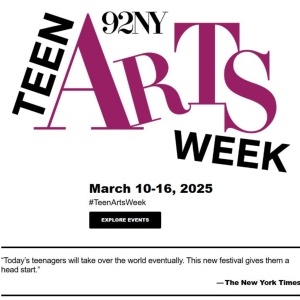
TEENS ARTS WEEK Returns In March For Teens In All Five Boroughs
Teen Arts Week will return to NYC from March 10–16, 2025. Launched by 92NY's Teen Producers in 2019, Teen Arts Week celebrates the best of arts programming for teens around NYC, in collaboration with leading cultural organizations in all five boroughs.

Master Drawings New York Unveils February Programming
Master Drawings New York has revealed programming in conjunction with the fair on view February 1 through 8, 2025 with a preview event on Friday, January 31. Learn more!

Tom Gold Dance To Perform At Isabella Stewart Gardner Museum And Marlene Meyerson JCC Manhattan
Tom Gold Dance announced performances at Calderwood Hall in the Isabella Stewart Gardner Museum on November 3 and the Goldman-Sonnenfeldt Auditorium at the Marlene Meyerson JCC Manhattan on November 14.
New York City Ballet Announces 2024 Fall Fashion Gala
The New York City Ballet's 2024 Fall Fashion Gala will feature world premiere ballets and stunning costumes by renowned designers, blending the worlds of fashion and dance in an unforgettable evening.

Tom Gold Dance To Present World Premiere and Revivals This Spring
Get the latest updates on TOM GOLD DANCE's 2024 Spring Season, happening on April 17 and 18 at The Kaye Playhouse at Hunter College, featuring the World Premiere of Lavender is all the Rage, set to Ezio Bosso's String Quartet No. 5.

Review Roundup: THE HUNT Opens at St. Ann's Warehouse
St. Ann’s Warehouse is presenting the U.S. premiere of the Almeida Theatre production of The Hunt. Read the reviews for The Hunt here!
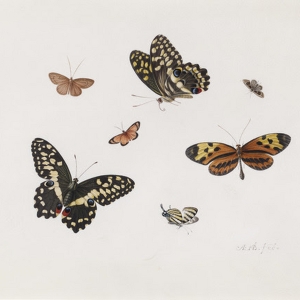
Master Drawings New York Announces Spring Exhibitions
Master Drawings New York, the premier U.S. drawings showcase, will take place from January 27 through February 3, 2024. The exhibition will feature exceptional and rare works on paper from the 15th to the 21st centuries, as well as paintings and sculpture. Don't miss this highly anticipated event!
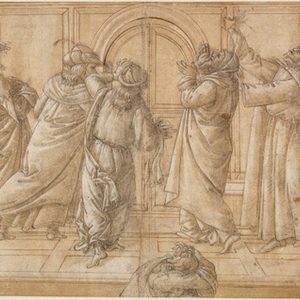
Master Drawings New York Announces Programs During Run Of Fair, January 26 – February 3
Master Drawings New York (MDNY), the premier U.S. drawings showcase, announces programs for the 2024 fair, on view from January 27 through February 3 in more than two dozen galleries on Manhattan's Upper East Side.

Williamstown Theatre Festival Reveals Margaret Gould Stewart As New Chair Of The Board Of Trustees
Williamstown Theatre Festival has announced that Margaret Gould Stewart will succeed Jeff Johnson as the Chair of the Board of Trustees. Johnson has led the board for the last five years and will remain a member of the Board of Trustees.
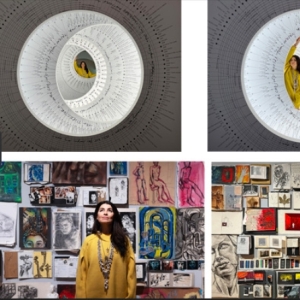
Tony Award Winner Es Devlin Opens First Solo Museum Exhibition At Cooper Hewitt
Cooper Hewitt, Smithsonian Design Museum will present “An Atlas of Es Devlin” from Nov. 18 through Aug. 11, 2024. Th
Cooper Hewitt, Smithsonian Design Museum Frequently Asked Questions
- What are the closest subway stops to Cooper Hewitt, Smithsonian Design Museum?
-
The closest subway stops to Cooper Hewitt, Smithsonian Design Museum at 2 E 91st St in New York City are:
1. 96th Street Station: Located on the Lexington Avenue Line (4, 5, and 6 trains), this station is just a short walk from the museum. Exit the station and head south on Lexington Avenue until you reach 91st Street, then make a left.
2. 86th Street Station: Also on the Lexington Avenue Line (4, 5, and 6 trains), this station is a bit further from the museum but still within walking distance. Exit the station and head north on Lexington Avenue until you reach 91st Street, then make a right.
Both of these subway stations are easily accessible and will get you to the museum conveniently. Remember to check for any subway updates or service changes before your visit. You can find the latest information on the official MTA website: MTA.info.
While you're in the area, I recommend exploring the beautiful Central Park, which is just a stone's throw away from the museum. Take a leisurely stroll through the park, rent a bike, or have a picnic on the Great Lawn. It's a great way to relax and enjoy nature in the heart of the city.
If you're feeling hungry after your museum visit, there are plenty of dining options nearby. Some popular choices include:
- Sarabeth's: A charming restaurant known for its delicious brunch options and homemade jams. It's located at 1295 Madison Avenue, just a few blocks south of the museum. Check out their menu and make a reservation at Sarabeth's Upper East Side.
- The Boathouse: Situated in Central Park, The Loeb Boathouse offers a picturesque setting for a meal. Enjoy classic American cuisine while overlooking the park's scenic lake. Visit their website for more information: The Central Park Boathouse.
I hope you have a fantastic time exploring the Cooper Hewitt Museum and the surrounding area!
- What's the best way to get to Cooper Hewitt, Smithsonian Design Museum by bus?
-
The closest bus stops to Cooper Hewitt, Smithsonian Design Museum at 2 E 91st St in New York City are:
1. Madison Av/E 92 St: This bus stop is served by the M1, M2, M3, and M4 buses. You can check for updates on the MTA website [here](http://bustime.mta.info/).
2. Madison Av/E 89 St: This bus stop is served by the M1, M2, M3, and M4 buses as well. You can find bus updates on the MTA website [here](http://bustime.mta.info/).
Please note that bus routes and schedules are subject to change, so it's always a good idea to check for updates before your trip. Enjoy your visit to the Cooper Hewitt, Smithsonian Design Museum!
- How much time should I plan to spend at Cooper Hewitt, Smithsonian Design Museum?
-
The ideal length of time to plan for a visit to Cooper Hewitt, Smithsonian Design Museum in New York City is typically around 2-3 hours. This will give you enough time to explore the museum's extensive collection, engage with interactive exhibits, and fully immerse yourself in the world of design.
Cooper Hewitt offers a unique and interactive experience, allowing visitors to engage with design through various mediums such as textiles, furniture, graphics, and digital installations. Take your time to appreciate the intricate details and innovative concepts showcased throughout the museum.
If you're a design enthusiast or have a particular interest in a specific exhibition, you may want to allocate more time to fully explore and absorb everything the museum has to offer. Additionally, Cooper Hewitt often hosts temporary exhibitions and special events, so make sure to check their website for any upcoming highlights that might pique your interest.
Remember, it's always a good idea to check the museum's hours of operation and plan your visit accordingly. Enjoy your time at Cooper Hewitt, Smithsonian Design Museum and embrace the creativity and inspiration that awaits you!
- Can I bring food and drinks into Cooper Hewitt, Smithsonian Design Museum?
-
Cooper Hewitt, Smithsonian Design Museum in New York City allows visitors to bring their own food and drinks into the museum. However, they kindly request that you enjoy your refreshments in designated areas such as the garden or outdoor spaces. Additionally, there is a café located on-site where you can purchase food and beverages if you prefer. So whether you want to bring your own snacks or indulge in the museum's offerings, you have options to satisfy your hunger and thirst while exploring the world of design at Cooper Hewitt.
- Does Cooper Hewitt, Smithsonian Design Museum offer luggage storage?
-
Cooper Hewitt, Smithsonian Design Museum in New York City does not have a luggage storage facility on site. However, there are several options available nearby for storing your luggage while you visit the museum.
One convenient option is to use a luggage storage service such as LuggageHero or Vertoe. These services allow you to securely store your bags at nearby businesses, such as hotels or shops, for a small fee. You can easily find and book these services online or through their mobile apps.
Another option is to check if your hotel offers luggage storage for its guests. Many hotels in the city provide this service, allowing you to store your bags before check-in or after check-out.
If you prefer to explore other attractions before or after your visit to the museum, you can also find luggage storage facilities at major transportation hubs such as Penn Station or Grand Central Terminal. These facilities typically charge a fee based on the size and duration of storage.
Remember to plan ahead and check the operating hours and policies of any luggage storage service you choose, as they may vary. By utilizing these options, you can enjoy your visit to Cooper Hewitt, Smithsonian Design Museum without the burden of carrying your luggage around.
- Is Cooper Hewitt, Smithsonian Design Museum a good place to visit for foreign travelers who are not native English speakers?
-
Yes, the Cooper Hewitt, Smithsonian Design Museum is a fantastic destination for visitors from other countries and non-English language speakers. While English is the primary language used in the museum, they offer several resources and services to make the experience enjoyable for everyone.
Firstly, the museum provides multilingual audio guides that offer detailed explanations of the exhibits in various languages. This allows non-English speakers to fully understand and appreciate the artwork and design on display.
Additionally, the museum offers informative brochures and maps in multiple languages, making it easier for visitors to navigate the museum and learn about the different exhibitions.
The staff at the Cooper Hewitt, Smithsonian Design Museum is also very helpful and accommodating. They are accustomed to assisting visitors from all over the world and are happy to answer any questions or provide guidance in multiple languages.
Overall, the Cooper Hewitt, Smithsonian Design Museum is a welcoming and inclusive destination for visitors of all backgrounds. Whether you are a non-English speaker or from another country, you can expect to have a fulfilling and enjoyable experience exploring the world of design at this remarkable museum.
- What ages are appropriate for Cooper Hewitt, Smithsonian Design Museum?
-
The Cooper Hewitt, Smithsonian Design Museum in New York City is a fantastic destination for visitors of all ages! While the museum does not have a specific recommended age range, it offers a wide range of exhibits and interactive experiences that can be enjoyed by both children and adults.
For families with young children, the museum has a dedicated space called the "Process Lab" where kids can engage in hands-on design activities and explore their creativity. Additionally, the museum offers family-friendly programs and workshops throughout the year, making it a great educational experience for children.
Adults and design enthusiasts will also find plenty to enjoy at the Cooper Hewitt. The museum houses an extensive collection of design objects spanning various periods and styles, including furniture, textiles, and digital media. There are also temporary exhibitions that showcase contemporary design and explore different aspects of the field.
Overall, the Cooper Hewitt, Smithsonian Design Museum offers something for everyone, regardless of age. So whether you're traveling with kids or visiting on your own, be sure to add this unique cultural institution to your itinerary!