


Feature: Indonesian Musical Theater: 2026 Overview (Part 1)
After the pandemic, the musical theater scene in Indonesia has been on a steady road of recovery and growth.
Disclaimer: This article is meant as an observation piece on the current Indonesian musical theater scene. Moreover, this article mainly focuses on productions in the Greater Jakarta Area, due to the writer’s area of residence. Indonesia has a rich performing arts culture that’s beyond the scope of this article.
Indonesia has a long history of theatrical forms that integrate musical elements to the performance. From traditional art forms such as Lenong and Ludruk, to the birth of Komedie Stamboel during the colonial era, up to the modern influence of American musical theater, thespians throughout the nation have always been exploring how music can add another layer to theatrical works.
For a deeper look into recent developments in the Indonesian musical theater A Decade of Indonesian Broadway Musicals, which was written and published a couple months before the COVID-19 pandemic.
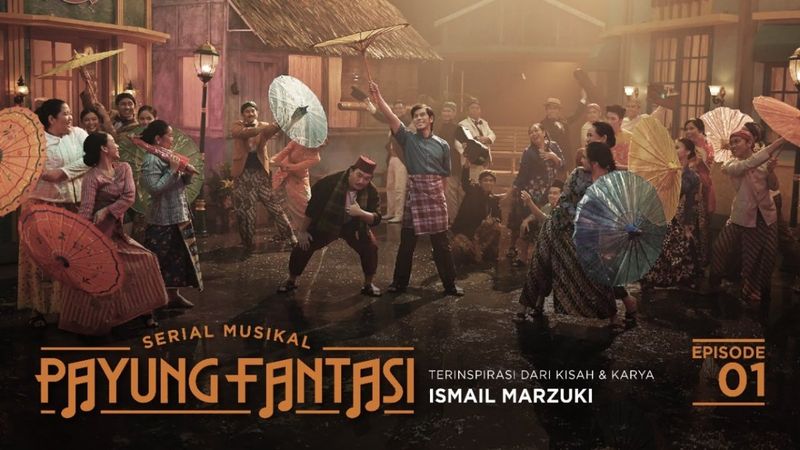
In 2020, the pandemic hit Indonesia and shuttered many businesses, either temporarily or permanently. Theater was among the hardest-hit industries. Some pivoted to online productions. The flag bearer was Indonesia Kaya’s web musical anthology #MusikalDiRumahAja (#MusicalAtHome) that collaborated with different performing arts troupes and adapted various Indonesian folk tales. It was followed by the web series Nurbaya and Payung Fantasi. Other such streamed affairs included JPAC’s The Last Five Years and Indonesia Menari Virtual.
Educational programs also moved to the digital space, with organizations like JPAC, RND (now Arendi), and Hi Jakarta Productions holding training programs through Zoom. Although there were practical limitations, being online opened these programs to more aspiring performers beyond those residing in big cities.
Even after government-mandated lockdowns loosened in mid-2020, the audience’s appetite to attend large gatherings did not return right away, making live shows a financial risk. Big shows only started to make their return in 2022, such as TEMAN’s RENT (November 2022) and Jakarta Movin’s Cek Toko Sebelah (December 2022).
Ever since then, the nascent local musical theater scene continues to grow and evolve. Despite the growing pains, showrunners continue to innovate in very exciting ways that might inch the whole scene closer to shaping what an “Indonesian musical” can look like.
Musicals and The People Who Make Them
So what kind of musicals are being made in Indonesia – particularly, Jakarta?
For the purposes of this article, ‘musicals’ refers to musical theater productions that follow the iconic framework of modern musical theatre that was developed in America: a theater piece with songs as a storytelling tool to drive the plot and develop characters.
Even with that definition, musicals can take wildly different shapes and sizes.
A musical can be a school production that runs for one time and with minimal budget, to a professional show with a month-long run, star-studded cast, and majestic set pieces.
Content-wise, there are both licensed musicals – performances of pre-existing material, supplied through licensing agreements with agencies like Music Theatre International or Concord Theatricals – and original musicals. Original musicals themselves can be wholly original or adaptations of existing stories.
Notably, there are currently no touring musical companies making a stop in Indonesia. In the last decade, Jakarta saw tour performances of shows like ANNIE, SHREK, and THE SOUND OF MUSIC. The main reason is twofold: there are few theaters in Indonesia available to fulfill the technical requirements of touring shows and the limited market demand. After all, by having a stop in Singapore, touring companies can still attract Jakarta theatergoers who are passionate and affluent enough to add a plane ticket to their theater visit.
But who is making these musicals?
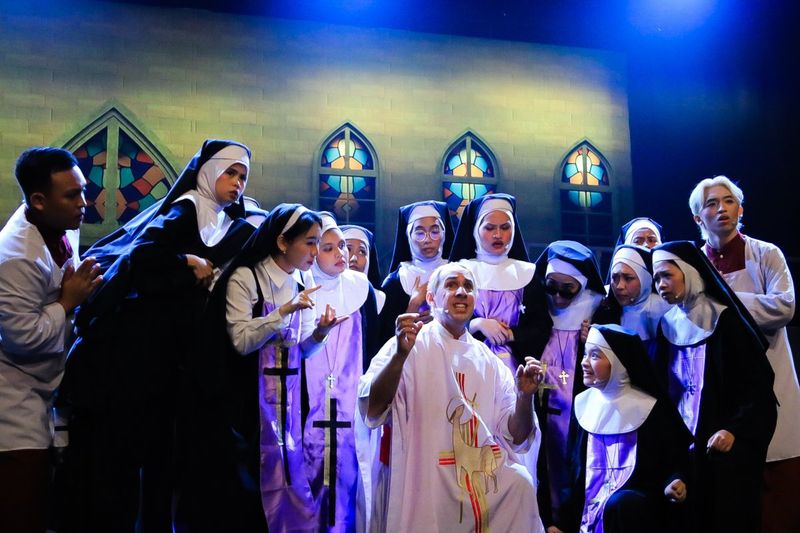
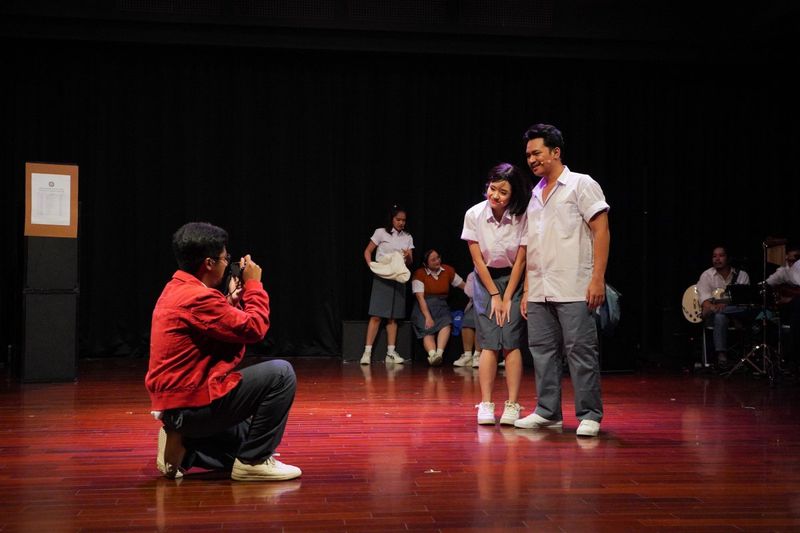
The two main categories are community theaters and production companies. Other musical makers include independent artists, churches, training institutes, and schools (with some schools even putting on licensed productions. This article will later delve further into the differences between musical communities and companies.
But musicals are not just made by these theatermakers themselves; some musical shows are commissioned works.
Take, for example, NALA, DENGAR AKU JUGA. It was a musical piece borne out of collaboration between the fashion brand KLAMBY with Jakarta Art House, highlighting the former’s fashion pieces. Elizabeth, another fashion brand, teamed up with the community JPAC to create a short musical retelling the brand’s founding for their 60th anniversary. Ketemu Di Seni’s DI HATI ADA CINTA is a personal commission from a man to surprise his wife as part of their anniversary.
These commissioned projects highlight a rising awareness of musical theatre as an art form, which can lead to more economic sustainability.
Licensed Musicals, Now in Bahasa Indonesia
Throughout the last six years, licensed musicals still proved to be a popular choice.
From iconic titles like R&H’s CINDERELLA, GREASE, and MAMMA MIA; cult classics like THE ADDAMS FAMILY, SISTER ACT, and CATCH ME IF YOU CAN; and even lesser-known works like ORDINARY DAYS, these licensed works provide ready-to-use script and songs. And, one would hope, enough name recognition to get the ticket sales going.
Typically, these shows are presented in English. But in April of 2026, AdPro produced the jazzy, iconic musical CHICAGO. Through a licensing arrangement with Concord Theatricals, the show’s dialogues were translated into Bahasa Indonesia while the songs were kept in English.
.jpg?format=auto&width=800)
This marks a major milestone in the mainstream musical scene. Having Indonesian dialogues allows the show to reach out to an even bigger audience – theatergoers who find fully English shows inaccessible.
During a sharing session held by Jakarta Directors Lab, Aldafi Adnan, the founder of AdPro shared that the creative team had tried translating the songs as well. But due to the linguistic differences between English and Indonesian, they’d found it difficult to retain the same feeling and flow. Regardless, they believed that keeping the songs in English was an appropriate compromise; after all, the songs were popularized in English.
During the same sharing session, Adnan shared that this approach proved to be a hit, with theatergoers praising the translated dialogues as easily understood, funny, and familiar. Directors and actors can explore imbuing certain characters with regional accents to give further characterization and flavor. Moreover, having the script in their native tongue helped some actors with their performance as they didn’t have to focus on diction too much.
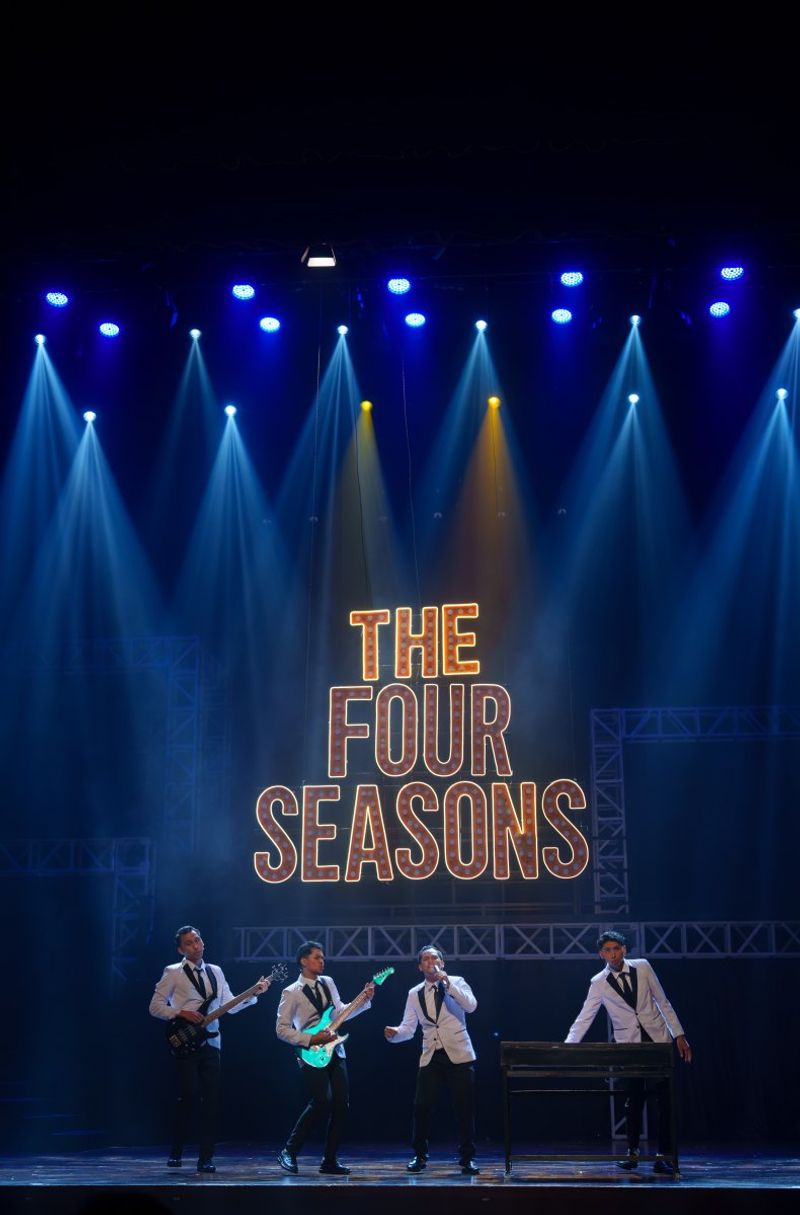
In June of 2026, the production of JERSEY BOYS by Jakarta Art House and Nawanika was also performed with Indonesian dialogues and English songs. It remains to be seen if more theater groups and communities will follow suit.
Before these bilingual musicals, some productions already made accommodations by providing Indonesia subtitles, such as Hi Jakarta Production’s SCHOOL OF ROCK, Censtacom’s LITTLE WOMEN, and many more. However, subtitles also ran into challenges: particularly, ensuring they are displayed in-sync with the performance and arranging the placement of monitors to ensure readability to all audience members. Many theaters don’t even have monitors in the first place and the production has to have them installed.
Still, this trend highlights a pragmatic understanding of the market: musicals are already a niche art form in Indonesia. Lowering the barrier of entry is a worthwhile endeavor, even considering the extra time and (and, potentially, money) required.
Tapping Into Beloved Local IPs
Although licensed musicals have the potential to attract theatergoers, the licensing fee can add a substantial cost to the production budget, especially considering the conversion rates. Moreover, certain titles might be well-known by hardcore theater fans but unknown to the general public.
There is another way: adapting a well-known local IP into a musical.
This is not a new practice; back in 2010, Miles Productions and Erwin Gutawa Productions made MUSIKAL LASKAR PELANGI, an adaptation of Andrea Hirata’s seminal novel (which had been adapted into a box office smash in 2008). Jakarta Movin’s MUSIKAL PETUALANGAN SHERINA, based on the musical film Petualangan Sherina, had such a successful run in 2017 that it earned reruns in 2018, 2022, and 2025.
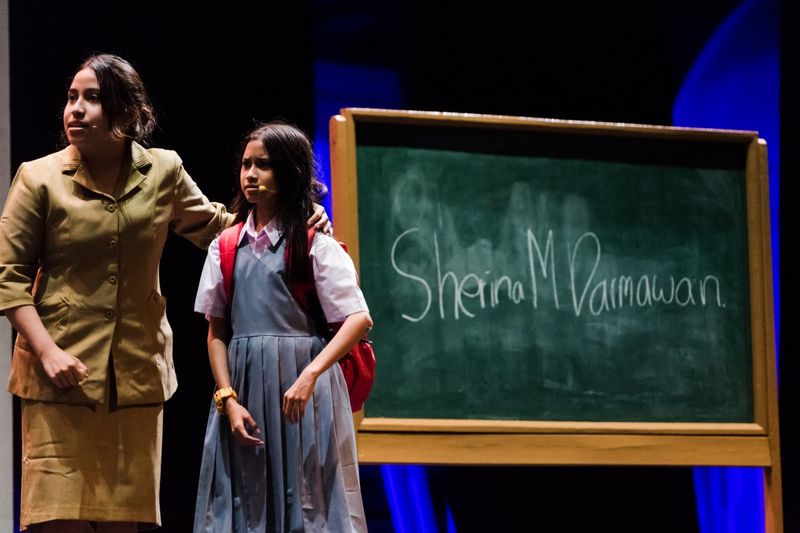
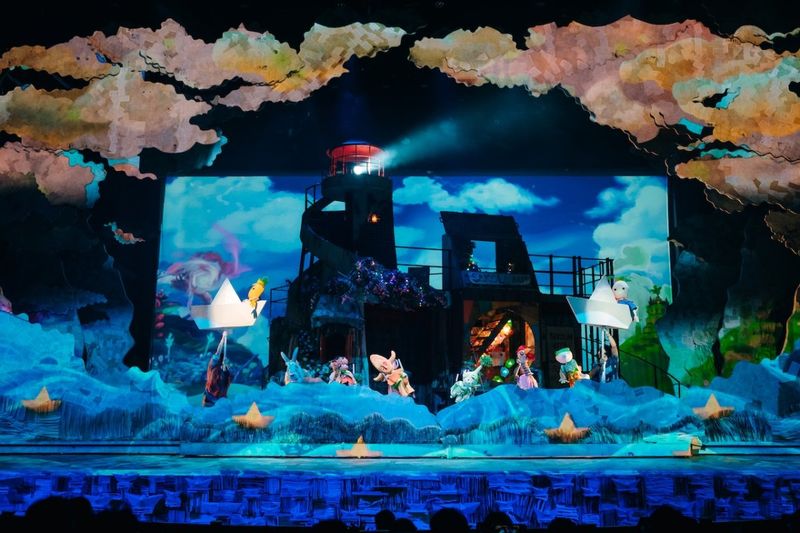
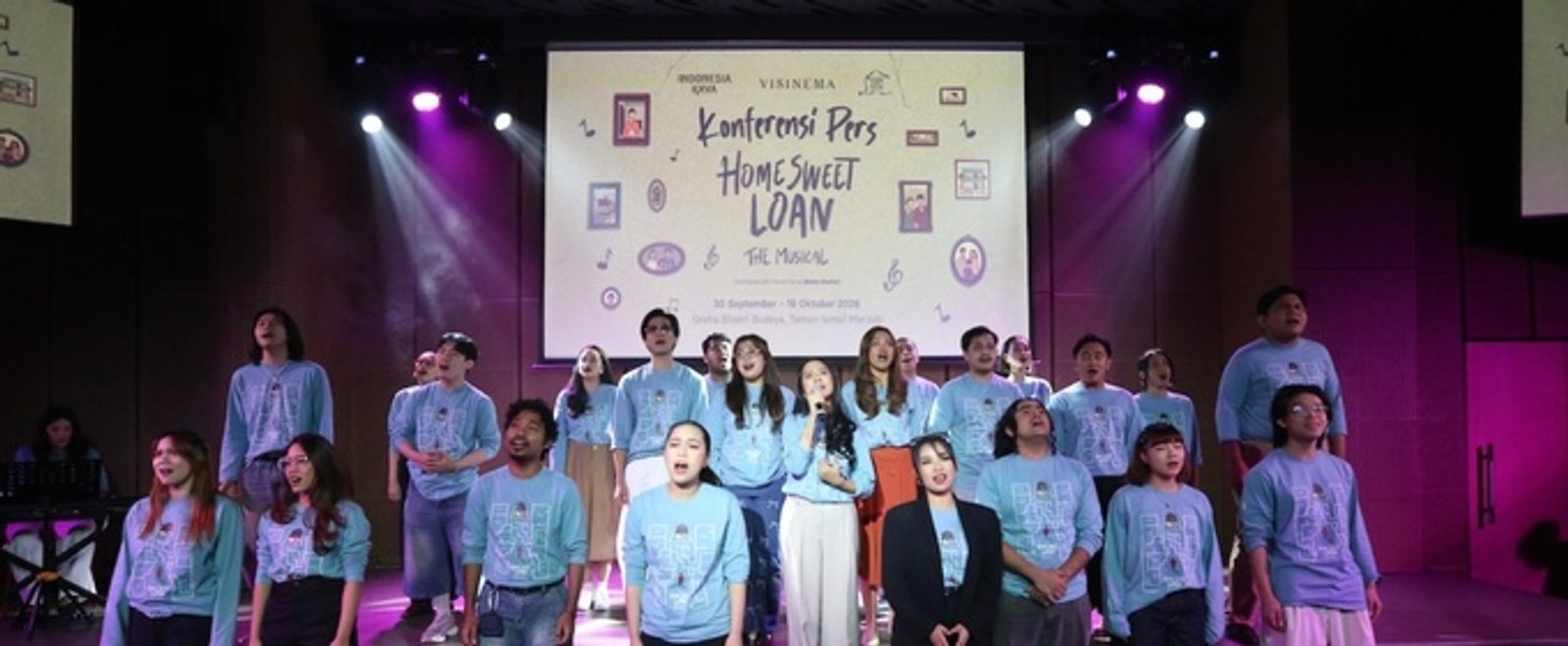
Other such titles include CEK TOKO SEBELAH (Jakarta Movin, 2022), JOSHUA OH JOSHUA (Cerita Beda Hak Sama, 2024), MUSIKAL KELUARGA CEMARA (Indonesia Kaya, Visinema Studios, and TEMAN Musicals, 2024 and 2025), MUSIKAL PERAHU KERTAS (2026), and the upcoming HOME SWEET LOAN (Jakarta Art House, 2026) and SI DOEL (2026).
This approach has an obvious advantage: brand recognition. Many Indonesians are already familiar with these beloved titles; this captive audience then, ideally, only needs a nudge into seeing the musical adaptation. Doubly so if the original work was a childhood favorite, with the original audience now being adults with money to spare.
There is also another potential benefit: the support of the IP owners. When these musicals came to be through a collaboration with the IP holders – often a production house for works originating as films – the IP holders can support the theatrical adaptation by the way of industrial connections, marketing expertise, and even monetary backing.
Of course, securing the rights to an IP adaptation is not always easy. IP holders can be protective of their IPs; theater groups might need a well-established reputation, a solid plan, and multiple meetings to reassure the IP holders that their creation is in good hands.
It should be mentioned that adapting pre-existing stories into a musical theater format is a longstanding tradition even before the rise of modern IP adaptations; many musical titles instead adapted legends, myths, and folktales, with the Ramayana being a particularly popular source.
Another approach that builds upon well-established works is jukebox musicals.
The web series PAYUNG FANTASI (Indonesia Kaya, 2022) built a story using the iconic Indonesian composer Ismail Marzuki’s songs. Ismail Marzuki’s body of work continues to inspire other jukebox works, particularly the stage musical MAR (ArtSwara, 2025 and 2026) and the musical movie SIAPA DIA (Fabis Entertainment and 909 Studio, 2025).
For a more contemporary artist, Jakarta Movin worked with the singer Tulus to create the romantic drama musical of INTERAKSI. Tulus is a true juggernaut in the modern Indonesian musical scene, breaking streaming records and winning tens of awards. INTERAKSI ran in 2024, selling out shows and even adding additional showtimes. Jakarta Movin’s next work, SENJA TEDUH PELITA (2026) took a similar approach, this time in collaboration with the band Maliq & D'Essentials. It was also an apparent commercial success, selling out shows.
.JPG?format=auto&width=800)
A similar but more esoteric approach comes in the form of MUSIKAL ABSURD: HIDUP SEGAN BUT I’M NOT DONE, which is inspired by the off-beat, nostalgia-filled illustration of scherle. And although MUSIKAL DANGDUT: KUKEJAR KAU SAYANG has an original story, the show’s art direction carries the creator’s (Aulion) signature style, as seen on his YouTube videos with millions of views.
Be it a cherished title, a musician’s discography, or a unique visual identity, leveraging familiarity can be a smart way to help a show’s marketability hit the ground running.
Comedy, Interactivity, and the Question of Script Development
When we talk about a show being licensed or original, it’s about the show’s ownership. But what are the shows actually like?
Different directors, writers, and creative teams have different approaches, needless to say. We have small, intimate musicals (like the musical monologue INGGIT) to big, bombastic musicals (like MUSIKAL PERAHU KERTAS with its giant rotating set).
But even amidst the myriad of shows of various scales and genres, some trends can be observed.
Many original musicals have an extended improvised comedy sequence, typically with no consequence to the main story, and often with some audience interaction. You can find them in shows like KAPAN NIKAH?, MUSIKAL KELUARGA CEMARA, MUSIKAL MEGA-MEGA, and many more.
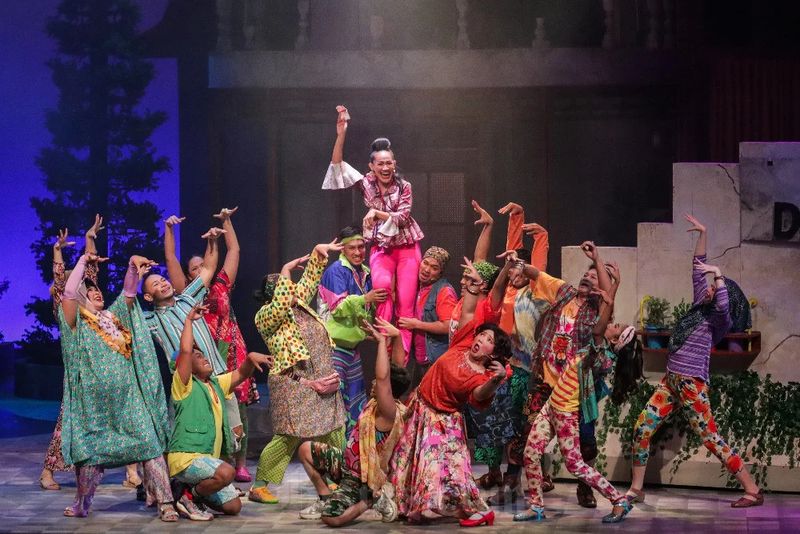
These sequences have their roots in traditional Indonesian theatrical art forms, like lenong and ludruk, adding a touch of familiarity to the Western-influenced musical theater structure. It’s also an easy way to make each showtime different, potentially resulting in viral moments.
When done right, these comedic asides can be crowd pleasers and a way to inject some levity and energy into the show. But it’s easy to take it too far; when left unchecked, these sequences can make the audience forget about the show’s actual plot. Even worse, if the comedy doesn’t hit – which is often, since comedy is very subjective – it can make for a painful experience.
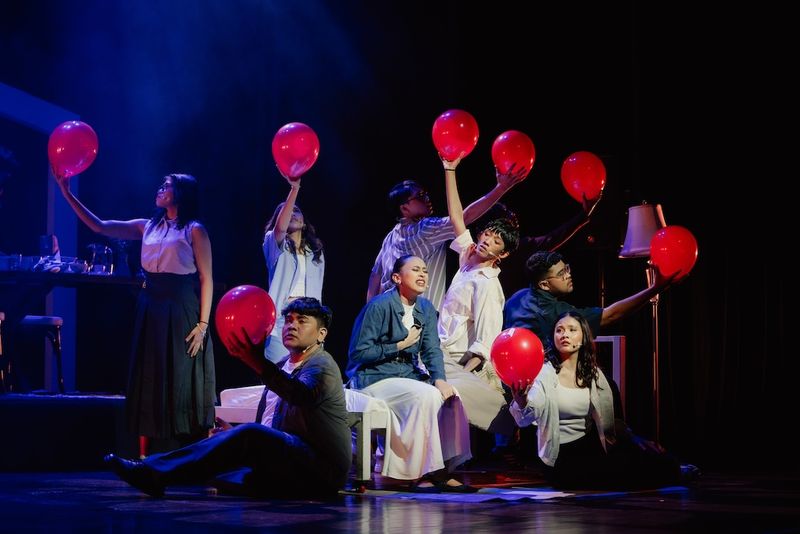
Another trend in original shows is the rise of contemporary stories set in the modern day, compared to fantasy or sci-fi stories. This is quite understandable, from writing and marketing standpoints; the writers can write what they know while platforming actual worries, and the marketers can sell its relatability. Some shows with this setting include PEREMPUAN PUNYA CERITA, RUMAH PIKIRAN DAN HATI, INTERAKSI, KAPAN RESIGN, SEMESTA BERDENDANG, JEMARI, and more.
Another common source of inspiration for writers is the ever-reliable local folklore, myths, and legends, inspiring shows like MIRAH, KIJANG KENCANA, LUTUNG KASARUNG, CALON ARANG, and many more. They likewise bring a cultural specificity but with a more traditional flair
The infusion of dangdut into the framework of western musical theater format is another highly intriguing development. This is most prevalent in MUSIKAL DANGDUT: KUKEJAR KAU SAYANG, which carries the genre in the title itself. But other shows have also incorporated dangdut-inspired numbers, like in PEREMPUAN PUNYA CERITA and KAPAN NIKAH. As an ubiquitous and homegrown genre, known for both its very danceable melodies and potential for melodrama, dangdut can certainly imbue a musical with a distinctly Indonesian flavor.
.JPG?format=auto&width=800)
Although the local musical scene isn’t left wanting for a diversity of themes and art direction, and the quantity of musicals produced has certainly gone up compared to 10 to 20 years ago, there is still the question of script development.
In Indonesia, most musicals took to the stage without having gone on a tryout phase where the work is staged for public or limited viewing. Although the root of this are monetary and timeline limitations, there is also a pervasive sense that it’s just not the expected path for musical theater works.
Although, internally, the writer and any co-writer (and sometimes the wider artistic team) might do rounds of revision of the script, theater is an art form that lives and dies on the stage. A script that sounds good on paper might flop and flounder on stage. Not to mention, after working on a script for too long, there’s the risk of the writer becoming blindsided by its shortcomings; all the events flow naturally, all the jokes land, and all the motivations are consistent, but only in the writer’s mind.
Even for shows that are given a second life through a rerun, the script is usually already locked in and forgoes the opportunity for improvement. A rare exception to this approach is Jaksical’s KAPAN NIKAH. Although the original show in Salihara was already a certified spectacle with intriguing discussions about marriage, the main story itself felt sidelined. When it returned in FMI 2025, the reworked script and direction (with more focus given to the main couple) helped the story tremendously in delivering its themes and tying everything together into an unforgettable show, despite the more stripped down production.
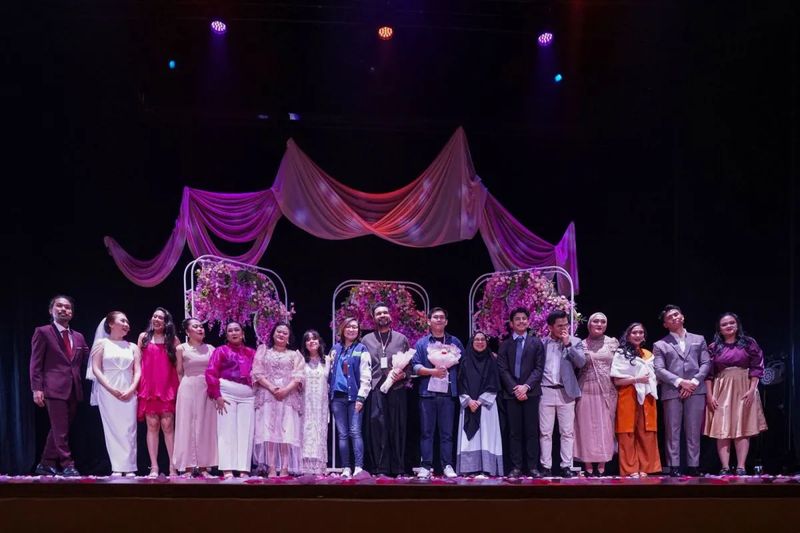
In addition to the script’s quality itself, the role of a director in interpreting a script shouldn’t be underplayed. It is often difficult to dissect the interplay between a script’s inherent qualities and directorial that elevate – or, in unfortunate cases, hinder – the material, especially for original musicals. That being said, I believe that script quality should be prioritized, at least at this time; as they serve as the canvases on which Indonesian directors can experiment on, create masterpieces, and learn from each other.
Moving forward, as production teams and community theatres gain experience in running shows, it would then be a major boon if those teams also invest more in script development. After all, a strong libretto and music are the backbone of the most timeless musicals.
Star Power Matters
When the producer in charge thinks their show needs a little boost, star power might just be the answer. Indonesians love their celebrities, after all.
Casting performers who are already big name celebrities is also a well-established tradition, although the showrunners do take into account their singing capability if it’s for a singing role. For example, back in 2010, LASKAR PELANGI already boasted an impressive entourage of singers in its cast, including Dira Sugandi, Lea Simajuntak, and Gabriel Harvianto. TEMAN’s HAIRSPRAY (2019) had the ex-idol group member Morgan Oey as Link Larkin.
Some online content creators have even taken up the mantle as producers and/or directors of stage musicals. Andovi Da Lopez and Jovial Da Lopez, a pair of brothers known for their comedic videos that sometimes include musical elements, made the political musical POLARISASI (2024). YouTuber Aulion made the dangdut-infused MUSIKAL DANGDUT: KUKEJAR KAU SAYANG in 2024.
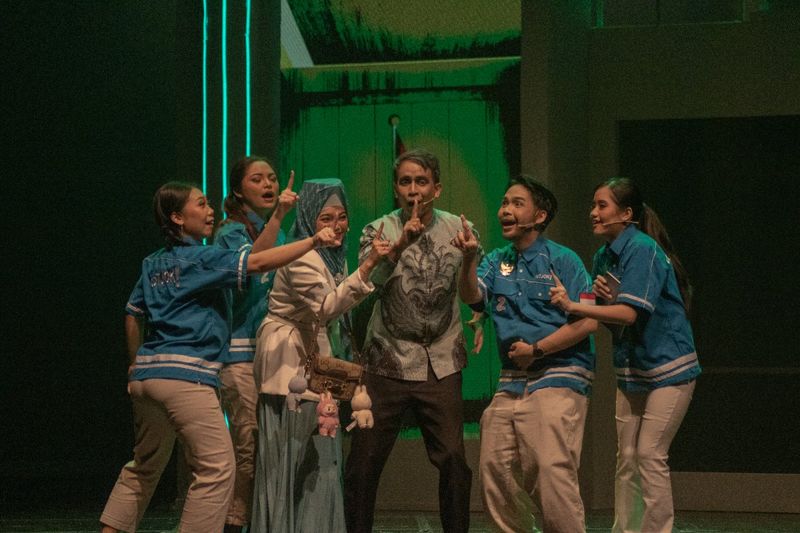
These musicals also had other content creators – especially those who have collaborated with the showrunners before – in their company, such as Leyla Aderina in POLARISASI and Genta and Bondol.jpg in MUSIKAL DANGDUT.
Today, many productions ask for the auditionees’ social media handles. It gave rise to speculations that an auditionee’s follower count is taken into consideration during the casting process. Although these speculations have not been publicly confirmed, it’s becoming more common to see cast members with a follower count numbering tens of thousands on Instagram or TikTok (of course, it should be noted that many performers enjoy making social media content as well).
However, once again, it doesn’t mean that taking follower count into account always comes with sacrificing a show’s quality. These cast members have to go through the same rehearsal process as everyone. To an audience member who’s not up-to-date with the latest viral trends (such as myself), it’s not always apparent which of the actors have hundreds of thousands of followers, and which ones have a measly two thousand or less.
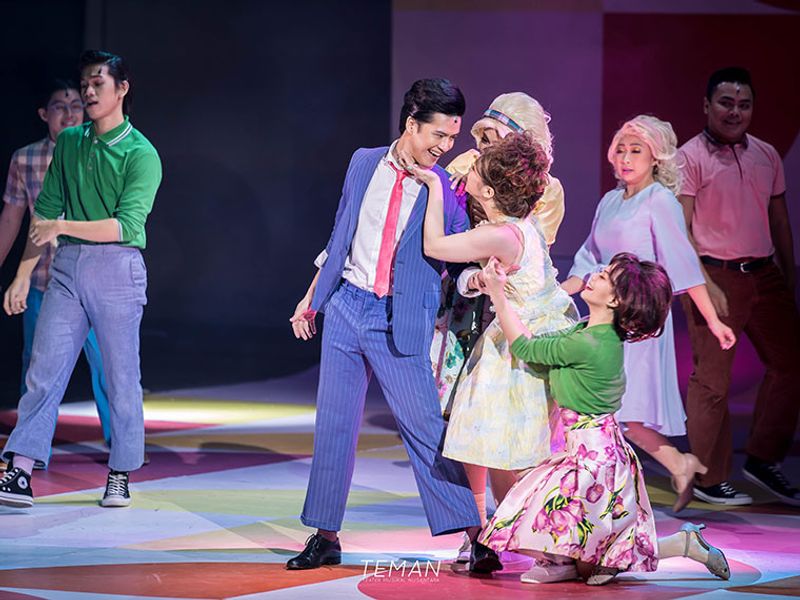
Celebrity casting is always a contentious topic. On the plus side, they can attract more audience members, perhaps introducing them to musical theatre with the hope that they’re impressed enough that they’ll consider watching another production even without a star name. More audience members also mean more ticket sales.
But leaning too heavily into celebrity casting can take roles away from talented, hardworking, fledgling musical actors who just don’t have a following yet. Thankfully, at this time, even the most high-profile commercial productions will have an open audition, typically for supporting characters and ensemble, with the main characters being pre-cast or having an invitation-only audition process. Still, it’s a treat whenever we see a new performer in a lead role, especially in bigger commercial productions. It’s important for the regeneration of talents.
From an artistic point of view, if the casting and rehearsal process are done too lackadaisically, the performance might compromise the show quality. Oftentimes, celebrity casting also necessitates a considerable budget to hire the performer, who’s used to professional rates. This does not only have budget implications, but might lead to accusations of unfairness, depending on how the other cast members are compensated.
.jpg?format=auto&width=800)
Then there’s the matter of converting online following into ticket sales. Some celebrity casting did not bring enough crowd to help set off the cost; this is particularly risky for online content creators and influencers, whose followers are used to enjoying their content without paying a cent. Asking them to take the jump to purchasing a ticket for hundreds of thousands of rupiah is never a safe gamble.
Bottom line, celebrity casting is not a cheat code and should be done carefully.
Talent and Crew Pipeline: How to Train Your Thespians
For the non-celebrity among us, how does one join a musical production in 2026?
Community productions will have open auditions and crew calls. However, depending on the community, there is a noticeable rise in quality expectations. This is different to how community theatre works in, say, the United States, where most communities will allow actors of all experience levels to get a role. Some even have policies in place to not allow a person to be in the cast for two productions in a row, to give opportunities to other members. This dichotomy between a community and a professional company will be further discussed in the next section.
Nevertheless, when you look at recent cast announcement posts, there is a rising trend: cast members increasingly come from graduates of local training programs, such as Indonesia Kaya’s Intensif Musikal Budaya, Creangers, Semesta Akademi, Svatuhari, Indonesian Musical Company’s class, Hi Jakarta Production, and so on and so forth.
.jpeg?format=auto&width=800)
This is a marked difference compared to the 2010s, when there were much less performing arts training programs to choose from. Back then, most performers earned their skills through autodidactic learning, or non-theatrical artistic training – such as vocal lessons or dance classes. A handful of performers had learned musical theater outside of the country.
Of course, completing training programs does not guarantee a role, but it helps to know the industry’s terms, have at least basic capability in acting/singing/dancing, and, perhaps more importantly, possess the discipline and work ethics required.
Once a performer establishes strong performance skills, builds their portfolio, and nurtures industry connections, they are more likely to be invited to try out for professional jobs (which are still often held behind closed doors).
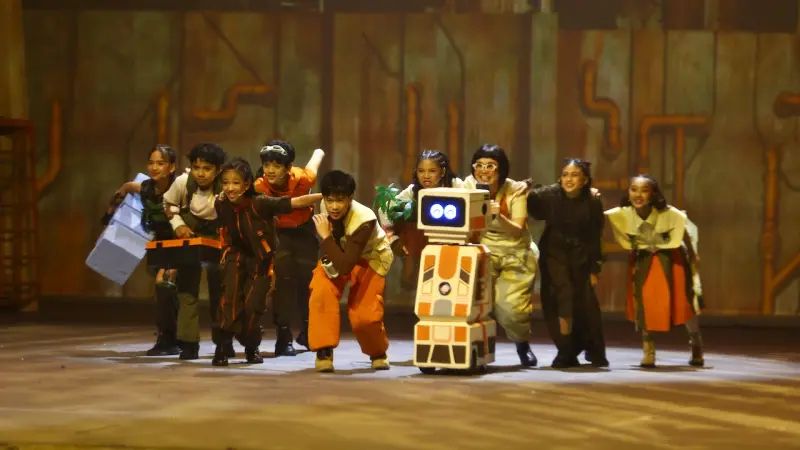
That being said, the reality is, it’s still a very privileged position to be able to do performing arts as one’s main job.
First, most musical productions run for a limited amount. Even professional productions with considerable financial backing only run for one month, usually with a one or two month rehearsal period. Secondly, many productions still can only pay their cast the minimum regional wage or even less (especially for ensemble cast members). Third, the living cost in the Greater Jakarta Area is among the highest in the country.
Many performers have a main job to sustain their livelihood. If it’s a corporate, 9-to-5 office job, it limits them from taking on performing jobs that need them to come in during working hours. Others pursue performing art jobs as their main career, while taking side jobs on the side. Others still focus on the adjacent but more-established industries, such as TV, music, or advertisement.
More stable performing arts jobs (relatively speaking) come in the form of employment at amusement park jobs – such as Taman Safari Indonesia or Dunia Fantasi – or training institutes (at least the ones that have year-round programs).
Some aspiring Indonesian performers instead dream of working as full-time performers abroad, particularly owing to UK-based role models Desmonda Cathabel (Aladdin, Hadestown, Jesus Christ Superstar) and El Haq Latief (Cabaret, Karate Kid). They both started their performing arts journey in community productions in Jakarta, before pursuing higher arts education in the UK, and eventually earning roles in professional productions.
.jpg?format=auto&width=800)
A similar trajectory is happening with crew members, to a lesser degree. While courses for theater tech and management skills exist, offered by institutions like Indonesia Kaya, Titimangsa, and API Pertunjukan Indonesia, they are outnumbered by classes for performing skills.
Nevertheless, many crew members have continued to develop their skills through on-the-job experience, often starting from being a team member in a community production, to a team or division head, and eventually taking on paid roles in professional productions.
In the next part, we’ll take a deeper look at the groups – both professional and community – that produced these musicals, as well as the current marketing ecosystem, Indonesia’s first and only musical theatre festival, and more.
Prefer BroadwayWorld in Google Search?
Add us as a preferred source so our stories show up more often in Top Stories and Google’s AI answers — for you.
Sign up for all the news on the Summer season, discounts & more...
