


Review: Asararua’s RUMAH BONEKA and the Desperate Housewife
On August 22, the new community theater Teater Asarua put on a production of RUMAH BONEKA at Teater Bulungan as part of Festival Teater Jakarta Selatan.
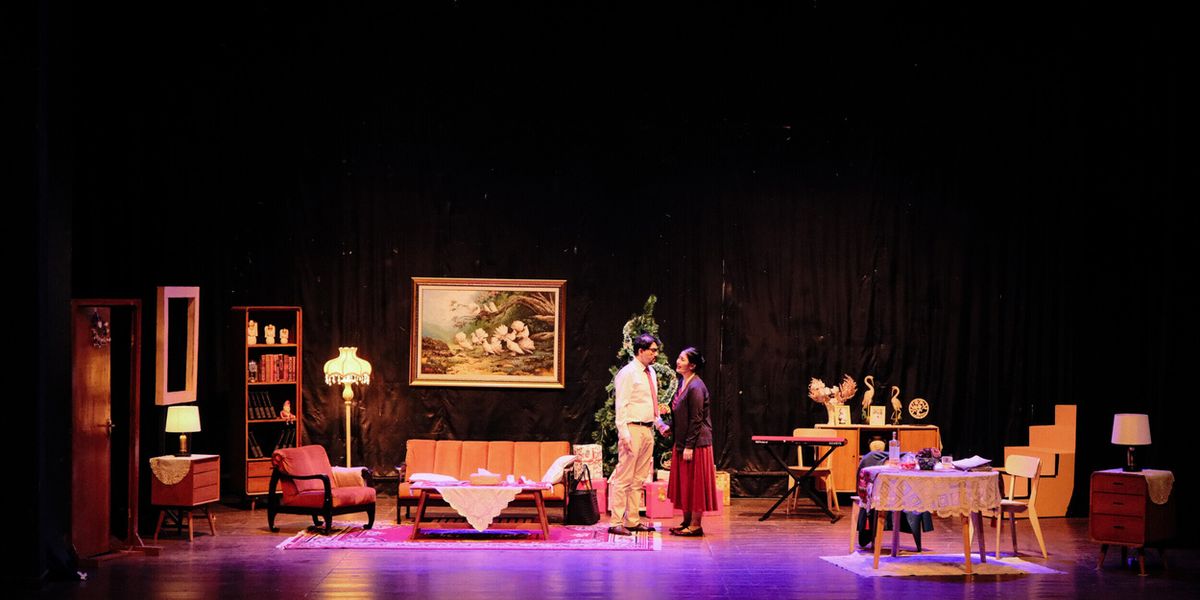
On August 22, the new community theater Teater Asarua put on a production of RUMAH BONEKA at Teater Bulungan as part of Festival Teater Jakarta Selatan. The script is an adaptation of Henrik Ibsen’s classic play A DOLL’S HOUSE.
RUMAH BONEKA’s script was adapted by Septika Ranu and Josep Razaqi, with Ranu also directing the play. Zaki Zakaria S and Dimas Pamungkas served as the music director, while K.K. Tazkia was in charge of artistic direction.
The show tells the story of Ratna (Fransisca Lolo), a housewife living in Jakarta with her husband Andreas (Heriska Suthapa) and daughter Jessica. Their family had just recovered from a recent economic downturn, thanks to Andreas’s promotion to director at the bank he worked at.
But their idyllic life didn’t last long. The undoing began with the arrival of Dewi (Amanda Gondowijoyo), Ratna’s old friend who recently arrived at Jakarta to find employment. Ratna convinced Andreas to find a job for Dewi at the bank. Although he agreed, this decision drew ire from Teguh (Ahmad Aufar), one of Andreas’s employees who believed he was in danger of being replaced by Dewi. Teguh threatened Ratna that he would reveal her ‘secret’ if she didn’t convince Andreas to keep him employed.
There was, in addition to the main blackmail plot, a subplot concerning Andreas’s physician, dr. Rahman (Ranggih Wukiranuttama) and his one-sided attraction towards Ratna. He tried to convince Ratna that he could be a good husband and provider for her, but Ratna refused his advances. He then opened up about his illness, which reached a terminal stage towards the end of the play.
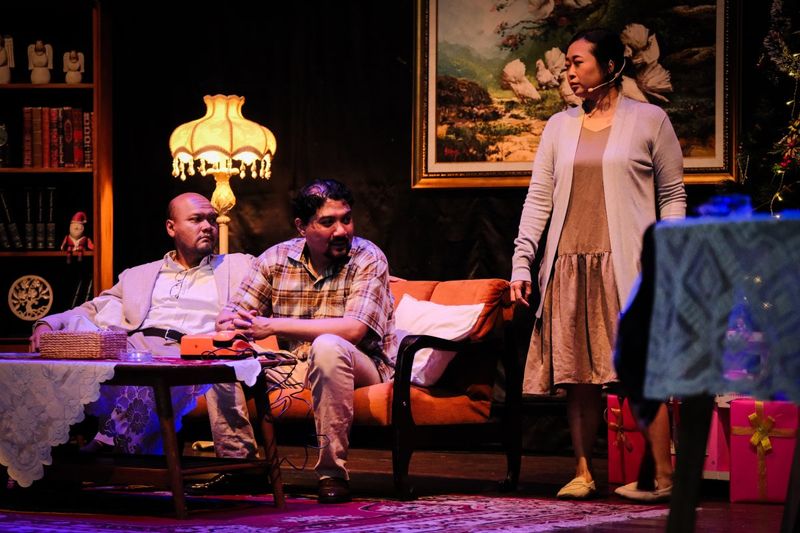
Eventually, Andreas got fired from the bank. He confronted Ratna with her secret: that she had fabricated her father’s signature on the loan contract she’d taken out to fund Andreas’s medical needs. Ratna pleaded for him not to reveal the secret to Andreas, but Teguh wrote it down in a letter that he intended to put in the mailbox (of which only Andreas held the key to).
Ratna asked Dewi to convince Teguh to rescind the letter, knowing about their past relationship. Dewi managed to reconnect with Teguh, but she herself had a change of heart: she believed that the secret should come out. Hence, Teguh put the damning letter in the mailbox.
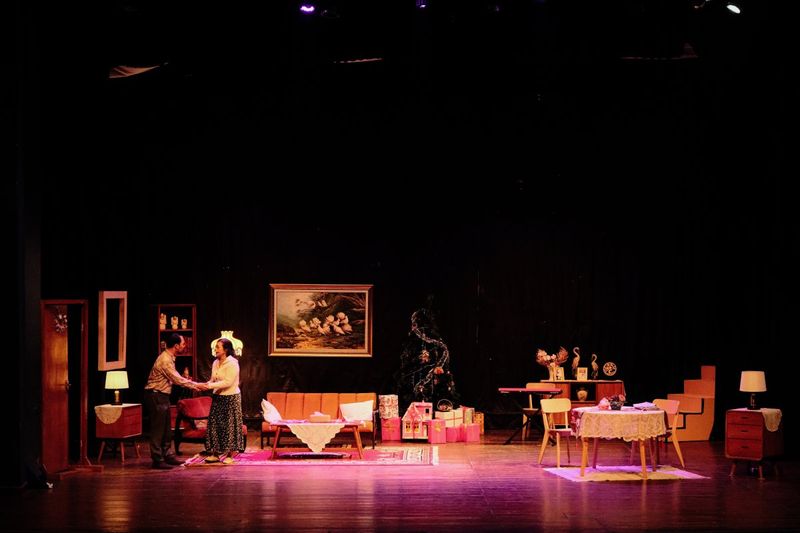
Despite Ratna’s best efforts to distract Andreas, he inevitably opened the mailbox and discovered the letter. He exploded at Ratna, calling her an ungrateful wife and unfit to raise their child. Just moments later, their house maid, Mbok Sur (Restu Saraswati), came home with a letter from Teguh: he sent them the original contract, which Andreas hastily disposed of.
Freed of the potential scandal and litigation, Andreas happily celebrated this development. But Ratna, having seen Andreas’s true colors, decided to leave and even demanded Andreas to return his wedding ring. In the final scene, Andreas is left sitting alone at home, wordlessly watching Ratna as she leaves him behind.
Henrik Ibsen’s A DOLL’S HOUSE was originally written in the late 1800s in Norway as a three-act play. Transplanting the story into a local context is always going to be challenging in the first place; and having to fit the story into a 2-hour runtime – as mandated by FTJ – further complicates matters. The result is a bit of a mixed bag.
First, the message of the piece – namely, self-empowerment – is still as important and inspiring. Fransisca Lolo delivered the show’s ultimate monologue compellingly. This moment serves as an obvious thesis of the show’s whole existence; it’s easy to see why A DOLL’S HOUSE remains an enduring work of theatre.
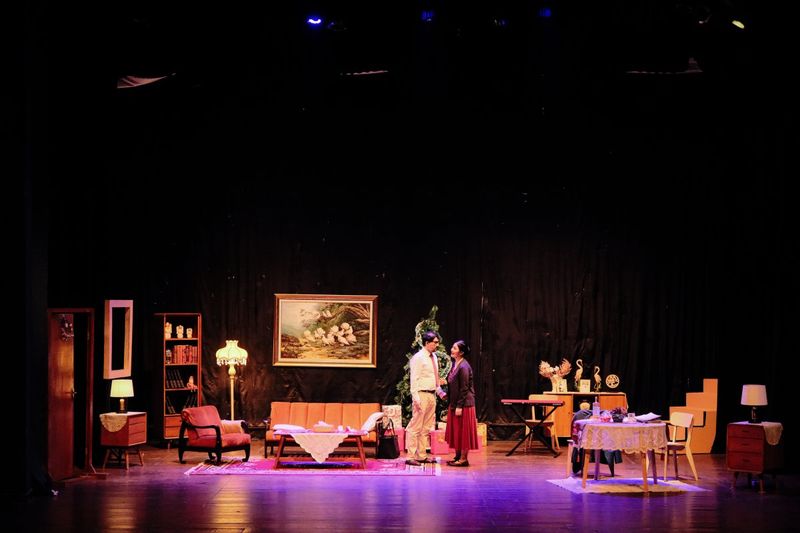
However, the road there is quite rocky. First, the period in which the play is set is left vague. For a realist play, a clarity in the setting plays an important part in how the audience understands the characters’ circumstances. Although there are allusions in the dialogue to a “crisis”, it’s never made explicit if it’s the 1998 Asian economic crisis or another, lesser crisis from another year. The set and costume design, while pleasing to the eyes, would fit from anywhere from the 1960s to the 2020s (considering the house was Ratna’s father’s and therefore could have been simply decked out in a retro style).
This lack of specificity lurks in the background and rears up whenever Ratna is pushed into a corner for, ostensibly, having no choice but to fake her father’s signature or plead Teguh not to unveil her deception. Ratna’s life is depicted as revolving around her husband (and, previously, her father). But she comes across as a well-educated, well-spoken woman living in modern-day Indonesia, which raises some questions: does she not have other avenues to seek help from? What happened to her mother and extended family members? Does she not have other friends?
Although it’s not unthinkable that a woman still relies on the men in her life even today, more groundwork is needed to set up her background believably, considering the context change. Perhaps setting it in a smaller town or an older time period would also help.
Secondly, the subplots often feel extraneous; perhaps due to the shortened run time, spending so much precious time on Rahman’s sickness or Dewi and Teguh’s romance can be frustrating (although the performances themselves were very good). These scenes come across as contributing little to the story’s ultimate conclusion compared to the time allotted to them. It left me wishing that we could see more of Ratna’s thought process, external influences, and simply her working through her dilemma before she finally had her moment of defiance at the end.
Where the production excels is in the cast’s acting ability. Their clear diction, unique tone of voice, and natural interaction – although the interactions between Ratna and Andreas sometimes feel stilted, perhaps purposefully so – makes every character feel fully realized with distinct personalities. Each cast member also operates on a comparable acting quality, making for a smooth watching experience. Even Restu Saraswati, who’s not a trained actor, brought a natural and believable performance to her few lines. Of particular note, Ranggih Wukiranuttama won Best Featured Actor at Festival Teater Jakarta Selatan’s awarding night for his role as dr. Rahman.
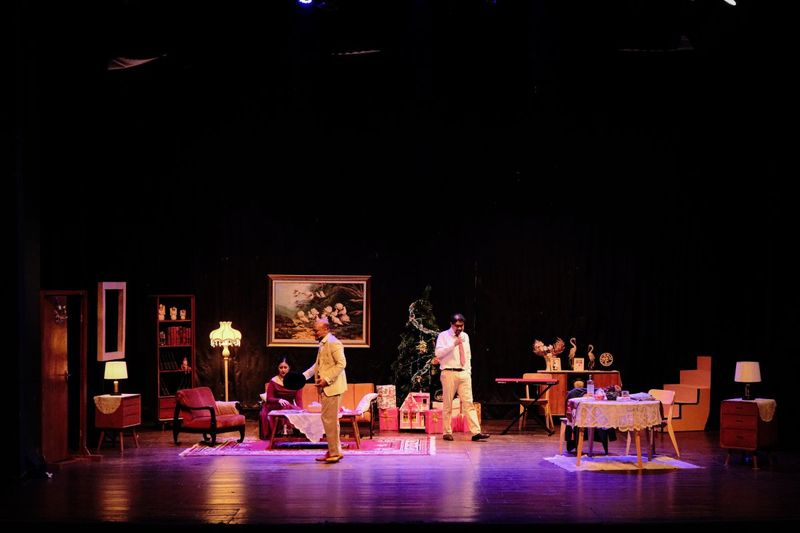
Another stand out aspect is the production design by K.K. Tazkia. The usage of actual furniture lends a warmth, lived-in atmosphere to the proceedings. Although there was no change in setting and the stage itself was not large, the sophisticated set design and directing keep the visual language of the piece pleasantly dynamic throughout. This is further helped by the atmospheric, tasteful lighting design and scoring.
RUMAH BONEKA is a fascinating study in adapting Ibsen’s A DOLL’S HOUSE for the modern Jakarta audience. The climactic monologue still packs a powerful punch, but the unsatisfying build up and confusing setting dampened the show’s overall impact significantly. That being said, the unilaterally strong acting and the evocative artistic design are both strong enough to intrigue me to see Asarua Theater’s next iteration of this show. Perhaps a more concisely edited version, or, contrariwise, a fuller adaptation, would further bring out the troupe’s full potential. Until then, just like Ratna, we have to contend with the imperfections in our life.
Reader Reviews
To post a comment, you must register and login.