


Review: DI HATI ADA CINTA’s Ode to Enduring Love
On 29 May 2026, the up-and-coming creative collective Ketemu Di Seni presented a preview performance of their jukebox musical.
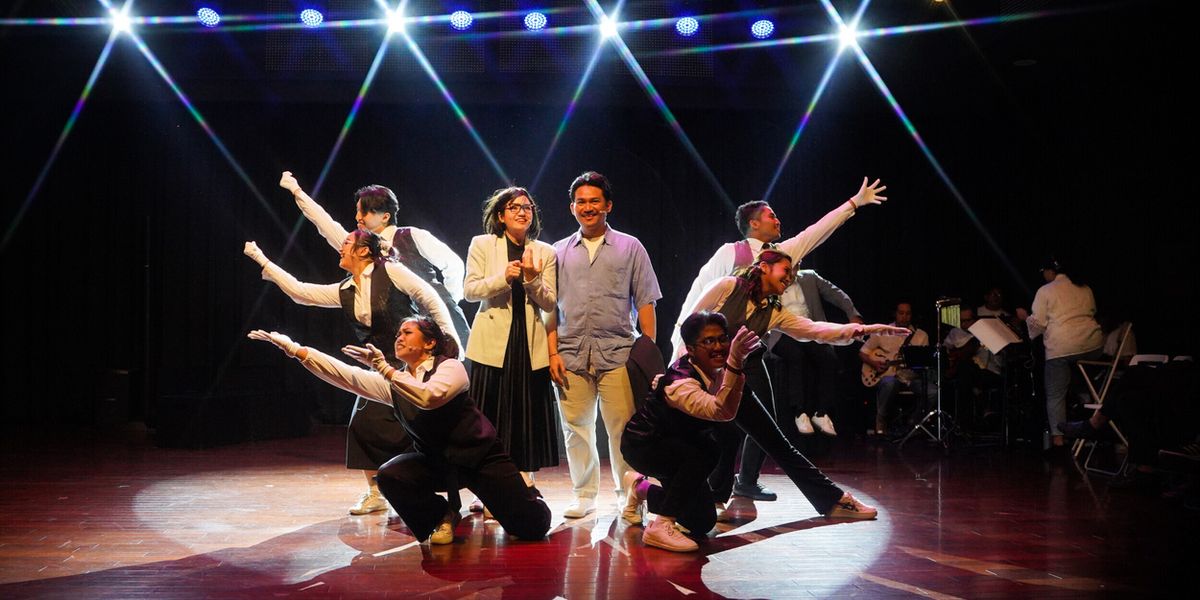
On 29 May 2026, the up-and-coming creative collective Ketemu Di Seni presented a preview performance of DI HATI ADA CINTA (“There’s Love in Our Hearts”). This jukebox musical marks their second-ever production following BUKAN PERAWAN MARIA (“Not Virgin Maria”) and their first musical.
DI HATI ADA CINTA was written, directed, and choreographed by Vito Prasasta, with Pradnya Padminiamaitri as music director, and Ferdy Zein as vocal director.
The show itself is a commissioned piece by Widi A., a patron of the arts who seeks to surprise his wife for their 33th anniversary with a musical. Hence, the story is based on their actual love life, with characters inspired by real-life people.
The story of DI HATI ADA CINTA opens with Widi (Bagus Parta), a high school student enjoying his school life in 1980’s Indonesia. As he and his friends were busy studying for the upcoming final test for their graduation, a new transfer student arrived: Erni (Felicia Caroline).
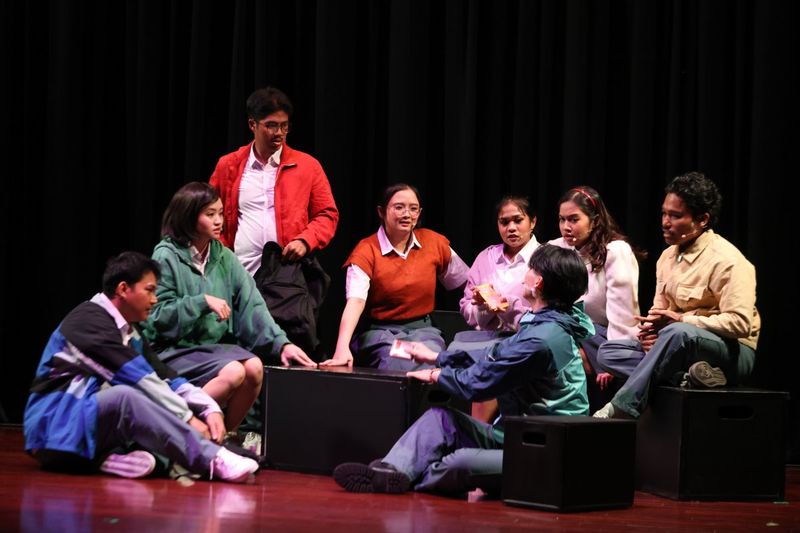
After a graduation trip with friends, Widi and Erni began to grow close with each other in an adorably awkward teen romance. Yet, their budding romance came to a halt as Erni soon left the country for college. The two of them promised to stay in touch by writing letters.
Years later, Widi and Erni met again at a wake for the mother of their mutual friend, rekindling their relationship. Soon after an unfortunate run-in with Widi’s then-girlfriend, the two of them finally got together.
We then follow the couple’s adult life, including their wedding, marital life, and even a rough patch in their relationship. Thankfully, they eventually made up and the show ended with them welcoming their now-adult children to celebrate Eid together.
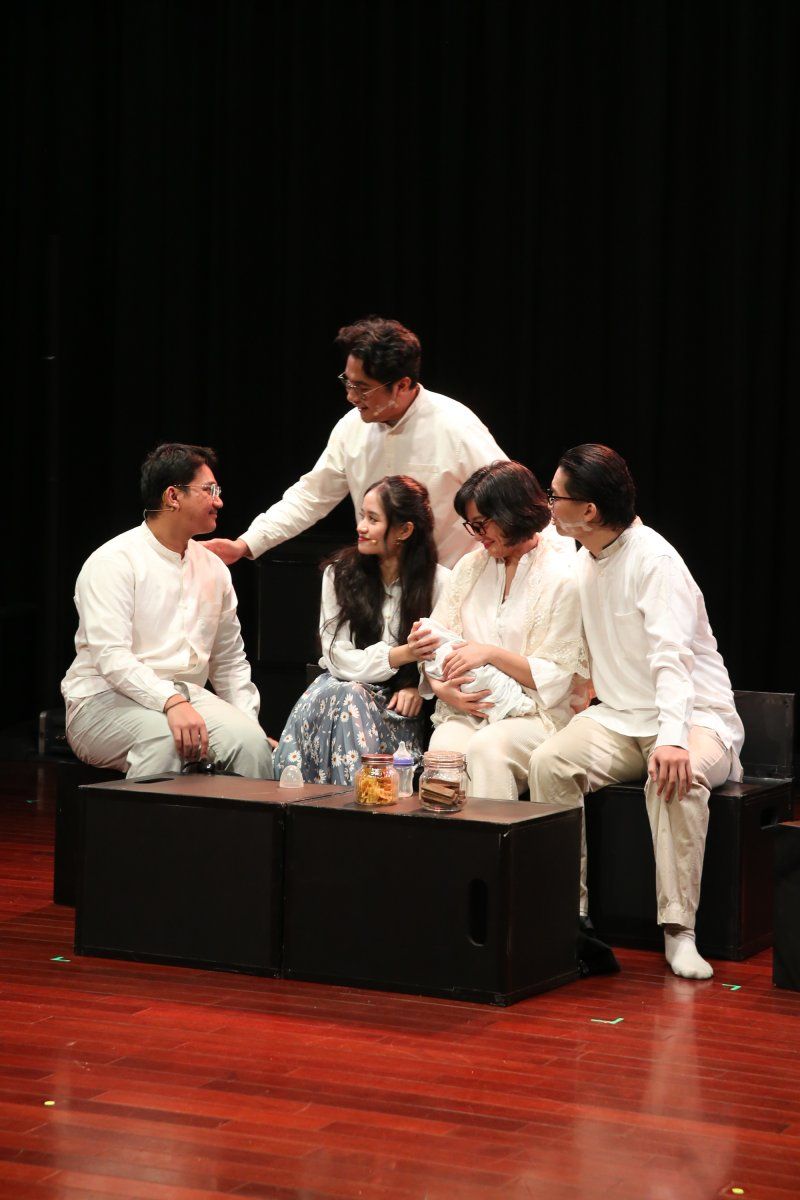
As a commissioned piece, DI HATI ADA CINTA is first and foremost a personal story; thus, out of necessity, there were moments in the narrative that were glossed over, particularly regarding interpersonal conflicts. Although this would be questionable for a more public show, it was an understandable compromise. On the flip side, it was bold to even portray questionable romantic decisions and unpleasant marital problems.
Taken as a whole, the narrative approach – confidently showcasing certain parts of this decades-long relationship, while strategically foregoing others – is emblematic of a loving and strong relationship that had survived through various ordeals (as longstanding relationships do). And there were more pragmatic considerations as well, considering the show is only about one hour long.
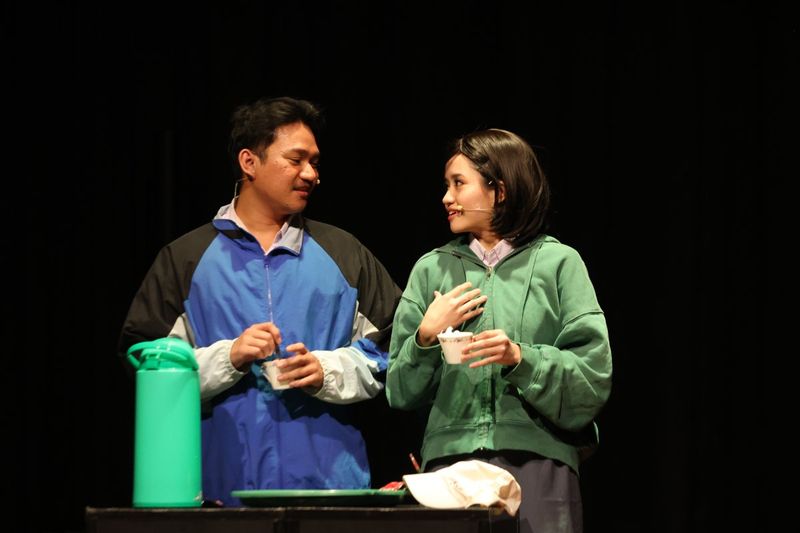
The show shone the brightest when it portrayed the charming, innocent, and often awkward teenage romance. The early days of Widi and Erni’s courtship, with their self-doubt and trying to flirt without making it too obvious, felt oddly nostalgic and wholly endearing. The dramatic parts, although appreciated, didn’t land quite as well due to the aforementioned lack of specificity.
The group numbers were also a highlight, energizing the show through Prasasta’s lively choreography and the cast’s infectious joy. DI HATI ADA CINTA is a jukebox musical with live music, making good use of Indonesian and western classics that feel appropriate for the time setting. The simple but creative set, lighting, and costume design helped to imbue glitz and glamor to the otherwise small-scale production.
Another indispensable part to the show’s charm is the actors. Bagus Parta made for a likeable scamp as young Widi; his earnest approach to the role makes it easy to root for him, despite his romantic unfaithfulness early on. Felicia Caroline as Erni had fantastic comedic timing with purposefully awkward line deliveries, creating a unique and delightful character.
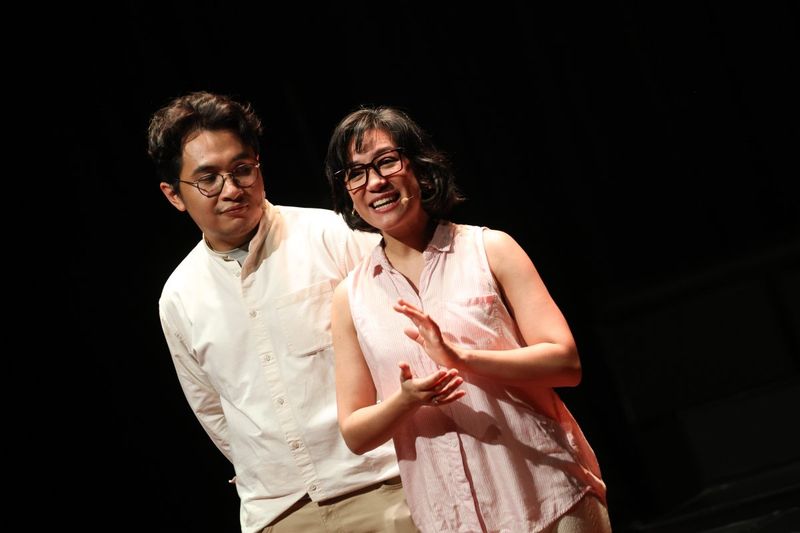
Interestingly enough, the show decided to have a different pair of actors portray Widi and Erni in their later years, namely Asdi Rahmani as Widi and Ashley Aisyah as Erni. The duo delivered a good dramatic performance for the show’s bleaker parts, successfully portraying the complicated, darker feelings of the married couple. Although Aisyah’s Indonesian pronunciation could use additional practice, she made up for it in masterful acting through expression and body language.
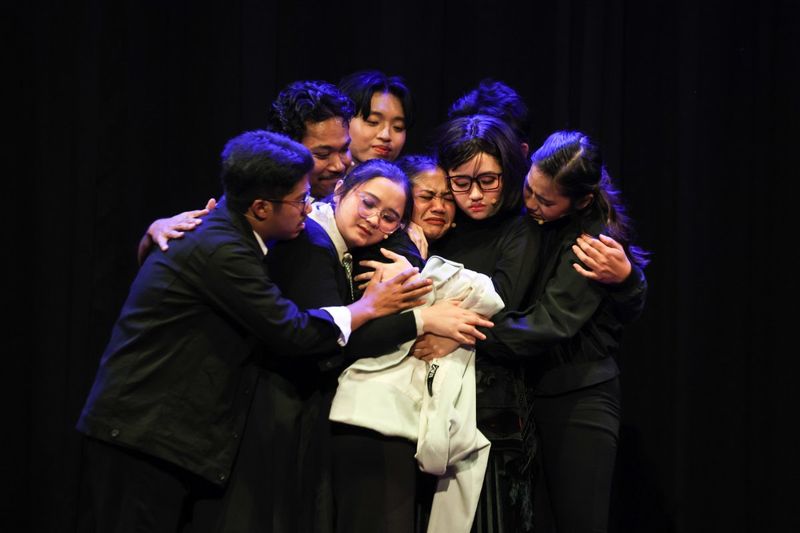
The ensemble (Patricia Dara, Rainer Rafael, Reska Primadita, Aisyah Fadhila, Firman Agung, and Jordy Orno) also put in good work. A definite stand-out is Jordy Orno, who stole the scene as a wedding singer with his formidable vocals.
At the end of the day, DI HATI ADA CINTA is a commissioned piece. The most important review is, of course, the one by its commissioner. But from a more critical point of view, DI HATI ADA CINTA is a showcase of Ketemu Di Seni’s artistic capability. And through this short and sweet show, it manages to highlight the production team’s strengths: dynamic choreography, likeable characters, and simple yet effective artistic design. Understandably, there are still flaws; but, like Widi and Erni’s story itself, nothing is unsurmountable through the power of love, patience, and effort.
Sign up for all the news on the Summer season, discounts & more...

Reader Reviews
To post a comment, you must register and login.