


Interview: Shannon Emerick of ELECTRA at Classical Theatre Company
Emerick takes on one of Greek tragedy’s most formidable figures in Classical Theatre Company’s production of Electra.

Shannon Emerick, a celebrated Houston stage actress and two-time Houston Press Best Actress winner, takes on one of Greek tragedy’s most formidable figures in Classical Theatre Company’s production of Electra. As Clytaemnestra, the queen, mother, and murderer whose actions set a family and a city on a path of grief and revenge, Emerick brings a deeply human perspective to a character often seen as purely villainous. In this interview, she discusses how she approached the role, the personal and emotional connections that shaped her performance, and what drew her to embody one of theatre’s most iconic and challenging women.
Clytaemnestra is such a complicated figure—mother, queen, murderer. How did you approach preparing for such a layered role?
I tried to look at all sides of her. She has been through immense grief, not only in losing a child, but also that it was her own husband - father of that daughter, Iphigenia - who killed their child, as a sacrifice to the gods, without, of course, consulting Clytaemnestra. And then that husband promptly sailed off to war. In her deep grief and rage, she committed unspeakable acts, and in the process, she lost her remaining children. They turned on her, siding with their dead father. So even though she has a new husband and children with him, she is remarkably alone. And now prolonged years of hatred from her daughter Electra have made Clytaemnestra dig in her heels and allow reciprocal hate and bitterness to infiltrate ALMOST every part of her being (but not quite all).
Were there particular translations, historical texts, or modern perspectives that influenced how you built your performance?
It is almost impossible not to approach the role of a mother through the lens of being mother myself. I cannot fathom losing my son or my stepchildren. That’s where I started in building my performance, then layering on how deeply wronged she feels AND how these years of fighting with Electra and against a city who hates her, and the terrifying reality that her own son Orestes may one day come back to kill her - these added griefs have made her brittle and hard - though at her core still human.
Many audiences see Clytaemnestra as a villain, but she has her own sense of justice. How do you humanize her in your portrayal?
Thanks to our director, Jon Harvey, we talked a lot in rehearsal about how the rights and wrongs of this play, the morality, are not as black and white as they may seem. Ultimately, it is hard not to side with Electra, but Clytaemnestra does have some very good reasons for her behavior. Grounding her in her motherhood and her own true belief that what she has done is right and true, allowing for that humanity to seep through in specific moments. Additionally, she is a woman of faith and can share her fears directly with the gods through prayer - and those fears are very real. There is no doubt that she is cruel and barbarous in many ways, but all that cruelty came out of her pain and loss.
How do you navigate the tension between Clytaemnestra’s maternal role and her political role in the story?
Clytaemnestra desperately wants to maintain a sense of decorum, power, and her own royal place. Jon has guided us in this direction, too. What “dirty laundry” (to put it lightly) are we airing before the general public? Clytaemenstra so wants to return to being a happy and regal queen that she has all but abandoned her remaining daughters (who still live in the palace), and she is so weary of the accusations and labels placed upon her and longs to return to her own chosen label of Queen. That said, she never loses her motherhood completely - the cracks of her motherly love and grief do come through in brief moments. While she wishes to remain powerful and gain acclaim from those around her, I believe she is always tending to the deep cuts of a mother lost, wounded, and abandoned and never forgets the deep pain of losing her daughter at the hand of her husband.
Classical Theatre Company is known for fresh, accessible takes on the classics. What excites you about their approach to Electra?
I think the design elements of the play (no spoilers), especially the set and costumes, will go a long way to bringing a play from thousands of years ago into modern consciousness.
Greek tragedy often relies on heightened language and ritual. How does this production make those elements resonate for a contemporary audience?
It’s the humanity of the story - a deeply grieiving family torn apart by horrific acts that have befallen them. Sadly, this happens every day. How do you, as a family, survive unspeakable loss? Or is that even possible?
Do you find any personal connections with her—perhaps in her resilience, her strength, or even her flaws?
The motherhood connection is what runs strongest for me. Not that you have to be a mother to play Clytaemnestra, certainly. But since I am a mother, that was my immediate connection to her.
After tackling such an iconic role, what kinds of characters or projects are you hoping to explore next?
Working on such an iconic role and such powerful language makes me wish, more than ever, to return to Shakespeare. I have always, always loved Shakespeare. Talk about humanity… Any Shakespeare play, any time!
If you could invite any character from Greek tragedy to dinner with Clytaemnestra, who would it be and why?
Oh, it’s got to be Medea. Wronged women, wronged and abandoned mothers who commit unspeakable acts out of a sense of love and justice. I think they would have a LOT to talk about.


|
Jesus Christ Superstar Deluxe Theatre (8/14-8/17) |

|
Write The Vision Productions Presents: Faith For My Family Stage Play Jefferson Theatre (9/05-9/05) |

|
Hardy WhiteWater Amphitheater (11/21-11/21) |
|
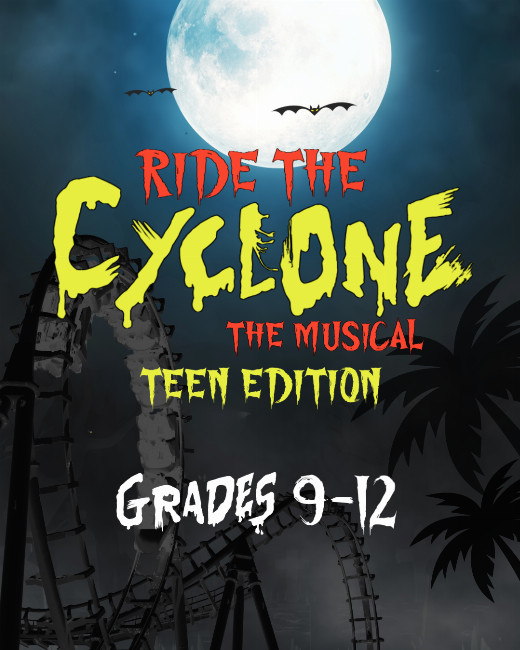
Ride the Cyclone HITS Theatre (8/14-8/14) |

|
Xanadu MATCH (Midtown Arts & Theater Center Houston) (8/14-8/30) |
|
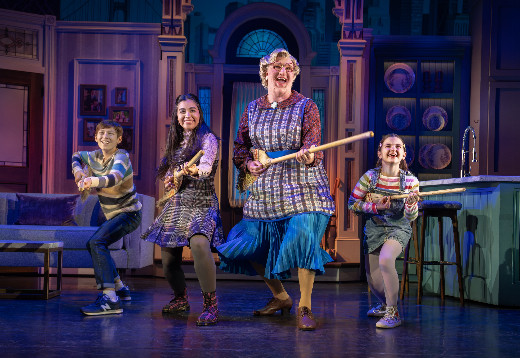
Mrs. Doubtfire The Musical Theatre Under The Stars (10/13-10/25) |

|
Therapy Gecko Punch Line Houston (9/20-9/20) |

|
Kinky Boots Theatre Under The Stars (3/30-4/11) |
|
Rocky Horror Picture Show House of Blues Houston (10/23-10/23) |

|
Oh, Mary! Theatre Under The Stars (4/27-5/09) |