


Interview: Jimmy Mak of FREAK SHOW at Shadowbox Live!
From pen to pad to the stage is often a long, peculiar process for Shadowbox Live's writing team
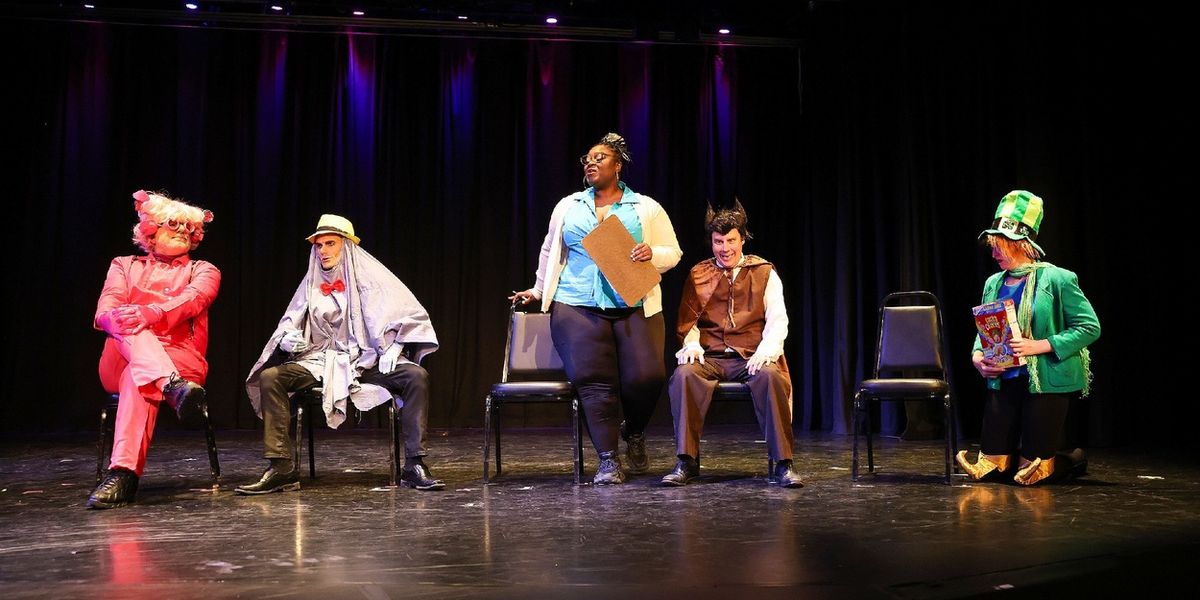
Jimmy Mak, the head writer for the Shadowbox Live! theater troupe, isn’t one to throw an idea away.
The Mak-penned “Cereal Killers” is one of eight new sketches in Shadowbox Live’s Halloween-themed FREAK SHOW, performed 7:30 p.m. Saturdays through Nov. 15 at the theatre company’s stage (located at 503 S. Front Street in downtown Columbus). It only took 22 years for the sketch about a group therapy session for children cereal mascots to go from its lonely exile in Mak’s idea folder to being performed.
.jpg?format=auto&width=1400) “I have this gigantic folder I call the X-Files where I keep ideas that aren’t ready yet,” Mak said. “I thought of this idea where Count Chocula, Frankenberry and Boo Berry were being interviewed for a 20/20 type of show, but I just couldn't figure it out. Sometimes sketches are just not ready. For whatever reason, this last time around, I pulled that sketch out and suddenly it clicked. I know what to do with this sketch.”
“I have this gigantic folder I call the X-Files where I keep ideas that aren’t ready yet,” Mak said. “I thought of this idea where Count Chocula, Frankenberry and Boo Berry were being interviewed for a 20/20 type of show, but I just couldn't figure it out. Sometimes sketches are just not ready. For whatever reason, this last time around, I pulled that sketch out and suddenly it clicked. I know what to do with this sketch.”
Generally speaking, two decades is an abnormally long incubation period for a sketch to become stage worthy. Mak and the writing team of Brendan Barasch, Jamie Barrow, Ash Davis, Danny Gallagher, Robbie Nance, Alexis Slaughter, and David Whitehouse usually have five months to take an idea, put words to it, and then present it as a sketch to an audience. The writers began creating rough drawings of what FREAK SHOW was going to look like last April. The group bounced ideas off each other, honed them, presented them to producing director Julie Klein, and then brought those sketches to life.
It’s a process Mak has gone through over and over again for nearly 30 years. Mak never planned on becoming a sketch writer. It was just something he fell in love with.
“I loved writing, but I didn’t think becoming a professional writer in Columbus, Ohio was a thing,” he said. “I had gotten a bachelor's degree in English and I was looking forward to moving to Pittsburgh, getting a master’s degree, and becoming a professor.
“I was reading in the (now defunct) Other Paper about this little theater company that did original sketch comedy. I thought that would look so good on a resume and contacted them. It turns out I’m a pretty big goofball, so it all worked out.”
Mak is the first to admit the process of writing comedy is “a weird thing.” Some weeks, he has four or five solid ideas for sketches; other weeks, the idea cupboard is bare.
“You’re staring at a blank computer screen all day and punching the wall because you can’t come up with anything,” he said. “Sometimes you produce a character or you will hear a (Shadowbox) patron say something that will set you off. I have all these little notes on my phone to remember this idea or that.”
IT TAKES A VILLAGE
For its sketch comedy performances, Shadowbox Live! collectively decides on a theme for a production and Mak and the seven other writers commence to write out sketches individually. Each writer makes sure he or she has a solid list of potential storylines to pitch before they first meet. In the reading room, each writer gives and receives feedback on the strengths and weaknesses of those ideas.
When he first started out, Mak remembers it took a while to get past the nerves and feel like he fit into the group but now it almost feels like second nature
“I'm so lucky,” he said. “I get to work with a lot of very funny, very creative people all day. We all riff off each other, start joking around, and someone will create a character or an idea.
“It takes a lot of trust. I’ve worked with a lot of my writers for a very long time and we know each other really well. A lot of times, I'll be pitching something and in the middle of it, I’ll say ‘You know what? Forget this. This isn't ready yet.’ Other times someone will produce some other jokes we could throw into a sketch to make it work.”
After the meeting, the writers begin working on their rewrites. The writers submit their rough drafts to an online forum where other Shadowbox co-workers comment on them. Armed with that feedback, the writers go back to the drawing board and create draft upon draft of the sketches before they reconvene.
JUDGEMENT DAY
By the time they are finished fine tuning sketches, the writing team usually has 12 sketches to present to executive director Julie Klein. Typically, a show will have eight or nine sketches balanced against eight or nine songs the band has chosen. At the last read through, the writer’s group wants to make sure Klein has solid choices from which to pick.
“When we know the producer is coming, there’s a heightened sense of anxiety,” Mak said. “We’ll ask each other, ‘Okay, are we sure we’re good with this or can we add some more jokes to it?’”
Klein was working as a paralegal in 1992 when a friend hold her about the ShadoArt Productions and immediately she changed careers. In 2017, she became to Shadowbox Live! what Loren Michaels is to SATURDAY NIGHT LIVE.
In many ways, she is the complete opposite of the dour, seldom smiling SNL producer. She loves to laugh but she also has a good eye for what works and what doesn’t. She gives honest feedback and the writing team is always honest with her.
“There are times where I will give Julie a disclaimer like, ‘I don’t think this is our best material, but we’ll get it there,’” Mak said. “Julie’s a pretty good gauge. We read it out loud to her and she gives notes or says, ‘That's ready for rehearsal’ or ‘that one is really close but it could use just a couple little tweaks here and there.’ She might shoot down a good idea but it’s usually justified because the idea is there but the execution just wasn’t right.”
And sometimes Klein’s opinions surprise the writers.
“I wrote a sketch (ASS TRICK about the creation of certain punctuation symbols). I loved it, but I couldn’t imagine it going into the show,” Mak said. “We brought Julie in and she had tears in her eyes from laughing.”
THE GREENLIGHT
Upon receiving the thumbs up from Klein, Shadowbox begins the process of preparing the sketch for presentation. First actors must audition to be in certain sketches.
“Some pieces have recurring characters, so we’ll write them with a certain person in mind, but for the most part, everything is up for audition,” Mak said.
Klein, Mak, and a few others in the company score the tryouts on a 10-point scale. After that, the group announces the cast list. “We try to balance it out,” Mak said. “The last thing you want to do is have the same three people in everything and not have any work for the other people.”
In the weeks leading up to the show, the theatre troupe puts together the blocking, the costuming, the lighting, and the order of the show.
“It’s like putting together a jigsaw puzzle. You want the show to have a nice flow,” Mak said. “You find yourself thinking, ‘That sketch is a B plus effort and I don’t want to end the first act on a B plus sketch. You also have to balance the actors to make sure you don’t use the same person in back to back pieces.”
GAME DAY
All the screenings, read throughs, rehearsals, and practices are not necessarily a guarantee for success on opening night. Sometimes the wording is wrong or something requires rewiring a bit. Often the sketch you see on opening night is a much different piece by the end of the run.
Sometimes the sketch is not there at all. For FREAK SHOW, a first act piece failed to connect with the audience on opening night and was pulled from the show.
“There's no blueprint for this. When I meet with new writers, I tell them I wish I could give you instructions for how we do this, but there aren't any,” Mak said. “I've been in the business for a very long time and (when something fails), you know instantly: ‘Oh man, this is not working out.’
But when a sketch hits, there’s no better feeling in the world. Mak remembers how good it felt when his first sketch, “Pope Fiction,” a play on Pulp Fiction with two popes serving as gangsters, was received by the audience
“I was blown away that A.) what I wrote got on stage and B.) people were laughing at it,” he said. “That changed my world instantly. I knew this is what I wanted to do.”
.jpg?format=auto&width=1400)
Head shot: Tommy Feisel
Feature photo: Buzz Crisafulli

|
Liverpool Legends "The Complete Beatles Experience!" Marathon Center for The Performing Arts (8/15-8/15) |
|
The Dinner Detective Murder Mystery Dinner Show The Dinner Detective Columbus (8/22-8/22) |
|
Wicked Ohio Theatre (7/28-8/15) |
|
MTP Presents: Sister Act John, James and Clara Knight Stage (7/31-8/16) |
|
The Fab Four: The Ultimate Tribute LIVE in Concert in Columbus, OH Hollywood Casino Columbus (8/21-8/21) |

|
Screamers: A Nightmare-Fueled Sketch Comedy and Music Experience Shadowbox Live (9/20-11/14) |
|
Sombr Nationwide Arena (11/08-11/08) |
|
The Lightning Thief - The Percy Jackson Musical Abbey Theater of Dublin (8/07-8/16) |

|
Caamp Value City Arena at The Schottenstein Center (8/29-8/29) |
|
Dirty Talk Shadowbox Lice (4/12-8/15) |