


Interview: Colin Hay brings his acoustic performance to the Southern Theatre
Former Men at Work frontman loves playing for intimate audiences
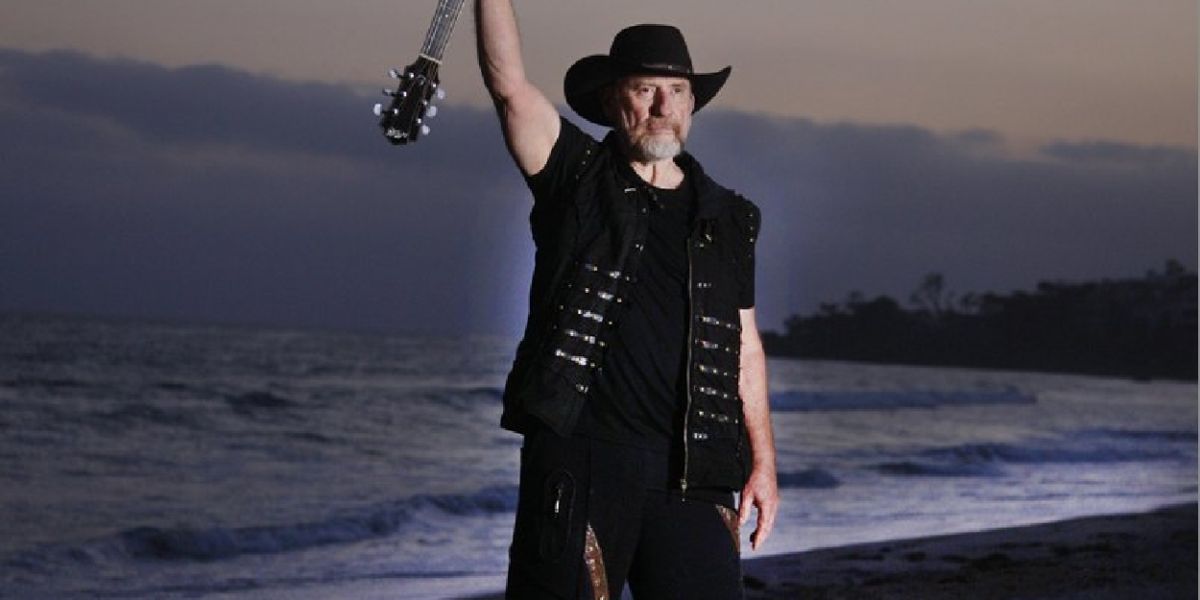
Colin Hay, who will perform an acoustic show Nov. 2 at the Southern Theatre (21 E. Main Street in downtown Columbus), disagrees with the assessment, but the former Men at Work frontman is a man of misperceptions. For example:
*Although he is most associated with Australia, Hay is not from the land “Down Under.” He’s a Scottish import.
*Although most of his Men at Work catalog -- like “Who Can It Be Now? “Be Good, Johnny,” and “It’s A Mistake” -- reflect an off-beat whimsy, most of Hay’s solo work and his demeanor are stark, serious, and self-reflective.
*Although he achieved most of his commercial success in the 1980s, Hay is still producing relevant, powerful, and moving songs and he is much happier now than he was when his former band ruled the pop charts.
Asked about the contradictions, Hay, who is coming to promote his latest work, MAN @WORK 2, snorts. “I don't know whether that’s true or not,” Hay said in a telephone interview from Los Angeles. “I don't feel misconcepted. … OK, that’s probably not a word.”
Perhaps the best way to understand Hay is to look at his lyrics and chisel out a glimpse of who he is. Each one of his songs seem to tell a different story.
I said to the man, "Are you trying to tempt me?/Because I come from the land of plenty"
“Down Under,” Men at Work (1980)
Hay, like many of Australia’s top singers, is from Scotland, joining fellow Scots Jimmy Barnes, Lewis Capaldi, and Bon Scott and Malcolm and Angus Young of AC/DC. His parents Isabela and John Hay moved their family from Saltcoats, North Ayrshire, Scotland to Melbourne, Australia when the singer was 14.
“It's extraordinary, isn't it?” Hay said of his fellow Scottish ex-pats in the Australian music industry.
“I don't think I'll ever fully understand or appreciate the significance of moving there. My mother and father were in their 40s and it was a big thing to take your family to the other side of the world. It completely changed my life in terms of what I do for a living and the kinds of songs I write. I would’ve never written a song about the land “Down Under” if I hadn’t gone there.”
Hay said Australia was a perfect vision … of what he thought America would be like.
“Australia was a little bit closer to what I imagined America to be, although we’re being sorely tested by that lately,” he said. “The people I went to school with were much freer (than my classmates in Scotland). There were kids who were 16 years old and owned a car. That was insane. Most people don't have a car in Scotland until they’re 36.
“We would drive these long distances, stay on the beach, and spend the night on the beach. If the sun was shining, it was like the start of a new life.”
You might think the love of this brave new world was the inspiration for the song, “Down Under.” However, the Men at Work song is kind of like Bruce Springsteen’s “Born in the USA,” in that.” Springsteen’s tune is the plight of a Vietnam vet forgotten by society but it is grossly misunderstood. The song is more of an ecological warning than a tourist brochure of the sunny land of wallabies, kangaroos, and Steve Irwin people think. The lyrics read more like a warning than a tourist’s brochure.. In one line, Hay sings, “I come from a land down under/Where beer does flow and men chunder (Australian slang for vomit)” and in another, he adds, “Where women glow and men plunder?/Can't you hear, can't you hear the thunder?/You better run, you better take cover.”
“We were protesting the stewardship of (Australia),” Hay said. “Men tend to plunder and leave a big mess wherever they go. That seemed to be what was happening to Australia’s environment. People were taking stuff out of the land that should be left there.”
I can't get to sleep/I think about the implications/Of diving in too deep/And possibly the complications
“Overkill,” Men at Work (1983)
The success of “Down Under,” Men at Work’s only number one hit in America, and the debut album BUSINESS AS USUAL catapulted the quintet of Hay, saxophonist Greg Ham, drummer Jerry Speiser, guitarist Ron Strykert, and bassist John Rees into a new stratosphere of airplay, fame, and resentment.
Radio stations who had bombarded their audiences with a steady diet of Men at Work offerings songs began having “Men without Work” weekends where they wouldn’t play any of the bands’ tracks. When the group released their second album, Record’s John Mendelssohn wrote about how the tracks didn’t live up to the quality of their first album and dismissed the album as “inoffensive but forgettable
As they were starting their third album in 1986, the original band lineup imploded in a squabble over band management and burn out.
“We were never the darlings of the (rock) press, but I didn’t care that much about what other people thought,” Hay said. “There was a lot more density to the band, musically and lyrically than people give us credit for. And 30 or 40 years later, those songs are still being played. People write me every single day about how their kids are discovering our music.”
As the band surfed on the wave of quirky videos like “Down Under,” “It’s a Mistake,” and “Who Can It Be Now?” Hay’s ability to fade into the background without being recognized evaporated. The lack of anonymity led the songwriter to pen “Overkill,” which peaked at No. 3 on the American charts in which Hay described what it was like to be living under the mushroom cloud of fame.: It's time to walk the streets/Smell the desperation/At least there's pretty lights/And though there's little variations/It nullifies the night from overkill.”
Perhaps Hay smiles when he sings those words these days. Since the band split in 1986, he has produced 15 solo albums, five times the amount of albums Men At Work put out. His best-selling solo album, 2002’s MAN @ WORK, sold 100,000 units. It is a respectable number but it is dwarfed by comparison to BUSINESS AS USUAL’S 15 million.
“I rarely get recognized anymore, but I enjoy that,” Hay said. “I joke about that occasionally when I'm in a CVS picking up my medication and there's a long line of customers. One of my songs will be playing through the PA system and I think, ‘Ohh, it'd be nice to skip the line here.’”
You can’t live without hope that things will change for the better
"Next Year's People," Colin Hay (2015)
This current tour has been a part of an on-going road trip for Hay. Columbus is the midway point of a 30-show, three-continent tour that concludes Dec. 11 in Newtown, Australia. Prior to embarking on this acoustic tour, Hay was part of the Ringo Starr and his All-Starr Band tour with the former Beatle drummer, Average White Band bassist Hamish Stuart, Toto guitarist Steve Lukather, Joe Satriani/Electric Light Orchestra drummer Gregg Bissonette, Kansas/Toto saxophonist Warren Ham, and Aerosmith keyboardist Buck Johnson.
During the tour, Hay occasionally pinched himself when he realized he was playing with a former Beatle.
“It’s phenomenal,” Hay said with a throaty laugh. “It’s one of those things you think shouldn’t happen. Ringo Starr was in The Beatles for f*** sake. I'll continue to (tour with the All-Starrs) for as long as Ringo wants me there.”
As much as he enjoyed playing with one of his idols. That being said, Hay prefers these smaller acoustic gigs over being in a band or being an opening act. The solo show tours have been a marriage of convenience for Hay. After being dropped by a few labels in the 1990s, he found it easier and cheaper to perform alone.
“It’s like a lot of things you in your life: it’s not necessarily by plan; it’s by circumstance,” Hay said. “When you are the opening act, you must hit people as quickly as you can for the half hour you’re given. People aren’t there to see you. (When you are performing with a band) you don’t tend to engage with the audience the same way as you do when you are by yourself. You have five or six people on stage, so you can’t be telling long-winded stories. When you’re performing solo, everyone is there for you.”
As he began playing these acoustic shows, Hay quickly learned there is a secret to playing for small audiences.
“There’s a little bit of trickery involved like there is with any kind of performance,” he said. “You’re trying to connect with people without making it obvious. You have a story (for a song). You may have done the same story the night before but the whole idea is to make it appear as if you just thought of this and have never told it before in your life.”
I wish I was still drinking, then I'd have no fear/Tell you how to fix the world, then have another beer/ I wouldn't have to feel the pain that's in a mother's eyes/I'd drink till I believe the sound of my own drunken lies
“I Wish I Was Still Drinking,” Colin Hay (2007)
As a storyteller and as an interviewee, Hay is open and honest about his past. He’s written about his struggles with alcohol and how it cost him his marriage. He hasn’t had a drink since 1991 but in “I Wish I Was Still Drinking,” he confides about missing the clinks of glasses and the camaraderie liquor can bring.
“It’s never really behind you,” he said. “There’s still that addict who lives inside me. He just sits in the corner and sulks a lot.”
To put that addict in the corner, Hay knew he couldn’t stay in Australia. He packed his bags and moved to Los Angeles, which may seem a little like a gambling addict moving to Las Vegas. However, Hay said the California sun is the perfect place to dry out.
“(In Australia), my friends were all the same as me. They're very successful addicts,” he said. “Los Angeles is a great place to not be messed up. The city doesn't cast any judgment on you. It just goes, ‘You want to do this, off you go. Good luck to you.’ But it's not a good place to relapse because there's no real support system.”
Everybody's always looking for Jack/In the fire and in the water/Everybody's always looking for Jack/In the streets and on the corners
“Everybody’s Looking For Jack,” Colin Hay (1987)
With its celebrity driven culture, Los Angeles is the perfect place to star gaze as you reinvent yourself. One of Hay’s favorite celebrity encounters was running into actor Jack Nicholson at a concert.
“When I was here to record in 1986, I was trying to make sense of Los Angeles,” Hay said. “I remember driving around and thinking everyone here seems to be looking for something to realize their dreams. I had this idea for a song but I didn’t know what everyone was looking for.
“I was at this concert and I saw Jack Nicholson by the mixing console. I went up to him and said, ‘I’m a great fan of yours.’ He looks at me and says, ‘I can’t hear you.’
“I went into the green room and these two girls were talking with me. Jack walked into the room and made a beeline straight for me. He said, ‘I just wanted to say I’m a big fan of yours, too’ and walked off. This girl kept talking with me while I kept looking over her shoulder. Finally, she goes, ‘What are you doing?’ I said, ‘You must excuse me. I’m looking for Jack.’ She goes, ‘Yeah, everybody’s always looking for Jack.’”
Asked what Nicholson’s reaction was to the song, Hay chuckled. “I don’t know. I haven’t run into him since.’”
“I don't want you thinkin' I'm unhappy/What is closer to the truth?/And if I lived 'til I was a hundred and two/I just don't think I'll ever get over you
“I Just Don't Think I'll Ever Get Over You,” Colin Hay (1998)
While Nicholson gave Hay an idea for a song, it was TED LASSO and SHRINKING producer Bill Lawrence and actor Zach Braff who helped introduce the singer to a whole new generation of fans. When Lawrence and Braff were working on the sitcom SCRUBS (2001-10), they decided to use an acoustical version of Men At Work’s “Overkill” in the first episode of the second season, “My Overkill.” The episode featured Hay and his guitar constantly appearing whenever J.D. (Braff) began experiencing anxiety. At one point a surly Dr. Cox (John C. McGinley) grabbed Hay’s guitar and smashed it in a fit of rage. Hay looked at Cox and said calmly, “I have other songs.”
The cameo led to more soundtrack work for Hay. Braff later used “I Just Don't Think I'll Ever Get Over You” in a key scene in his movie GARDEN STATE. Hay’s music can also be found in DAWSON’S CREEK, A MILLION LITTLE REASONS, MONEY HEIST, MODERN FAMILY, THE CLEANER, FAMILY GUY, THE SIMPSONS, SOUTH PARK, and KANGAROO JACK. Hay also has played roles in many television shows, including JAG, THE LARRY SANDERS SHOW, A MILLION LITTLE THINGS, and the Australian television drama JACK IRISH - BAD DEBTS. He also provided the voice for Fergus Flamingo in the animated film THE WILD.
“There’s been a lot of young people who discovered what I’ve been doing from soundtracks,” Hay said. “It’s funny. I have a friend of mine and she overheard her daughter listening to (the GARDEN STATE soundtrack). She thought she recognized the sound of my voice through the headphones. She asked her who she was listening to? She goes (dropping his voice into that of an angsty teen), ‘You wouldn’t know him, Mom. It’s a guy named Colin Hay.’ She responded, ‘I know him. I am friends with him.’ The daughter goes, ‘You don’t know him, Mom.’”
Seasons come and seasons go/Some tanking in between/I'm looking through the window now/At all that I have been
“Frozen Fields of Snow,” Colin Hay (2017)
At 72, Hay is not the same man who penned "traveling in a fried-out Kombi/On a hippie trail, head full of zombie …” His lyrics are far more honest, clear, and poetic than his biggest hits with Men at Work.
“I wouldn't say I go out of my way to reflect on things, but as you get older, you're certainly aware of the fact you have less time left,” he said. “I tend to try and make something I want to do as opposed to something I feel some kind of obligation to do.”
Sometimes Hay admits he gets a little nudge in the right direction. Creating “Frozen Fields of Snow,” according to the singer, was an out-of-body experience. Hay had been toying around with a melody and as he was trying to write the lyrics, he had a vision of an old man looking out the window of his kitchen at the icy tundra in front of his home.
“Sometimes you can develop a bit of a trance-like state,” he said. “I felt like I had been visited by this older gentleman who told me his story. It was one of the rare times when I started writing things down on a piece of paper. I didn’t change anything.”
Asked if that kind of inspiration happens often, Hay said, “No, but I like it when it does.”
While he waits for his next magical moment to occur, the singer/songwriter continues to love performing. Hay said playing his music is a simple equation: The more he gives his audience, the more he gets in return.
“It feels like an electric current. You put it out there and it comes back to you from the audience,” Hay said. “It’s a rewarding experience for me and hopefully it's one for the audience as well.”
Photo: Paul Mobley



|
Liverpool Legends "The Complete Beatles Experience!" Marathon Center for The Performing Arts (8/15-8/15) |
|
The Dinner Detective Murder Mystery Dinner Show The Dinner Detective Columbus (8/22-8/22) |
|
Wicked Ohio Theatre (7/28-8/15) |
|
MTP Presents: Sister Act John, James and Clara Knight Stage (7/31-8/16) |
|
The Fab Four: The Ultimate Tribute LIVE in Concert in Columbus, OH Hollywood Casino Columbus (8/21-8/21) |

|
Screamers: A Nightmare-Fueled Sketch Comedy and Music Experience Shadowbox Live (9/20-11/14) |
|
Sombr Nationwide Arena (11/08-11/08) |
|
The Lightning Thief - The Percy Jackson Musical Abbey Theater of Dublin (8/07-8/16) |
|
Caamp Value City Arena at The Schottenstein Center (8/29-8/29) |

|
Dirty Talk Shadowbox Lice (4/12-8/15) |