


Review: SWEET CHARITY at Blank Theatre Company
The production runs through June 8 at the Greenhouse Theatre Center
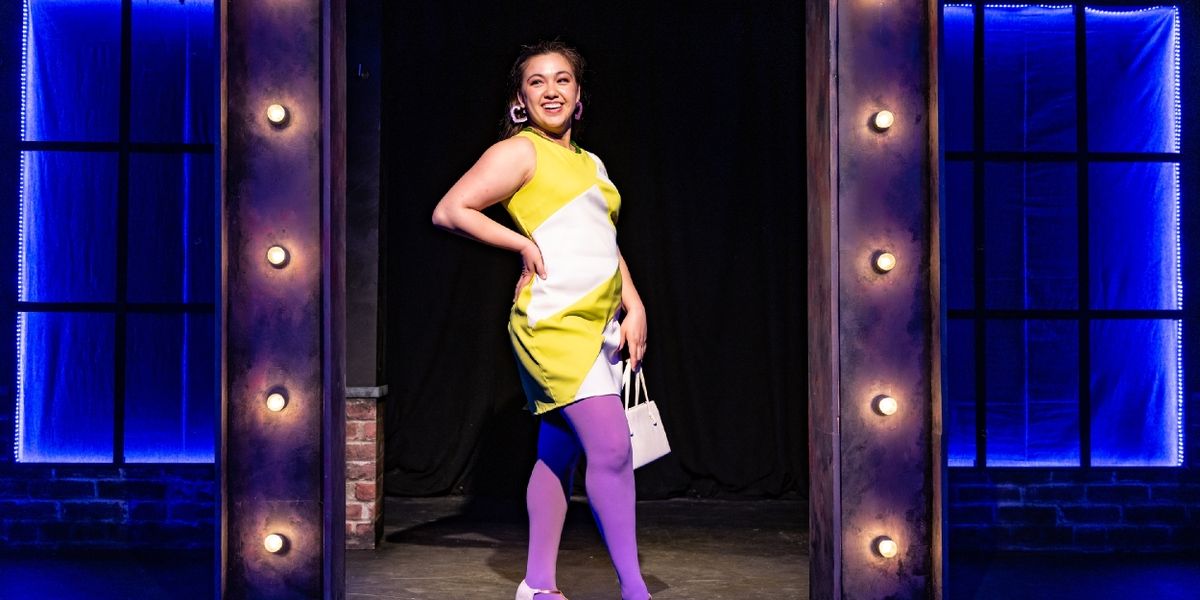
It’s always a joy to see a theatre company in Chicago find its footing and receive the attention it deserves, and I’ve been lucky enough to see Blank Theatre Company grow and come into its own over the last few years as a spunky provider of quality Broadway and Off-Broadway classics produced in intimate settings. I first learned of Blank when I saw their highly recommended version of THE WILD PARTY at an Edgewater storefront that required audiences to crab walk past the orchestra to get to their seats. Last year’s inventive, Jeff Award-winning production of ON THE TWENTIETH CENTURY premiered at the black box space of the newly opened Bramble Arts Loft in Andersonville that provided much more comfort for viewers but still confined individual performances as well as the director’s overall vision. Now Blank has found another suitable, even larger venue at Lincoln Park’s Greenhouse Theatre Center with its production of SWEET CHARITY. Despite a few growing pains and a rushed finale, SWEET CHARITY is a great vehicle for the cast’s charming female lead and further evidence that Blank attracts some of the best young musical talent in the city while pushing the envelope of what Chicago storefront theater can accomplish. The production runs through June 8.
Occupying an interesting cultural space between the Golden and Silver ages of Broadway, SWEET CHARITY recounts the picaresque adventures of the romantic dance hall employee Charity Hope Valentine (Teah Kiang Mirabelli) as she attempts to find true love and a happily-ever-after ending that seems to be becoming a rarity in 1960s New York City. While perhaps not as musically groundbreaking as the rock opera HAIR that would premiere on Broadway two years later, SWEET CHARITY nonetheless dared to explore rapidly shifting attitudes toward women, romance, and sexual liberation that were only recently becoming more mainstream in the American theater.
Under the direction of Johanna Mckenzie Miller, Mirabelli shines in her Blank debut, managing to find the ample humor in Charity’s exploits without turning the heroine into a caricature. While the punchlines of early scenes land a bit uncertainly, Mirabelli quickly grows into the character, finding ample humor in Charity’s naivete without ever turning the heroine into a brainless caricature. Just as importantly, she sings Cy Coleman’s jazzy music with a confidence and emotional depth well-suited to Greenhouse’s larger house size. It’s tough to pick a favorite, but Mirabelli’s talents as a singer and actress are most evident in the hilariously ironic “If My Friends Could See Me Now” and the rousing eleven-o’clock-number “I’m a Brass Band.”
The expanded distance between orchestra and audience also means that conductor Danny Kapinos’s musicians can do greater justice to Coleman’s score here than Blank was perhaps able to do with ON THE TWENTIETH CENTURY, and every instrument comes through crisply and clearly. But it’s also a testament to Aaron Kaplan’s talent as a music director that the cast sings and blends their voices without having to worry that the band may overpower them.
Other notable performances include Kelcy Taylor and India Huy as, respectively, Nickie and Helene, Charity’s coworkers and closest confidantes. Both actresses exude warmth in their scenes with Mirabelli but also excel in executing Lauryn Schmelzer’s largely original choreography. I say “largely” because the Broadway production of SWEET CHARITY and its subsequent film adaptation were choreographed by Bob Fosse, and many patrons have come to expect to see these iconic routines in any show with his name attached to it. This is especially true of the “Rich Man’s Frug” sequence in which Charity and others let loose at a hip new dance club where it’s considered cooler to be aloof than sincere. The choreography for the dance is not necessarily technically challenging, but it does require sharpness and precision to contrast with the more fluid movements at the Fandango Ballroom where Charity works. At the opening performance, movements meant to be tight and controlled felt too loose and sequences intended to be more fluid came across as uncomfortably stiff.
Eldon Warner-Soriano is appropriately captivating as the Italian actor and Charity’s early love interest, Vittorio Vidal. As evidenced in “Too Many Tomorrows,” Warner-Soriano’s voice has a power and depth that feels right at home in a classic Broadway show. But perhaps the most surprising and delightful performance of the show comes from Patty Roache as Herman, Charity’s boss and the seedy proprietor of the Fandango Club who isn’t afraid to show some tough love to keep their dancers in line. Whether singing, dancing, or exchanging quips with their costars, Roache is a whirlwind of talent and charisma that will have you wondering how the role could have ever been played any other way.
Similarly, Dustin Rothbart is utterly charming as Oscar Lindquist, a neurotic man who represents Charity’s best chance yet at finding true love. Rothbart has already proven himself a more than capable singer in his previous roles, so it’s a treat to see him in a role that allows him to show off his comedic chops and skills as a romantic lead. The only hiccup comes at the musical’s conclusion, which—even in 1966—struggled to provide audiences with the happy ending that they had come to expect from musical comedies while also leaning into the cynical finales that later became standard in the works of Kander and Ebb and Stephen Sondheim. Neil Simon’s script for SWEET CHARITY asks the actor playing Oscar to make some large leaps in character development in the musical’s final scenes, but these moments feel too rushed, leading viewers to possibly hate Oscar without really bothering to understand him.
But in the two hours that carry audiences into this finale, Blank Theatre Company has once again proven themselves willing and capable of putting a fresh spin on beloved classics.
Photo Credit: Steve Townshend/Distant Era
|
Fleetwood Max Raue Center For The Arts (10/03-10/03) |
|
Love Story: A Tribute to Taylor Swift Raue Center For The Arts (11/07-11/07) |
|
Rotary Rocks The Raue: James Garner's Tribute to Johnny Cash Raue Center For The Arts (10/24-10/24) |

|
The Dave Matthews Tribute Band Raue Center For The Arts (9/25-9/25) |
|
Memphis The Musical Studebaker Theater at the Fine Arts Building (10/24-10/25) |
|
for colored girls who considered suicide when the rainbow is enuf eta Creative Arts Foundation (8/01-8/30) |

|
Lucy's Comedy Raue Center For The Arts (11/13-11/13) |

|
Zac Brown Band Allstate Arena (11/21-11/21) |
|
The Book of Mormon Cadillac Palace Theatre (10/23-11/01) |
|
Northern Lights Pilgrim Congregational Church (10/16-10/16) |
Reader Reviews
To post a comment, you must register and login.