Exclusive: Screenwriter Robert Kaplow Shares How BLUE MOON Came to Life
Kaplow is nominated for Best Original Screenplay at the 2026 Academy Awards.
 Click for Tickets!
When Robert Kaplow began Blue Moon, it wasn't yet clear to him just what he was writing. The right medium for the story would come later. But he was certain of one thing: "I had this character and this voice and he really wanted to talk."
This character was lyricist Lorenz Hart, co-writer of such songs as "My Funny Valentine," "Bewitched, Bothered and Bewildered," and, yes, "Blue Moon." In 1943, Hart found himself stuck between the Broadway of the past and the Broadway of the future as the form evolved. This was the story Kaplow wanted to tell.
A longtime novelist and former teacher (not to mention a musician himself), Kaplow spent years perfecting what would become his first screenplay. All that tweaking and finessing paid off in more ways than one, including a nomination for Best Original Screenplay at the 98th Academy Awards.
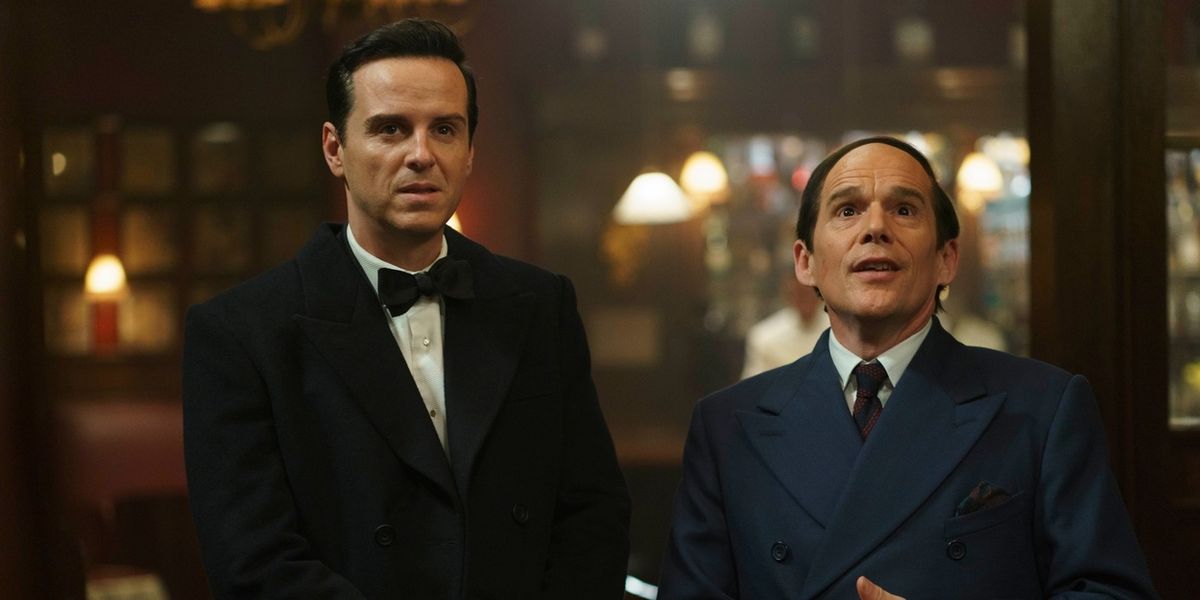
The movie itself takes place at Sardi's during the opening night of Rodgers and Hammerstein's Oklahoma! in 1943, which marked Richard Rodgers’s first collaboration with Oscar Hammerstein II. A rich character portrait, the plot sees Hart, played by Ethan Hawke, as he grapples with the changing times and his own relevance as an artist.
Ahead of the Oscars, we caught up with Kaplow to discuss the nuances of his screenplay, how it continues to connect with audiences, and why it became a film rather than a play.
This interview has been condensed for clarity and length.
Congratulations on the Academy Award nomination. I know that the seed for the movie was planted many years ago. Was there a moment along the way that you had an inkling that it would connect with people in the way that it has?
I never knew or even felt that it would have as big a footprint as it's had, and that so many people who aren't involved in theater [would say] to me that they've somehow found themselves in the story. I don't know if they found themselves in the love story; some have about unrequited love and things like that.
I think, especially older people, [know] what it feels like when the world is moving on without you. The world has changed, and suddenly, this thing that you were celebrated for or good at- nobody's that interested in that anymore. A lot of people have found themselves in that, so it's been rewarding in that regard.
It's fascinating to think about how once you put something into the world, you can't control what happens to it. In the film, everybody knows Hart for Blue Moon, the song, and he seems to wish that he had more recognition for some of his other work, too. You can't pick the things that people love from the things that you've created.
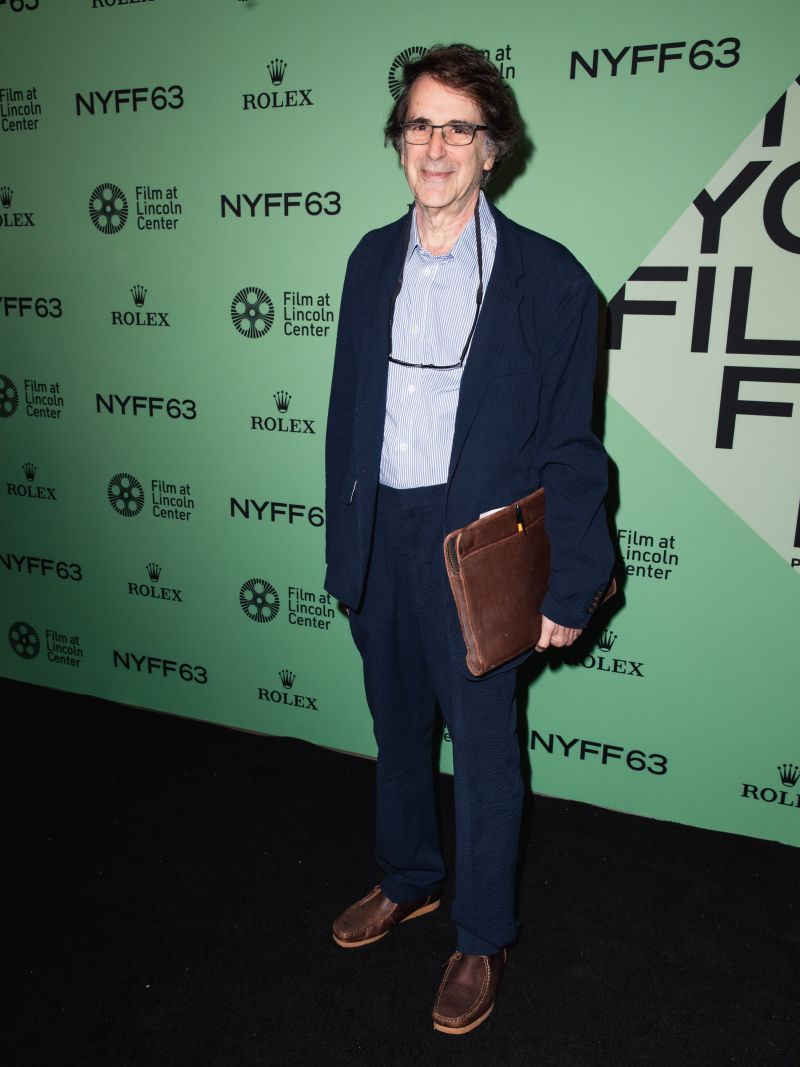
Photo Credit: Jason Crowley/BFA.com
No, and I think that's probably common among songwriters and musicians, or maybe even actors, too. They remember you for the big popular success, and you're only moderately proud of [it]. The story of Blue Moon, the song, is that it really did have at least three incarnations with different lyrics. And nobody liked all the ones that Hart came up with that he finally said, as he does in the movie, "What do you want me to call it, 'Blue Moon'?"
And that lyric is not cliche, but it's borderline cliche. I think Hart is much more sardonic than that. When you read the earlier versions of the lyric... it's a more sarcastic and hipper and New York lyric. And you could just see somebody saying, "Give me a lyric that the guy in the street wants to sing, Larry."
How much did the final product of your screenplay for Blue Moon differ from earlier drafts, structurally?
It's relatively the same from the first draft that I wrote, which is that it's all on Sardis and it's all in one night and it's all in real time. For 10 years, we just read it a few times every year and I would sit there with my ballpoint pen and cross things out and change things. The original version was probably about 20 minutes longer than the film version. Part of it was, I think, to get Richard Rodgers in earlier because the film just gets so much more energetic and has more sparks. I got him in now about page 24, and that's about as fast as I could do it because there's a lot of exposition that you have to inform the audience of.
And I think it was Richard [Linklater]'s idea to add that prologue in the beginning, where you see Hart wandering down an alley, he collapses, and then you hear what's supposed to sound like a 1943 radio obituary from WQXR about Hart.
The idea was, in 40 seconds, we can say to an audience, many of whom don't know who Larry Hart is, "Okay, he was 48 years old when he died. These are 10 of his big hits." And so people in the audience would go, "Yeah, I know My Funny Valentine. I know Blue Moon and Manhattan." And then we go into Oklahoma! and the rest of it follows in real time.
By the way, that's my part in the movie. I'm the voice of the radio announcer. I originally got a friend of mine from NPR to record it, and I thought he did a good job, but Richard wanted it to be a little more like radio of that period. So I just recorded one and I went full NPR voice.
Whenever I watch media of any kind, I almost always think about Stephen Sondheim’s mantra, “Content dictates form.” Why did you want to create this as a screenplay, as opposed to novels, which you had written prior, or a play?
When I started it, I didn't know what it was going to be. I had this character and this voice and he really wanted to talk. And the first draft, I just let him talk for 71 pages and then went back and said, "Okay, this is what I need in the beginning and middle and end, and I need Rodgers and I need the girl, etc."
It really is a very closely observed character portrait. That's what I wanted about this guy that a lot of people have forgotten and yet was brilliant in his time. I remember having lunch with Ethan Hawke about this and he said to me, "This is a small film." And I was like, "Great, because I don't want to give somebody a play script that has 27 speaking parts in it." It will never get put on.
There's a 14-minute scene in a coatroom between two people, and I don't think that scene works unless the camera's a foot away from them. You're seeing Margaret Qualley's eyes half-filled with tears as she realizes, "I have to tell this guy that I don't love him in the way that he loves me." If you were in row one of the theater, you'd get that. If you were in Row 80 in the theater, I don't know if that would play.
The Sardi's set that they built in Ireland was really big. And Linklater uses that. He finds the area by the piano, the area by the bar, the area where E.B. White is sitting, the area where the cast members are celebrating the staircase, the men's room. All that was built as part of one real set that you could literally walk around. They're not cheating.
I know there are some fictionalized elements in the movie, or specific scenarios have been invented. What were non-negotiables to you in terms of keeping things historically accurate? In general, when you begin work on a project like this, do you find yourself tied to real-life events?
You start anchored to as much history of March 1943 as you can use. I went through The New York Times of the period, and I saw Casablanca [was] still playing in New York, even though it had come out a year ago. I could use that as a reference that modern audiences would still resonate with, because they would know some of those lines.
The historical fact is that Lorenz Hart really did go to the opening night of Oklahoma! and was applauding wildly. Whether he went to the after-party or not is largely my invention. My guess is that he probably wouldn't go to the after-party, but it just seemed like a heroic thing to show up to say, "Look, I'm here. I'm still a player. I still count." It also felt like a self-punishing thing to do and I thought he had a little of that in him.
Obviously, Oscar Hammerstein was going to be there; it's his show. Whether he would've brought Steve Sondheim with him at age 12, that just seemed to me too delicious not to use. If you get it as an audience, you get it. If you don't get it, then it's just a joke about a precocious and somewhat obnoxious child.
I remember I was trying to get a sense of what life at Yale University would've been like in 1943. I bought the Yale 1943 yearbook, and I'm going through it at home and I get to the drama club, and see that one of the big guys in the drama club is George Roy Hill. And I think, "Is this the George Roy Hill who's going to direct Butch Cassidy in the Sun?" And it is. He was a senior in 1943. So that's Elizabeth's date at the party. And again, if you get that Hart gives him advice about stories about friendship — that's, of course, his movies — and if you get it, you get it. If you don't, it works well anyway.
We don't say Sondheim's last name in the movie. And George Roy Hill, we identify just as George Hill. We're trying to be a little subtle, and I think there's a sense that a lot of that stuff could have happened. So why not for the film?
Photo Credit: Sony Pictures Classics
Sign up for all the news on the Fall season, discounts & more...
.jpg?format=auto&width=300)