


Pianist Myron Romanul Joins Cape Ann Symphony For May Concert
The concert is on Sunday, May 11 at 2 pm at Manchester-Essex High School auditorium.
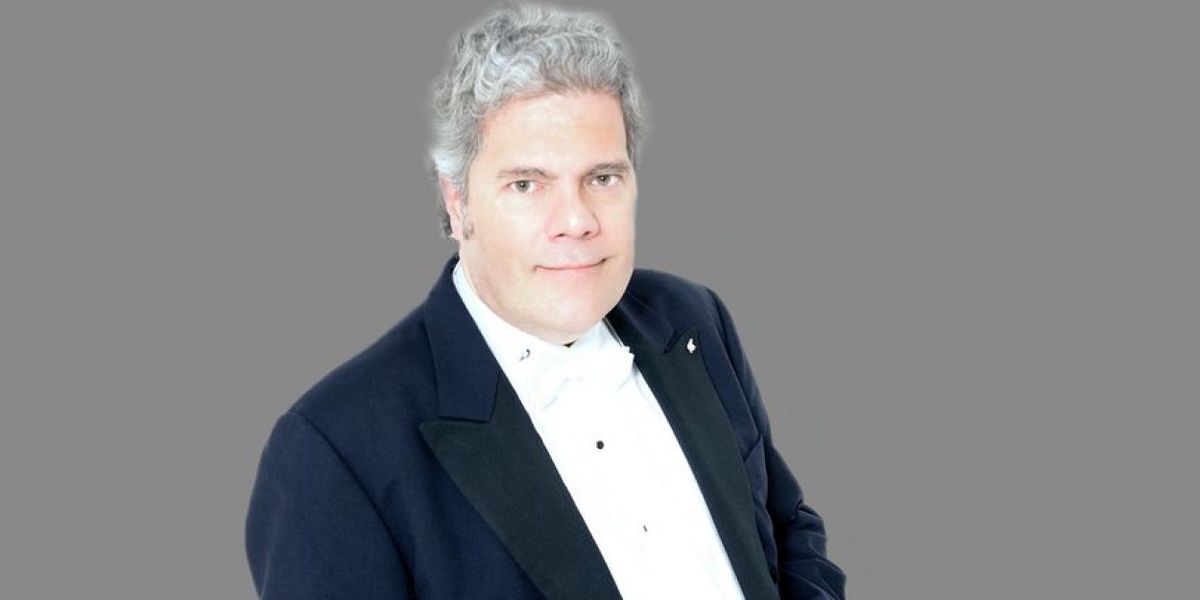
The Cape Ann Symphony’s 73rd Concert Season will wrap up with The Swirling Romantics Concert featuring guest artist globally celebrated pianist Myron Romanul and the music of Jean Sibelius and Sergei Rachmaninoff on Sunday, May 11 at 2 pm at Manchester-Essex High School auditorium on 36 Lincoln Street in Manchester-by-the-Sea, MA.
The Swirling Romantics Concert program includes Jean Sibelius' Symphony No.2 and Rachmaninoff's Piano Concerto No. 2 performed by guest artist Myron Romanul. An internationally famous pianist as well as a conductor at the Munich National Theater, Mr. Romanul comes from a family of musical virtuosos. He is the grandson of Stella Roman, former leading dramatic soprano at La Scala and the Metropolitan Opera and his brother premier violinist Victor Romanul performed Tchaikovsky's "unplayable" Violin Concerto in his debut Cape Ann Symphony performance in October 2022. Myron Romanul made his Cape Ann Symphony debut performing the Mozart Concerto No. 27 in 1966.
"The musicians of the orchestra and I are thrilled about this opportunity to present to our audiences some of the greatest music ever written and to perform with our acclaimed guest artist," CAS Music Director and Conductor Yoichi Udagawa, continues, "We are thrilled to be "welcoming back" Myron Romanul to play with the Cape Ann Symphony. Myron last played with the orchestra almost 60 years ago in the 1960's as a youngster. He is an extraordinary pianist, and his playing of the ever popular, ultra Romantic, gorgeous Rachmaninoff Piano Concerto No. 2 is going to be incredible. Also on the program is the powerful and swirling Symphony No. 2 by Jean Sibelius. It is an audience favorite, and so exciting to listen to live in concert. "
Born in Baltimore, Maryland, Myron Romanul studied opera with his grandmother Stella Roman, former leading dramatic soprano at La Scala and the Metropolitan Opera and was able to gain the insights and traditions of opera. Mr. Romanul began studying piano and memorizing orchestral scores when he was six. Raised in Boston, Mr. Romanul has studied with, and performed with the best. He was featured with the New England Conservatory Ragtime Ensemble on the Angel-EMI recording "Scott Joplin: The Red Back Book", which won the 1973 Grammy Award for "Best Classical Chamber Music Performance". He studied conducting at the New England Conservatory of Music, the Boston University School of Music and the Berkshire Music Center at Tanglewood with Seiji Ozawa, Gunther Schuller and Joseph Silverstein. His long association with the Boston Symphony Orchestra, working with Ozawa, Kurt Mazur, Arthur Fiedler and John Williams, to mention a few, has been a strong influence in his growth as a conductor. After conducting orchestras such as the Central Massachusetts Symphony Orchestra, the Pro Arte Chamber Orchestra and the Boston Ballet Orchestra, he moved to Germany where he has served as Kapellmeister and Associate and Assistant Music Directors in various opera houses in Stuttgart, Karlsruhe, Mainz and Essen. He has also guest conducted throughout Germany, including Munich, Bonn, Heidelberg, Darmstadt, Leipzig, Dresden and Halle as well as orchestras in Italy, France, Japan, China, Korea, Turkey, Iceland, Norway, Australia, Venezuela, Brazil, Chile and Romania. Mr. Romanul was a major force in the successful Fairbanks Summer Arts Festival in Alaska with his creative 16-year run as Music/Artistic Director. He was also "Resident Guest Artist" at Wesley College in Perth, Australia. His recently released CD, "The Piano of the Opera" has won critical acclaim. Recently he has received Gold and Platinum prizes from several online competitions and from the Royal Music Competition, 7 Diamond and 2 Gold prizes as well as "Technical Marvel Special Award". Mr. Romanul was recently nominated for the Marie Taglioni European Award as "Best Conductor."
He is currently conductor at the National Theater Munich, Germany, where since 1987 he has been leading performances of the Bayern State Opera and Ballet. In addition, he is Principal Conductor of the Massachusetts Symphony Orchestra and Guest Conductor at the Opera in Metz, France.
Sergei Rachmaninoff and Jean Sibelius composed the lush romantic music filled with dramatic emotionally charged melodies, and rich orchestral themes featured in The Swirling Romantics Concert. Known to be one of the greatest pianists, conductors and composers of his time, Sergei Rachmaninoff was one of the last of the Russian Romantics in classical music. The piano is featured in many of his compositions and he used his skills as a pianist to explore the expressive and technical possibilities of the instrument. After the disastrous 1897 premiere of Rachmaninoff's Symphony No.1, he experienced a creative block and went into a deep depression. Rachmaninoff began therapy with Dr. Nikolai Vladimirovich Dahl in January 1900. Composed between 1900 and 1901, his Piano Concerto No. 2 became a symbol of Rachmaninoff's recovery. Dedicated to Dr. Dahl, the concerto is often interpreted as a reflection of his emotional rebirth, and its success revived his career. Following the tremendous success of Piano Concerto No. 2, Rachmaninoff went on to become conductor of the Bolshoi Theater from 1904–1906, to perform and conduct in the United States as part of the 1909–10 Boston Symphony Orchestra concert season with conductor Max Fiedler. His performance of his Piano Concerto No. 3 by the New York Symphony Orchestra, conducted by Gustav Mahler was a highlight of his long career.
Finnish Jean Sibelius wrote Symphony No.2, a four movement work for orchestra from 1901 to 1902. He began writing the Symphony shortly after the highly successful premiere of his Finlandia, a symphonic poem that became a symbol of Finland's struggle for independence. The Helsinki Orchestral Society premiered Symphony No. 2 on March 8, 1902, with Sibelius conducting. After three sold-out performances, Sibelius made some revisions and the revised version was performed on November 10, 1903 in Stockholm, Sweden. Sibelius' Symphony No. 2 was written and gained popularity during a time of Russian sanctions on Finnish language and culture which resulted in a strong rise in Finnish Nationalism. Symphony No. 2 was nicknamed the "Symphony of Independence" as many connected the grand finale of the symphony with Finland's struggle for independence.
Founded in Gloucester in 1951, the Cape Ann Symphony is a professional orchestra of over 70 players from throughout the New England area. They perform a subscription season of four concerts per year plus several Pops and youth concerts. The Symphony Board of Directors named Yoichi Udagawa the Music Director and Conductor of the Cape Ann Symphony in the summer of 2000 after a yearlong search. In addition to his leadership of Cape Ann Symphony, he is Music Director and Conductor of the Melrose Symphony Orchestra, and the Quincy Symphony Orchestra and a cover conductor at the Boston Pops Orchestra. Frequently invited to guest conduct, Mr. Udagawa has worked with many different orchestras including the Boston Pops Esplanade Orchestra, Nobeoka Philharmonic Orchestra, the Pro Arte Chamber Orchestra of Boston, the University of Texas Symphony Orchestra, the Indian Hill Symphony, the Garden State Philharmonic, the Brown University Orchestra, the Syracuse Society for New Music, the Boston Conservatory Orchestra, the Midcoast Symphony Orchestra, the Newton Symphony, the Austin Civic Orchestra, and the Mid-Texas Symphony. Mr. Udagawa is at home in popular and contemporary music as well as the standard symphonic repertoire. He is known for his relaxed manner and ability to speak from the podium which has helped new audiences as well as enthusiasts gain a greater appreciation for symphonic music. His programs often include premieres of new works – some specially commissioned for the orchestra — as well as great orchestral works across the symphonic repertoire and lively Pops programs. He is also an integral part of the Cape Ann Symphony Youth Outreach programs to area schools.
|
The Norwegians Elayne P. Bernstein Theatre (9/04-10/04) |
|
Rocky Horror Show The Company Theatre (10/02-10/18) |
|
A Christmas Carol North Shore Music Theatre (12/03-12/23) |
|
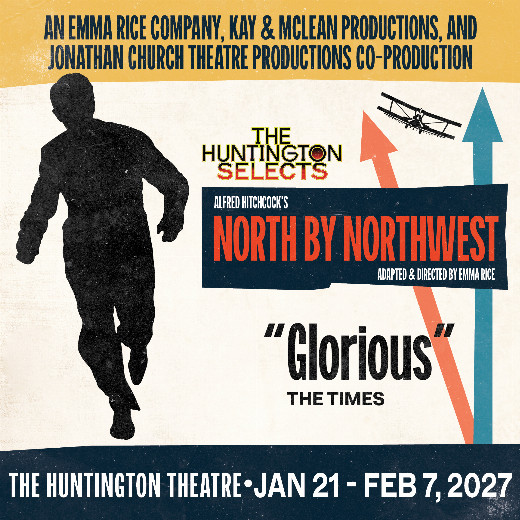
Alfred Hitchcock's North by Northwest Huntington Theatre (1/21-2/07) |
|
|
The Sound of Music Boch Center Wang Theatre (11/17-11/22) |
|
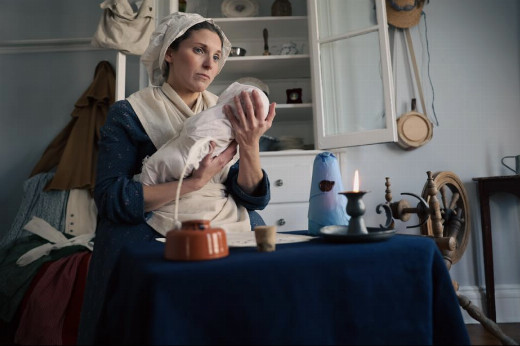
Rendezvous with Rachel Revere™ Vokes Theatre (8/30-8/30) |
|
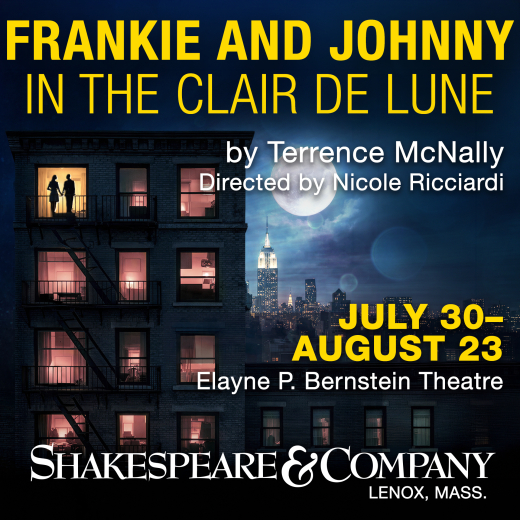
Frankie and Johnny in the Clair de Lune Elayne P. Bernstein Theatre (7/30-8/23) |

|
Koe Wetzel & Shane Smith and The Saints Leader Bank Pavilion (8/19-8/19) |
|
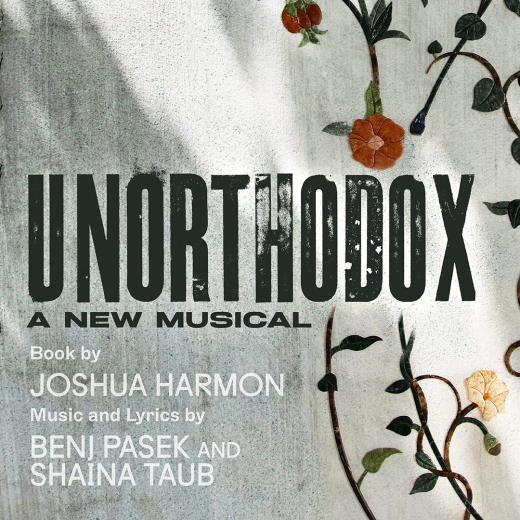
Unorthodox Huntington Theatre (4/29-5/30) |
|
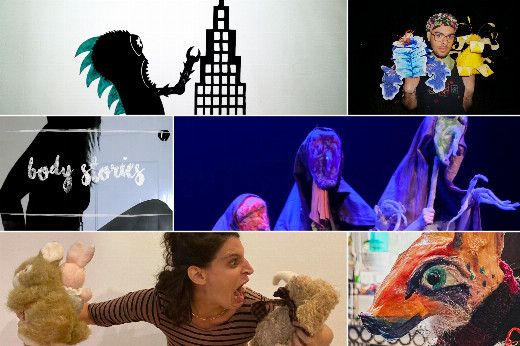
Puppet Showplace Theater Presents: Summer Puppet Slam Puppet Showplace Theater (8/15-8/15) |