


Treasures From Egyptian Museums Go On Show At The Hong Kong Palace Museum
The exhibit will open on 20 November 2025 and run until 31 August 2026.
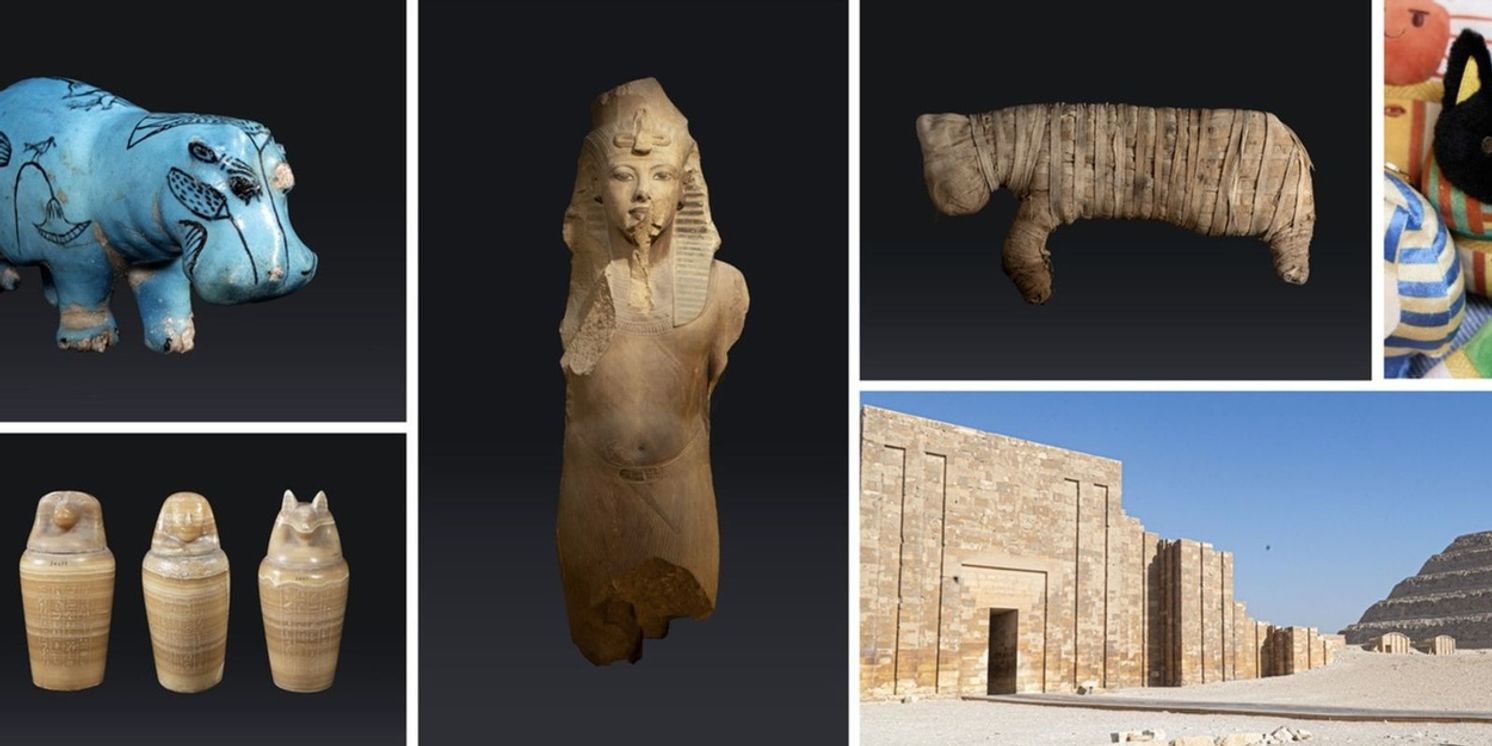
The Hong Kong Palace Museum will host Ancient Egypt Unveiled: Treasures from Egyptian Museums opening on 20 November 2025 and running until 31 August 2026, in a major exhibition organised in collaboration with the Supreme Council of Antiquities (SCA). It will bring together 250 exquisite treasures, some never seen outside Egypt before, from seven major museums in Egypt, including the Egyptian Museum in Cairo, the Luxor Museum of Ancient Egyptian Art, the Suez Museum, and the Sohag National Museum. Jointly organised by the HKPM and the Supreme Council of Antiquities of Egypt, the exhibition is proudly supported by Bank of China (Hong Kong), the HKPM's Strategic Partner, with Cathay and UnionPay International as the Major Sponsors.
The exhibition will be the largest, most comprehensive display of ancient Egyptian treasures ever seen in Hong Kong. For the first time, Hong Kong will exhibit museum artefacts and the latest archaeological findings directly loaned from Egypt. The SCA of Egypt, the sole owner and lender of all artefacts, is honoured to share these treasures with the people of Hong Kong and the world, as part of its mission to preserve, protect, and promote Egypt's cultural heritage through international collaboration.
It will also include recent significant archaeological discoveries from the Saqqara, the vast necropolis of the ancient capital Memphis located south of Cairo, offering visitors a glimpse into the mysteries of Egypt's magnificent ancient civilisation. These precious artefacts, spanning nearly 5,000 years of history, include monumental statues, painted and inscribed stone stelae, mummy coffins and masks, jewellery, everyday objects, and animal mummies. Many of these objects are exhibited outside Egypt for the first time*.
* All loaned artefacts are the inalienable property of the Arab Republic of Egypt and are presented on temporary loan by the SCA.
To welcome the opening of the special exhibition, the HKPM is introducing various discount packages available for purchase. Please visit the Museum's website for more details.
The first section, “The Land of the Pharaohs”, explores ancient Egyptian civilisation during the era of the pharaohs, covering various aspects including pharaohs' kingship, religious belief, and daily life. Acting as mediators between gods and humans, pharaohs served as earthly rulers and protectors of the deceased. On display are statues of renowned pharaohs, including SenwosretI (r. about 1956–1911 BCE), the female pharaoh Hatshepsut (r. about 1473–1458 BCE), and Rameses II (r. about 1279–1213 BCE), each embodying the figure's immense power and authority. Additionally, this section introduces the belief systems and funerary practices of ancient Egypt: from Osiris, the god of the underworld, and Isis, the goddess of life, to Horus, the guardian of kingship, which altogether shaped the spiritual world of ancient Egypt. Well-preserved painted wooden coffins, canopic jars used as storage for internal organs, and amulets illuminate the ancient Egyptians' quest for eternal life. This section also features a variety of everyday objects—from statues of brewers and musical instruments, to Senet game pieces, bread, sandals, and even a toilet seat—that bring the ancient civilisation to life.
The second section, “The World of Tutankhamun”, and the third, “The Secrets of Saqqara”, explore the earth-shattering archaeological discoveries in modern Egyptian archaeology. Tutankhamun (r. about 1336–1327 BCE), one of the most legendary pharaohs in ancient Egyptian history, ascended to the throne at the age of 9 and passed away at 18 or 19. His brief life coincided with a time of religious and political upheavals. After coming to power, he swiftly reversed the monotheistic religious reforms of his predecessor, Akhenaten, restoring traditional polytheistic beliefs and dynastic order. Tutankhamun's tomb in the Valley of the Kings remained nearly intact for more than three millennia until its discovery by archaeologists in 1922, revealing more than 5,000 burial objects and treasures that astonished the world.
In addition to the monumental stone sculptures of Tutankhamun and Akhenaten, this section will feature a quartzite head of Nefertiti (about 1370–1330 BCE), often regarded as the most beautiful queen of ancient Egypt. Other exquisite artefacts from the New Kingdom period on display include gold jewellery pieces, faience objects, and sculptures. Together, these treasures demonstrate the artistic achievements of ancient Egypt's golden age.
The third section features fine examples of the latest archaeological findings from Saqqara, including painted anthropoid coffins, animal mummies, including cats and cattle, and deity statues with animal features. Saqqara, located near Cairo, is the core burial area of Memphis, Egypt's earliest capital. It is home to numerous pyramids, including the first pyramid in Egyptian history—the Step Pyramid of the pharaoh Djoser (r. about 2686–2667 BCE) of the 3rd Dynasty. Saqqara is an important archaeological site with a high concentration of royal and noble tombs, temples, and animal mummy cemeteries. Since 2020, archaeological teams have uncovered the rare architectural remnant of the temple dedicated to the feline goddess Bastet. In nearby burial shafts, nearly a thousand intact painted coffins were found.
The final section, “Ancient Egypt and the World”, explores the dynamic exchanges and parallels between ancient Egypt and other civilisations. On view are a selection of artefacts that exemplify cross-cultural encounters, including mummy masks that incorporate Greek and Roman stylistic elements and a stele inscribed with three scripts.
In celebration of the 70th anniversary of diplomatic relations between China and Egypt in 2026, the exhibition will conclude with a brief review of Egyptian archaeological history over the centuries, as well as the fruitful collaboration between China and Egypt in archaeology and museum exhibition.
Over ten multimedia installations inside and outside the gallery will offer engaging experiences, such as a dynamic display of the mummification process and the excavation of Tutankhamun's tomb. Visitors are encouraged to study the precious artefacts up close and put them into historical and archaeological contexts. Through 3D modelling, projection mapping, and digital colour reconstruction, the historically damaged statue of Tutankhamun will be presented in a carefully restored digital form.
* All multimedia presentations are entirely digital and non-intrusive, ensuring full preservation of the original artefacts.
The HKPM will offer a series of educational programmes, cultural and creative merchandise, and publications related to the exhibition. Other learning offerings include interactive workshops, performing arts events, public talks, and guided tours, to engage audiences of all ages and encourage exploration of the rich culture of ancient Egypt in a fun and accessible manner. More details will be announced soon.

Videos