


Review: W;T at City Theatre Of Austin
A life-affirming play, City Theatre of Austin’s production of W;T draws us all a little closer to compassion and beauty of the human spirit.
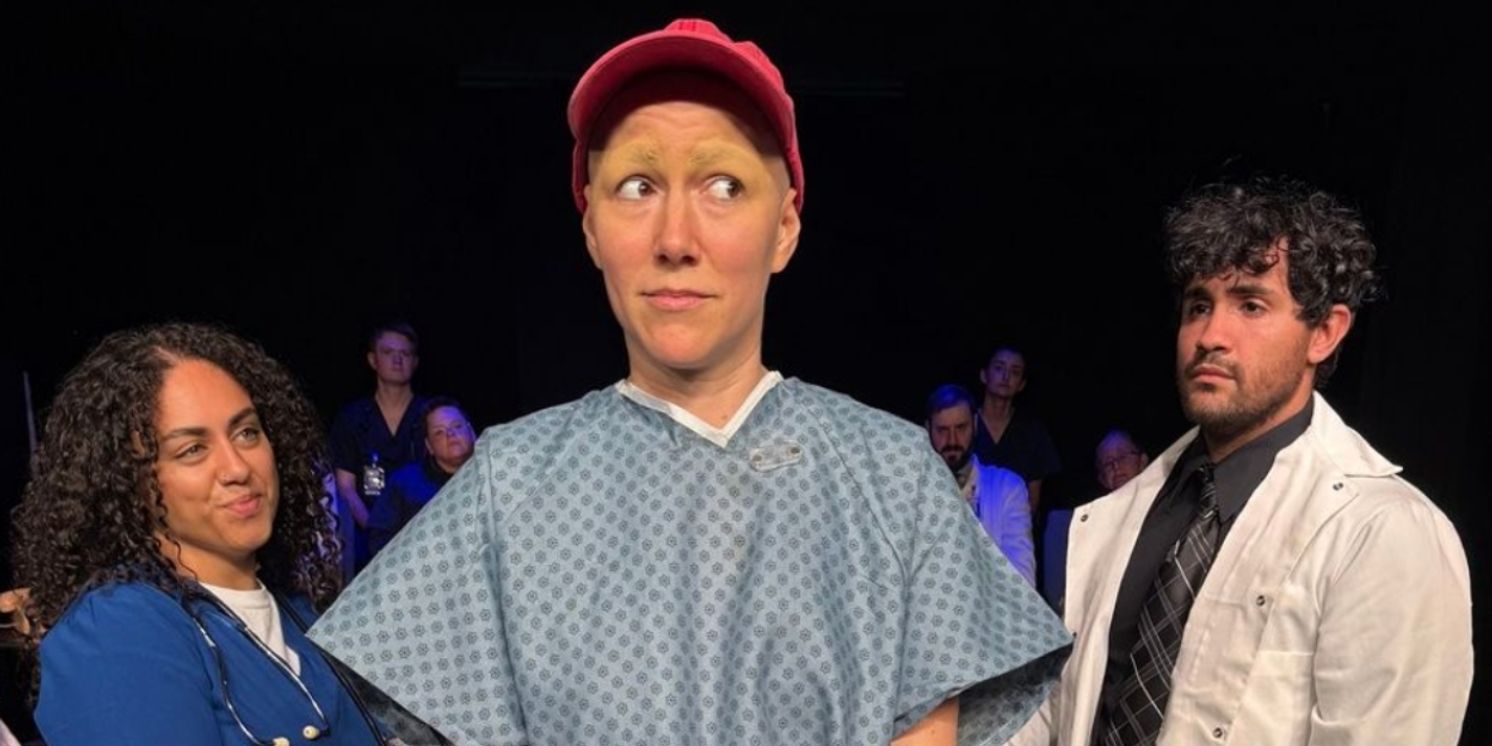
From July 25 to August 10, City Theatre of Austin presents Margaret Edson’s Pulitzer Prize winning play W;T as part of its 2025 season. An astonishing and insistently relevant script, the action follows Dr. Vivian Bearing (Taylor Flanagan) in her final hours with Stage IV metastatic ovarian cancer. A formidable English professor known for her rigorous teaching and love of John Donne’s poetry, Bearing reflects on her life, career, and isolation while undergoing an aggressive experimental treatment. Through flashbacks to her studies under Dr. E. M. Ashford, her relationship with her father, and encounters with medical staff, including former student and oncology fellow Dr. Jason Posner, Bearing comes to see the limits of intellectualism and the deeper value of kindness. Near the end, Dr. Ashford visits, reading from The Runaway Bunny instead of Donne, offering gentle comfort. When Vivian dies, the play closes with Vivian walking unclothed toward a small, welcoming light.
Director Adam Adolfo, in their notes writes of the play:
“W;T is not a play about dying alone. Rather, it’s a play about the power of words and a time when they matter most. It’s a play about the strength of the human mind to evolve and grow in the face of certain mortality. W;T is not a cancer play. W;T is a play about living…a celebration of the human spirit.”
Adolfo has assembled an accomplished cast for this production; from the main role to the smallest performed by seasoned, expert actors. And this begins with Taylor Flanagan in the role of Vivian Bearing, PH.D. Flanagan delivers a formidable, imperious, and achingly authentic portrait of a brilliant mind grappling with the body’s betrayal. As a professor of English literature and expert on John Donne, she navigates the shifting terrain between dry, gently tempered intellectualism and the raw vulnerability of a woman confronting the end of her life. From her hospital room, she addresses the audience in the first person, wielding language with both the precision of a scholar and the urgency of someone with nothing left to lose, sometimes using words as direct ammunition to land devastating, heart-wrenching truths. Flanagan masterfully balances wit, rage, and razor-edged critique, allowing flashes of humor to break through the suffocating weight of her situation. Each line lands with perfect timing, whether delivered with intellectual detachment or searing, painful presence, always balancing between gallows humor and literary commentary.
The supporting cast of W;T delivers a series of performances that deepen the play’s emotional resonance and bring dimension to every interaction on stage. Stephanie Salama portrays the deeply caring nurse Susan Monahan, R.N., B.S.N., with a warmth that immediately puts both patient and audience at ease. From the smallest bedside adjustment to powerful advocacy for her patient, Salama conveys profound empathy and grounded professionalism for her role. Salama’s Susan is more than a caregiver; she is a steady presence in the storm, offering comfort without pity and compassion without condescension. Through her performance, she reminds us of our most essential calling: to care for one another as equal and valued persons, each deserving of gentleness, dignity, and compassion in life’s most difficult moments. It is in her attentive silences, as much as in her spoken lines, that Salama’s artistry shines, revealing the healing power of human connection when words are not enough.
Andrew Solis captures the ambition, occasional awkwardness, and clinically detached researcher mindset of Dr. Jason Posner with authenticity. From his brisk, precise movements to the measured cadence of his speech, Solis embodies a man who is more comfortable in the lab than at the bedside. Yet, within this professional reserve, he allows the audience glimpses of the humanity beneath, hinting that Posner cares, at least a little, for his former professor. Still, the demands of the experimental treatment and his role within it take precedence, creating a gradual widening of the emotional gap between himself and Bearing, reminding us that even those who care deeply can be swept into the impersonal tide of clinical necessity.
Dawn Azbill-Smith brings grace, wisdom, and emotional depth to Professor E. M. Ashford, offering moments of heartfelt compassion that stand among the production’s most tender. From the moment she first appears, Azbill-Smith reveals Ashford’s deep human concern for the balance between academic ambition and the simple joys of life, urging a young Bearing to make time for friends alongside her studies. Years later, she becomes the only visitor to Bearing’s hospital room, sitting by her bedside and reading aloud from Margaret Wise Brown’s The Runaway Bunny, offering comfort in the most human, accessible way. In doing so, Azbill-Smith weaves together the weighty, enigmatic reflections of John Donne on life, death, and God with the gentle simplicity of a children’s tale, creating a rare space of spiritual respite for both Bearing and the audience. Her performance allows us, if only for a moment, relief from the agonizing vigil we keep at Bearing’s bedside, and reminds us of the power of presence when words alone cannot heal.
Julien Hemmendinger inhabits Dr. Harvey Kelekian with ease, embodying the authority and clinical focus of a senior physician whose priorities lie with his research and clinical trials. Hemmendinger makes it easy for us to dislike this difficult character, whose professional detachment overshadows concern for the lonely, painful journey Bearing endures. Yet, he also allows a single, striking moment of humanity to break through: the quiet revelation that he has signed Bearing’s DNR, honoring her wish for dignity in her final moments. This choice, delivered without fanfare, lingers in the mind as a reminder that even those consumed by the demands of work and ambition can engage in acts of compassion. Hemmendinger’s portrayal carries a quiet warning: if we are not careful, the very busyness that drives our success can also cause us to lose sight of what truly matters.
Alan Brent’s brief portrayal of Mr. Bearing leaves a tender impression, grounding the story’s emotional core in the quiet, enduring bonds of family. With gentle presence and understated emotion, he offers the audience a glimpse into Vivian’s world before illness, a reminder that behind the formidable scholar is a daughter, loved and cherished. His performance beautifully bookends Vivian’s life, connecting the childhood comfort of bunny tales to the final moments of her journey. In the stillness of those closing scenes, Brent allows us to feel the invisible yet unbreakable bond between father and daughter, a connection that lingers even when words have ceased. It is a role of few lines, but immense heart, reminding us that love - even for the loneliest life - often speaks loudest in silence.
The cast is rounded out by Reed Syzdek, Adriana Fontanez, and CB Feller in the multifaceted roles of lab technicians, students, residents, and chorus. Through their many portrayals, they bring to life the outer layers of the story: the hum of the hospital, the rhythms of academia, and the unseen forces that shape Bearing’s journey. Syzdek shines as a compassionate and earnest resident, offering a glimpse of medical care grounded in empathy. Fontanez stands out as a promising student, embodying the curiosity and determination of the next generation. Feller delivers a haunting presence, at times appearing almost as the specter of death itself, silently watching and waiting at the edges of the narrative. Together, they form a versatile and essential chorus, providing texture, context, and resonance to the world surrounding the central story.
Set on the floor and backed by a platform with chairs, this production features several design elements that enhance the storytelling and atmosphere. Andy Berkovsky’s set design employs realistic hospital beds and medical devices to ground the audience in the world of the play, while keeping the ensemble visible behind the hospital room, a choice that allows for seamless movement of set pieces, ample performance space, and a constant sense of presence. Payton Trahan’s lighting design is precise and purposeful, guiding the audience’s attention exactly where it needs to be. Adam Adolfo’s music and sound design is particularly noteworthy, blending modern, neo-classical piano with subtle hospital sounds. These auditory elements never overshadow the action but instead provide a connective thread, supporting the actors and underscoring the emotional tone of each scene.
City Theatre of Austin’s W;T is a powerful performance, a play that draws us unflinchingly into the unrepeatable journey of one human life, faced with its own ending. W;T is a work of startling intimacy, raw without tipping into melodrama, poetic without losing its grounding in reality. This production honors Edson’s vision with both precision and heart, creating a space where the audience is invited not simply to watch, but to bear witness. Here, life is not neatly explained or tied up with comforting assurances; it is lived in full complexity, with all its contradictions intact. Death, in this telling, is neither proud nor mighty, nor solely dreadful. It is a passage steeped in the fierce vitality of the one who walks it. In moments of sharp humor, quiet tenderness, and aching truth, the production reminds us that even in the shadow of the inevitable, life persists, radiant and unrelenting.
Reader Reviews
Videos