


Review: TREEMONISHA at Washington National Opera At Lisner Auditorium
Washington National Opera's excellent production of Scott Joplin's historic and only surviving opera plays its last performance at Lisner Auditorium on Sunday, March 15

.jpg?format=auto&width=1400 "Review: TREEMONISHA at Washington National Opera At Lisner Auditorium")
Treemonisha
Washington National Opera
Lisner Auditorium
By: Douglas Poms
To honor the country’s 250th birthday, Washington National Opera (WNO) is putting on a season of operas by American composers. It seems fitting that WNO has included Treemonisha, the inspiring opera by Scott Joplin, a revered American composer best known for his Ragtime compositions, whose legacy merits celebration. Treemonisha is a widely known piece, but it is rarely performed. So, it is a real treat to have this production mounted in DC by the WNO and beautifully directed by the esteemed Denyce Graves. This is WNO’s first production since breaking with the Kennedy Center, and it represents a return to WNO’s first home of 70 years ago, Lisner Auditorium.
Treemonisha is the story of a young Black girl during the Reconstruction era in Arkansas (Texarkana). Treemonisha, a former slave, was found as a baby under a tree and adopted by a loving couple, Ned and Monisha. Treemonisha’s adoptive parents, recognizing the value of a good education, send her to receive schooling from a white teacher. Treemonisha returns and shares her knowledge with the youth and adults there. But she must combat the resistance of the local conjurers, who attempt to exploit the townspeople with superstitious beliefs, including by selling “luck bags.” Joplin’s libretto centers around the theme of education prevailing over conjuring. The fate of Treemonisha makes the piece notably progressive, especially considering it was written in 1910.
Joplin’s orchestration notes for Treemonisha, to the extent completed, were lost after his death, but his piano score has survived. In the WNO production, composer Damien Sneed has fashioned a stellar musical adaptation featuring orchestrations that integrate the original piano score. The WNO production includes Sneed sitting at the piano, along with DeAnte Haggerty-Willis periodically playing the banjo, throughout the performance. This helps give the production a more authentic sound and feel. Presumably because of space constraints, the WNO orchestra is smaller than usual, but they still sound great.
Although Joplin is best known for his Ragtime compositions, Treemonisha’s score also contains a wide variety of music styles, including Black spirituals, American folk music, African folksong, and barbershop quartet.
Additions to Joplin’s libretto were made by librettist Kyle Bass, and they help with the flow of the story. One new helpful device that has been incorporated into this production is that during the lengthy overture to the piece, Treemonisha’s history leading up to the events at the start of the opera is acted out in the style of a pantomime.
The dynamic choreography by Eboni Adams featuring the splendid WNO corp of dancers is used throughout the production and seamlessly worked into the fine ensemble numbers, giving them additional flair. I especially enjoyed the ensemble in “We Wiil Rest Awhile (Song of the Cottonpickers).” In addition, the dancers are showcased together in some numbers, including a ballet during “Frolic of the Bears”.
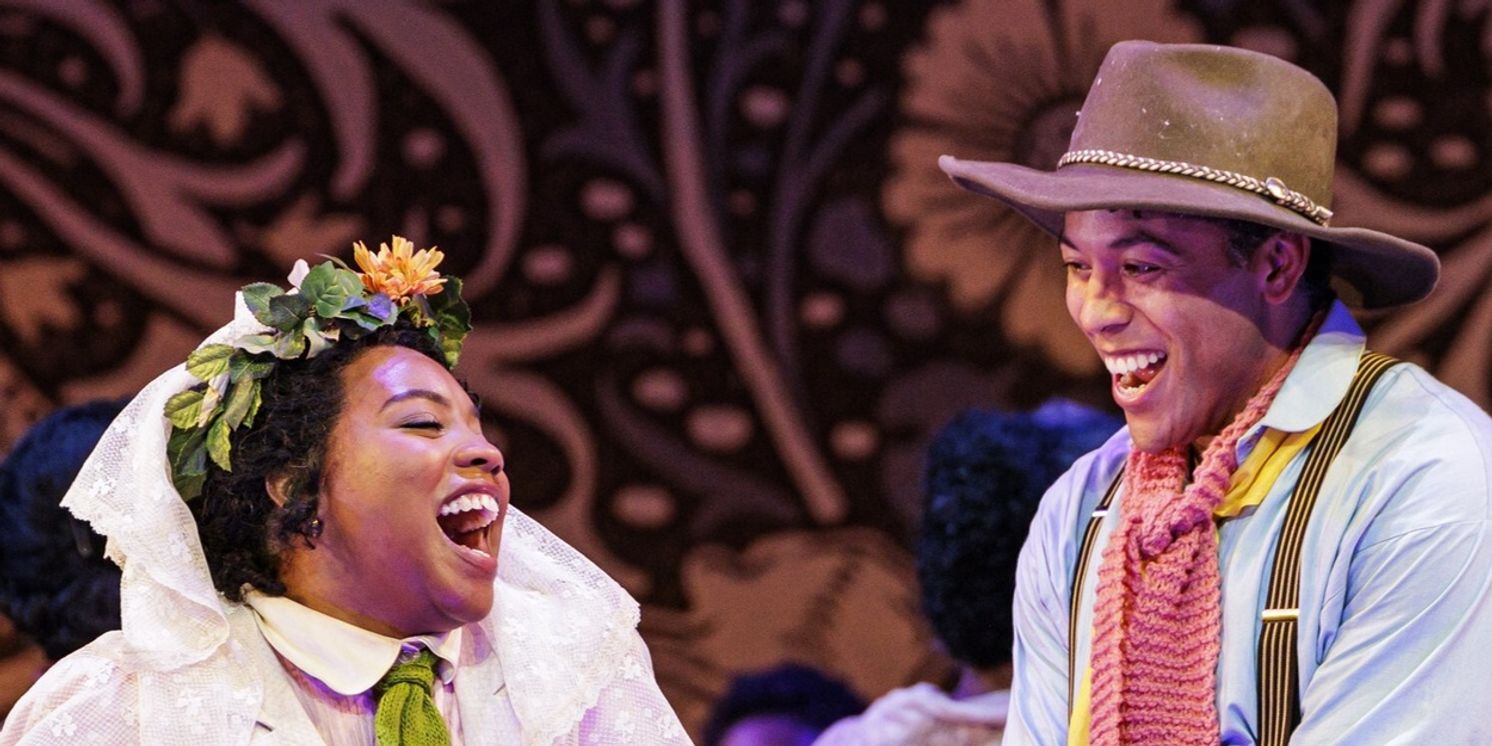
The principals are all terrific. Soprano Viviana Goodwin, a WNO regular, is superb as Treemonisha. Her lovely voice suits the role well. She sounds especially good in “A Real Slow Drag,” toward the end of the opera. Mezzo-Soprano Tichina Vaugn, in her WNO debut, is an excellent Monisha. She shines in “Treemonisha’s Bringing Up.” Bass-Baritone Kevin Short makes a fine Ned and shakes the rafters in “When Villains Ramble Far and Near.” Baritone Justin Austin is charming as Remus, Treemonisha’s friend and eventual love interest. He performs a delightful, crowd-pleasing aria in “Wrong is Never Right.” Tenor Jonathan Pierce Rhodes aptly brings both comedy and menace to the role of lead conjurer, Zodzetrick.
The painted backdrop by set designer Lawrence E. Moten III is lively and colorful, comprised largely of flowers and paisleys, and a central tree, around which much of the action takes place. The sound design by Mark Rivet works well most of the time, although when the singers were not at the front of the stage or when someone sang in low octave, sometimes it was hard to hear them. Lynly A. Saunders’ enchanting and vibrant costumes are effective in delineating the different economic statuses of the multiple characters. The lighting design by Jason Lynch helps enhance the drama on stage. Graves’ strong direction brings all of these elements together to make this a thematically coherent production.
Some aspects of Treemonisha highlight early influences on Joplin. As noted in the program, similar to Treemonisha, Joplin was born and raised in Texarkana and his mother worked for a white family so that Joplin could practice on the family piano. The use of magic and dark spirits and a central tree in Treemonisha is reminiscent of the work of Richard Wagner, one of the composers that most influenced Joplin’s music. Some of the Black traditions with which Joplin would have grown up, such as the barbershop quartet, are included in the opera’s libretto and score. All of these add to the richness of this opera.
With its strong themes accentuating the importance of freedom, education and compassion and its stirring and varied score, Joplin’s Treemonisha is an important part of America’s music history. How wonderful that the WNO has put on this historic opera during this celebratory year for our country.
Treemonisha has its final performance on March 15. Performance run time is approximately 2 hours and 5 minutes, including a 25-minute intermission.
Photo Credit: Elman Studios
ur Article Text Here!
Reader Reviews
Videos