


Review: THE SORCERER at Winter Opera
Gilbert and Sullivan gem plays at Winter Opera November 7, 9
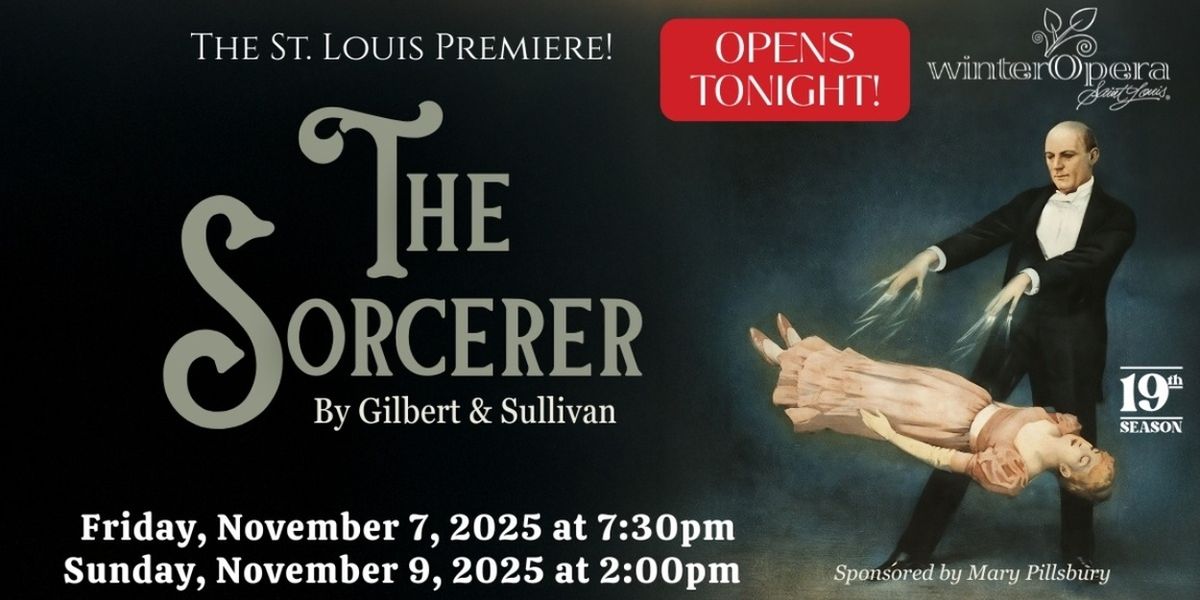
 Gina Galati’s delightful Winter Opera company has opened its season with a revival of a rarely seen Gilbert and Sullivan show—The Sorcerer. It premiered in 1877, the first of the grandly popular series of light operas by G & S in which the authors had total control over casting and staging. These shows became known as the “D’Oyly Carte operas” (after their producing impresario Richard D’Oyly Carte) or the “Savoy Operas” (after the theater where most were produced). The list includes the evergreen super-hits H.M.S. Pinafore, Pirates of Penzance and The Mikado as well as less familiar titles: The Yeoman of the Guard, The Gondoliers—all of which have been produced by Winter Opera. This history is a grand gift to the world of opera in St. Louis.
The principal trope in the plot of The Sorcerer is one fabled in antiquity and leading famously through Shakespeare’s Midsummer Night’s Dream and Donizetti’s L’elisir d’amore: a magical love potion (and its misapplication).
The village of Ploverleigh is celebrating the betrothal of Alexis (son of the lord of the manor, Sir Marmaduke Pointdextre) and Aline (daughter of Lady Sangazure). Now Alexis is an idealist, and he feels that (1) love is the solution to all problems, and (2) love should be unimpeded by all class barriers. (This is a sentiment that arises again in H.M.S. Pinafore.) In furtherance of these ideas Alexis purchases a love potion from the local Family Sorcerers company and uses it to spike the tea at the betrothal party. So everyone in the village (except married people, on whom, of course, love potions have no effect) will go to sleep, wake up, and fall instantly in love with the first person of the opposite sex they see. What could go wrong?
Much goes comically wrong.
Fine voices abound. The lovers could not be more beautifully matched. Alina Tamborini, as Aline, has a pure, rich, lyrical soprano capable of a delicate lightness as well as great power. Her vibrato is one of the most perfect I’ve ever heard. Gene Stenger, as Alexis displays a very sweet and lovely tenor voice. The two are sublime in their duet, “Oh, love, true love” .
James Eder makes Sir Marmaduke a Gilbert and Sullivan icon. This baronet is the 7,036th in direct descent from Helen of Troy—so of course his son must marry into only a blue-blooded family (“Sangazure)”. Sir Marmaduke is gorgeously pompous and confident in his kilt and crimson coat and stockings. Eder brings to the role a fine rich bass voice and a bold embracing of the melodramatic acting style Gilbert needed for the role.
Jacob Lasseter, as the Wizard, adds another powerful performance to his long list of major bass/baritone roles that have made him a favorite in St. Louis opera. He gives the Wizard the panache of a showman and a normal businessman’s concern for customer satisfaction. He aces the delightful patter-song “My name is John Wellington Wells”.
Poor Constance Partlet has long been in unrequited love with the vicar, Dr. Daly. He, oblivious, has comfortably relaxed into bachelordom. Soprano Courtney Fletcher is a delight as Constance, her voice aloft like an agile lark. Gary Moss sings the Rev. Doctor. (It is, I think, his ninth major role with Winter Opera.) He has a rich dramatic baritone and presents a placid acceptance of bachelorhood, though he fondly recalls when “I was loved beyond all other men”.
Karen Kanakis, another favorite presence in St. Louis opera, sings Mrs. Partlet, Constance’s mother. Over and above her lovely soprano voice, she has quite splendid diction.
Emily Harmon sings Lady Sangazure, Aline’s mother. Here she brings the same vocal beauties and discipline--and the terrific comic sensibility--that shone in her performance of Buttercup in last seasons H.M.S. Pinafore.
Bass Eli Panek sings (and comically infuses) the role of the “ancient Notary”.
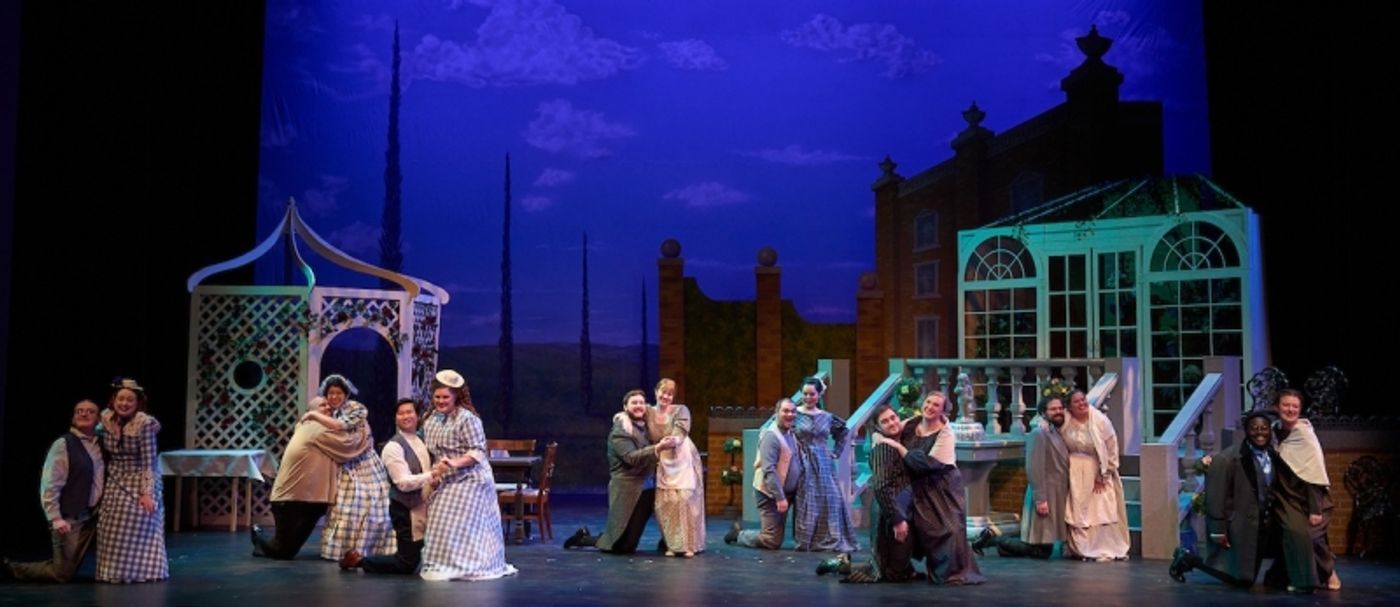
Stage Director John Stephens, who has directed ten productions for Winter Opera, continues to display his mastery. Stephens deftly pruned the script to a comfortable two hours or so. The large cast is gracefully managed on Scott Loebl’s lovely set: terrace, gazebo and entrance to the manor. The incantation scene (wherein the potion is activated) is filled with a stage aswirl with blue-glowing faces of elves and bogies in a haunted darkness. Congratulations to lighting designer Michael Sullivan.
The large chorus of townsfolk sings merrily, beautifully. After imbibing the love potion they all tumble oh-so-gracefully into each other’s arms.
Costumes, by Jen Blum-Tatara, are nicely period—lovely gowns for the ladies of class, graceful peasant frocks for the townspeople.
Winter Opera has launched another comic delight into our season: Gilbert and Sullivan’s The Sorcerer.
(Photos by Peter Wochniak)
To post a comment, you must register and login.
|
Fiddler on the Roof Union Avenue Opera (7/03-7/11) |
|
L’elisir d’amore Union Avenue Opera (7/24-8/01) |
|
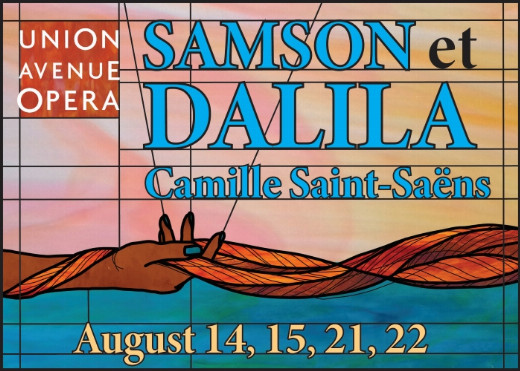
Samson et Dalila Union Avenue Opera (8/14-8/22) |