


Review: PORGY AND BESS Raises the Roof at the Metropolitan
American Masterwork from George and Ira Gershwin, DuBose and Dorothy Heywood
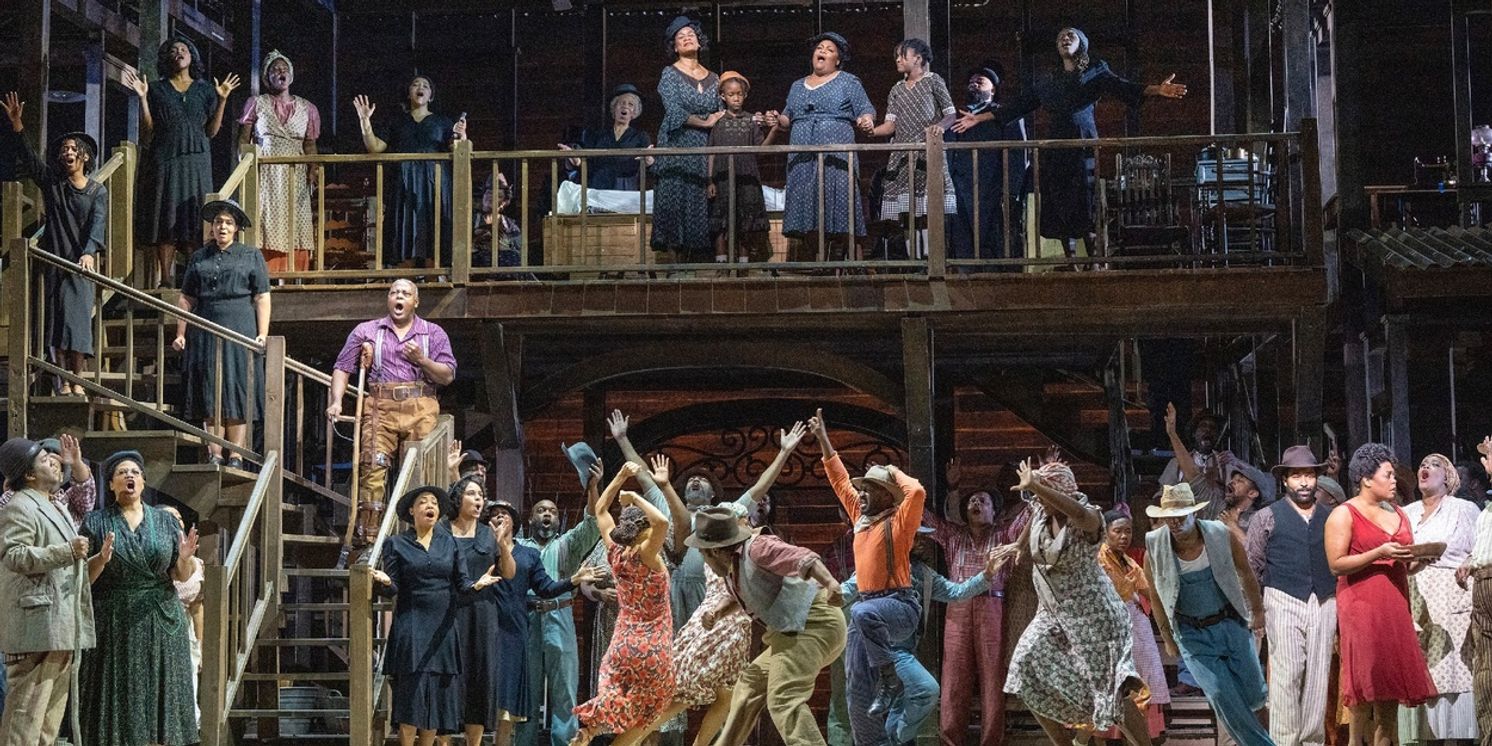
When I read that the Met, in the program notes for James Robinson’s production of PORGY AND BESS, called it “a supremely American operatic masterpiece” I couldn’t help but think of Stephen Sondheim’s answer (perhaps apocryphal) when he was asked whether SWEENEY TODD was an opera or a musical: “If it’s done in a theatre, it’s a musical; if it’s in an opera house, it’s an opera.”
This makes this PORGY definitely an opera (a Broadway version in 2012 with Audra McDonald as Bess was, thus, a musical, as it was called as a rule until the 1976 Houston Grand Opera production). This is not just an opera--a dancing, fighting opera, thanks to Camille A. Brown’s choreography and David Leong’s fisticuffs--but one with a supremely wonderful score: “Summertime,” “I Got Plenty of Nuttin’,” “It Ain’t Necessarily So,” “My Man’s Gone Now” and “Bess, You is My Woman Now” are just the tip of the gigantic iceberg of music in PORGY, well-performed by the Met orchestra under debut conductor Kwame Ryan.
It was put across, sometimes sensationally, by a supremely versatile cast. This included the bass-baritones Alfred Walker (a sympathetic yet fearless Porgy) and Ryan Speedo Green (an evil, sexy Crown), the sopranos Vuvu Mpofu (a Met debut as Clara, with a gorgeous “Summertime”), Latonia Moore (an earthy Serena) and Brittany Renee (a cocaine-besotted, weak-willed Bess), tenor Frederick Ballentine (a show-stealing Sportin’ Life), baritone Benjamin Taylor (an appealing Jake) and mezzo Denyce Graves (topping off her Met career with a strong-minded Maria).
The skillfully adaptable unit set by Michael Yeargan, with projections by Luke Halls and lighting by Donald Holder, filled Catfish Row, a somewhat mythical South Carolina sea town, with the Met’s so very reliable chorus under Tilman Michael.
Somewhere along the way, the piece was rechristened “THE GERSHWINS’ PORGY AND BESS,” in homage to the selling power of the great composer George Gershwin and his brother/wordsmith, Ira Gershwin. (George spent months exploring the Gullah music of Tidewater Carolina, but with hints of jazz and a classical hand also inflecting the score.)
But PORGY owes much to the work of DuBose Heywood, who set the ball rolling with the novella, “Porgy,” which was filled with “spirituals, dirges, lullabies, Gullah dialect, prayers, dance rhythms, the swoosh of the tides and the roaring winds of a hurricane,” according to the program notes. Later, it provided many of the lyrics in the libretto. The Heywoods--DuBose and his wife, Dorothy, a playwright--first adapted the novel into a Broadway play, which later inspired the opera.
PORGY AND BESS will be performed this season through the matinee on January 24, 2026. For more information and tickets, see the Met’s website.
Caption: Alfred Walker (Porgy) on stairs, Brittany Renee (Bess, in red, far right) and the cast
Photo credit: Richard Termine/Met Opera
Reader Reviews
Videos