


Review: GUARDS AT THE TAJ at NextStop Theatre Company
NextStop Theatre navigates the production of 'Guards at the Taj' with a sincere and skillful blend of empathy and urgency.

In times of upheaval, art can be a way to unpack and examine our own decisions – it helps us explore our moral scope, the systems we participate in, the lines we’re willing to draw, and what we owe ourselves, each other, and our society. The dilemmas we face may be deeply specific to our lives, circumstances, and worlds, but there’s a universal quality to our morality, and recontextualizing it can help lay bare where we stand.
Against the backdrop of our current socio-political landscape, NextStop Theatre Company’s production of Guards at the Taj feels especially prescient, perhaps even more so than when Rajiv Joseph’s celebrated play first premiered in 2015. There’s something particularly poignant about considering what our moral boundaries and social duties are, and how we decide to act when our loyalties and philosophies clash within ourselves and within our relationships.
Guards at the Taj focuses on two young sentinels tasked with overseeing a distant edge of the soon-to-be-completed Taj Mahal in mid-seventeenth century Agra. The two men, Babur and Humayun, are close childhood friends, with profoundly different personalities – Babur is a free-spirited dreamer, whose admiration of the Taj Mahal’s architect, Ustad Ahmad Lahori, is reflected by his own imagination and fanciful ideas for inventions, while Humayun, the more practical of the two, sees their position as a way to win favor with his cold, strict father, who serves as the head of the guard under the Mughal emperor, Shah Jahan, who commissioned the building to house the tomb of his wife, Mumtaz Mahal. As the sun rises on the day of completion of the building, revered for its beauty, the two argue whether to disobey orders for the opportunity to turn around and view it as the sun rises, as Lahori declared it would be at its peak brilliance; Babur succeeds in goading his friend into joining him, and the two stand in awe before considering the rumor they have heard that the Shah, determined for there to never be anything equal to this achievement, has declared that all 20,000 workers – including Lahori – will lose their hands to prevent anything as beautiful from being built ever again. To their horror, the two realize that they, as the lowliest members of the guard, will be tasked with this gruesome chore. As the pair grapples with the aftermath of their assignment, they realize that their opposing personalities have translated to radically different perspectives: Humayun sees it as a job to be done in service to the emperor and their country, while Babur laments his role in the destruction of lives, livelihoods, and beauty itself. What Humayun views as a decision made by others that he has no place to question, Babur sees as complicity, and a chasm opens between the two.
The timely production raises the core questions that always come at moments of crisis: how do you exist within an unjust system? Do you push back, or obey the rules necessary to keep you and your loved ones safe? How do you determine at what point you’re responsible for your actions and at what point are you simply doing your job or – as we’ve heard in more recent atrocities – following orders? And what do you do when the people you’re trying to protect are the ones pushing back, or the ones perpetuating the unjust system?
Rajiv Joseph’s script raises these questions to the audience in a compelling way, holding up a mirror to the viewer to ask them how they would navigate these moral dilemmas and to consider how they’re navigating the systems they exist within – it could have been a little too on-the-nose, especially with the premiere of this production coinciding with a “No Kings” protest, but Joseph’s writing and the team at NextStop Theatre tread a careful line to avoid anything too overt or preachy. It helps that Joseph also puts an emphasis on some particularly intriguing points: Babur, distraught by his actions, focuses on the guilt he feels at both the personal and philosophical level, considering how his victims must feel and the blame they put on him, specifically, as well as on the broader damage he has done to the concept of beauty by helping the emperor prevent the creation of the Taj Mahal’s equal. His lament that he has “killed beauty” is not because he holds the concept in higher regard than the people he has harmed, but because he feels the visceral impact of his actions on his own perspective of the world and his own dreams of creation. The other interesting emphasis comes from Humayun, who excitedly reports to his friend that they have been promoted not just for their service in carrying out the dark deed, but especially for their job cleaning the resulting bloody mess – their reward is owed in large part to their literal (and figurative) cleanup efforts, their work to remove the dark stains from the pristine images of both the Taj Mahal and the emperor.

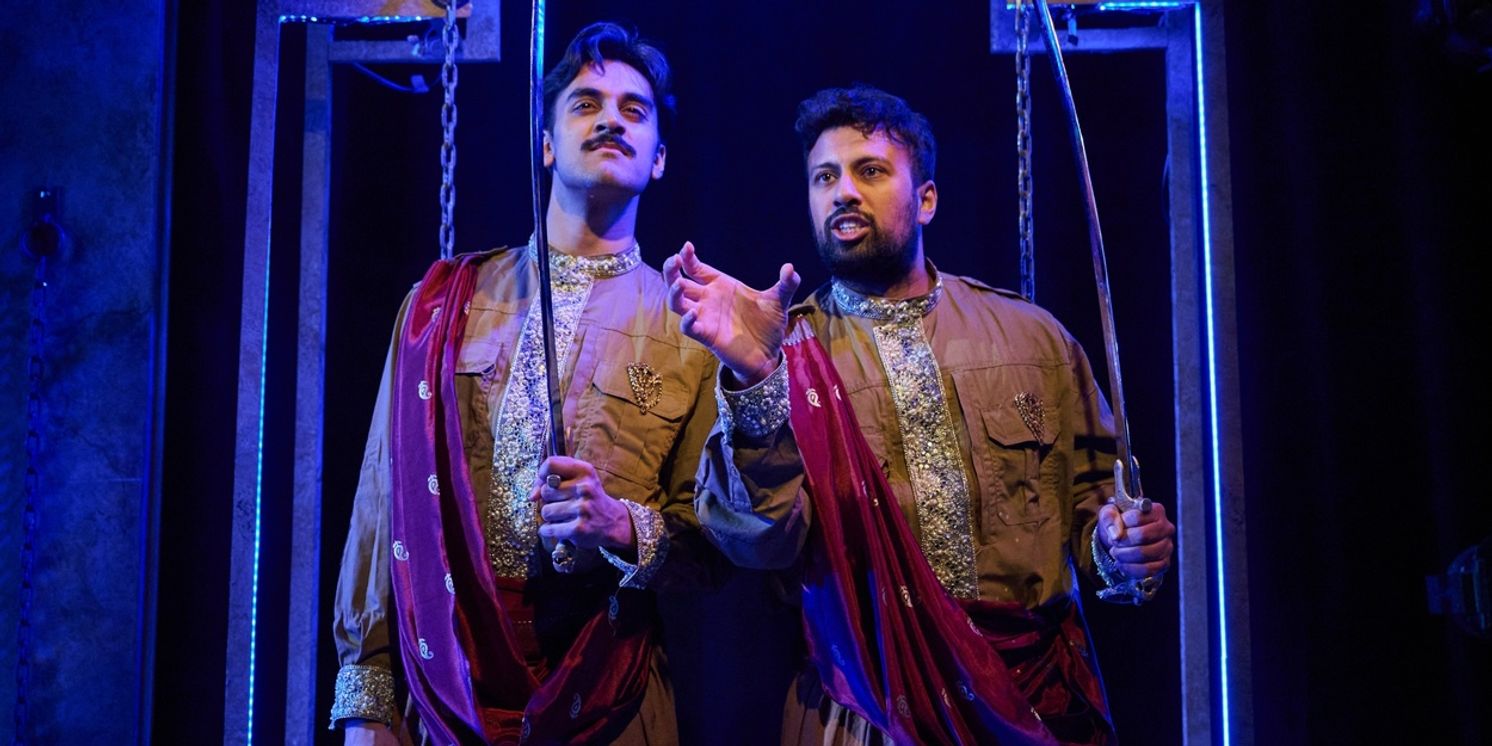
As Babur, Vish Shukla is effervescent – his character’s curiosity and passion is infectious, and it’s easy for the audience to be charmed by him right from the beginning. It’s also, as a result, heartbreaking to watch his light diminish as the events of the story unfold, and Shukla plays this shift achingly well. Vaibhav Taparia has a more difficult task in gaining the audience’s affection for the serious, rule-following Humayun, but Taparia’s portrayal is thoughtful and nuanced, allowing glimpses of the boy who loves his Best Friend and who fears his father peek through. When the two argue, it’s easy for the audience to side with Babur – both in principle and through Shukla’s persuasive delivery – but Taparia imbues Humayun with enough empathy that it’s impossible not to feel for him as well, even if you vehemently disagree with his choices. As a pair, Shukla and Taparia have wonderful chemistry, making their characters’ sibling-like connection feel incredibly real – it’s easy to see the genuine affection (and occasional annoyance) the two characters have despite their differences, and it’s tragic to see their relationship fracture.
There’s also a hint of humor, a bit of humanity that helps the audience collectively let out a breath during the tenser moments. From the beginning, the sibling-like relationship between Babur and Humayun adds a levity to the situation, from Babur’s impatience with their task to stand guard to Humayun’s exasperation with his friend’s antics to their bickering over the semantics of their fantasies. After the gruesome deed, Humayun thinks he has been blinded by the smoke, while Babur’s hands are cramped around his sword – Shukla and Taparia’s physical comedy in this horrible moment pulls the show back from the horror and the two release some of the tension by playing up the dark humor with their props (courtesy of Isabel Simoes deCarvalho) and pratfalls. It also feels deeply human, to turn something so horrific into something laughable, and the whole sequence grounds the show without fully pulling out from the nightmarish scene.
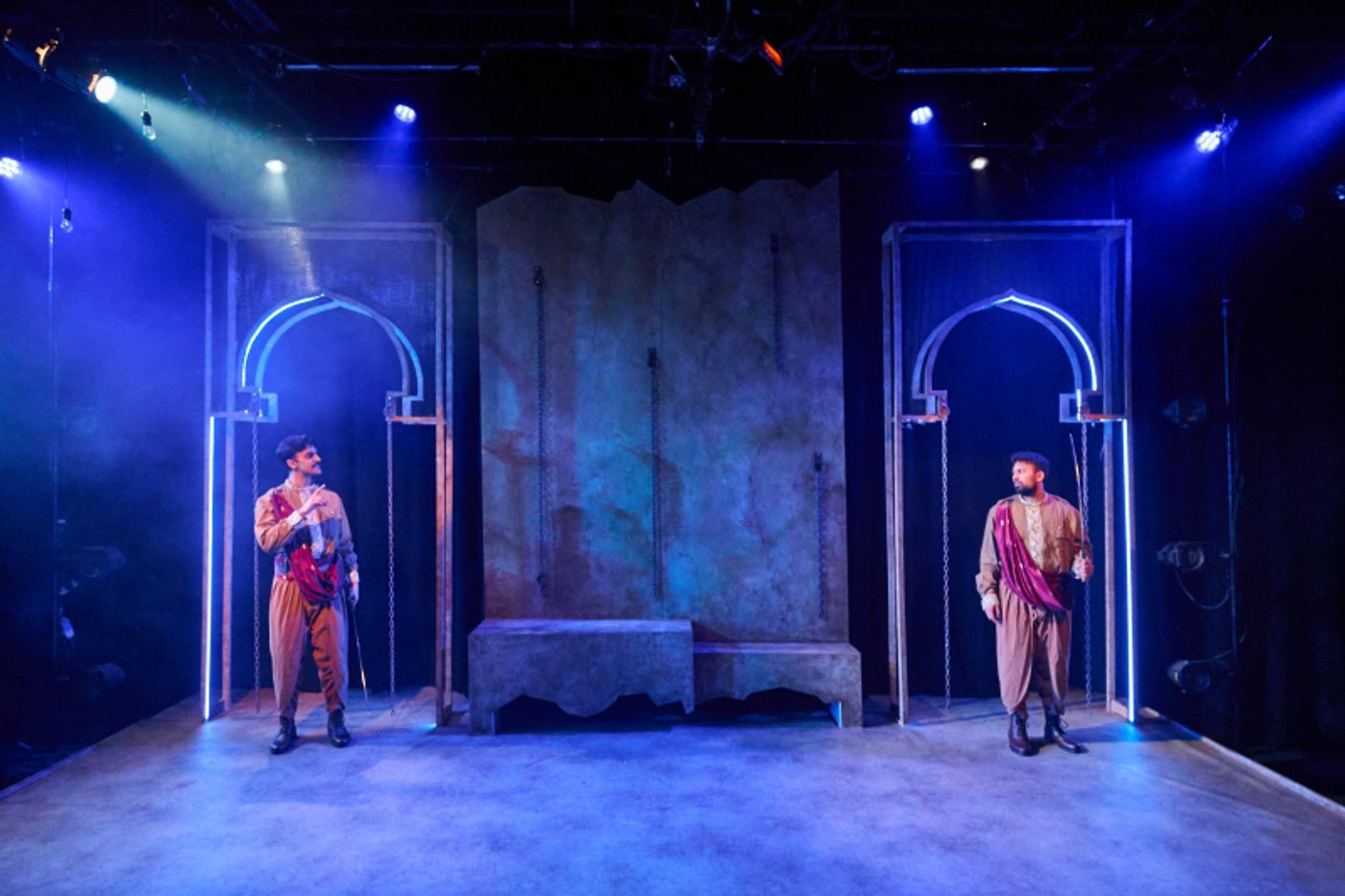
The creative team likewise helps build a compelling atmosphere to anchor this story, based on myth and particularly prescient in this moment in history. Mekala Sridhar’s direction of the two actors keeps the performance balanced, and infuses their situation with sympathy for the layers of loss and betrayal. Gisela Estrada’s sparse scenery is effective, creating just enough sense of place while allowing the performances to keep focus, and providing framing for Hailey LaRoe’s excellent tonal lighting. navi’s sound design and music compositions are unobtrusive, but grounding, and particularly noticeable when the background noises of birds and the Taj Mahal’s inhabitants drop out to emphasize the severity of the tenser moments. At the core of the production is the thoughtful approach imbibed by the Dramaturg, Ynika Pocopio Yuag, who uses the show to contextualize not only current events, but the impact of history, with acknowledgments of the labor, much like that which went into the Taj Mahal, that has erected Washington, DC, the emphasis on doing a job or following commands as the SS and ICE have both purported to do, and the weaponization of beauty, which is a hallmark of many empires throughout human history.
NextStop Theatre navigates the production of Guards at the Taj with a sincere and skillful blend of empathy and urgency, acknowledging the difficulties of the choices we make and the worlds we live in, while hoping, encouraging, and demanding that we do better. It’s a profound statement and plea, and one we’d do well to heed.
Guards at the Taj runs at NextStop Theatre Company through April 19th. Performance time is approximately 90 minutes with no intermission. Information on tickets, accessibility, and special performances can be found on the NextStop Theatre Company website. Audiences should be advised that this production contains theatrical blood and gore, simulated violence, and flashing lights.
Header Photo: L to R: Vish Shukla, Vaibhav Taparia, DJ Corey Photography

Reader Reviews
Videos