London Producer Bridges East and West Through Award-Winning Immersive Theatre
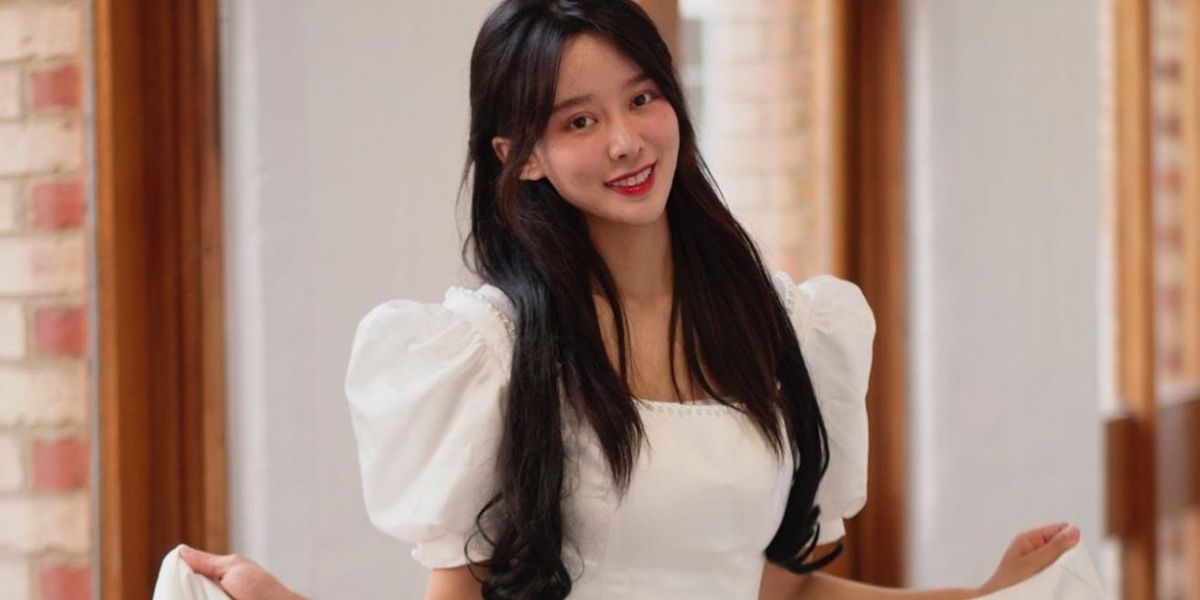
Born in Yunnan, China, Cao is now based in London
Written by Tom White
The first time audiences stepped into Re: birth at The Cockpit, London (Camden Fringe) they didn't take their seats. They became part of the performance. No proscenium, no script—just live composition, shifting light, and sound that responded to movement. For Yuke Cao, this wasn't just theatre. It was a quiet recalibration of how stories are told across cultures.
Born in Yunnan, China, and now based in London, Cao has spent the past decade building bridges—not with policy or speeches, but with music, immersive staging, and a producer's eye for detail. From co-founding one of Shanghai's earliest musical theatre workshops to leading sold-out runs at the Edinburgh Fringe, her work traces a path defined by exchange: between East and West, tradition and innovation, performer and audience.
Let's start at the beginning. You co-founded the Show More Time Musical Workshop in Shanghai back in 2018. What inspired you to create that space?
I grew up in China, and the first musical I ever watched was The Phantom of the Opera. It completely rewired something in me — the scale, the emotion, the combination of music and storytelling.
Years later, when international musicals started arriving in Shanghai around 2016, I realised that although audiences were curious, there weren’t many accessible spaces to experience musical theatre directly. In 2018, a few friends and I co-founded the Show More Time Musical Workshop.
It wasn’t commercial — it was simply a community space where people could rehearse, sing, and discover musical theatre together. That experience shaped my belief that musical theatre should be open, participatory, and built with people, rather than for them.
When you brought Someone: Evelyn's Story to London in 2023, it sold out in three performances. You've said that experience taught you musical theatre is more than just the 90 minutes on stage. What did you learn?
I learned that producing is really about everything around the performance: managing a team, creating a timeline, balancing the budget, coordinating the venue, promoting the show, and supporting every actor through the process.
It taught me the importance of responsibility — that a producer carries the structure that allows a creative team to work freely. And it made me realise I wanted to build productions that felt honest, collaborative, and culturally grounded.
That experience prepared you for Miracle the Musical. How did the show evolve across its different iterations in London, Peckham, Camden, and finally Edinburgh?
Each version taught me something essential.
- London 2023 gave me the courage — it was the first time I tried telling the story in English.
- Camden Fringe 2025 allowed me to refine structure and musical arrangement.
- Edinburgh Fringe was where everything came together — the immersive staging, the international team, the reworked script and score.
By the time it reached Edinburgh, it had grown into a fully reimagined production, shaped by two years of experimentation and feedback.
At Leith Arches during Edinburgh Fringe, Miracle unfolded as a participatory ritual. Audiences entered as "students" of the Royal Central School of Magic. How did you design that immersive experience?
Leith Arches has two floors, brick walls, and narrow staircases — instead of transforming the venue, I decided to use it exactly as it was. We relied on very simple elements: reflective mirror balls, handheld torches operated by actors and audience, small modular set pieces, and the natural architecture of the venue. By entering with a “letter of admission,” audience members weren’t observing the story — they were becoming part of it. The simplicity made the immersion stronger. It became about presence, not spectacle.
The music in Miracle is particularly striking. "Gina's Theme" employs a five-tone melody derived from Chinese tradition, interwoven with Western harmonic structure. How did you approach that blend?
My approach to music really comes from where I grew up. I’m from Yunnan, a region with over twenty ethnic groups, each with its own unique musical traditions. Growing up surrounded by that mix of colours, rhythms, and vocal styles shaped my understanding of melody long before I studied composition.
When I began working on Miracle, I wanted the score to reflect that inner landscape rather than imitate any particular tradition. “Gina’s Theme” started as a simple pentatonic idea, something that felt close to the folk sounds I heard as a child. From there, I built it into a motif that sits naturally inside Western harmonic structure without being forced into it.
We also brought in elements inspired by “The Butterfly Lovers (梁祝)” and subtle Chinese timbres — not as decoration, but as emotional markers.
For me, the goal wasn’t to “fuse” East and West. It was to let both musical languages breathe in the same space, in a way that felt honest to the story and to my own background.
You collaborated with a 30-person creative team from six countries: Canada, the US, Mexico, Switzerland, Argentina, and the UK. What did that international collaboration bring to the production?
It brought honesty. Everyone came with their own traditions, training, and understanding of storytelling. Our rehearsals were like a conversation — different cultures shaping one narrative. That diversity deepened the emotional core of the show. It also created an environment where no one assumed their perspective was the default. That was incredibly valuable.
Your work extends beyond traditional theatre venues. Re:birth evolved into a globally released soundtrack on Apple Music, Spotify, and QQ Music. How do you see the relationship between live performance and digital distribution?
Live performance disappears the moment it ends — that’s the beauty of it. But music gives the work a second life.
By releasing Re:birth and the Bloom & Re:birth OST internationally, I wanted to preserve the emotional atmosphere of the performance while allowing people to revisit it anywhere in the world. Digital distribution feels like an extension of memory, not a replacement for the live moment.
You've also coordinated large-scale concerts for artists like Jay Chou and JJ Lin, managing audiences of over 110,000 people. How does that experience inform your approach to intimate fringe productions?
It taught me clarity. When managing a crowd that large, every detail matters — from timing and communication to safety and coordination. I bring that precision into small theatre: even in a tiny venue, clarity makes actors feel safe and helps the audience move through the experience smoothly. Large-scale discipline is very useful in small-scale storytelling.
Earlier this year, you won First Prize at the Bartók International Music, Theatre and Dance Competition. What did that recognition mean to you?
It reminded me that my cross-cultural approach has artistic value beyond a single production.
The recognition gave me the confidence to continue exploring how different traditions can communicate with each other without losing their individual identities.
You've described your goal as creating "cultural exchange" through theatre, making it a "universal language." What does that mean in practice?
It means creating space where audiences recognise something of themselves — even when the story comes from another culture.
For me, cross-cultural theatre isn’t about mixing symbols. It’s about empathy, listening, and building a language that multiple communities can enter without feeling like visitors.
You're currently preparing to tour Miracle the Musical across the UK, Europe, and China. How do you see the production evolving as it travels?
I think the show will absorb the places it travels to. Different venues and audiences influence pacing, emotion, and sometimes even staging. But the core — the search for identity and belonging — is universal. That will stay the same.
What advice would you offer to emerging producers, particularly those working across cultures or without institutional support?
Start small, but start honestly. And protect your team. A healthy room and shared trust are more important than resources.
What's next for you? Are there new projects on the horizon?
I’m currently preparing the next touring version of Miracle, but I’m also developing a new performance project that explores distance and the idea of home — themes that feel increasingly universal.
Alongside that, I’ve begun exploring a series of music works that draw from the minority ethnic music traditions of my home province in Yunnan. I grew up surrounded by twenty-plus cultures and languages, and I feel a responsibility to bring some of those sounds into contemporary performance — not as ornamentation, but as living musical identities.
My aim is to share those traditions with UK and European audiences in a way that feels organic and respectful, building new forms of musical storytelling that emerge from genuine cultural exchange. It’s early in development, but it follows the same curiosity that has guided all my work: how stories move across borders, and how we ourselves are transformed in that journey.
Photo Credit: Yuke Cao