
Interview: 20 Years of Creating a ‘New Kind of Opera’ with the Prototype Festival’s Beth Morrison and BMP
Doing ‘whatever it takes’ to bring opera into the 21st Century, with some of today’s most notable composers, librettists and directors
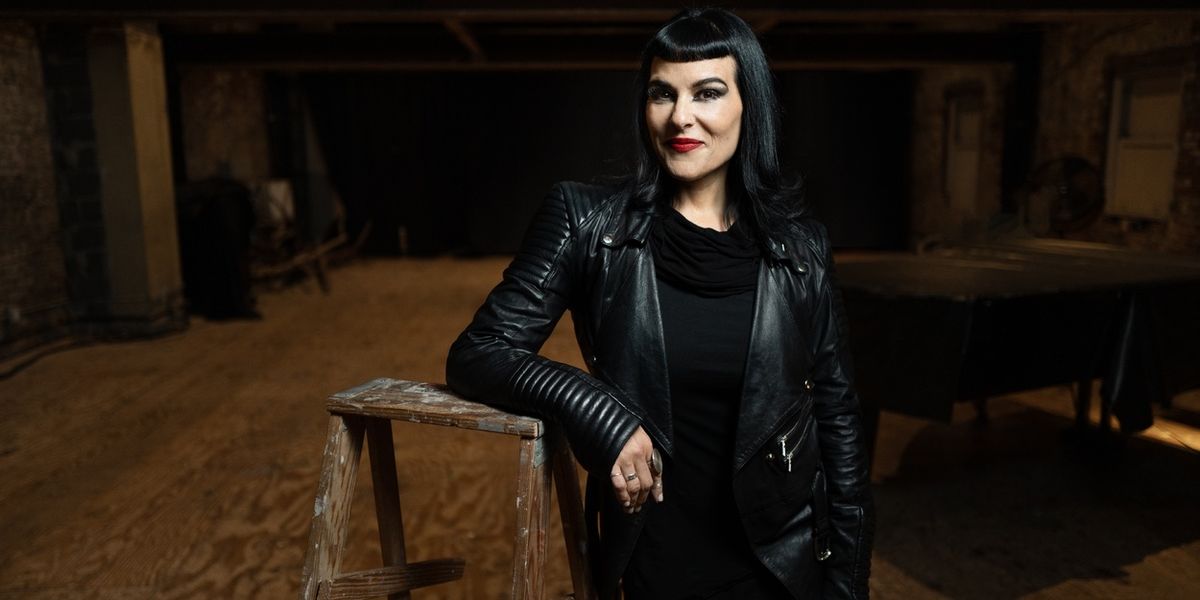
Not long ago, I was sitting in a café in midtown Manhattan with Beth Morrisson, president and creative producer of Beth Morrison Projects (BMP). BMP has been pushing the boundaries of traditional opera for 20 years and is now sole curator, producer and presenter of the indie-opera/music theatre Prototype Festival, with performances through January 18 in New York City.
We talked about what two decades years of BMP means: It’s a notable achievement in a rarefied field--the serious music business--in no small part due to Morrison’s fierce dedication to leading the industry into the future, cultivating a new generation of talent and telling the stories of our time.
The path toward the unknown
“The central tenet, the aesthetic, of my company, is to push against traditional opera,” she told me. “Yes, I love going to the Met, particularly now that they’re doing more new work. They’re the only place of its kind in this country, essential, and I love it. But they have to be careful in some ways because of different bottom-line considerations.”
(It'll be interesting to see how two new works set for the Met by artists from the BMP artistic community [LINCOLN IN THE BARDO from Missy Mazzoli and Royce Vavrek and THE WEDDING BANQUET by Huang Ruo and screenwriter James Schamus] fare in its environment. Or is the Morrison touch just what the 'big house' needs?)
“I went a different way, the path toward the unknown and, honestly, I had no idea whether this path was going to be viable,” she admitted. “I fundamentally believed in the power of music and theatre--and the combination of those things--to change lives and change hearts and create experiences for people to sit together and have our heartbeats sync together in a room.
“That was what I was put on this earth to do: to push the form, to move the boundaries of what it can be,” Morrison explained. "‘Whatever it takes’ is BMP’s motto. To realize the vision, to create a piece.”
Easy, right! Right?
12 Days and a 360-degree view
Part of this commitment includes the 2026 iteration of New York’s Prototype Festival, which began in 2013, but this year marks the first time that BMP is its sole curator, producer and presenter. It will last 12 days and bring a 360-degree view of how Morrison sees the contemporary music industry, looking both backward to things that haven’t been done in many years and forward to music that was composed quite recently.
The upcoming Prototype opens at Brooklyn’s National Sawdust, with BMP: SONGBOOK CONCERT & CELEBRATION, which looks at some of the 65 musical works for which Morrison has served as both midwife and mother. Make no mistake: While she didn’t compose any of the music, write the libretti or direct them, they’re “her babies,” because one of her greatest joys is putting together the teams that ultimately get the creative efforts done.
“None of this work would have existed if we hadn’t seen them through. The SONGBOOK project gives me the opportunity to feel proud about what we’ve accomplished,” she admitted in the straight-from-the-hip style that she’s known for.
The 2026 Festival concludes on January 18 at BAM’s Harvey Theatre, with the 2006 comedic, post-rock opera, WHAT TO WEAR, which skewers the superficial pressures of society. It was composed by Michael Gordon, with libretto by the late downtown theatre legend, Richard Foreman, who also directed the original production, which is being recreated here. The original opened in Los Angeles hasn’t been seen in New York in 20 years.
The local rolling premiere of Snider's HILDEGARD
The Festival’s centerpiece? Well, to many it’s the local rolling premiere of Sarah Kirkland Snider’s HILDEGARD (her first opera), on January 9-14, directed by Elkhanah Pulitzer (who staged John Adams’ ANTONY AND CLEOPATRA at the Met), with Morrison as creative producer. It will be at the Gerald W. Lynch Theatre at John Jay College in Manhattan.
BMP co-commissioned HILDEGARD with the Aspen Music Festival and School; it’s a piece of operatic historical fiction about 12th century German Benedictine abbess/polymath St. Hildegard von Bingen, who was haunted by mysterious visions she couldn’t explain.
Morrison has been working with Snider for over a decade on the piece--a timeframe that would probably be daunting for most producers. It opened in Los Angeles in November to a rapturously enthusiastic reception and was called “gorgeously mesmerizing” by the New York Times--the kind of response that led to a change of venue for the performances to John Jay College’s Gerald Lynch Theatre, which has a larger seating capacity.
“It’s a more traditional kind of opera than I would say a lot of what we do. It’s a linear, narrative storytelling. Beautiful and lush and we have amazing sound design, though it doesn’t need one,” she explained. “It was written to be played acoustically if a company wants to do it. We almost never do anything acoustically, because I’m interested in all the technical things we have at our disposal in the 21st century.”
Highlights from more than 65 BMP commissioned and produced works
“We also made a double album with 25 of the artists, and a 500-page coffee table book that’s a visual history of BMP,” she continued, "featuring highlights from the more than 65 BMP-commissioned and -produced opera and music-theatre works. It’s a celebration of the fearless artists whose voices and ideas have transformed not only BMP but the field itself.” (A selection from HILDEGARD, “In this dirt, this soil,” is on the album.)
The book has “production photos, and tons of interviews with the composers, librettists, producers, and other people who helped make these productions with me.” As you can tell, Morrison’s no shrinking violet, and she tells me that the book has “so many stories for me to reflect on, to remember how stressful it was at the moment and to look back and say, ‘yeah we did that.’”
More Prototype
The other works to be performed at the PROTOTYPE Festival in the coming weeks are PRECIPICE by Rima Fand and Karen Fisher; THE ALL SING:WHALE ROAD (HWAEL-RAD) by Jens Ibsen and Julian Talamantez Brolaski, a choral work for 150 that will be performed in Times Square; ART BATH curated by Mara Driscoll and Liz Yilmaz; and TIERGARTEN written and directed by Andrew Ousley with emcee Kim David Smith.
Beth Morrison Talks--and Doesn’t Mince Words--About…
Why are so many of the works you’ve done been so dark?
People say: “Are you ever going to do a comedy?” Well, I say “This is A, what the artists want to write and B, this is the art form that can hold the stories better than any other.” But that doesn’t mean it’s not changing. I see good projects that people are pitching, post-pandemic, are lighter in content. They’re still socially relevant, socially engaged but they’re doing it in a less hard-hitting way.
I think you’ll see this in the next five years, less heavy than [David T. Little’s] DOG DAYS and [Missy Mazzoli’s] BREAKING THE WAVES [both with Royce Vavrek libretti]. Those are two of my most favorite pieces that we’ve done and I love the heavy stories. That’s who I am. I never watch comedy; I want to watch drama. That’s what I’m attracted to--meaning, the laying out of ideas, processing those ideas.”
What has been your greatest challenge?
Money. Fundraising. It’s a hard time to be in a nonprofit, harder to be an independent, in the performing arts since Covid--even more than before. The whole industry has shifted so dramatically. We had a model of touring a lot of our work and that market doesn’t exist right now, with a fundamental shift away from risky work, large scale work, because people don’t have any money, the whole system is in a crisis right now.
We lost $1 million in touring during Covid but it forced us to come up with other solutions to keep going, to pay our people. We worked digitally and kept producing. Was it any good? I don’t know.” She laughs. “But we kept moving.”
We also started our Producer Academy--which I’d wanted to do for a long time--an 8-week crash course in turning a creative into a producer, an administrator: teaching the basics of production, touring, pitching, budgeting. Everything. We have 1000 alumni--all over the world, because we did it digitally. The first year it was a paid program, though we had some scholarships.
Then the Mellon Foundation came in and funded it for three years. (We’re not doing it right now but I want to resurrect it.) Foundations are leaving the performing arts, changing focus in the performing arts. A lot of the older donor pool is dying off and there isn’t a younger pool coming up to replace them.
Why is “miking singers” such a hot button for you?
There’s still a lot of controversy in opera, I don’t know why, about miking singers. It’s tradition, I guess. Well I’d hope that in 2025 some of that tradition would be laid to rest, though some critics still feel it necessary to ask why singers are being miked. It’s not a matter of making them louder through a microphone but putting them into the world we’re creating. Simple: You can do a lot more with staging ideas; everything I do I push more toward theatre rather than traditional opera.
Take [baritone] Nathan Gunn in Du Yun-Michael Joseph McQuilken’s IN OUR DAUGHTER’S EYES. He was diving under the set and still singing, lifting himself up, doing all kind of demanding staging techniques that we were asking of him. He could never have done that if he wasn’t wearing a mike.
How do you keep in touch with what’s going on “out there” with the next generation of composers and writers?
We realized that there was no way of keeping up with every area of the music world still producing what was already on our plate. So back in 2017, we started NextGen to do just that: keeping us connected to the emerging composers, singers, writers, drawn to opera and music-theatre.
We start with a call for composers, coast-to-coast, to submit a short piece--up to 10 minutes in length. From these submissions, we choose 10 first-round semifinalists to have their vocal works presented in a weekend program. From them, two are picked by a panel of invited industry professionals for 30-minute vocal-theatre commissions with a showcase of each finalist's work. Ultimately, one of them will get a commission for an evening-long vocal work and a premiere production.
To date, there have been three cycles of NextGen winners.
What’s the thing you’re most proud of?
[This is a hard one, because there’s so much she’s proud of, but one stands out, as we’re talking.] We [BMP] made a feature film, ‘an industrial opera film’ for tenor, rock band and amplified ensemble [string quartet and backing rack] BLACK LODGE, from the piece by David T. Little and Anne Waldman. It was directed by Michael Joseph McQuilken. It was supposed to come out when everything shut down from Covid. It's set in a nightmarish Bardo, a place between death and rebirth. The work follows a tormented writer (identified as the “Man”) as he confronts demons of his own making, in search of escape.
If you could turn back the clock--you know, took this fork in the road instead of that one--what would that have been?
I’ve already done that, with the path I’ve taken to get here. When you’re going down a different way than has been done before, you’re so busy flying by the seat of your pants that you don’t have time to worry about what you’re doing. No time for reflection. That’s why opening night is so powerful: because you see it and you feel good. But then you’re on to the next.
What is your legacy? Your future?
Legacy is the Songbook project--which includes the works in the opening night concert. I’m constantly asked by students for 21st century repertoire to take into auditions and I thought the Songbook project would be an amazing way to do that. Some of those works aren’t out in the world anymore and I’m hoping that the anthology will bring them back. Works we’ve done by Nico Muhly, David T. Little, Missy Mazzoli, Paola Prestini, Ellen Reid and so many others.
The future? Forging new partnerships, new alliances and new ways of working. The 13 commissions that we’ve recently announced
Will you have to clone yourself to get everything done that you want to accomplish?
People have been asking me that for 20 years. If I had an answer, I’d have done it by now.
If you're interested in the upcoming 2026 Prototype Festival, please click here.
Caption: Beth Morrison
Photo credit: Daniel Welch
Videos
|
Samson et Dalila Union Avenue Opera (8/14-8/22) |
|
Fiddler on the Roof Union Avenue Opera (7/03-7/11) |
|
L’elisir d’amore Union Avenue Opera (7/24-8/01) |
| VIEW ALL SHOWS ADD A SHOW | |