Everything to Know About Lincoln Center
Do you know what happens at all of Lincoln Center's iconic venues?
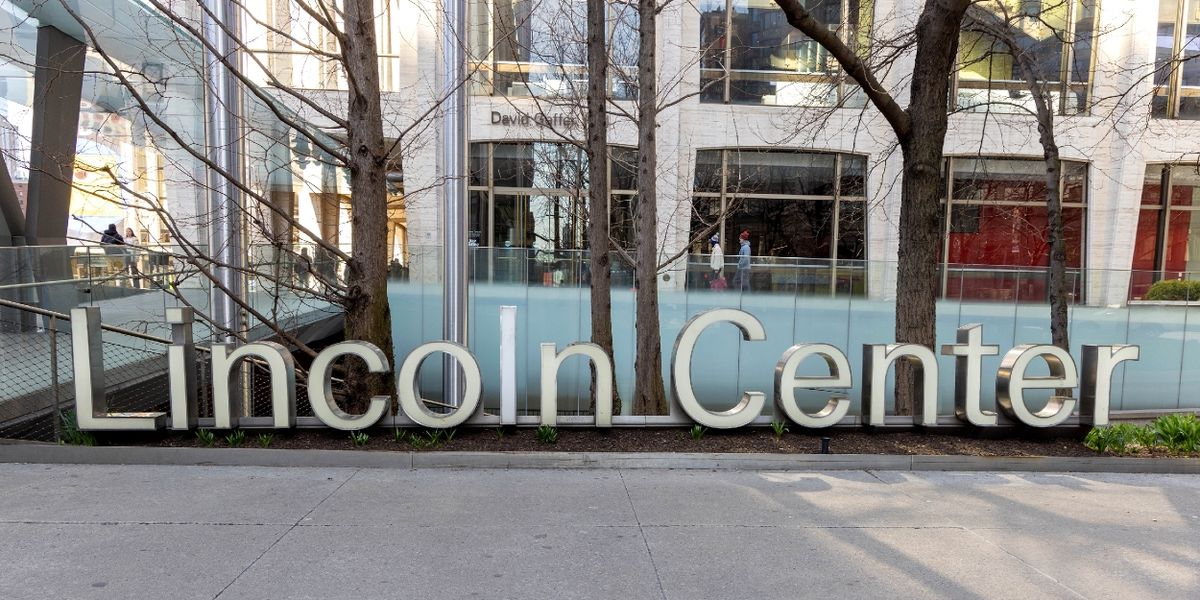
Broadway may be confined to New York City's theatre district, but there's even more going on uptown. One of the word's premiere arts centers is located just a few blocks north, and we're unpacking all that it has to offer...
What is Lincoln Center?
Lincoln Center is a major performing arts complex located on the Upper West Side of Manhattan in New York City. It spans more than 16 acres and is home to some of the world’s most prestigious cultural institutions.
Where is Lincoln Center?
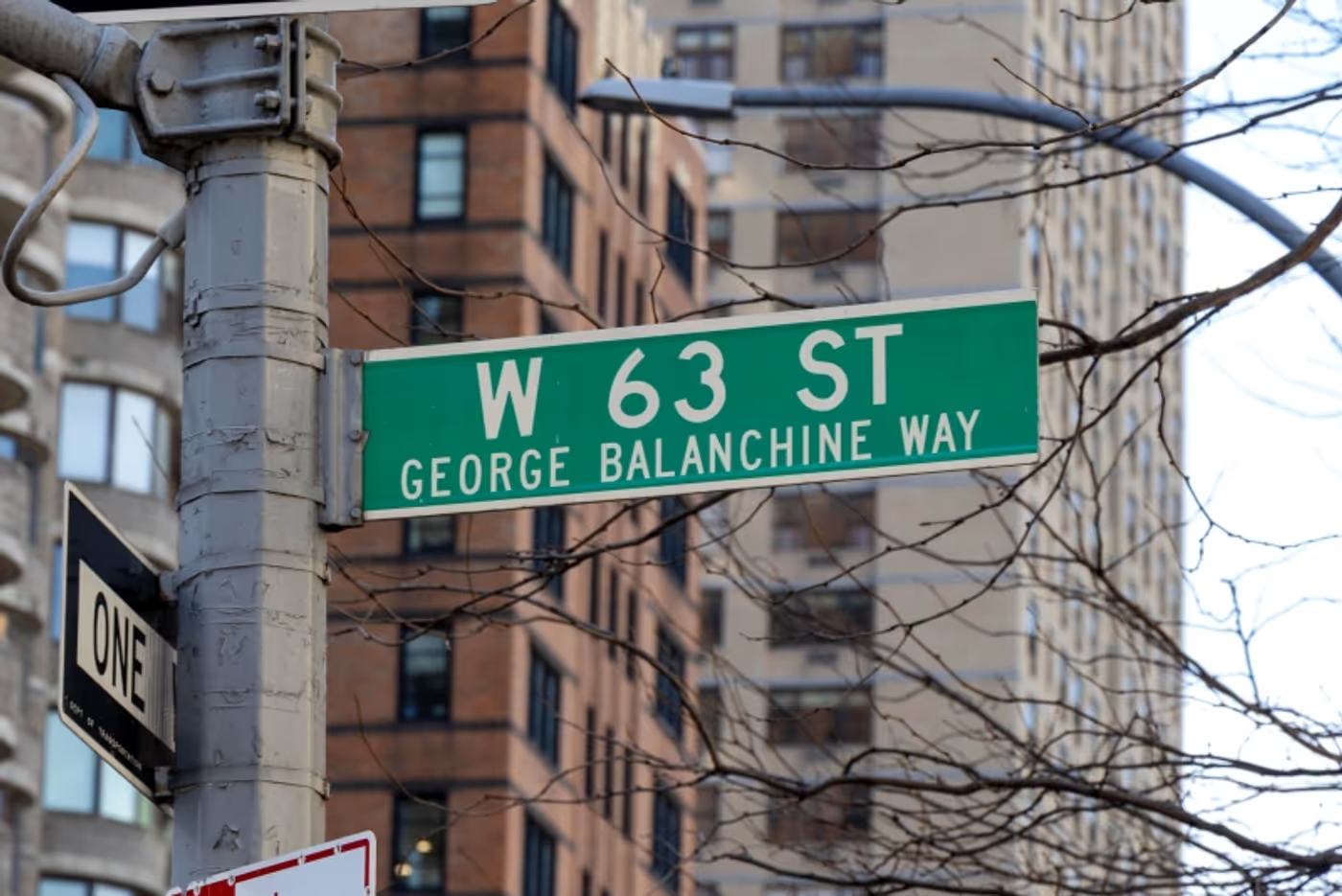
Lincoln Center spans several city blocks between West 62nd and West 66th Streets, and between Columbus Avenue and Amsterdam Avenue, just a few blocks north of Columbus Circle and Central Park. The main address is: 10 Lincoln Center Plaza, New York, NY 10023.
The nearest subway stops are:
-66th Street–Lincoln Center (1 train) – right across the street
-Columbus Circle (A, B, C, D, 1 trains) – about a 10-minute walk away
What is the history of Lincoln Center?
Lincoln Center was developed in the 1950s and 60s as part of a massive urban renewal project led by city planner Robert Moses and funded in part by John D. Rockefeller III. The goal was to create a centralized home for New York’s major performing arts organizations and to revitalize the surrounding neighborhood.
Construction began in 1959, and the first venue to open was Philharmonic Hall (now David Geffen Hall) in 1962. Over the next decade, other iconic institutions like the Metropolitan Opera House and the New York State Theater (now the David H. Koch Theater) followed. The complex brought together the city's top music, dance, theater, and film institutions into one cultural hub.
What plays at Lincoln Center?
Over the years, Lincoln Center has become a symbol of high culture and artistic excellence, offering everything from opera and classical concerts to avant-garde theater, dance performances, and film festivals. Events take place cross its many facilities, which include:
The Metropolitan Opera House
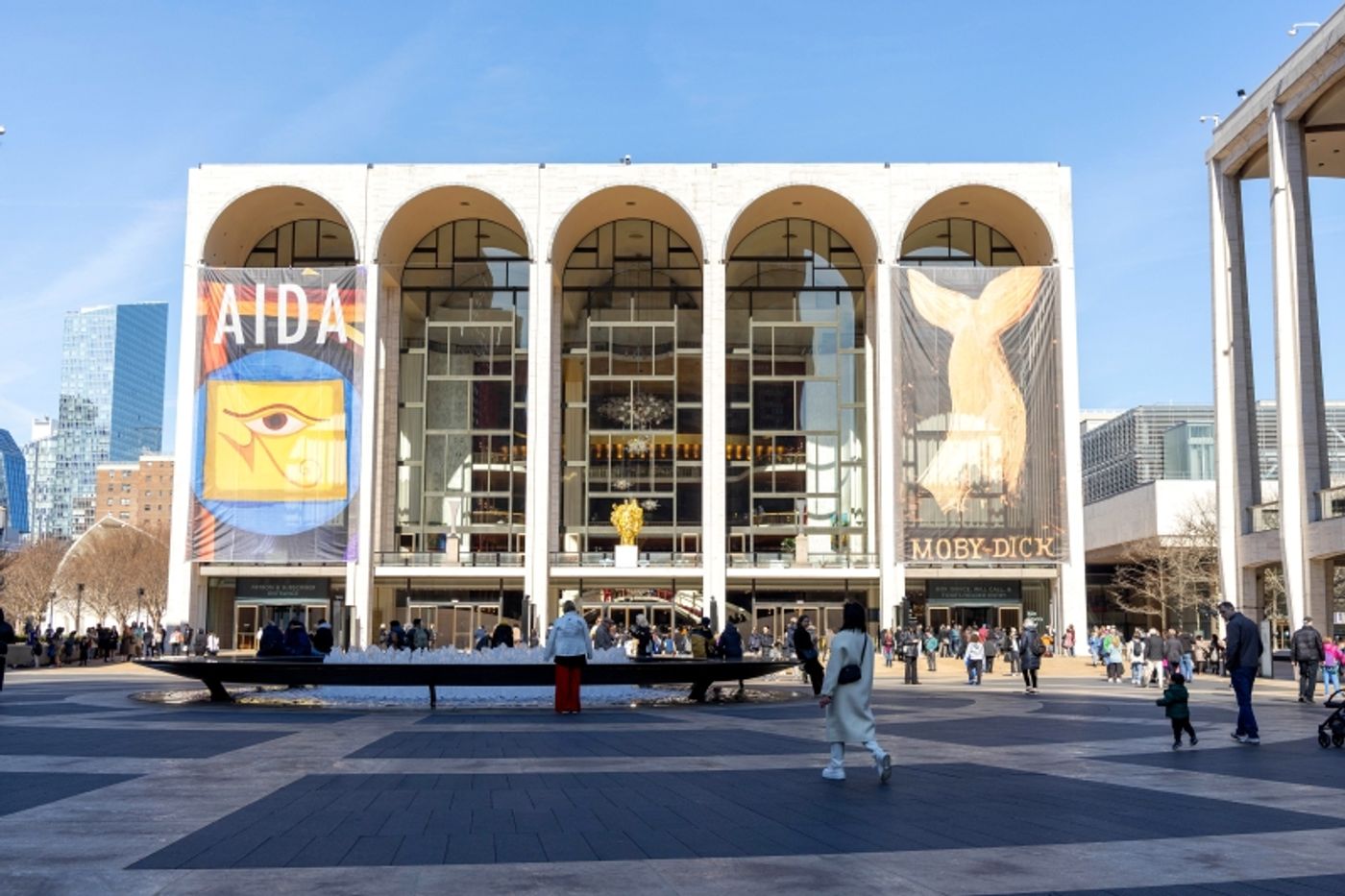
If you are looking at Lincoln Center Plaza from Columbus Ave., The Metropolitan Opera House is in the center, directly behind the fountain.
The Metropolitan Opera House at Lincoln Center is one of the most iconic opera venues in the world. Opened in 1966, the building features a modernist design with a soaring façade of five towering arches and two massive Marc Chagall murals in the lobby. Inside, the auditorium seats over 3,800 people and boasts one of the largest proscenium stages anywhere, equipped with state-of-the-art stage technology. It is home to the Metropolitan Opera, which presents a wide range of productions each season, from beloved classics by Verdi and Puccini to innovative new works and modern revivals.
The David H. Koch Theater
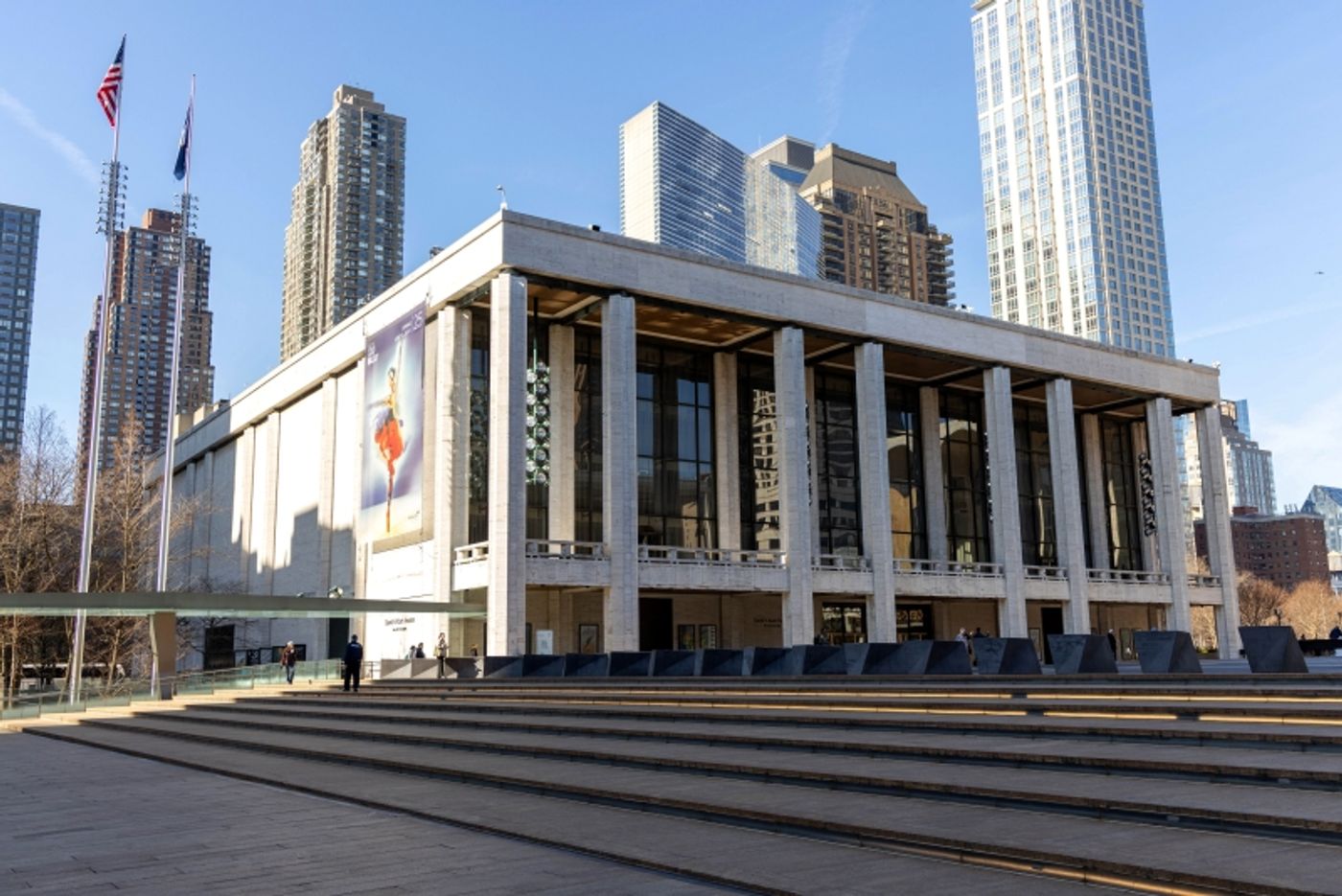
If you are looking at Lincoln Center Plaza from Columbus Ave., The David H. Koch Theater is on the left, on the south side of the plaza.
The David H. Koch Theater, originally opened in 1964 as the New York State Theater, was designed by architect Philip Johnson, the building features a grand lobby with wide staircases, elegant chandeliers, and floor-to-ceiling windows overlooking the plaza. With a seating capacity of around 2,600, the theater is home to the New York City Ballet and also hosts performances by other major dance companies and cultural events. It was renamed in 2008 following a major renovation funded by philanthropist David H. Koch. The stage is specially designed to accommodate large-scale ballet productions, with an expansive orchestra pit and sophisticated lighting systems. It hosted the Tony Awards in 2024.
David Geffen Hall
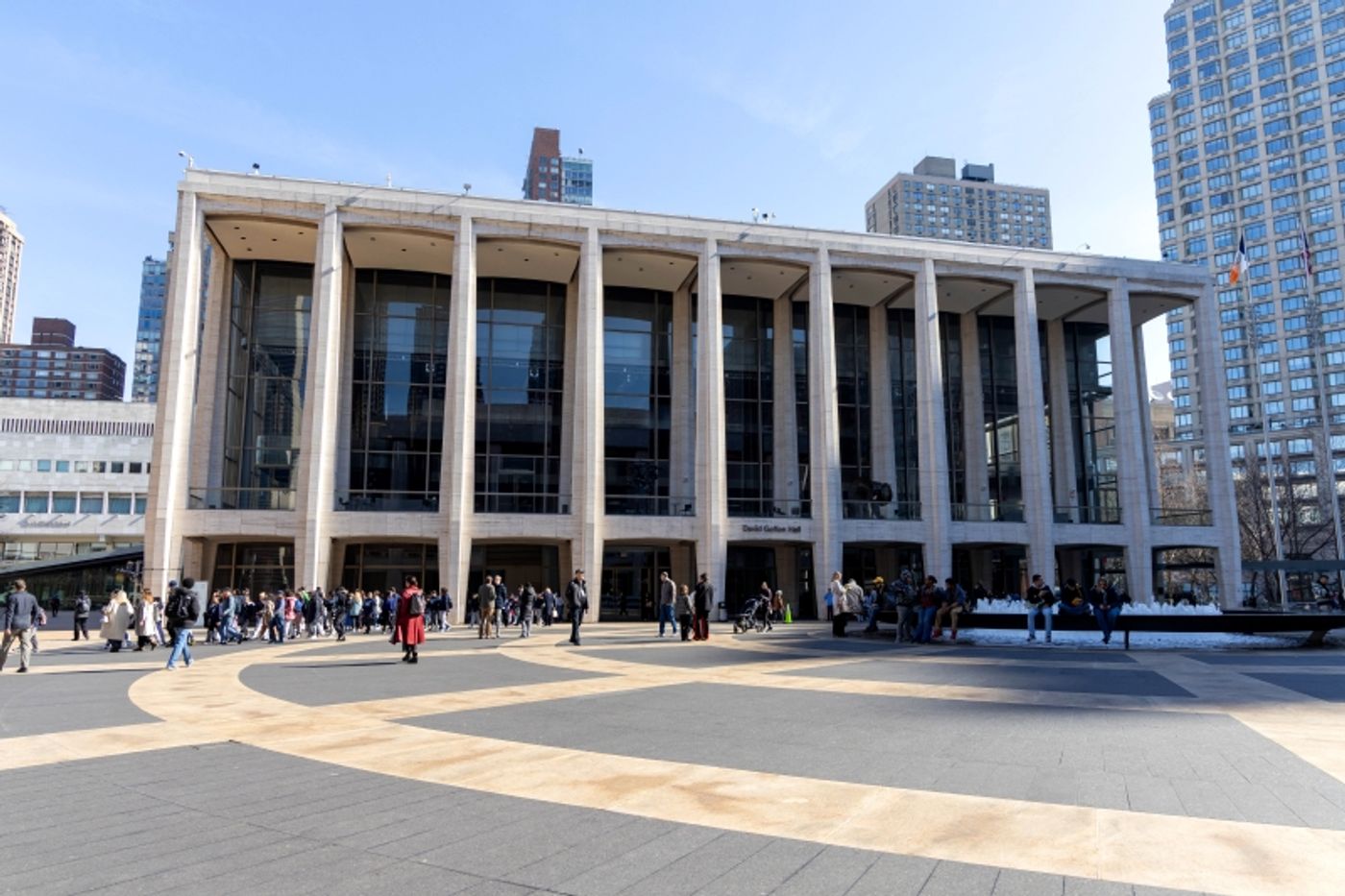
If you are looking at Lincoln Center Plaza from Columbus Ave., David Geffen Hall is on the right, on the north side of the plaza.
David Geffen Hall, formerly known as Philharmonic Hall and later Avery Fisher Hall, was the first building to open at Lincoln Center in 1962. Designed by Max Abramovitz, it serves as the home of the New York Philharmonic, one of the oldest and most respected orchestras in the world. The hall recently underwent a major renovation, reopening in 2022 with improved acoustics, updated interiors, and a more intimate seating arrangement to enhance the concert experience. Its sleek, modern design includes a spacious lobby and dramatic glass façade facing the Lincoln Center plaza. In addition to classical concerts, the venue hosts film music events, family programs, and talks.
Lincoln Center Theater
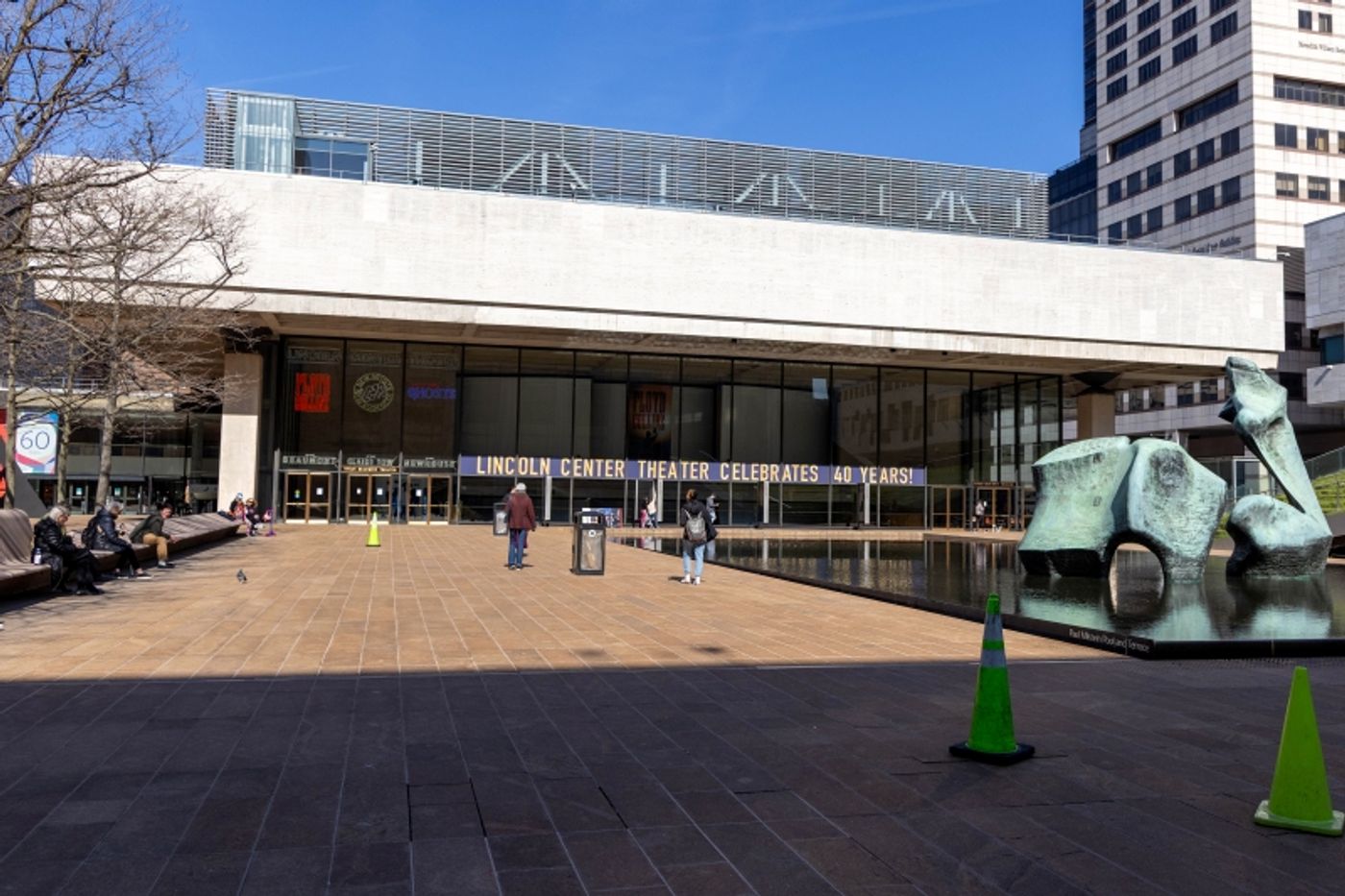
Lincoln Center Theatre can not be seen from Columbus Ave. It is nestled behind The Metropolitan Opera House and David Geffen Hall, on the northwest side of the plaza.
Lincoln Center Theater is made up of theatre theatrical venues- the Vivian Beaumont Theater, the Mitzi E. Newhouse Theater and the Claire Tow Theater. The former is the furthest north Broadway Theatre in New York City. The Beaumont opened in 1965 and features a unique thrust stage, which extends into the audience to create an intimate and immersive experience. Lincoln Center Theater produces a wide range of acclaimed plays and musicals each season, including both revivals of classic works and bold new productions. The company has won numerous Tony Awards and is known for its commitment to artistic excellence and innovation.
Jazz at Lincoln Center
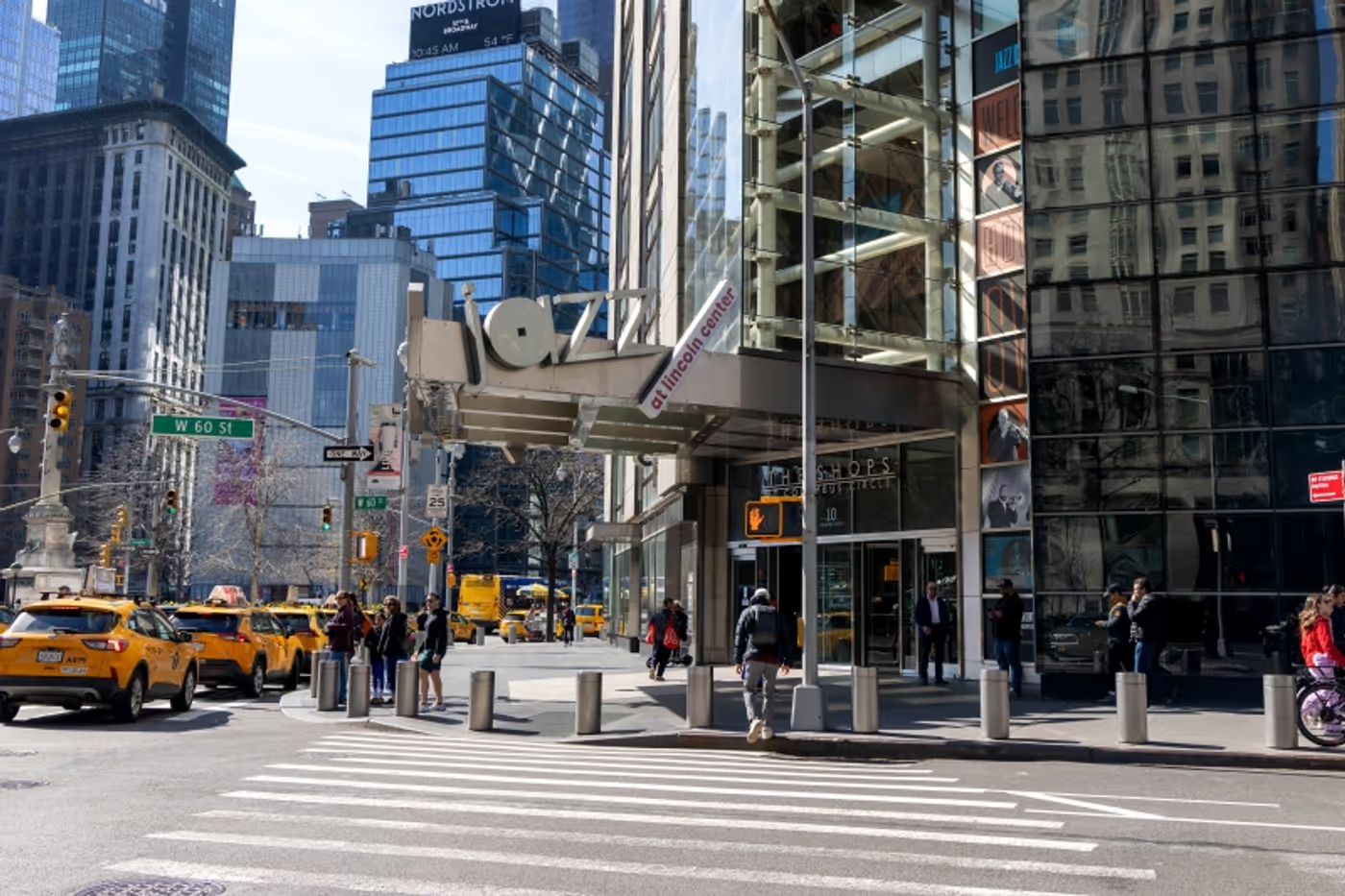
Jazz at Lincoln Center is not located in Lincoln Center Plaza, but is a quick walk away, at Frederick P. Rose Hall in Columbus Circle.
Jazz at Lincoln Center is a vibrant hub dedicated to celebrating and advancing the art of jazz. It opened in 2004 as the first performing arts facility in the world designed specifically for jazz. The complex includes several performance spaces, including the stunning Rose Theater, the intimate Dizzy’s Club, and The Appel Room, which features floor-to-ceiling windows with breathtaking views of Central Park.
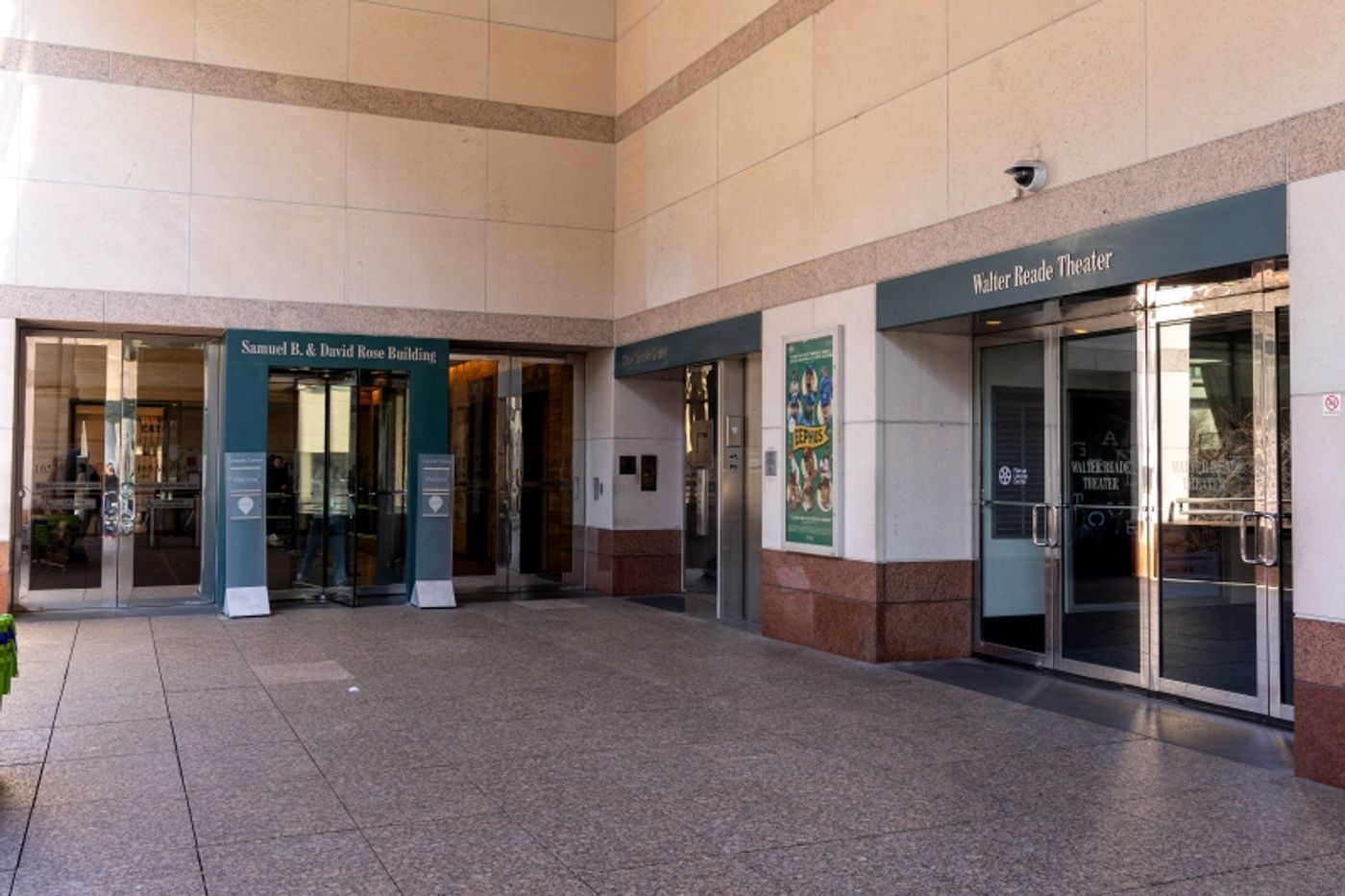
Film at Lincoln Center
Film at Lincoln Center is on the northern perimeter of Lincoln Center, accessible from 65th Street.
Film at Lincoln Center, formerly known as the Film Society of Lincoln Center, is a nonprofit organization founded in 1969 to celebrate cinema as an essential art form and foster a vibrant film culture. FLC presents premier film festivals, retrospectives, new releases, and restorations year-round in state-of-the-art theaters. The organization operates two primary venues: the Walter Reade Theater and the Elinor Bunin Munroe Film Center.
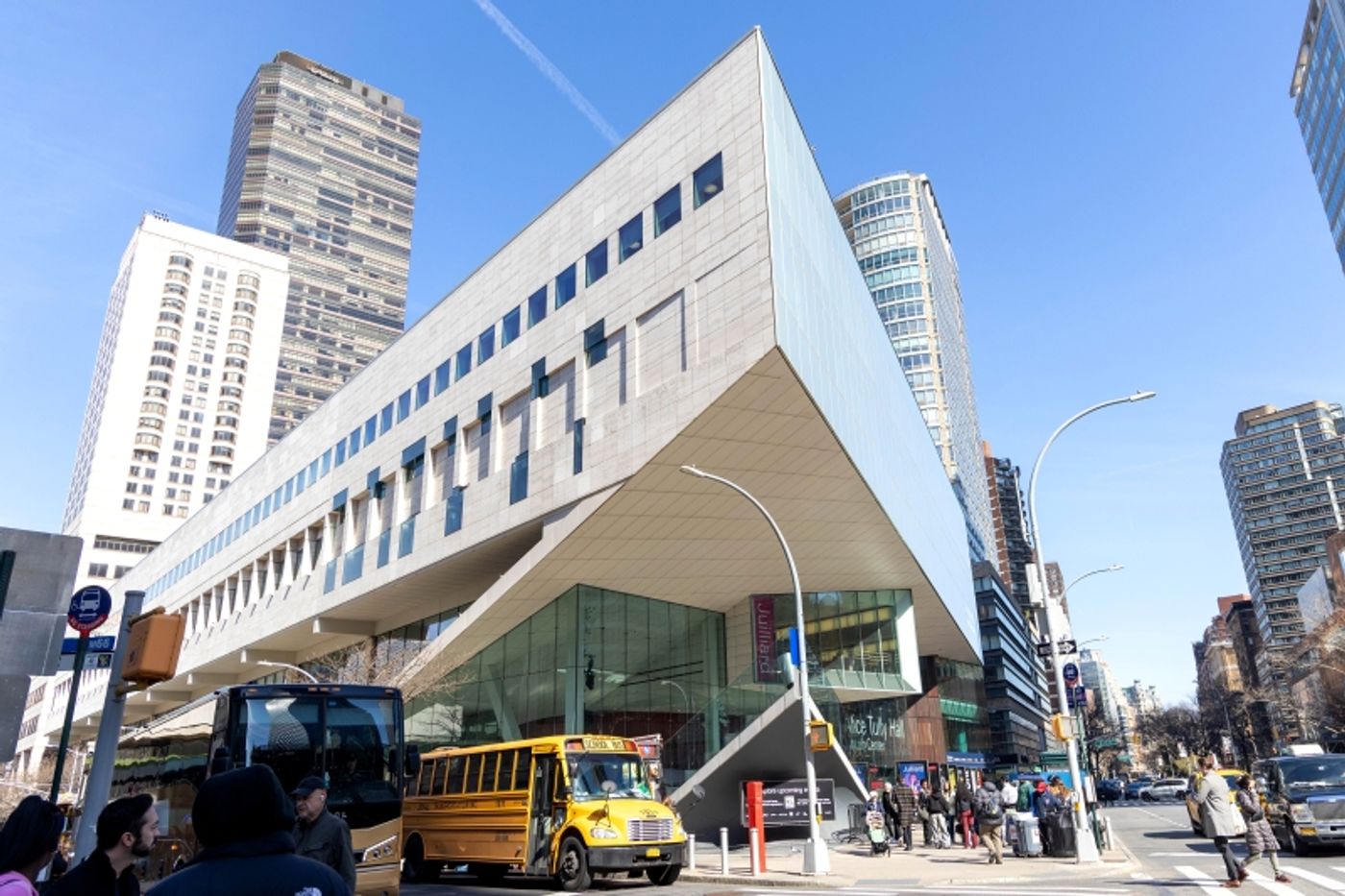
Alice Tully Hall
Alice Tully Hall is located north of Lincoln Center Plaza and is accessible at Broadway and 65th St.
Alice Tully Hall is a renowned concert venue located within the Juilliard School building at Lincoln Center in New York City. Opened on September 11, 1969, it was named after Alice Tully, a New York performer and philanthropist whose generous donations funded its construction. With a seating capacity of 1,086, the hall quickly became home to the Chamber Music Society of Lincoln Center and has hosted numerous performances and events.
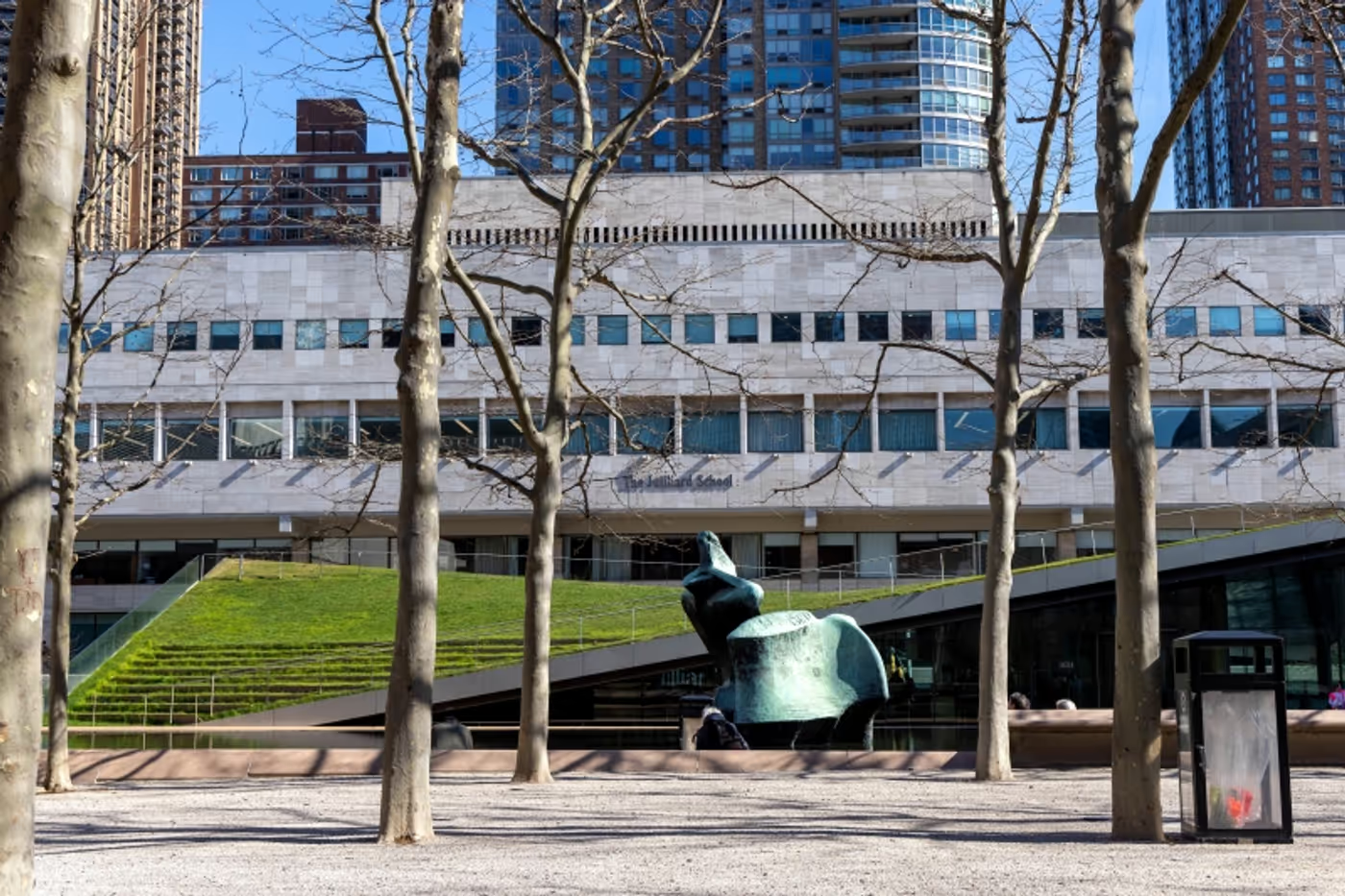
The Juilliard School
The Julliard School is located north of Lincoln Center Plaza and is accessible between 65th and 66th St.
The Juilliard School is one of the world’s foremost conservatories for the performing arts, offering rigorous training in music, dance, and drama. Founded in 1905, Juilliard moved to its current home at Lincoln Center in 1969, becoming a central part of the cultural complex. The school’s striking building—designed by Pietro Belluschi and later renovated by Diller Scofidio + Renfro—features state-of-the-art performance spaces, rehearsal rooms, and classrooms. Juilliard students regularly perform in venues across Lincoln Center, including Alice Tully Hall, the Peter Jay Sharp Theater, and the school’s own black box and recital spaces. With distinguished alumni such as Yo-Yo Ma, Patti LuPone, Robin Williams, and Renée Fleming, Juilliard is known for shaping generations of leading artists. Its location within Lincoln Center allows students to train in close proximity to some of the world’s greatest cultural institutions, creating a unique, immersive environment for artistic growth.
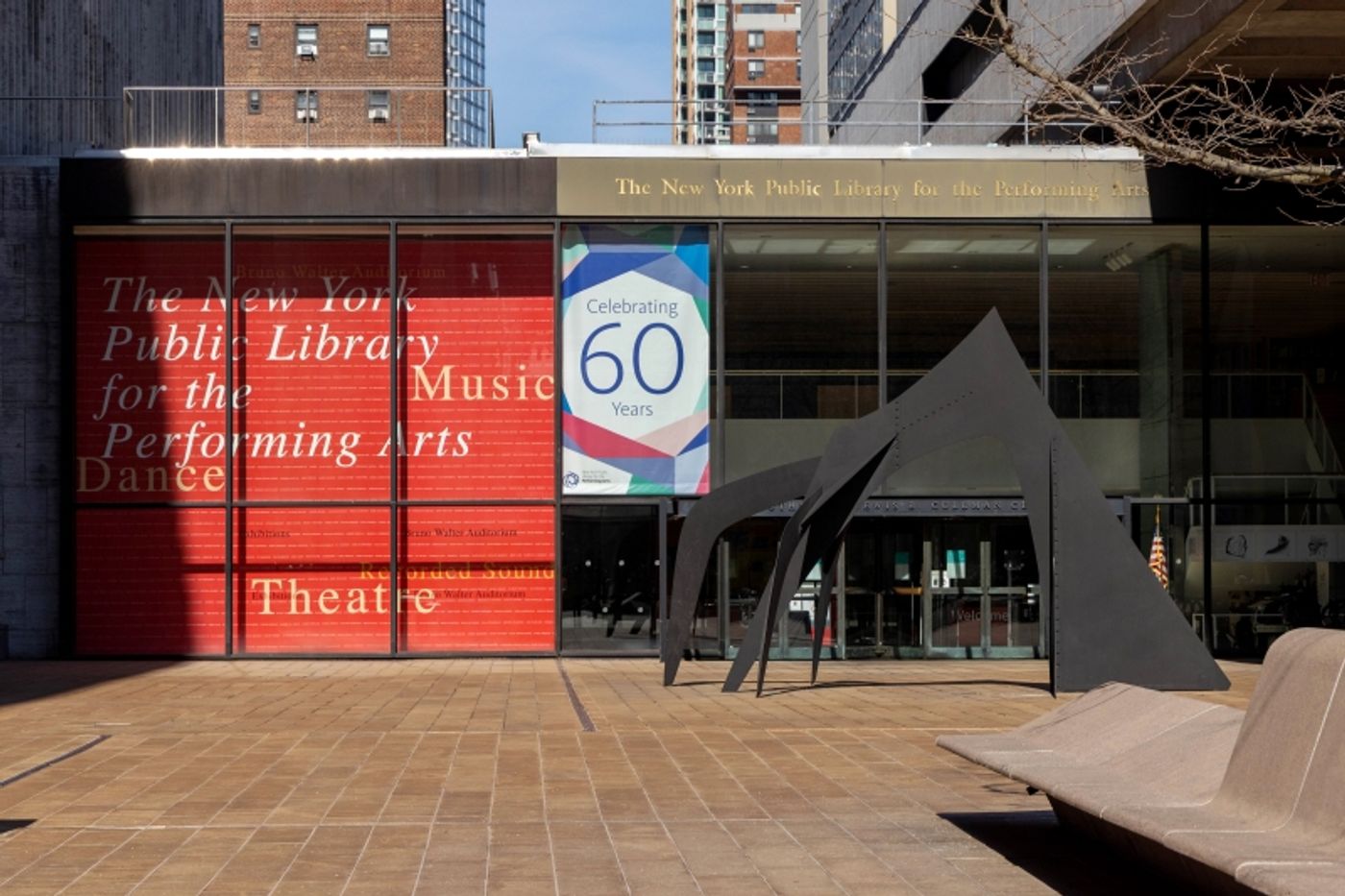
The New York Public Library for the Performing Arts
The New York Public Library for the Performing Arts is nestled between the Vivian Beaumont Theatre and the Metropolitan Opera House on the northwest side of the plaza.
The New York Public Library for the Performing Arts (LPA) opened in 1965 and was designed by architect Gordon Bunshaft of Skidmore, Owings & Merrill, in collaboration with Eero Saarinen, and technically shares its building with the Vivian Beaumont Theater. The library houses one of the world's most extensive collections of circulating, reference, and rare archival materials in the performing arts, encompassing music, dance, theater, film, and recorded sound. LPA's notable divisions include the Billy Rose Theatre Division, the Jerome Robbins Dance Division, and the Rodgers and Hammerstein Archives of Recorded Sound. The library also features the Theatre on Film and Tape Archive (TOFT), which preserves live recordings of Broadway and Off-Broadway productions, providing invaluable resources for researchers and theater professionals.
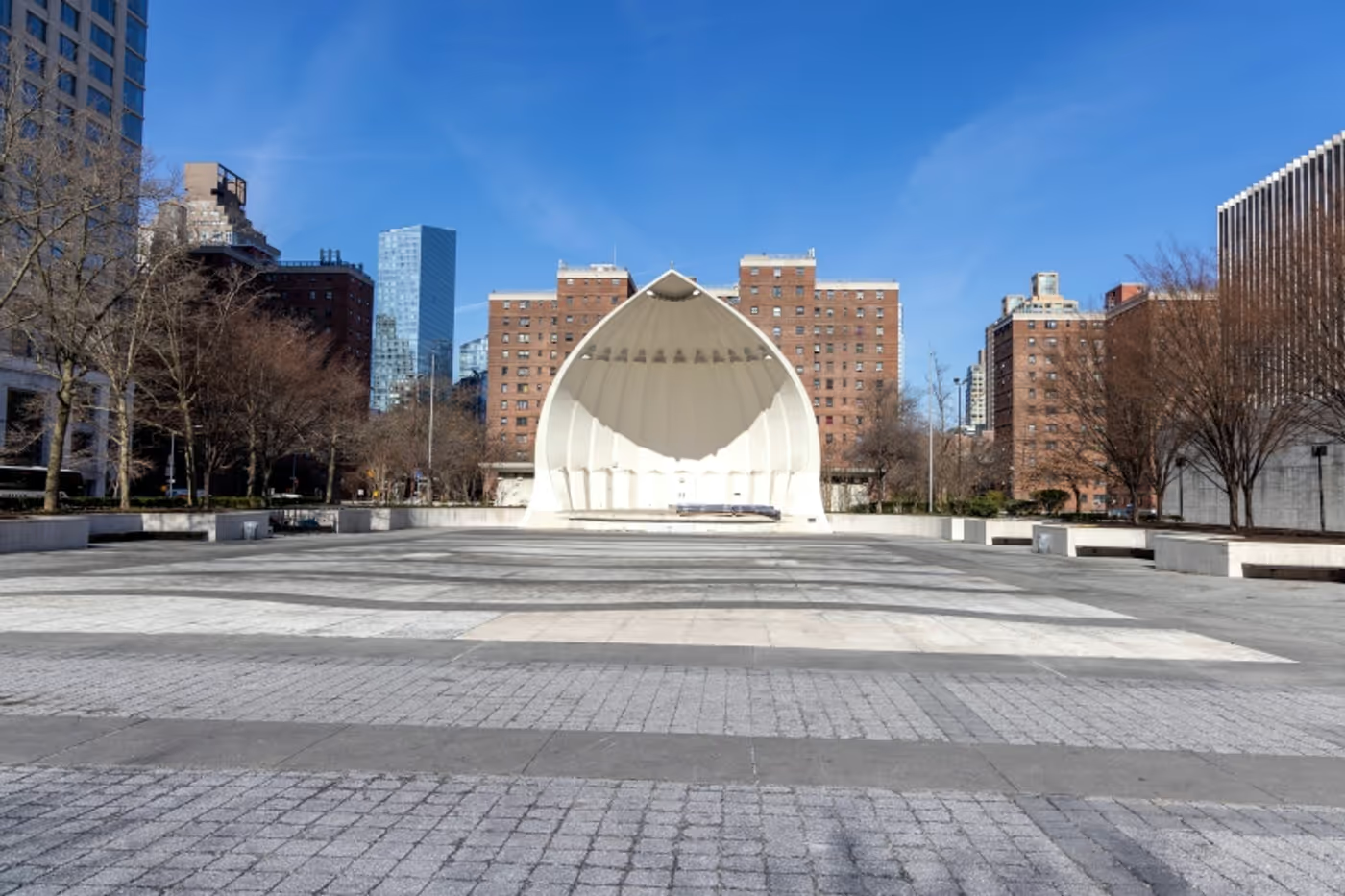
Damrosch Park
Damrosch Park is located south of the Metropolitan Opera House and is accessible from 62nd Street.
Damrosch Park is a 2.4-acre open-air venue located at the southwest corner of Lincoln Center in Manhattan, New York City, featuring the distinctive Daniel and Florence Guggenheim Bandshell. Since its opening in 1969, the park has hosted a variety of cultural events, including concerts, dance performances, and festivals such as Lincoln Center's "Summer for the City" series and the Big Apple Circus. Named after the Damrosch family, notable for their contributions to music, the park serves as a vibrant space for community engagement and the performing arts.
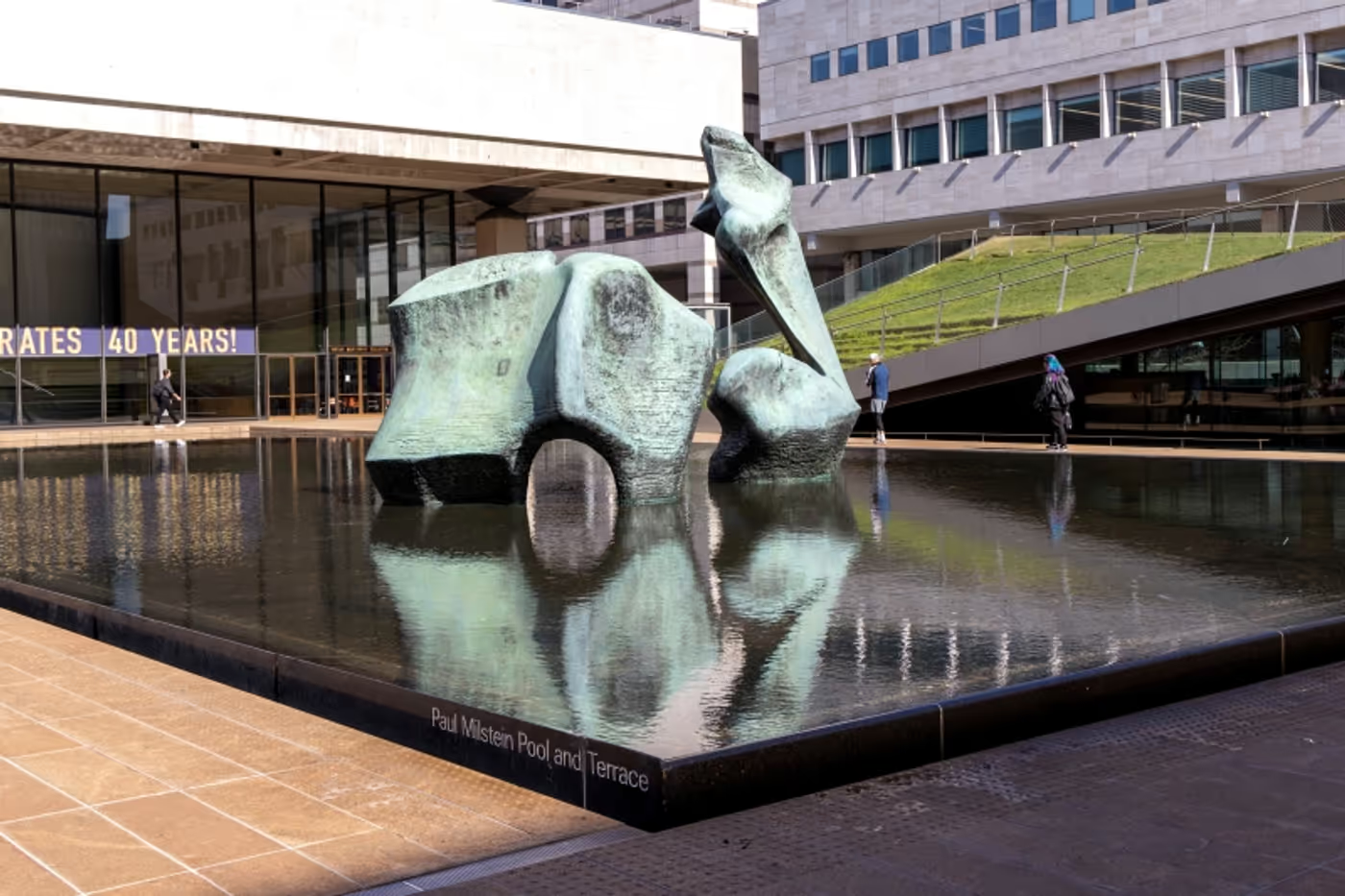
Hearst Plaza
Hearst Plaza is directly in front of Lincoln Center Theater and is accessible from the main plaza and 65th Street.
Hearst Plaza is a serene outdoor space that features the Paul Milstein Pool and Terrace, complemented by Henry Moore’s Reclining Figure sculpture, the shaded Barclays Capital Grove, and the sloping Laurie M. Tisch Illumination Lawn, offering both natural beauty and architectural interest. Throughout the warmer months, the plaza hosts free performances—including jazz, chamber music, and dance—as part of Lincoln Center’s "Summer for the City" series, making it a vibrant cultural hub for the public.
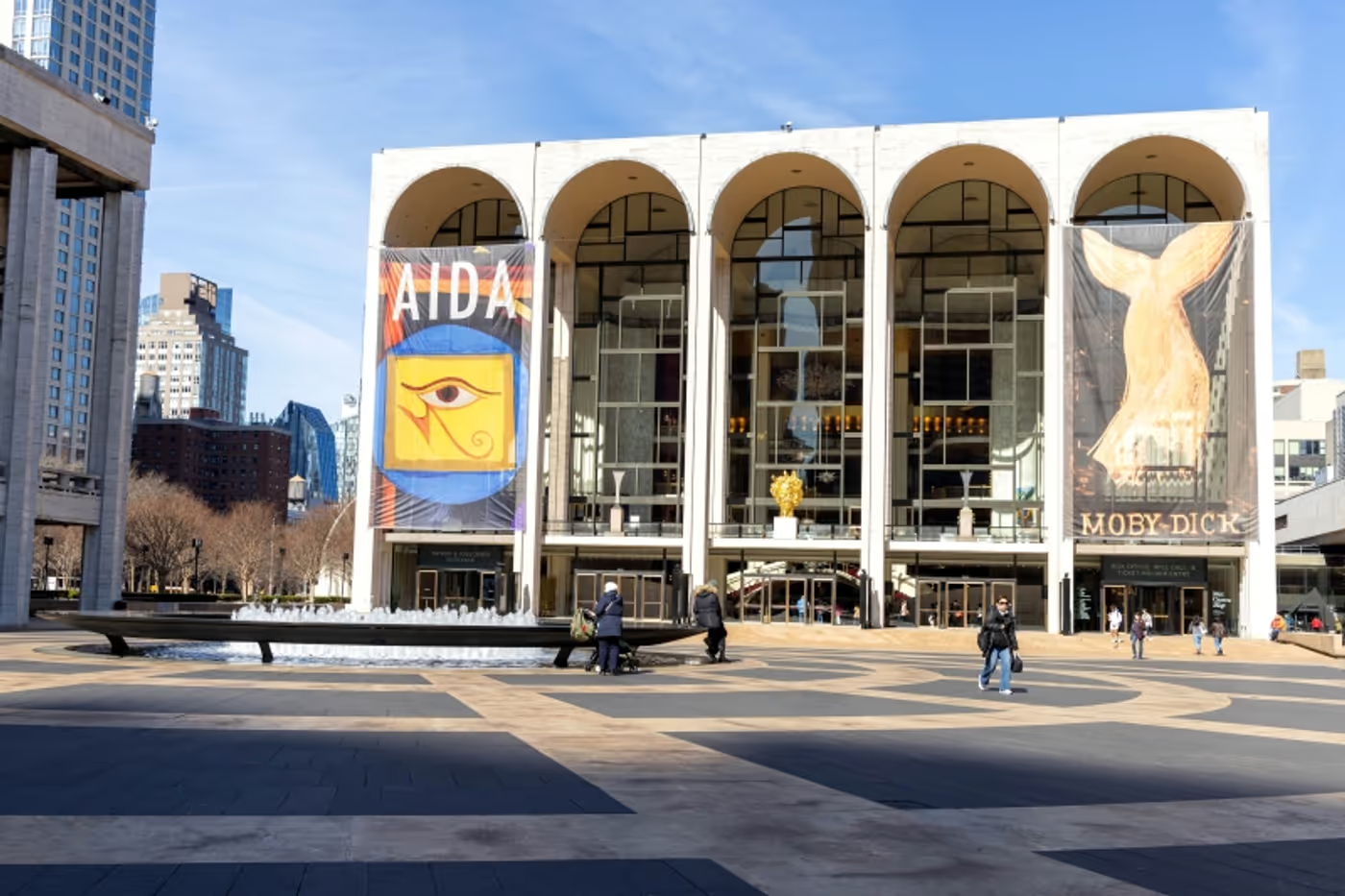
Josie Robertson Plaza
Josie Robertson Plaza is the main plaza that connects David Geffen Hall, the David Koch Theatre and the Metropolitan Opera House.
This central open space serves as a grand entryway of Lincoln Center. Designed by Philip Johnson and completed in 1966, the plaza features the iconic Revson Fountain, known for its choreographed water displays that can shoot water up to 40 feet high. Over the years, the plaza has hosted various public art installations and events, including "The GREEN" by Mimi Lien and "The Oasis," NYC’s largest outdoor dance floor with a 10-foot disco ball.
Learn more about what's going on at Lincoln Center at lincolncenter.org
Photo Credit: Jennifer Broski