


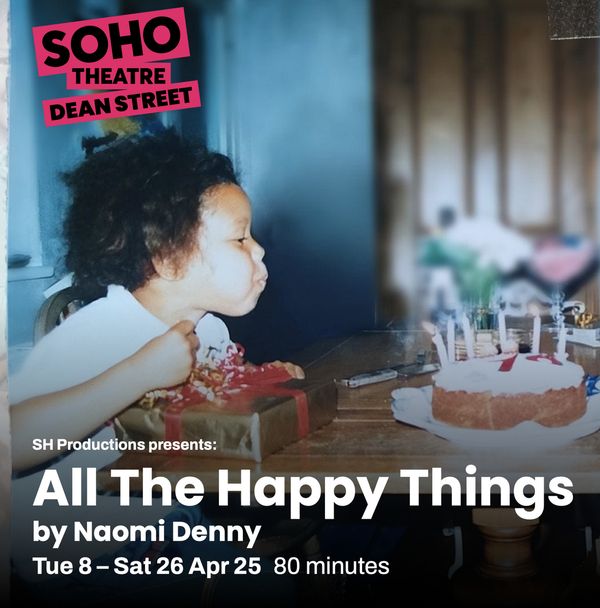
Review: ALL THE HAPPY THINGS, Soho Theatre
A raw, sometimes disorienting journey through the landscape of mourning
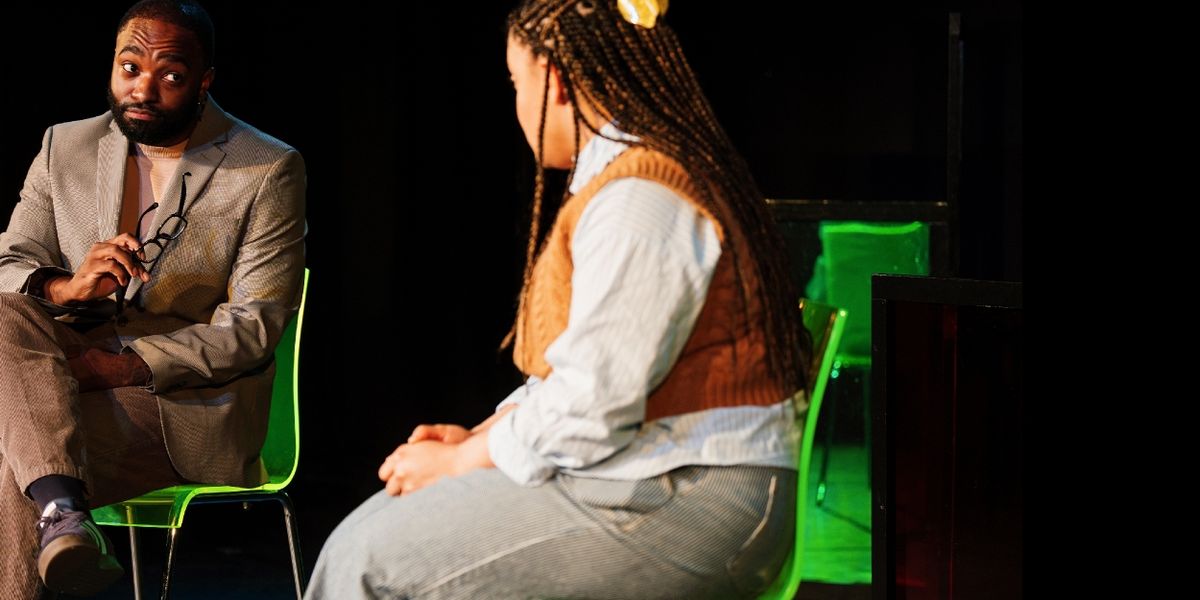
 In the intimate space of Soho Theatre, All the Happy Things unfolds as a poignant exploration of grief's distorting mirror. Playwright Naomi Denny crafts a narrative that refuses to conform to conventional representations of loss, instead offering a raw, sometimes disorienting journey through the landscape of mourning.
The play centres on Sienna (portrayed with compelling vulnerability by Naomi Denny), who grapples with the sudden death of her older sister Emily. Rather than presenting grief as a linear progression through familiar stages, Jones allows Sienna's emotional turmoil to manifest physically—her sister's presence remains palpable, visible, and in constant dialogue with her. This representation of grief as conversation rather than absence creates a theatrical language that resonates with authenticity.
What emerges most powerfully is the script's focus on birthdays and celebrations—moments that traditionally symbolise life rather than its end. These occasions become fraught emotional battlegrounds for Sienna, where joy and despair occupy the same space, much like the ghostly presence of Emily herself. The juxtaposition of celebratory rituals against profound loss creates a tension that drives the narrative forward with aching familiarity.
LJ Johnson delivers a remarkable dual performance as both Emily and Ruby (Emily's lover), navigating the challenging technical demands of these distinct roles while maintaining emotional precision. As Emily's ghost, Johnson skilfully balances between sympathetic presence and cruel spectre, at times criticising and ridiculing Sienna in ways that only a sister could. The sister relationship between Johnson and Denny forms the emotional core of the production—their interactions oscillate between tenderness and conflict, capturing the complexity of sibling bonds that transcend death itself.
Alex%20Brenner__11_1126-dx_s.jpg?format=auto&width=1400)
Patrick McKenzie brings dignified vulnerability to his portrayal of Sienna's father, whose dementia creates another form of absence-in-presence that parallels Sienna's grief. This layering of loss—the sister who is gone yet present, the father who is present yet gradually disappearing—creates a nuanced exploration of different forms of mourning and mental fragility.
Dejon Mullings demonstrates impressive versatility in his dual roles as Sam, Sienna's supportive boyfriend, and Kevin, her concerned boss. Mullings' transformation between characters is nothing short of impressive; through subtle shifts in posture and demeanour, he creates a convincingly older, fatherly boss figure concerned with Sienna's wellbeing. As Sam, he provides emotional ballast for a woman on the verge of breakdown, offering a counterpoint to the destabilising presence of Emily's ghost.
Movement director Yemurai Zvayara's choreography deserves special mention. The synchronised movements between the sisters—particularly the recurring motif of twirling braids—create a visual poetry that speaks to their shared history and genetic mirroring. These choreographed sequences function as emotional punctuation throughout the narrative, revealing the muscle memory of sisterhood that persists beyond physical separation.
The production's set design employs mirrors as tombstones—a visually striking choice that operates on multiple conceptual levels. These reflective surfaces serve as metaphorical boundaries between the living and dead while simultaneously suggesting permeability between worlds. When Sienna confronts her reflection, is she seeing herself, or catching glimpses of her sister? This ambiguity forces the audience to question their own understanding of where grief ends and memory begins.
Lucy Jane Atkinson’s direction embraces the uncomfortable aspects of bereavement, allowing Sienna's conversations with her deceased sister to unfold without offering easy psychological explanations. The arguments between the sisters suggest that death hasn't resolved their conflicts but rather suspended them in a state of perpetual irresolution—a refreshingly unsentimental perspective on loss.
All the Happy Things ultimately asks its audience to consider grief not as absence but as a transformed presence—a continuing relationship that changes shape rather than disappearing entirely. Through its thoughtful direction, nuanced performances, and evocative visual metaphors, the production offers a theatrically ambitious meditation on how we continue to interact with those we've lost. Endearing and cathartic, it serves as something of a panacea for grief—not by diminishing its pain, but by honouring its complexity.
All the Happy Things runs at Soho Theatre until 26 April
Photo Credits: Alex Brenner
|
Powered by

|





Reader Reviews
To post a comment, you must register and login.