Interview: 'I Hope It Moves People The Way It Moves Me': Actor and Writer Jordan Luke Gage on His Highly Personal Journey Bringing REDCLIFFE to The Stage
'You can only break people's hearts if you make them fall in love with the characters.'
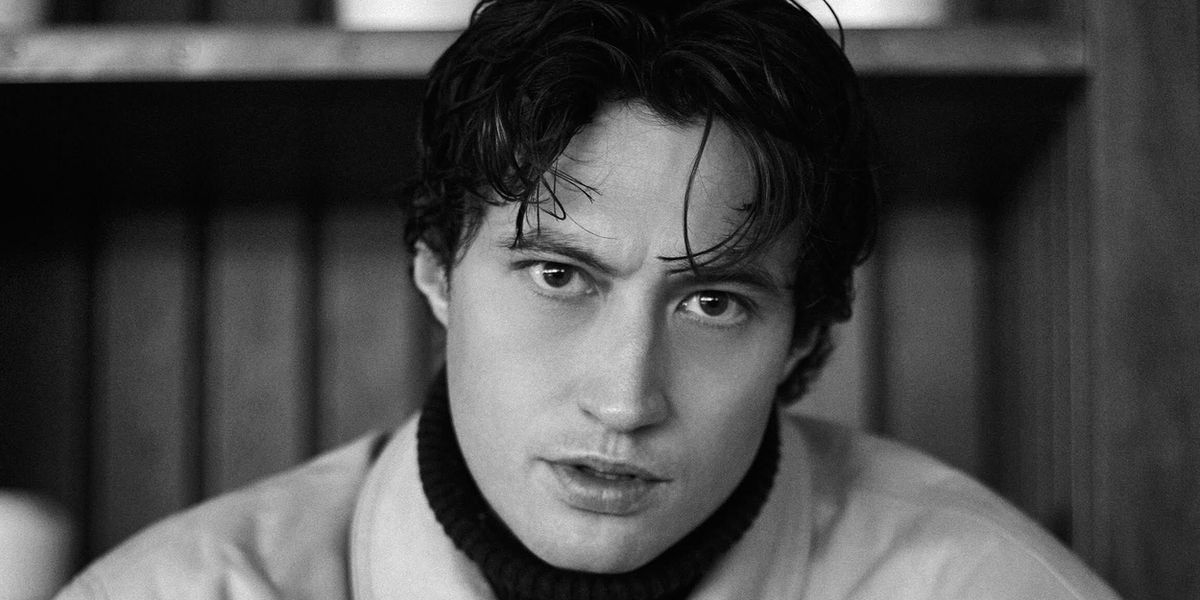
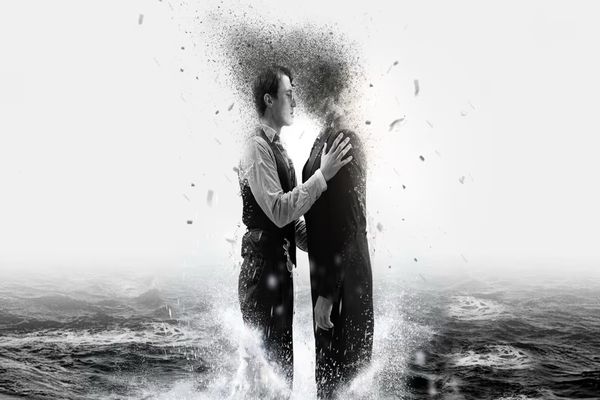
After eight sold-out workshop performances at The Other Palace, the new musical, Redcliffe, arrives at Southwark Playhouse next month. The show, written and performed by Jordan Luke Gage, tells the story of William Critchard and Richard Arnold, an “epic tale of forbidden love during the persecution people faced for hundreds of years.”
Recently, we had the chance to speak with Gage about the show and its upcoming run at Southwark Playhouse. We discussed how his Best Friend got him into the world of theatre, what the creative process has been like for Redcliffe and what he hopes audiences will take away from the show.
So, starting with a bit of a general question, how did you first get started in the world of theatre?
I first got started when I was around thirteen years old. I was actually dragged along by a Best Friend to go to this theatre camp, and I had no prior experience performing. I'd always sung around the house, but that was the extent of it. So I went to keep my friend company, basically! And then just loved how expressive you could be, how you were allowed to totally let loose in this new way that I'd never been able to do before. There was this talent competition at the end of the week, and they held auditions for that. My friend, who had heard me sing casually around her before, said, “You should audition!”
So with a little bit of nudging from her and from my mum, I sang “A Whole New World.” I remember being really nervous because it was the first time I publicly sang in front of a whole group of people. And then at the end of the day, they said who was selected to perform in the big show, and they selected me! I was like, “Wow, this is cool!” I was never sporty. I'd never won anything. So it's like, “Oh, my God, maybe this is something I'm good at!”
And then I performed in that show at the end of the week, and similar response from the audience and the parents - “You have something here. There's a gift, and you should keep exploring it.” And so from that, I started to take it a bit more seriously. I went to this part-time theatre school, which was four days a week in the evenings after my high school. And then with them, I did loads of shows. So that experience was so informative for me, knowing that this was something I wanted to do. It was the only thing I was good at. And then I auditioned for drama schools in London, went, studied and got a degree in it. And so that's how it all began!
So it all started thanks to your friend!
Thank you, Emma!
And what inspired you to create Redcliffe?
Having been involved in theatre for the last decade professionally, I've had amazing opportunities of originating roles in shows. I love being a part of the collaborative experience of theatre much more than I enjoy stepping into a role. When I went and played JD in Heathers, I had the time of my life - it was brilliant! But there's something about being the person that gets to create it from the ground up that I've always been drawn to, so I've had that creative mindset over the last ten years.
I was at a stage about three years ago where I was going to see a lot of theatre and feeling really inspired by things, and then seeing some theatre where my critical head was leaving the theatre and thinking, “Oh, that's interesting. I would have done this differently. I would have fleshed out this relationship, this song . . . I would have changed . . .” I was talking about it a lot with my partner, and he said, “You should just try writing something because you're clearly very opinionated,” and that's pretty much how it began!
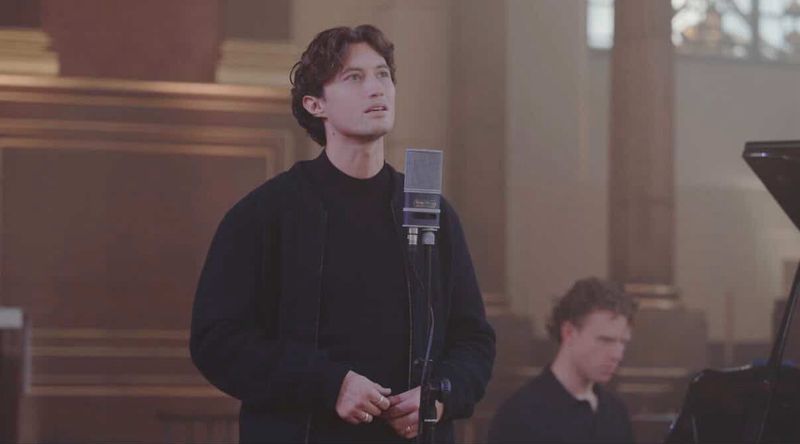
I decided that I wanted to write something that was based on a true story, because those are the stories that I'm mostly drawn to. I always feel more connected to something when I know that somebody's actually lived it. I watch a lot of true crime documentaries in my spare time - I’m drawn to that. So I knew I wanted to tell something that was a true story, and I knew I wanted to explore a queer story as well, because it's something that I've never really had the opportunity to explore in my acting work. I'm usually cast as the womaniser, so I wanted to dive into something a little closer to me as a person. So then I just started exploring stories.
This article had been discovered by the Bristol Museum about these two men in the 18th century who were navigating this secret relationship in a world where it was illegal to be gay and punishable by death. I won't give too much away about the article, because it's a big plot point in the story, but there was something in it that broke my heart when I was reading it. I had this spiritual awakening, and I realised that this is the story that I need to be writing. And so that was the nugget that it all began from. I started writing a few songs for it, and then slowly fell into creating some scenes. And then, before I knew it, I had the first act of this musical, and it just spiralled from there! We did some workshops - they went really well - and now we're at this place where we're about to premiere it, so it's really exciting!
What has the creative process been like for Redcliffe, including the research on the true story?
It's been super interesting! My partner is also from Bristol, so we have a connection to the area. I spend a lot of time there, so when I was researching for it [Redcliffe], I spent a lot of time in the Bristol Museum, in the archives, where they have actual artefacts from this case that I've written the story about. So it was really amazing to go there and to see these statements in front of me. There's a part of the story which takes place in the courthouse, and there's a trial that happens around these two men. I managed to actually hold the witness statement from 1753, and it was just incredible.
Also, there is a lot of information that we don't have from this time period, which allowed me to fictionalise it. I'm not too sure what my character, Williams’s, parents were like - his family, his upbringing, those things. So it's been really great, in the sense that it's given me scope to stay true to the actual facts that happened, but be able to play and create around that. So that's how the research has been for it.
And in terms of writing the music, I've always written songs on my guitar. I've always written poppy, folky tunes. The way that I work is I put my head in the moment that I want to write the song for... I'll have my guitar, I'll be jamming for a few hours. And normally, by the end of that session, I have an outline, and then I'm constantly chopping and changing it. Some songs come within like five minutes, and then some songs take weeks and weeks to get right.
What was it like doing workshops of Redcliffe at The Other Palace?
Oh, my God, crazy! That was the first time I'd put anything I'd written out on a stage. The first time we did the workshop, we did just the first act. It was part of this musical theatre festival, and we had just twelve hours to rehearse with the actors. So it's like, “How are we going to get this done?” It was a script-in-hand situation, so the pressure was slightly off in that sense, but it was still me putting my baby out into the world. It was probably the most nervous I've been for anything in my life! And it just went really well. There was just an energy in the room, and I just felt like people got it.
The story is very moving, and it's quite dark in moments, but there's also so much light and comedy, because ultimately, you can only break people's hearts if you make them fall in love with the characters. So I think it was just an amazing experience for me to stand there and hear the response from the audience.
So it was an incredible moment for me doing those workshops and getting the responses, and then also working out the moments that didn't quite work, the bits that needed changing. And so by the time we got to the full workshop, which happened a few months later, we presented both acts. It was in an even stronger place than the time before, but there were still a couple moments that I knew I needed to change. And that's what I've been working on for the last nearly two years since the last workshop. So the show now, compared to the show that was at the workshop two years ago, is really different!
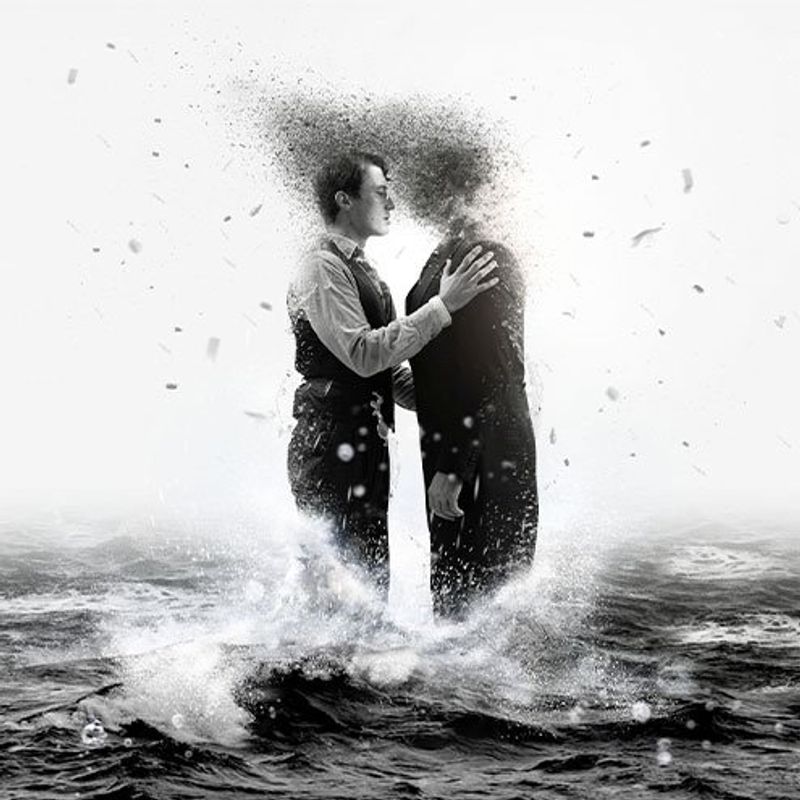
Image Credit: Southwark Playhouse
And how do you feel now that you're bringing a fully-staged production to Southwark Playhouse?
It feels like a dream, honestly! If you were to tell me this five years ago, before I'd ever written anything, I would have laughed in your face. But the fact that it's a piece that I care so much about . . . I spend every hour of the day on this piece, and I have since I first started writing it!
I’m so grateful to be in that space for us to play and create this thing. I'm sure it's going to keep on changing when we get there, but it just feels like a dream. And we've assembled the most incredible cast of actors and creatives. I'm more excited about it than I think I've ever been excited about anything in my life! It's a really cool feeling, but also terrifying!
What is it like to be telling this story at this time, when there are so many issues involving LGBTQ+ rights, especially in the UK?
It feels even more empowering and important to tell this story now. There is no time better than now to tell this story. With LGBTQ+ rights, there are so many worldwide that are being reversed, so many legislations . . . People feeling threatened by our community, which is just unfathomable - to think that the LGBTQ+ community are a threat to other people's existence in some way. And that's how the world used to see us hundreds of years ago. It feels like we're on this precipice of potentially reverting back to that place entirely, and we can't let that happen.
This story focuses on that time period, so I think it's so important to tell and educate people about what happened in our country hundreds of years ago, but also the fact that this actually does still happen in some countries. Now there are still countries where it's punishable by death to be gay, and countries where you can be imprisoned for it. I can't think of a better time to tell this story. It's so important.
On that topic, what do you hope audiences take away from Redcliffe?
I hope that they feel changed from the experience of it, and their eyes and hearts are opened. I want it to be a form of entertainment for them, but also education. And I want them to really understand the weight of what people experienced and do experience around the world, and realise how we all have to do our bit to try and make sure that we don't revert back to that place. I hope it moves people the way that it moves me.
And finally, how would you describe the show in one sentence?
I would describe it as a lyric from one of the songs in the show, which is “Rough and winding.” That's really the epitome of the piece. It takes you on a real journey, and it constantly changes direction - you don't know where it's going to be. And there are moments that are rough, like the roughest ocean, and the roads are winding to get there. But also, those are the things that force you to change your mindset. You have to go through an experience that feels tumultuous, so I would say it's a rough and winding experience.
Redcliffe runs from 22 May - 4 July at Southwark Playhouse Borough.

Sign up for all the news on the Fall season, discounts & more...
|
Powered by

|
.jpg?format=auto&width=300)