


Review: THE STUTTGART BALLET IN JOHN CRANKO'S ONEGIN at Kennedy Center Opera House
Onstage through Sunday
 Click for Tickets!
Ballet is back at the Kennedy Center for the 2025-2026 season with multiple outstanding companies on the roster this year. This season opened with the Stuttgart Ballet, arguably Germany’s (and one of Europe’s) best ballet company. For the first time in over 30 years Stuttgart returned to the US this weekend’s performances of John Cranko’s Onegin.
Based on Alexander Pushkin’s novel Eugene Onegin, it tells the story of Onegin, a flaneur who, seeking new thrills, leaves St. Petersburg, flirts with his Best Friend Lenski’s fiancée, duels with – and kills – Lenski, rejects Tatiana, a young woman who pursues Onegin, and later he regrets it all. It’s a tragic melodrama through and through and thus irresistible to artistic interpretation.
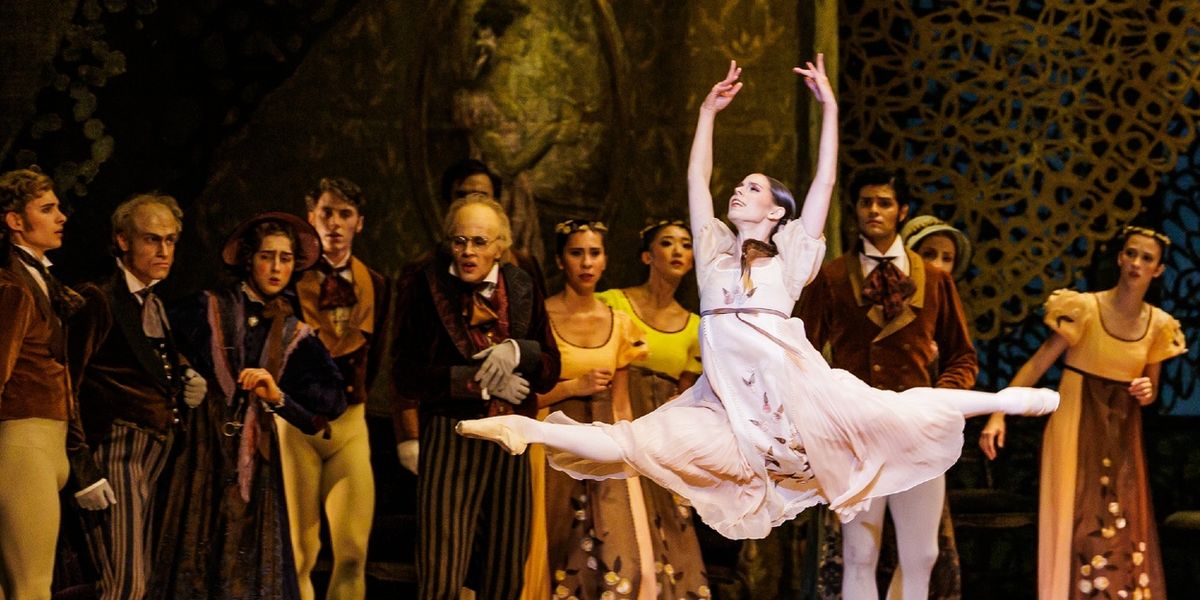
Cranko’s ballet premiered in 1965 to worldwide acclaim and is now danced by many companies around the world. His choreography is the star here; his emphasis on naturalism in the story ballet form was new, and the story is told entirely through dance. Gone is the stilted pantomime and each dance number is intended to be essential to moving the story forward. For the most part, Cranko succeeds. His characters and their hopes and emotions are easy to read; Tatiana is devastated and humiliated when Onegin destroys her letter and flirts with her sister. She doesn’t have to say it in pantomimed words for us to understand as her movements and face are perfectly legible.
In another example, Lenski and Olga’s Act I pas de deux is tender and intimate. The lack of pretentiousness was refreshing compared to couples’ dances in other ballets; I almost felt as though I was spying on a private movement between real lovers, even though it is danced for the corps de ballet.
All dance works based on novels require some trimming of the plot. It’s simply not possible to tell exactly the same story in a two-to-three-hour stage version. Thankfully, Onegin’s brisk story largely captures the key moments from Pushkin. The only significant gap in choreographic logic is in the first Act. Tatiana opens the ballet as a bookish, focused young women who is not interested in pretty dresses and gossip. She is above such petty things. So it doesn’t make any sense that she would immediately fall in love with Onegin after meeting him, literally setting her book down in favor of courting his hand. It’s too bad that this break from realism occurs in the first Act as it is jarring and made it difficult for me to believe in the rest of the story Cranko wove.
Luckily the dancers’ performances were strong, especially the principles, which further showcased the story’s emotional weight. The title character, danced by Friedemann Vogel, oozed smug narcissism and disdain for others. Why Tatiana fell for him was beyond me, though I pitied him at the end. Tatiana, performed by Elisa Badenes, was similarly affecting, though I have little recollection of her dancing. Perhaps this is the strength of Cranko’s style, though I would have enjoyed a few more bravura moments.
Dancing-wise, the second lead couple seemed to have more opportunities to show off. Gabriel Figueredo as Lenski seemed to hang in the air perfectly upright whenever he jumped or turned, and Mackenzie Brown as his fiancée Olga was similarly self-possessed in her turns, especially the punishingly slow single pirouettes in the opening scene.
Most engaging, however, were the demi-character roles in Act II who portrayed elderly couples at the birthday party. While they were primarily given the same steps to dance, each of the three couples – especially the men – brought backaches and stiff legs to the choreography. This humorous touch was not overtly played for laughs but added rich realistic touches to the evening, heightening the credibility of the story being told.
The ballet uses Tchaikovsky’s music, though not his 1879 opera of Eugene Onegin. Instead, it features mostly piano compositions and works from other operas and ballets, arranged and orchestrated by Kurt-Heinz Stolze. Sometimes the music struck me as ill-suited to the action on the stage; it was overly dark and dramatic for Lenski and Olga’s early pas de deux of young, joyful love. An original composition, even by a lesser composer, might have been more effective.
Each performance features a different cast, and it would have been interesting to see another interpretation especially of Onegin and Tatiana’s roles. Given the emphasis on character over showy dance, I suspect each interpretation is quite different and worth contemplating.
Performances run through Sunday, October 12 in the Kennedy Center’s Opera House.
Photo credit: Elisa Badenes in the Stuttgart Ballet's production of Onegin. Photo by Elman Studio
Runtime: 2 hours and 40 minutes, with two intermissions.

|
Brian Henson's Puppet Up! Lincoln Theatre (9/30-9/30) |
|
GARBO: EL ACTOR QUE SAVÓ AL MUNDO (Garbo: The Actor Who Saved The World) GALA Hispanic Theatre (9/03-9/27) |

|
A Monument To Comedy DC Improv (9/15-9/15) |

|
Coming to America: An Immigrant Cabaret ExPats Theatre (9/30-10/18) |

|
Some Like It Hot Bernard Family Theatre, Olney Theatre Center (9/18-11/08) |

|
Stonewall's Bust The Writers Center (10/09-10/25) |
|
Jitta's Atonement Washington Stage Guild (4/08-5/02) |
|
Ballet Hispánico New York "MUJERES: Women in Motion" The Alden Theatre (10/02-10/02) |
|
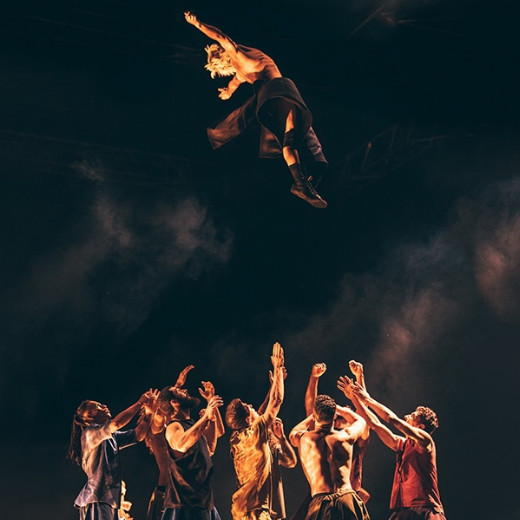
Compagnie HERVÉ KOUBI: Sol Invictus Center for the Arts (10/24-10/24) |
|
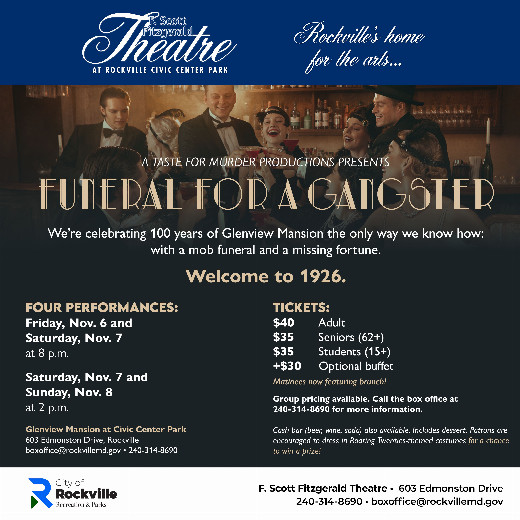
Murder at the Mansion presents "Funeral for a Gangster" Glenview Mansion (11/06-11/08) |

Reader Reviews
To post a comment, you must register and login.