


Review: FOOTLOOSE at NextStop Theatre Company
NextStop’s production of 'Footloose' felt haphazard and emotionless, and what should have been a fun evening of theater and nostalgia was instead entirely lackluster.
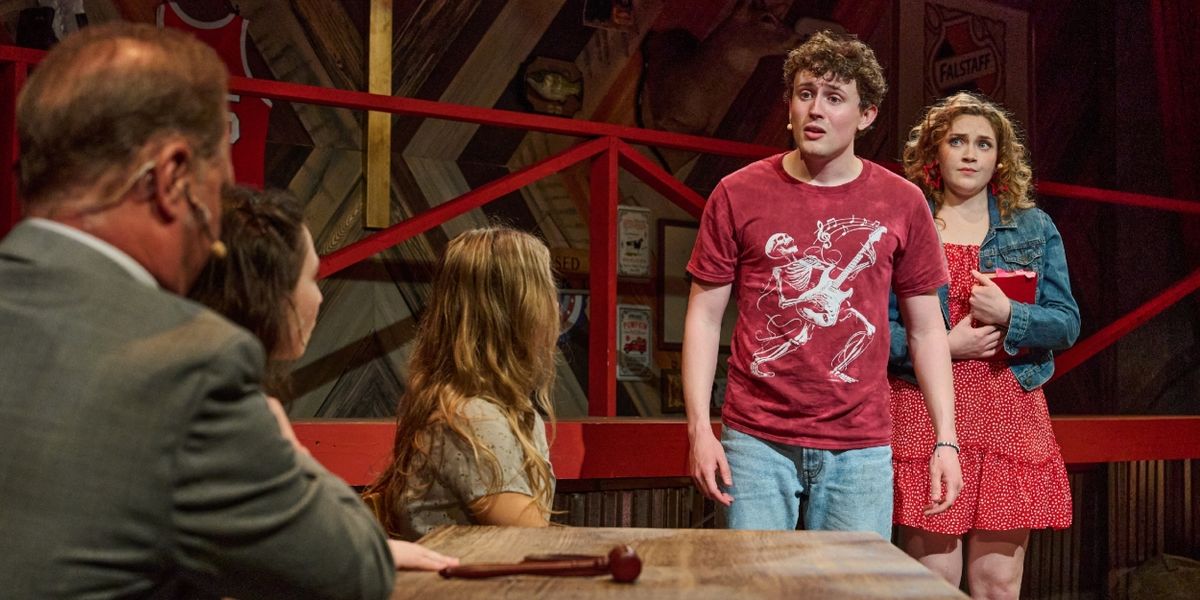
One of the benefits of local theater is the joy of watching creativity blossom. Smaller theaters often lack the resources of larger ones, but there’s something enchanting about watching the ingenuity that elevates their work, relying on the talents of their casts and creative team to bring something wonderful to the stage. Honestly, that’s one of the best parts of being a critic in an area with as wide of a theater scene as DC – getting to see truly talented companies find ways to uniquely shine. It’s why I love returning to places like NextStop Theatre Company.
Unfortunately, NextStop’s latest production, Footloose, lacks all of the charm and electricity that usually characterizes their productions, and the difference is all the more striking in light of their past radiance. What should have been a fun evening of theater and nostalgia was instead entirely lackluster.
Footloose is the 1998 musical based on the iconic 1984 movie of the same title, a coming-of-age story about a teenager, Ren, who is forced to trade vibrant Chicago for small town Bomont, Utah, after his father leaves and his mother moves in with her sister and brother-in-law for support. The rural community is tight-knit and controlled by the local minister, Reverend Shaw Moore, who is determined to save the town by banning what he sees as the culprit behind a prior tragedy: dancing. Ren’s urban attitude, combined with his outside status, quickly pits him against the Reverend, especially when he shows interest in both the Reverend’s rebellious daughter, Ariel, and challenging the local law. The soundtrack is comprised of songs that later went on to top the billboards, including “Holding Out For a Hero” by Bonnie Tyler, “Let’s Hear It for the Boy” by Deniece Williams, "Dancing In The Sheets" by Shalamar, and "Almost Paradise" by Mike Reno (Loverboy) and Ann Wilson (Heart), as well as Kenny Loggins’ titular “Footloose.” The movie and its music are considered definitive examples of the 1980s, and have supported the enduring reputation of the film, soundtrack, and stage show.
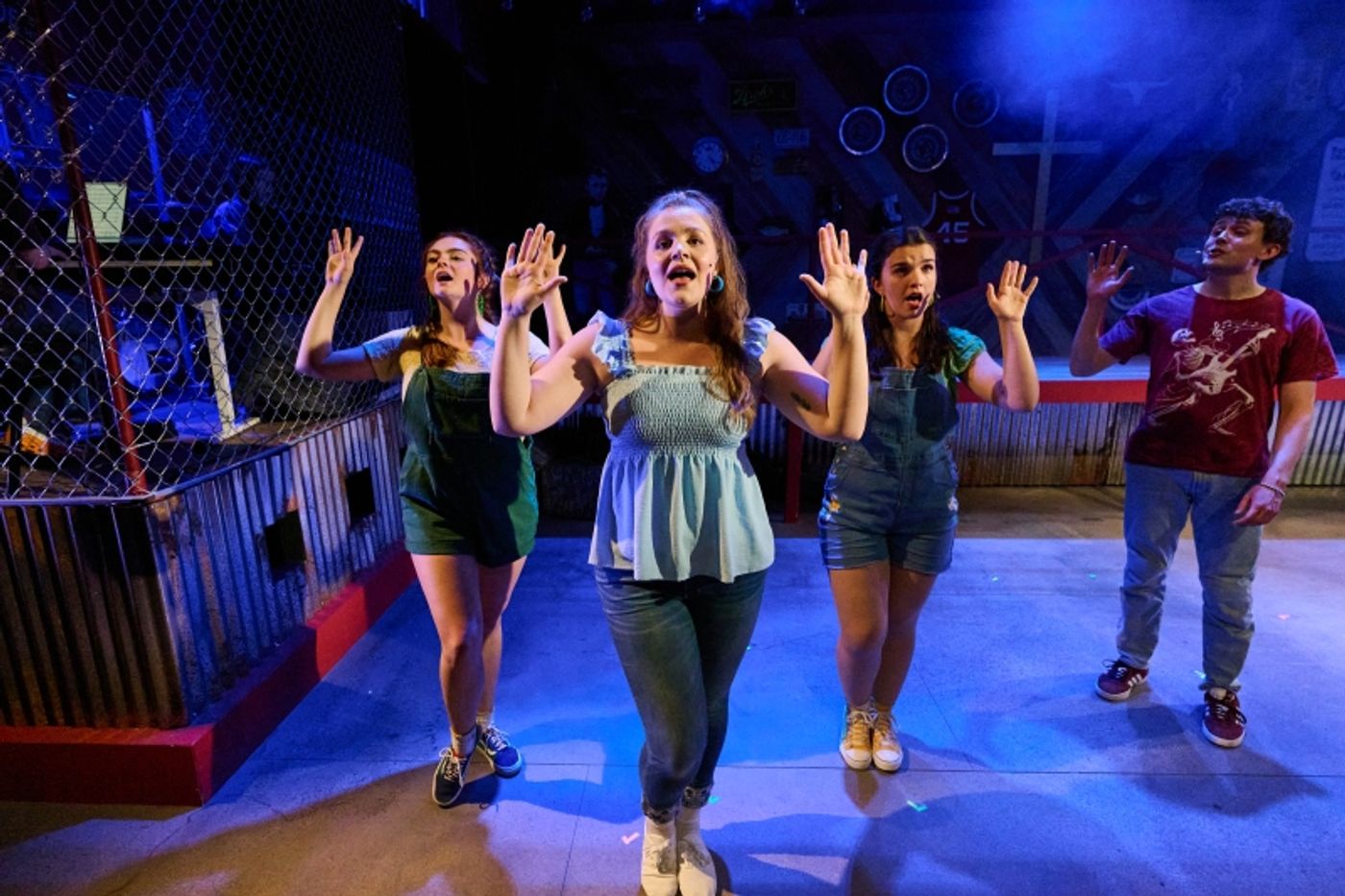
Tackling a show with so much history is tricky, particularly since the movie features stars like Kevin Bacon and Sarah Jessica Parker, music that people sing regularly on karaoke night, and dance sequences highlighted in nearly every internet video roundup of iconic dance movies. Audiences are familiar with the material – some of the songs have even been featured in other shows – and typically have a soft spot for it, but are also going to hold it to higher standards, which is why both the 2011 remake of the movie and the 1998 musical received such a lukewarm reception; the main consensus about the stage adaptation was that the show wasn’t particularly strong, but was fun due to the beloved music and entertaining cast.
And therein lies the rub with NextStop’s production: it feels as though at every turn, the creative team committed a grave disservice to the cast and material.
The first issue comes from the casting itself. While many members of the cast are clearly talented, it feels as though many performers are miscast in their exact roles, often in unbalanced duets and groups, or tasked with characters whose needs aren’t aligned with their own strengths. The result is that most characters and interactions never quite click, a feeling only heightened by the muddled staging and choreography. While Director Ricky Drummond and Choreographer Stefan Sittig have some moments that really work well (like genuinely great scene where the ensemble poses as Ren and Ethyl’s car as they prepare to leave Chicago), there are unfortunately far too many moments where the directions are confusing – such as when characters continue to actively eat as their song begins or the dance attendees create a messy reception line for the Reverend – unclear – when ensemble members seem to have been told to improvise and are left with drastically noticeable differences in style and capability in group numbers – or outright chaotic – notably the finale scene, the iconic “Footloose” finale sequence, where most of the cast seems to have no clear direction or marks for where they should be and instead cluster in an awkward ball as they try to dance. What’s more, for a show about dancing, Sittig’s choreography is far from being either clean or exciting – there are some half-hearted tumbles and an absurd number of jumps off the platform, but most of it was either uninspired or frustrating, particularly when there was an attempt to incorporate the movie’s finale dance sequence, but the staging meant the cast didn’t have the room to complete the steps, even if they had clear directions on what they were. Even the final beat of the show suffered from this, with some members of the cast finishing before the last beat of music, some after, and very few on the actual note.
The artistic decisions were also bewildering. While Footloose takes place in 1984, and the music is reflective of this, it is definitely possible to update it (a version of Footloose that examined how we muddle religion and policy today or addressed Tik Tok dances would be a fascinating update), but what doesn’t really make sense is seemingly keeping the 1980s time period (based mostly on the earring choices and lack of modern technology, like cell phones or social media, though there also isn’t any period technology, like a boom box), with the odd anachronism essentially tossed in carelessly. While Heelys may have been a practical stage effect for Ren’s job at the Burger Blast, the actual skate shoes didn’t come out until 1999, a full year after the original stage production and over a decade after the setting, so specifically naming them was an odd addition. Additionally, when Ariel, Rusty, Wendy Jo, and Urleen are studying, one of the girls references Wikipedia, a company that didn’t exist until 2001 and based on an internet that wasn’t widely available to the public until the 1990s; why the decision was made to change this reference from Cliffsnotes, which has continued to live on through the internet and stayed in the popular vernacular is genuinely puzzling.
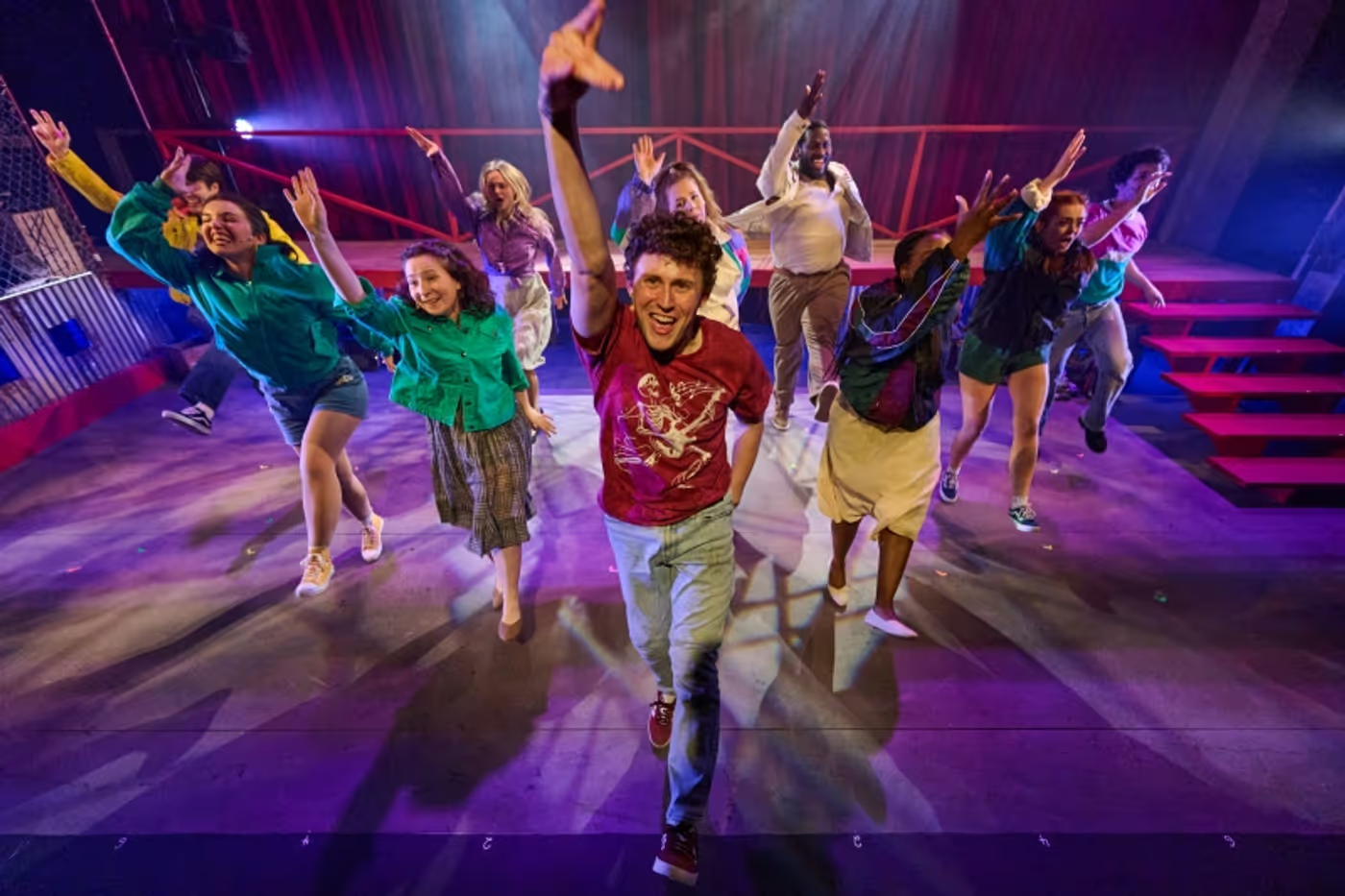
Also puzzling are Costume Designer Imari Pyles’ choices, which continue to tangle sense of time and place. Rather than the period-appropriate and recognizable outfit Ren is typically seen in (a white tee shirt and blue jeans), Ren is dressed in a concert tee with one single rip in the hem; while most characters have a costume change between acts, Ren, the lead, stays in this tee until the finale dance. The other characters’ outfits cover a range from vague mid-century to the early-to-mid 2000s; while the 1980s and 1990s are retro and popular again, this still feels like an odd, aimless choice, especially when the dance dresses look like they came from an early 2000s Macy’s sale, complete with spaghetti straps, glitter, and modern silhouettes.
Another baffling element was Jack Golden’s set, which was a static wall with a mishmash of haphazardly mounted items that evoked an aisle at Hobby Lobby and made it feel as though even the creative team wasn’t quite sure where the show took place (the “Don’t Mess with Texas” sign was particularly odd for a Utah setting). The set wasn’t memorable or dynamic, and didn’t really help with setting a sense of place; most of that work fell to the often-askew tablecloths hastily thrown over the tables as they were swapped for benches in alternating scenes. While a minimalist set can be a great backdrop for a show with multiple settings, this set only made it feel as though no one was really sure where they were.
While all of these creative elements were more than a little unsatisfying, one of the most vexing aspects of this show was Kenny Neal’s sound design. The poor sound mixing on the ensemble numbers made for unbalanced songs, which also carried over heavily during the more intimate duets. But perhaps the worst sin was the lack of correction. One character’s microphone went out during the first act, and it not only wasn’t fixed for Act II, but her duet partner’s microphone also went out during the second act, so neither could be clearly heard. While mishaps are bound to happen in live performances (tape comes off, mic packs can go flying, wigs fall off – live theater is nothing if not a gamble), not correcting such an important technical element feels incredibly unfair to both the performers and the audience, and shows a lack of care for the whole experience.
That’s probably what’s most disappointing about this production: the lack of care throughout each element. The production that opened this weekend falls far short of the standards that NextStop typically holds itself to, and felt haphazard and emotionless, words not typically associated with this company and its work. And maybe it’s unfair to hold this production in comparison to others, even from this same theater, but it’s also unfair to everyone involved to stage such an substandard production.
Footloose runs at NextStop Theatre Company through June 8th. Production run time is approximately two hours and thirty minutes with one 15-minute intermission. Additional information about ticket information – including special events, discounts for students and furloughed federal employees, and accessibility – can be found on the NextStop website: https://www.nextstoptheatre.org/footloose-24.
Photos courtesy of DJ Corey Photography. Banner photo features Jeremy Crawford and Brigid Wallace Harper.

|
Misery Aldie Mill Historic Park (8/20-8/30) |
|
Ford''s Theatre presents: Come From Away Ford's Theatre (9/10-10/18) |
|
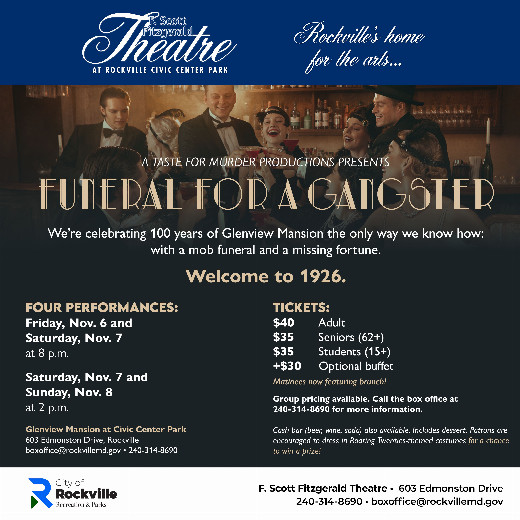
Murder at the Mansion presents "Funeral for a Gangster" Glenview Mansion (11/06-11/08) |
|
Gershwin, Bernstein & American Mosaic Wolf Trap (8/15-8/15) |
|
Mamma Mia! National Theatre (10/27-11/15) |
|
Hamlet Folger Shakespeare Library (3/02-4/11) |
|
The Jersey Four A Tribute to Frankie Valli and The 4 Seasons, featuring original member Gerry Polci F. Scott Fitzgerald Theatre (9/13-9/13) |
|
The Dinner Detective Murder Mystery Dinner Show The Dinner Detective Washington DC (9/26-9/26) |

|
Body Language The Allan Lefcowitz Theater at The Writer's Center (9/25-9/27) PHOTOS |
|
Josh Groban Wolf Trap (8/22-8/22) |
Reader Reviews
To post a comment, you must register and login.