


Interview: Josh Tower of BUENA VISTA SOCIAL CLUB National Tour
The national tour has just hit the road.
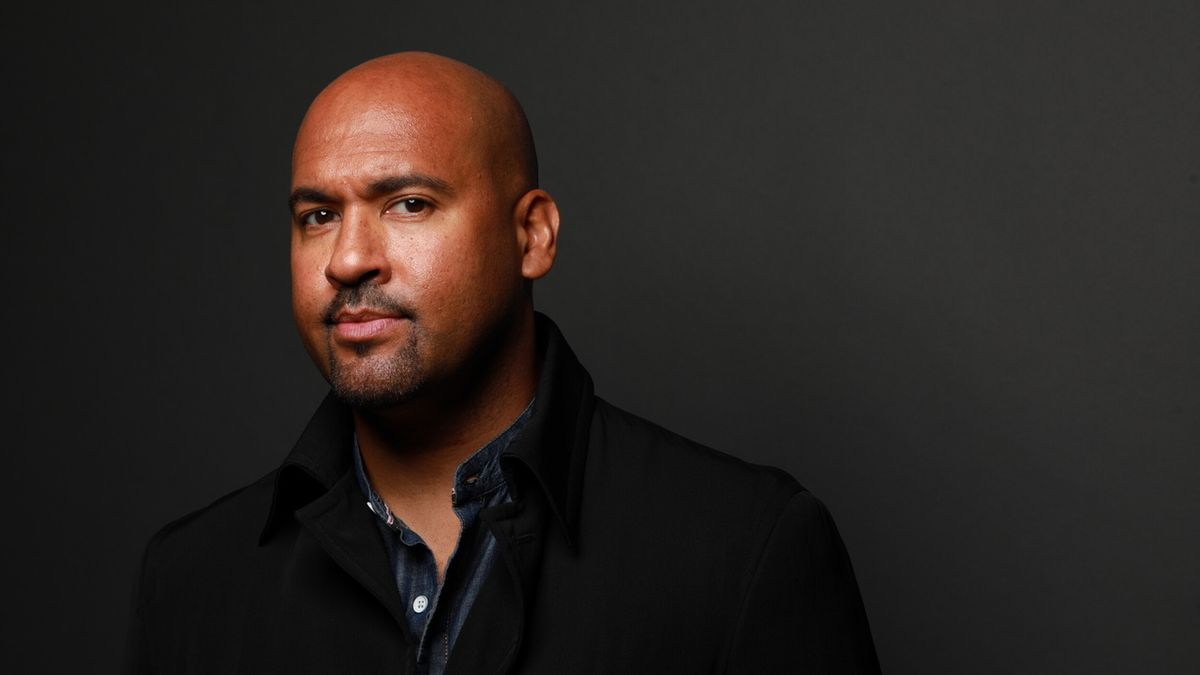
From September 22nd-27th, the national tour of Buena Vista Social Club will be gracing the stage of the Durham Performing Arts Center. I recently got to speak with Josh Tower, who's one of the understudies in the show. He has previously been seen on Broadway and on tour in RAGTIME, THE LION KING, MOTOWN THE MUSICAL, SCHOOL OF ROCK, and HAMILTON. Yet before all of that, he went to graduate school at the University of North Carolina.
To start things off, you’ve just kicked off the tour in Buffalo. How are things going?
JT: They're going great! Buffalo is actually where I had my first show as Burr (in Hamilton) almost eight years ago. And so it's really kind of come full circle on this. But the Shea Theatre is a beautiful theater. It's got its hundred year anniversary this year, so it's great. Buffalo's got a lot of buzz around it right now. They got a brand new football stadium. So there's all kinds of events, booths, chefs, parties and all those things. So it's really cool.
Prior to getting involved, how familiar were you with the real Buena Vista Social Club?
JT: I actually have this album in my CD collection. It's out of the jewel case, but it's in a sleeve. I look back and, sure enough, I was like, "I know this music." I look back and I have it. So I was very familiar with all these songs. It's really cool to know and understand what the music is, was, and kind of how it started. But now it's kind of more in depth. So I'm able to zero in a little bit more on some of the band members and the creation of the music.
What are you enjoying most about doing the show?
JT: On this one, I've kind of taken a little bit of a backseat a little bit more than I'm used to. But it's a wonderful experience being a standby because I'm not on all the time. I kind of came into the process late in the casting process, and I am standing by for all of the older men. So Older Compay, Older Ibrahim, and Older Rubén, who they call the 1990s cast, which is when this album was done in ‘96. Then the younger cast is the 1950s cast, which is their past. So I'm loving doing the show. We just opened two so the standbys haven't been on yet, but we are ready to roll at any time in case someone gets hurt or does whatever. What I have to offer is a lot of experience and a lot of tutelage for our younger cast members who haven't experienced this thing before in terms of a production contract and touring. For a lot of people, it's their first big gig. So I'm happy to enact any kind of mentorship that I can along the way.
You cover multiple roles. How are you navigating with learning them?
JT: I've been around a long time. I went to grad school at Playmaker's Repertory Company in Chapel Hill. My background is in Shakespeare, Chekhov, and things like that. Ibrahim mostly sings. Compay drives the story with his humor and his energy, but he has kind of the most lines as far as the men. Rubén basically has Alzheimer's/dementia, so he has five words. So navigating them has been more about learning where I am on stage so that I don't get hurt or I don't hurt somebody when there's a piano being rolled in or a chair flying in from one of our incredible dancers. We've got an incredible ensemble. So navigating it has been really joyful. I've really been able to keep an eye on what I need to do and what each of these characters deserve. None of us are doing impressions of the characters. We're kind of bringing their flavor and essence to ourselves. It's a great direction from Saheem (Ali) and Moses (Garcia), our associate director.
You’re no stranger to these biographical musicals from having played Berry Gordy in MOTOWN and Aaron Burr in HAMILTON. How does this experience compare to those?
JT: Show-wise, I seem to only do the big hits and the shows that really matter. I would say Lion King was the most spiritual show that I've ever done. Hamilton was the most important show that I've ever done. Motown was a great reminder of where music history and where a lot of our music and stars come from. just that plug. Working with Mr. Gordy and having conversations with a living legend was incredible. I was in the ensemble of School of Rock because the kids were the stars of that one. That was incredible because I had the most fun with any ensemble that I've ever had in my life. We had a great group of guys and women in that. We were the guys who had our own dressing room, and the women were in another room, the adults. It was amazing. But this show is the most timely. I think it is the most timely and the most needed to mend the country. The country is in a real state of flux right now. It's really special to be in a show where this music and the heritages of all, all kinds of Latino heritages are being celebrated. I mean, I know it's Cuban, but it's really special because we don't just have Cubans in the show. We have Dominicans and Puerto Ricans and non-Latino people. So it's been incredible. It is timely. Our country needs to heal, and a reminder of the work that still needs to be done. This is the show that is a reminder to all the people that there's still work to be done.
You previously went to graduate school at UNC. How excited are you to be coming back to the Triangle area with the tour?
JT: Though it didn't happen, I have always said that I could raise a family in the Triangle. I've toured through there probably three times over the last 15 or 20 years. I always love coming to the area. The last time I was there, I took my kids to all the campuses, to Carolina, to Duke, NC State, Wake Forest. I was like, "This is what a real college campus looks like." Of course, my son said he wanted to go to Duke, and I was like, "What?!." That notwithstanding, I love coming back. I always go back to Playmakers, and whether I see a show or literally just walk around the Paul Green Theatre, it's really special. I spent three years there, and I'm proud of my time. I’m always proud to go back and reconnect my classmates and all the times that we had on campus.
For audiences who may or may not be familiar with the real Buena Vista Social Club, what can they expect from this musical?
JT: First of all, like I said, the music is the star, so you're gonna see incredible music played live. Our band is on stage and our band is the Buena Vista Social Club. Idealistically, they are the band. They represent the band, and they are phenomenal musicians. They're some of the best in the business. They're all jazz players, and it's really incredible. But you can expect to hear great music, see incredible dancing, choreography, a great story, and just moments that you're gonna think you don't know the music, and then you're gonna hear, like, the chords of a song or two where you're like, "Oh, that song!." It's special like that. It's very near and dear to so many people. But for those people who don't know, I bet you do. You probably know more than you think.
Going back to the beginning, how did you first get started in the theatre?
JT: Well, I was in the Army. I came out of the Army under the GI Bill, and I went to community college. I transferred to Temple University in Philadelphia where I grew up. Then right after that, I went to the Playmakers Rep. I auditioned for their graduate acting program and went right there. A lot of my background really is more behind the camera. I was into the kind of technical aspect and directing of film and TV. There was some point late in my college career where someone needed an actor, or really before I got to Temple when someone needed an actor and I said, "Hey, I'll step in. I'll do it for the day." I kind of caught this bug and ever since I've been going strong. The singing is something that I just picked up along the way. I think that a lot of the three years of consistent voice and speech training at Chapel Hill really helped to enhance whatever singing voice that I had. Music and acting just turned into, “ah, musicals.” There's specific kinds of musicals that I like to do. I still do straight plays, I do television, I do film, a lot of voiceover these days. It's like everybody, you're just inspired to do something that you love, and at least hopefully like everybody, you are inspired to do something that you love and you go for it. I've just been really lucky enough to have made a career, to not have had any second jobs. I've started businesses, but I've never had a second nor day job per se. I'm very lucky for that. I know that part of our business is preparation and training, but luck is also a part of that equation.
You made your Broadway debut as a replacement in the original run of RAGTIME. How did that come about for you?
JT: That was literally three months after I graduated from Carolina. I went to an open call in New York and conducting the open call was Stafford Arima, who’s now a bigger director in Toronto. He was Frank Galati's associate director on Ragtime. I auditioned for the Chicago company, and I got it. So I'm in New York City for three months after grad school, and then I leave to go live in Chicago for about a year. Literally when the company closed in Chicago, I was in a U-Haul on the way back to New York City, and my agent called me and said, "Hey, your track, which is your role, opened up in the Broadway company. Do you want it?." I said, "Heck yeah, I want it." That's how it happened. That was my Broadway debut. Strangely enough, Orgena Rose, our Omara standby on this show, who's my kind of female counterpart on Buena Vista, she was Audra McDonald's standby in that production. We didn't put two and two together, but we did this circle up in rehearsal for Buena Vista, and we went, "Oh, I was in that and you were in that, but we just missed each other.” She had just left and I had just come in. But talk about six degrees of separation. It was really, really cool. That was a phenomenal production under the tutelage of both Stafford Arima and Frank Galeti, God rest his soul. I couldn't have had a better way to start my career and be more inspired from incredible directors.
What was it like getting to be a part of that show?
JT: Some people left the business from that production. A lot of people are still working. Alton Fitzgerald White, was playing Coalhouse at the time when I was in the Broadway company up to closing. Then later on, he played my father, Mufasa, to my Simba in Lion King. He went on to do, like, 4,300 or something performances of Lion King. I did about six years and left, but he stayed on. He's a powerhouse. It was an incredible production. With Ragtime just being at Lincoln Center and seeing the production, you know, Lynn Ahrens and Stephen Flaherty are two American songwriters who I just love dearly and have done so many incredible shows Yet they tend to tell great African American stories. I don't know what it is about the fabric of a community. They're just so good. They're so in tune together. So it was an incredible experience.
When the original production opened, it was largely respected. Yet when the show started getting done regionally, more came to discover what a great musical it is. Most recently, RAGTIME received a major resurgence through Lincoln Center Theater’s award-winning revival. What’s it like for you seeing the show get some newfound appreciation?
JT: Oh, I love it! I had friends in it. Caissie Levy, who just got a Tony for playing Mother, a role that Marin Mazzie had done and originated. It's always great to go back and see the different incarnations of it. I've seen that one. I saw Marcia Milgrom Dodge’s production as well. So it's really cool to see it get a resurgence. I'm really happy for them and all the Tony winners.
Speaking of RAGTIME, it notably opened the same season as a little known show called THE LION KING, which you went on to do as Simba. How do you look back at your time in the role?
JT: Like I said before, Lion King is one of the most spiritual shows that I've ever done. To do a show with a predominantly, not only African American, but straight up African company, South African inspiration, it’s aesthetically like none other. The story itself is, you know, Hamlet. It's cool to look back on my time because I think I was the fourth or fifth Simba in the history of the show. Oddly enough, I understudied Christopher Jackson, who was a longtime friend. Of course, he went on to Benny in In the Heights and then George Washington in Hamilton. So I've known Chris for a long time. He was an original Lion King company member understudying the original Simba, Jason Raize, God rest his soul. So I came back after the tour and took over. Chris was gone and Clifton Oliver, God rest his soul, was also playing Simba. I had a beautiful run. There's no other show like that. There weren't a lot of African American leads and principals on Broadway, and I was very proud to be in a show that, like I said, was largely African American and African. To be inspired by our cast members who were from Africa or South Africa, to be inspired by them and to understand something of their culture that bleeds over to our culture here as an African American. It was such a pleasure and an honor.
Looking ahead into the future, what are some dream roles you’d love to pursue?
JT: I don't know if those roles are written yet. When one comes up that I'm like, "Oh, I want that," it's one I've already thought of, but I just didn't realize it was in that show or that incarnation or character. I would probably love to do Hadestown at some point. I think that would be good. I'm in this weird place in my career where I don't necessarily look old, but then I don't look too young. Despite my gray beard, when the beard is off, I kind of have a little bit of a baby face. So it's this tricky age range. But, you know, I will literally not say no to pretty much anything. I will go and do whatever role. I'll stand by, understudy, do a principal role, or be in the ensemble. My mission statement has always been to be a working actor, and I have accomplished that goal. I've never not worked. There've been lulls here and there, of course, like for everybody, but, I've been happy to be able to sustain myself and my family as a working actor.
For those who’d like to pursue a career in the theatre, where do you think would be a good place to start?
JT: Well, I don't know that I could name any particular institution to start. I think a great place to start is to ask yourself about your own drive and persistence. Your own choice of skill levels or where you wanna focus your creativity, the potential to have a thick skin, to not take no as an answer, which goes to perseverance. A discussion just with yourself to just know, "Okay, I wanna do this, and these are the ups and downs, and these are the pitfalls. What, you know, program, institution, um, best fits me? Or do I need any of it at all? Can I just jump right in and do a, do a film or do a TV show?." In TV, film, and theater, what's incredible is that you can get an actor who is trained at Julliard, and then you can get an actor who stepped off the street, like Brad Pitt or Ryan Reynolds. Not that they haven't gotten coaching and haven't taken acting classes, but I don't know that they have degrees in any of those areas. Even Timothée Chalamet went to LaGuardia High School, which is a performing arts high school in New York. He didn't go to college. He started getting booked after that. As far as I know, he was picked up pretty quickly right out the gate. You have to know that those things are an anomaly, so you can't get in the business to be a star and say, "I wanna be a star." It can absolutely be a dream. Hopefully there's a more simplistic thing like, "I wanna get in this and I wanna have a great life and travel and do shows and have a house and have a car or two or three." Those are the things that you shoot for. Smaller battles in the larger war.
Josh, I thank you very much for devoting your time to this conversation. For those who’d like to keep up with your career, where can people find you on the internet?
JT: I am on Instagram @therealjoshtower and that's pretty much it. I guess I'm on Facebook too, but I don't really do anything else beyond that. I don't push social media too much.
Be sure to catch the national tour of Buena Vista Social Club at the Durham Performing Arts Center. It’ll be running from September 22nd-27th. For more information, please click here.

Sign up for all the news on the Fall season, discounts & more...

|
Powered by

|

|
Ghost Light: Echoes of The Revoluton Garner Performing Arts Center (9/26-9/26) |
|
One Noble Journey Temple Theatre (1/28-1/31) |

|
August Wilson's Radio Golf Net Friends Theatre at the Durham Arts Council (10/22-10/31) |
|
John Cameron Mitchell: Hedwig 25th Anniversary Movie Tour The Fillmore Charlotte (10/27-10/27) |

|
Hadestown (Non-Equity) Durham Performing Arts Center (3/05-3/07) |

|
Dracula: A Comedy of Terrors Theatre Raleigh (10/21-11/08) |

|
Disney's Frozen Studio 1 (9/11-9/27) |
|
The Phantom of the Opera DPAC (5/26-6/06) |

|
Unframed Voices: Art. Theater. No Boundaries North Carolina Museum of Art (10/09-10/11) |

|
Death Becomes Her DPAC (11/10-11/15) |
