


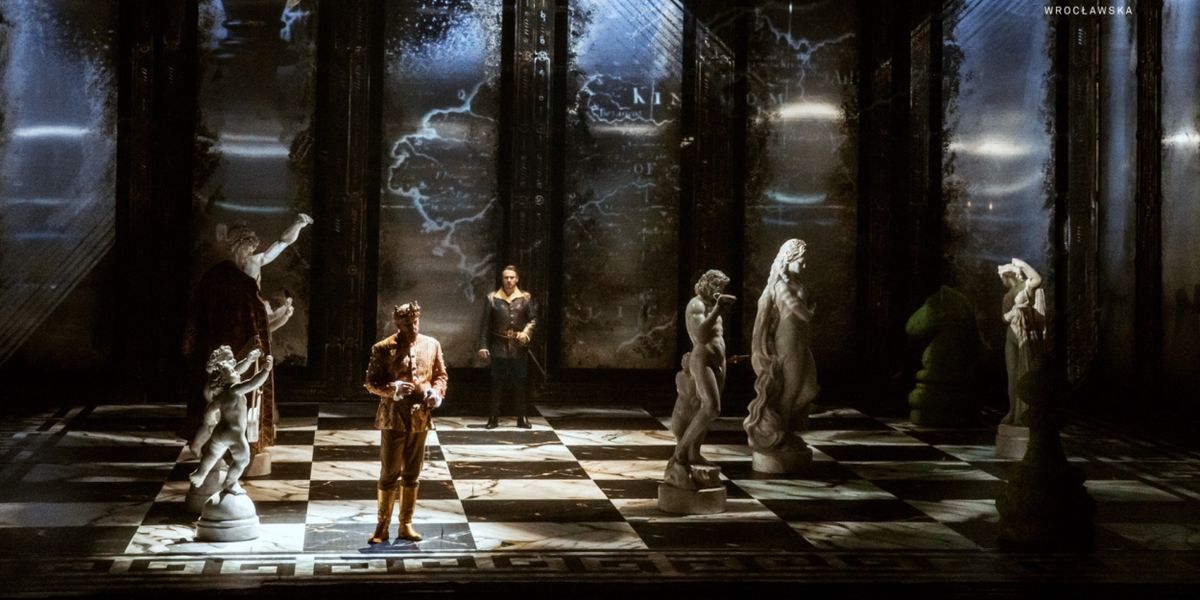
The opera Don Carlo, composed by Giuseppe Verdi and directed by Michał Znaniecki, is not just about stunning music, though it certainly delivers on that front, but also about a cohesive and engaging story in which the motif of chess plays a key role. Set in the 16th century, the plot weaves together political intrigue and personal drama. Don Carlo, after losing his beloved (instead of becoming his wife, she becomes his stepmother—not a happy ending), decides to oppose his father, King Philip II, leading to dramatic events unfolding in the shadow of the Spanish Inquisition.
The set design by Luigi Scoglio is nothing short of magical, filled with mystery and 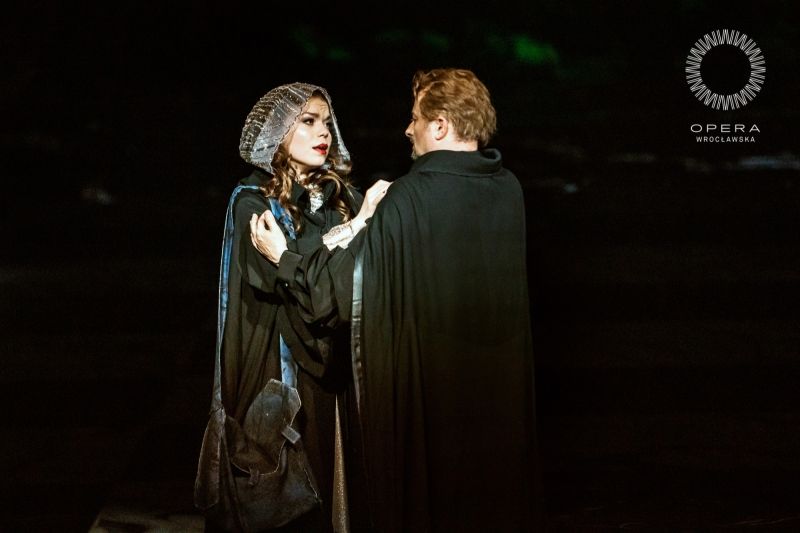 movement that keeps your eyes glued to the stage for the entire three-hour performance. Every element of the scenery dazzles, and the use of stage space is absolutely outstanding. The moving parts that rise, fall, and unfold are visually captivating, making it a feat to maintain the audience’s attention for such a long time. However, the half-transparent curtain that descended during the performance obscured too much, preventing me from seeing the actors up close, which I prefer. I know there was a purpose behind—I’m just saying: I want to see every wrinkle and sparkle in the eye. Don’t hide the actors from me! The initial animations felt a bit too modern and flat for my taste, not quite fitting the character of the production, but thankfully, they enhanced each subsequent moment.
My favorite moments are undoubtedly the Grand Inquisitor (Aleksander Teliga) playing chess for people’s lives — a scene filled with tension and fiery emotion. Picture this: people actually dying in flames when a chess pawn disappears from the game. Another remarkable moment is when the monks (Filip Rutkowski, Peter Erdei, Marcin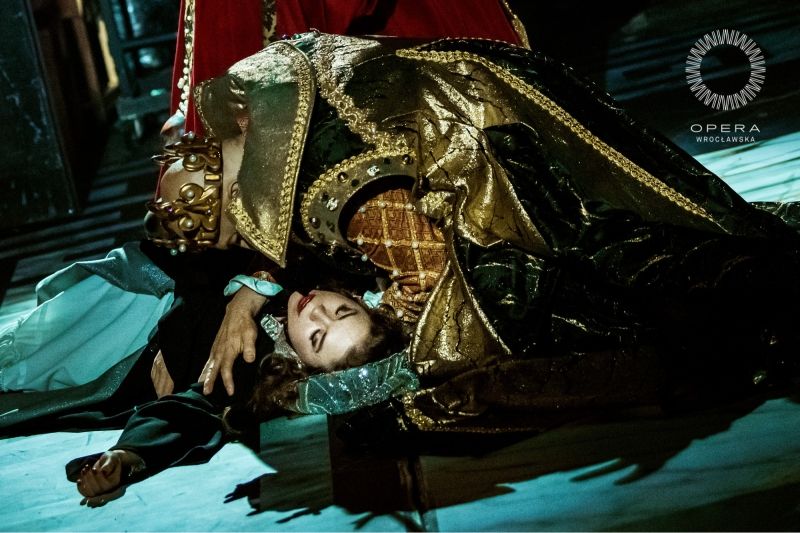 Grzywaczewski, Marek Klimczak, Adam Pacyno, Jerzy Szlachcic, and Michał Zborowski) sing from the audience, creating an atmosphere that was simply enchanting. Imagine the sound that surrounds you—like a magical forest singing instead of whispering in the wind, and it is very much alive. Next top moment: King Philip II (Rafał Siwek) starts to sing. As simple as that. His voice gripped my heart and refused to let go! The collective and choral scenes, thanks to the amazing choir, are so incredible that they left me saying “wow wow wow” in sheer delight!
I must admit, it felt a bit off that the age difference between Don Carlo and King Philip II was too small — they didn’t quite look like father and son (good for you, King Philip!). In this play, each character brings their own unique flair: King Philip II exudes strength and ruthlessness like a stormy sea, while Don Carlo (Norbert Ernst) swirls with emotion, reminiscent of a tempest. Rodrigo, the Marquis of Posa (Stanisław Kuflyuk), shines with charisma like a beacon, and the Grand Inquisitor intrigues the audience, lurking like a shadow in the night. Elżbieta de Valois (Olena Tokar) evokes feelings that touch the heart,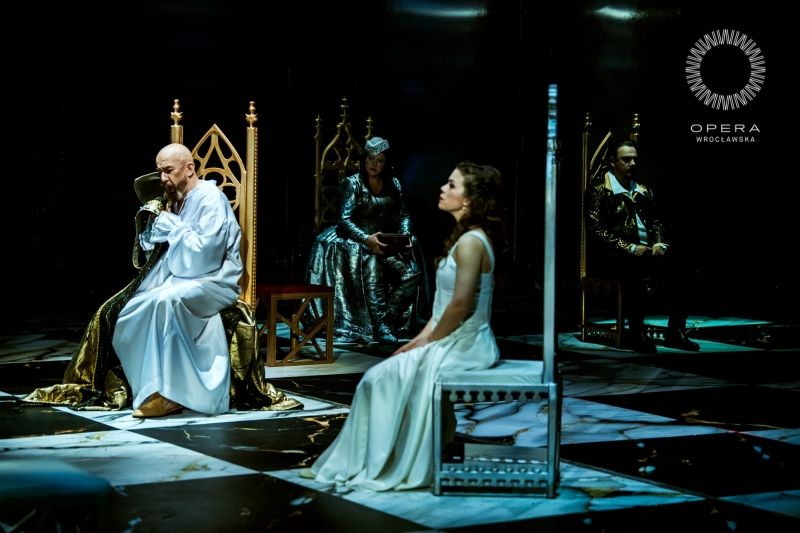 akin to a gentle breeze, whereas the Duchess of Eboli (Jadwiga Postrożna) captivates with her sensuality, much like a sultry summer evening.
I truly appreciate the coherence of this production. Michał Znaniecki served us a mix of Alice in Wonderland and Game of Thrones, spiced with chess. I love it! Don Carlo is not just an opera — it’s an emotional journey that proves opera can be captivating and full of life. So don’t be afraid to dive into this world — it’s sure to be an experience you’ll remember for a long time!
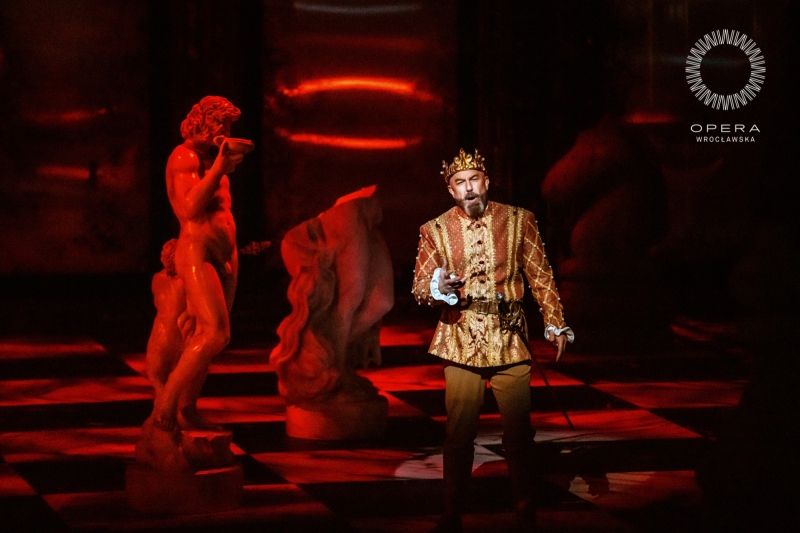
Photo: Karpati&Zarewicz
Otrzymuj wiadomości z Broadwayu na WhatsAppie
Otrzymuj najnowsze aktualności, wiadomości i ekskluzywne treści bezpośrednio w aplikacji.

Reader Reviews
To post a comment, you must register and login.