


Review: LET THE GOOD TIMES ROLL: A NEW ORLEANS GUMBO at The Phoenix Theatre Company
The production runs through September 7th at The Phoenix Theatre Company's Hormel Theatre .
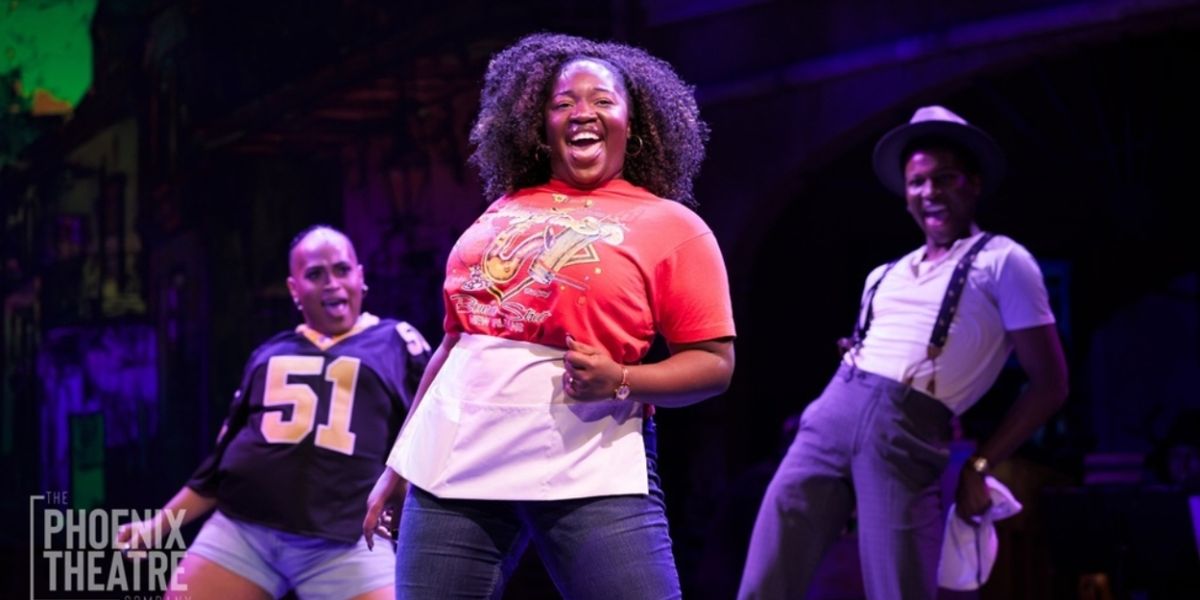
David Appleford, BroadwayWorld Guest Contributors rolls with a glowing review of The Phoenix Theatre Company’s production of LET THE GOOD TIMES ROLL: A NEW ORLEANS GUMBO.
LET THE GOOD TIMES ROLL is a vibrant, music-soaked love letter to a city that lives and breathes rhythm even in the face of heartbreak and hardship. First introduced in a staged reading at the 2024 Festival of New American Theatre, this new show is now premiering at The Phoenix Theatre Company's Hormel Theatre until September 7.
Subtitled A New Orleans Gumbo, the production is a certain kind of musical experience. It’s a woven patchwork of stories told through six characters, each navigating the highs and heartbreaks of a city that has seen more than its share of both. And if that sounds ambitious, it’s meant to.
Written and conceived by Jack Viertel, the show is a rich mixture of music and memory, filtered through characters who span generations, neighborhoods, and life experiences. There’s not much plot in the traditional sense, yet despite this, the evening feels satisfyingly full. That’s because LET THE GOOD TIMES ROLL understands something essential about theater: when emotion is paired with music that comes from somewhere deep, that’s more than enough to sustain an audience.
Directed and choreographed by Sara Edwards with a sense of movement that feels more like flow than staging, the show follows six characters, each from a different corner of the cultural mosaic that defines New Orleans as they trace a historic path, including the devastation of the Great Flood of 1927, described here as “Hell on earth,” and presented effectively by Dave Temby’s explosive, thunderous sound on a frighteningly darkened stage.
We meet Onyx (William Bailey), Captain (Scott Davidson), Wanda (Gina Guarino); L.D. (Tre Moore); Maretha (Miciah Lathan), and at the center, Liza Jane (Carmiña Monserrat) a young woman adrift in grief who finds herself gradually restored by the heartbeat of New Orleans, a place that seems to know instinctively how to cradle the wounded and set them dancing again.
Together, they form a kind of communal narrator, part Greek chorus, part block party. Each performer embodies their character so well, you feel that by the end of the production you’ve just made six new best friends. They speak directly to us and sometimes to each other, though often the deepest truths arrive through song. Writer Viertel wisely lets the music carry the soul of the piece, and it’s a memorable songbook he’s assembled.
Musically, LET THE GOOD TIMES ROLL is as rich and varied as its namesake gumbo suggests, performed by a rousing nine piece band that deserves its own standing ovation. The score, arranged and orchestrated by Sonny Paladino, moves effortlessly from Fats Domino’s I’m Walking, Huey “piano” Smith’s Rockin’ Pneumonia And The Boogie Woogie Flu, to Shirley Goodman and Leonard Lee’s title song, LET THE GOOD TIMES ROLL. Other names including Harry Connick Jr., Lyle Lovett, and Randy Newman all make their way into the mix, giving the evening a sense of musical density that transcends simple nostalgia. This playlist is a living, breathing jukebox of a city’s history. And if you question the absence of zydeco from the show’s musical tapestry, it’s not because it’s unimportant but because it’s not actually native to the city in the same way that jazz, brass band traditions, gospel, R&B, and funk are.
The show challenges as it envelops. And while some may wish for a little more bite, there’s no denying the flavor. Director and choreographer Edwards lets the performers guide us from one emotional beat to the next with a fluidity that suits the setting. The transitions aren’t always seamless. There are moments when the narrative feels more suggested than developed, but as with all good musicals, the score often fills in the emotional blanks with more eloquence than dialogue ever could.
As for technical credits, the production is performed on an effectively detailed set design by Douglas Clarke, where you can practically smell the atmospheric Louisiana environment. A constantly shifting back screen projection by Anthony Churchill adds its own flavor to the surroundings, while Charlie Morrison lights the stage using practically every color in the rainbow. The result is a visual feast, further enhanced by sparkling costumes from Adriana Diaz and Alita Lopez’s ever-changing hair and makeup design.
The release of a concept album alongside the premiere, produced by Paladino, hints at ambitions way beyond the Phoenix stage. There’s a sense that this production is a testing ground, a first draft of something potentially larger, and perhaps more daring down the line, depending on how local Phoenix theatre audiences respond.
With a current running time of 90 minutes with no intermission, it may still be finding its shape. In truth, it feels like the first step of something bound for more regional stages, or even off-Broadway to The Great White Way itself. But even in its present, raw form, LET THE GOOD TIMES ROLL: A New Orleans Gumbo is an undeniable success. It doesn’t try to sell us New Orleans as postcard nostalgia. It doesn’t paint over the pain or the politics. What it does instead is more generous; it lets the city speak in its own voice. Sometimes that voice is rough. Sometimes it’s jubilant. And that’s the real triumph of this show.
As presented here by The Phoenix Theatre Company, Jack Viertel’s concept and its execution creates a celebration of a city, its culture, and its music that, as the show’s hugely appealing Carmiña Monserrat as Liza Jane discovers, reaches out as a lifeline. It also reminds us why we still turn to musical theater. It’s to feel something, to be moved by stories, especially ones that are not just told, but sung.
The Phoenix Theatre Company -- www.phoenixtheatre.com -- Box office: 602-254-2151 -- 1825 N. Central Avenue, Phoenix, AZ
Photo credit to Brennen Russell: William Bailey, Miciah Lathan, Tre Moore
|
A Doll's House Part 2 The Scoundrel and Scamp Theatre (4/15-5/02) |
|
A Tribute to Woodstock 1969: The Music of Janis Joplin, Joe Cocker, The Band, Jefferson Airplane and more Hale Centre Theatre (8/14-8/29) |
|
The Comedy of Errors By William Shakespeare Adapted by Stephen Frankenfield Live Theatre Workshop (9/18-10/11) |
|
Campbell, Rogers, and Denver: A Tribute Hale Centre Theatre (11/06-11/21) |
|
British Invasion: The Who, The Kinks, Herman's Hermits, The Moody Blues, The Zombies, The Animals and more Hale Centre Theatre (10/09-10/24) |
|
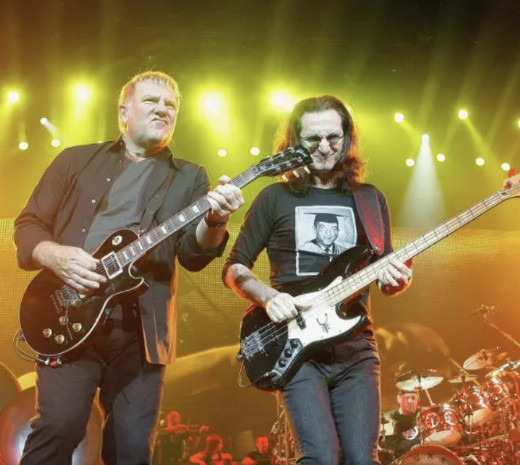
Rush Desert Diamond Arena (12/01-12/01) |
|
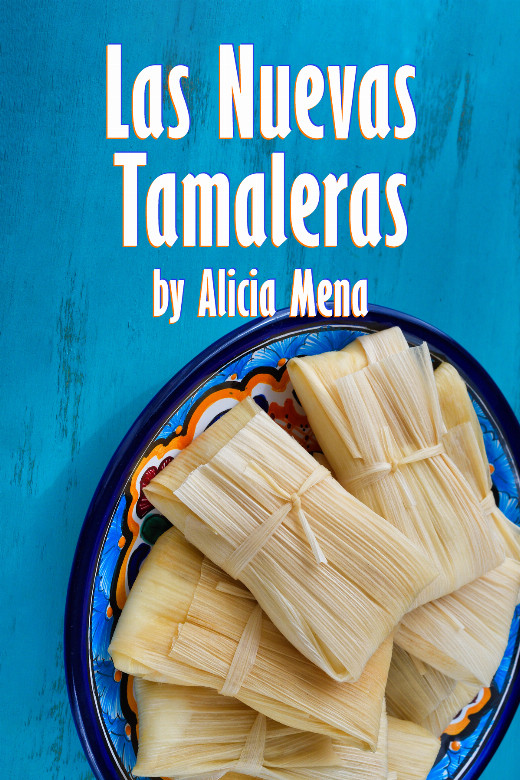
Staged Reading of Las Nuevas Tamaleras By Alicia Mena Live Theatre Workshop (9/05-9/06) |

|
Hi-Fi Holiday Concert Hale Centre Theatre (12/04-12/19) |
|
The Little Mermaid Hale Centre Theatre (7/03-8/15) |
|
Murder For Two The Phoenix Theatre Company (8/26-9/20) |
Reader Reviews
To post a comment, you must register and login.