Interview: CHAMBER MAGIC Star Steve Cohen on Manhattan’s Magical History and the Art of Wonder
The “Millionaires’ Magician” reveals the secrets to his longevity after two decades of intimate performances at the Lotte New York Palace.
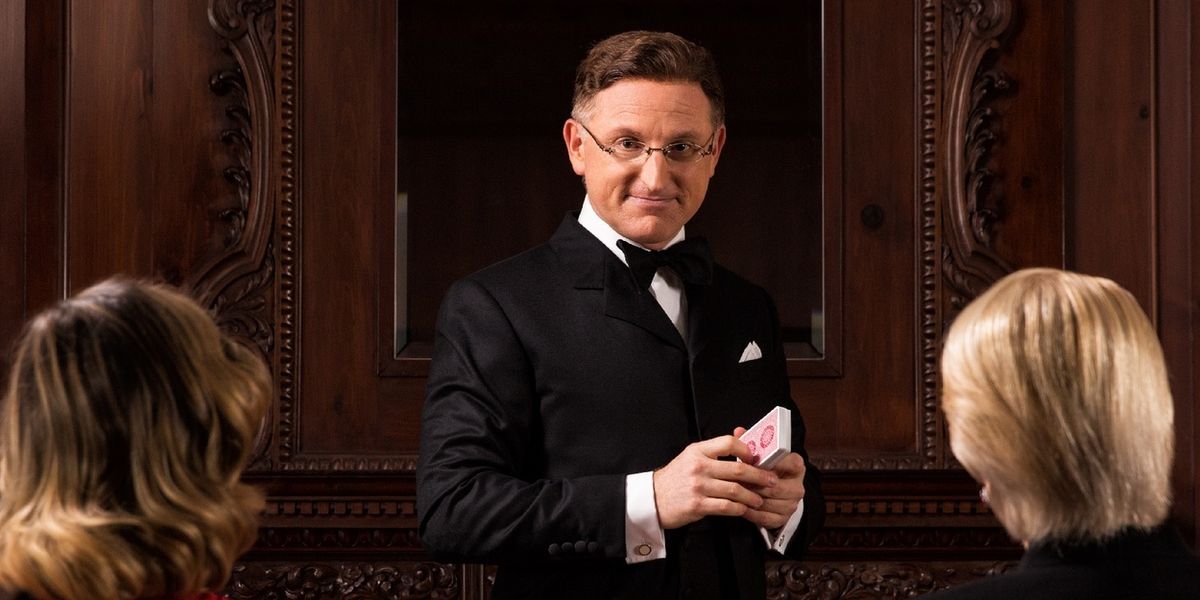
Manhattan is full of secrets. Beyond the marquees of midtown and the excitement of the theatre district lies a city filled with possibilities; one made of hidden rooms, secret speakeasies, and the hum of old-world artistry still at work. From burlesque to jazz to old school variety shows, the past and present of New York City are littered with skilled artists delivering throwback artforms to excited audiences. In one such room, buried deep inside the Lotte New York Palace hotel, audiences are invited to step back in time with magician Steve Cohen.
Known as “the Millionaires’ Magician,” Cohen has been performing his one-man magic show, Chamber Magic, for over two decades, reviving traditions that flourished in Manhattan’s drawing rooms and parlors more than a century ago. Cohen blends sleight of hand, storytelling, and wit to conjure a kind of wonder that feels rare in the modern city. The ceilings are high, the lamps glow low, and the space, one of the first rooms in Manhattan to sport electricity (and wired by Thomas Edison himself!), feels suspended somewhere between past and present.
That balance of elegance and endurance defines him both on and off stage. When he's not wowing crowds with his illusions, Cohen is also a marathon runner, and the discipline that carries him through 26.2 miles is the same that sustains his precision across thousands of performances.
Cohen’s path to this singular career began far from the Gilded Age grandeur of the Palace. Taught the tricks of the trade by his uncle, Steve arrived in New York in the early aughts with no act, no connections, and a dream to turn an inherited craft into a career. Today, his intimate performances have drawn Broadway and Hollywood icons including Al Hirschfeld, Vanessa Williams, Alex Lacamoire, Renée Zellweger, John Williams, Guillermo Del Toro, Martha Stewart, and even astronaut Buzz Aldrin and magic greats like David Copperfield.
Today, he stands as one of the few artists carrying forward a lineage that stretches from the Golden Age of magicians like Houdini and Malini to the present day; a history soon to be celebrated by the New York Public Library for the Performing Arts in its 2026 exhibition The Mystery and Wonder: A Legacy of Golden Age Magicians in New York City.
In this conversation, Cohen reflects on his enduring show, the history that inspires it, and the fine balance between mastery and mystery.
You recently completed the New York City marathon. Do you find overlap between marathon training and the discipline it takes to perform?
Steve Cohen: I do. It’s helped in both directions. In a marathon, you conserve energy for the final stretch. Inexperienced runners go out full blast on adrenaline, then they’re depleted at the end. As I’ve done more marathons, I’ve become a better performer because I pace myself for the last show of the week. Before I was a runner, that last show was my least energetic. Now that I pace better, the final show is a piece of cake because I’ve conserved enough energy. And in the opposite direction: as a performer, when I’m running, I think, “This is the buildup; this is tying them into a knot; this is the finish.” There’s that old vaudeville saying: hit ’em over the head, tie ’em in a knot, and get off. I think about that running: have enough energy at the end so you’re getting off on a high, not overstaying until the audience wishes it ended five minutes earlier.
Your show feels uniquely theatrical, almost like a one-man show with magic. Outside of the tricks themselves, you use storytelling, tone, and pacing to great effect. Do you have a history in theatre? Where does that part come from?
In high school and my freshman year of college, I was in the theater club. I appeared on stage in several productions, two Shakespeare plays, Marat/Sade in college, several musicals, and student-written musicals. I knew what it was like to stand on stage and be part of a longer narrative. Creating that myself came from working with my collaborator, Mark Levy. He’s a magician but also an excellent writer. Mark has a great sense of rhythm; how to control language, how to create phrasing that captures your imagination and makes you wonder after the show: was he telling the truth? Why did we feel this way? With my technical expertise and Mark’s language expertise, we put together a unique amalgam.
I agree. And it's not 'flash and bang' showmanship in the usual sense of the word. It’s straightforward, intriguing, mysterious, and not in any way manipulative or suggestive. It’s very elegant.
You know Siegfried & Roy, the Mirage tiger show. After Roy was injured by the tiger, Siegfried came to my show. First time meeting him. I was thrilled, I had a Siegfried & Roy poster on my wall as a boy. A hero. After the show he said, “I’m so jealous of you.” I thought, what are you talking about? This was when I was at the Waldorf Astoria, where I performed for many years. He said, “You put on a show you can carry in a suitcase, and people were more impressed than when they saw our show with three tractor trailers of equipment.”
That meant a lot coming from someone I idolized. Then David Copperfield came to see me; we’ve since become friends. He said, “You can’t write a show like you just put on. A show like this only comes from listening to the audience after every show, evaluating what worked and what didn’t, and then making a better show next time.” That meant a great deal. He’s right. Mark and I didn’t sit down to script exact verbiage and rhythm. It came from post-show surveys and talking to people about what worked. I started the show in 2000. If you don’t pay attention to the audience by now, it would have fallen apart. The law of very large numbers: something’s going to work if you do it often enough, and listen.
There’s also an element of feeling you’ve stepped back in time. You did first it at the Waldorf Astoria and now at the Lotte New York Palace. Do you feel, performing in these history-steeped spaces, a sense of continuity, being part of a lineage of magicians and entertainers who may have worked in those rooms?
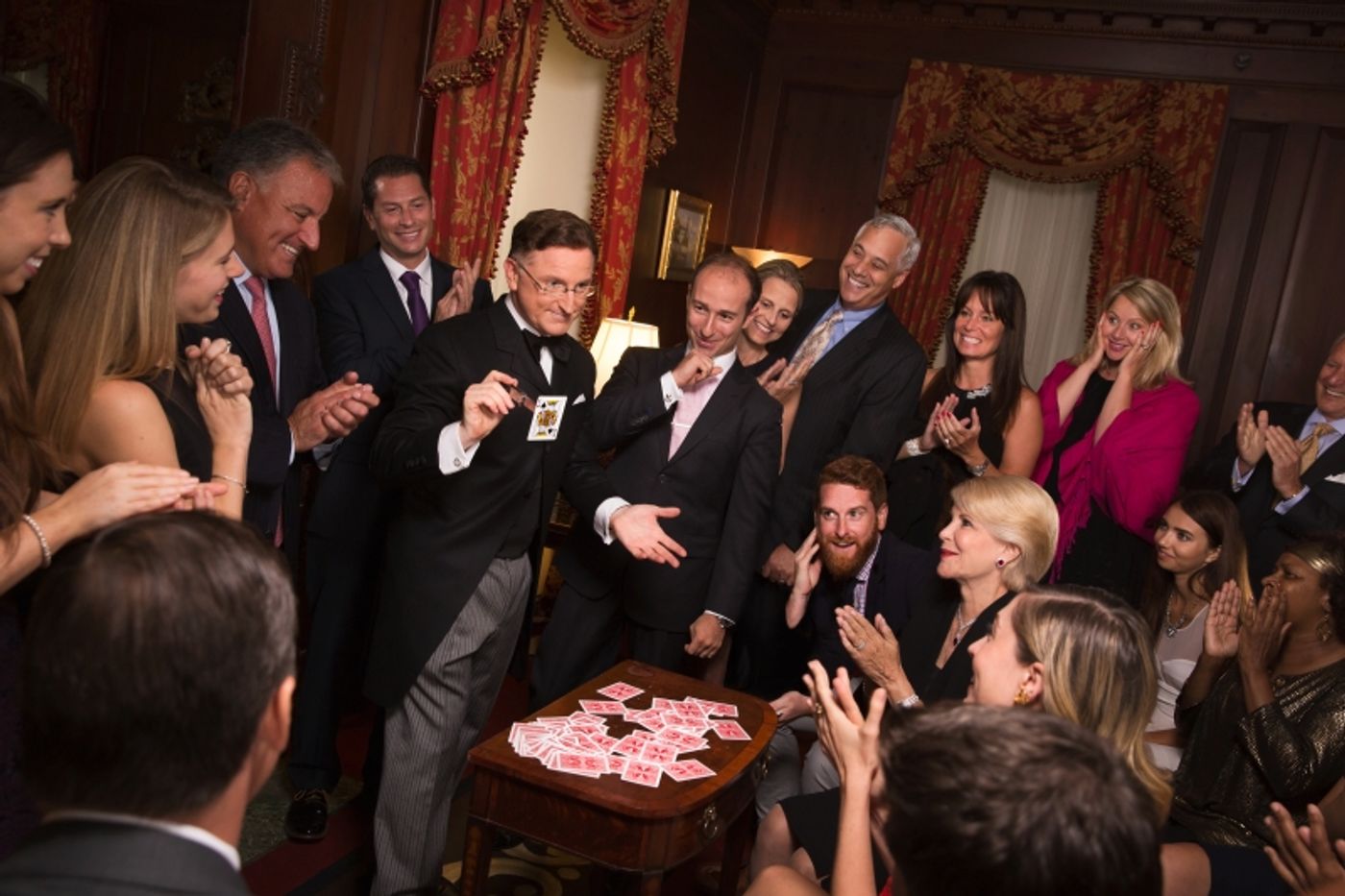
Yes. Making the show feel like a step back in time, a time machine, was a design parameter from day one. I wanted to recreate parlor entertainment popular in the late 19th century. I thought if it worked then, it would work now. The only difference is people have screens in their pockets and are easily distractible. Otherwise, we’re the same humans we were 100–150 years ago. As proof: the name Chamber Magic is based on chamber music, a small ensemble in a confined space so you can enjoy the intricacies of the artistry. I wanted to do that with magic, intimate, close-up style magic you might’ve seen 100–150 years ago, happening now. I only pick hotels or locations that match that criteria. I’m bringing people in for an experience, stepping back in time. I’m the host or guide into that mind space.
Where did your interest in historical magic come from?
There was a time as a teenager and in my early/mid-twenties when I didn’t care about the history. I wanted the latest sleight of hand and cutting-edge techniques. I traveled to magic conventions and met peers who showed me what they were working on. We rose together as a cohort. There were older magicians standing off in a corner with magic posters and 1800s books. They seemed to know more than us young Turks. I gravitated to them: “What are you talking about?” They were discussing props they’d collected, posters from auctions, memorabilia like business cards of magicians they were tracking, The Great Lafayette, Max Malini, Chung Ling Soo. I wondered: Who are these people? These older magicians seemed to guard deeper secrets and preserve them. I thought I could learn from them. I started reading and collecting magic books, now I have 300–400 in my apartment, dating back to the mid-1800s. Some pages are so delicate they’re crumbling; you handle them with gloves or the secrets crumble.
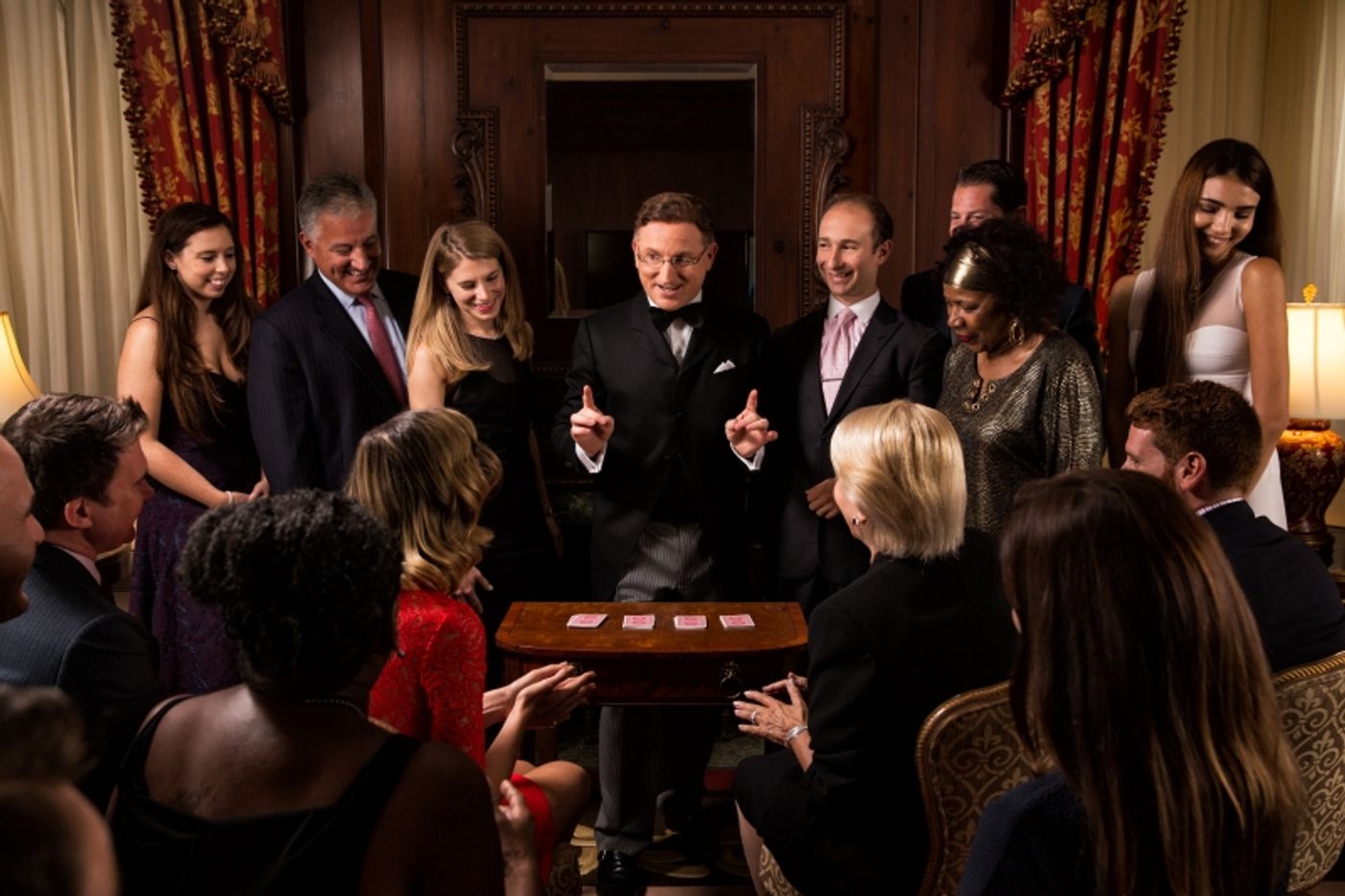
The history opened itself up as I read. I realized secrets of yesteryear would play today if you don’t use antiquated language. I didn’t want to pretend we’re at a Renaissance fair, speaking Old English. I wanted to take old tricks that baffled people 100 years ago and spruce them up, make them palatable for modern audiences. Like classical music: we listen to orchestras play pieces written 300–400 years ago. Depending on the artistry, it feels modern and moving. That was the proof of concept that it might work in magic too. Take old pieces from old books, add modern techniques and storylines, make them fun. I joke around a lot. Add humor that’s not corny, magicians often default to dad jokes. I prefer situation-defined humor. By the end, people are rolling with laughter, but not because I’m telling jokes. That combination, old magic, modern storytelling and sensibility, came together.
You recently did a benefit performance for the New York Public Library for the Performing Arts in support of an upcoming historical exhibition of magic. Tell me more about that.
The name is The Mystery and Wonder, A Legacy of Golden Age Magicians in New York City. It’s great for magicians and eye-opening for non-magicians. You see how, even though it’s a quirky subset of entertainment, there’s so much thought that goes into creating an illusion. Magicians don’t let anything slide as “good enough,” because the human eye and brain can be tricked, but everything has to be orderly so it feels right, not “off.” At this exhibition, the curators worked to make it something the public will appreciate. There are three rooms. The first is a collection from the founder of the Society of American Magicians, Dr. Saram Ellison. He was one of the biggest collectors of magic literature in the early 1900s, with scrapbook after scrapbook of every instance of magicians in the media. The second room recreates a magic shop called Martinka. The third room has posters and memorabilia from Houdini, Howard Thurston, Harry Blackstone, Harry Kellar, and others who came through New York. I like to think I’m carrying on that tradition. I’m probably one of the only magicians focusing on recreating the Golden Age of magic. That’s one reason I did the benefit.
2026 is Houdini’s death centennial: October 31, 1926, 100 years. So there will be a substantial amount of Houdini memorabilia, plus many other magicians, Alexander Herrmann, Max Malini (my hero), The Great Rouclere, hundreds of smaller names, people you may not have heard of but who were famous in their day. Everything is in great condition and going on display so the public can appreciate how magic has been a throughline, a subset of theater in New York over the years.
I noticed repeat attenders at the show. How do you keep things fresh? What is your process of developing and adding new tricks to the show?
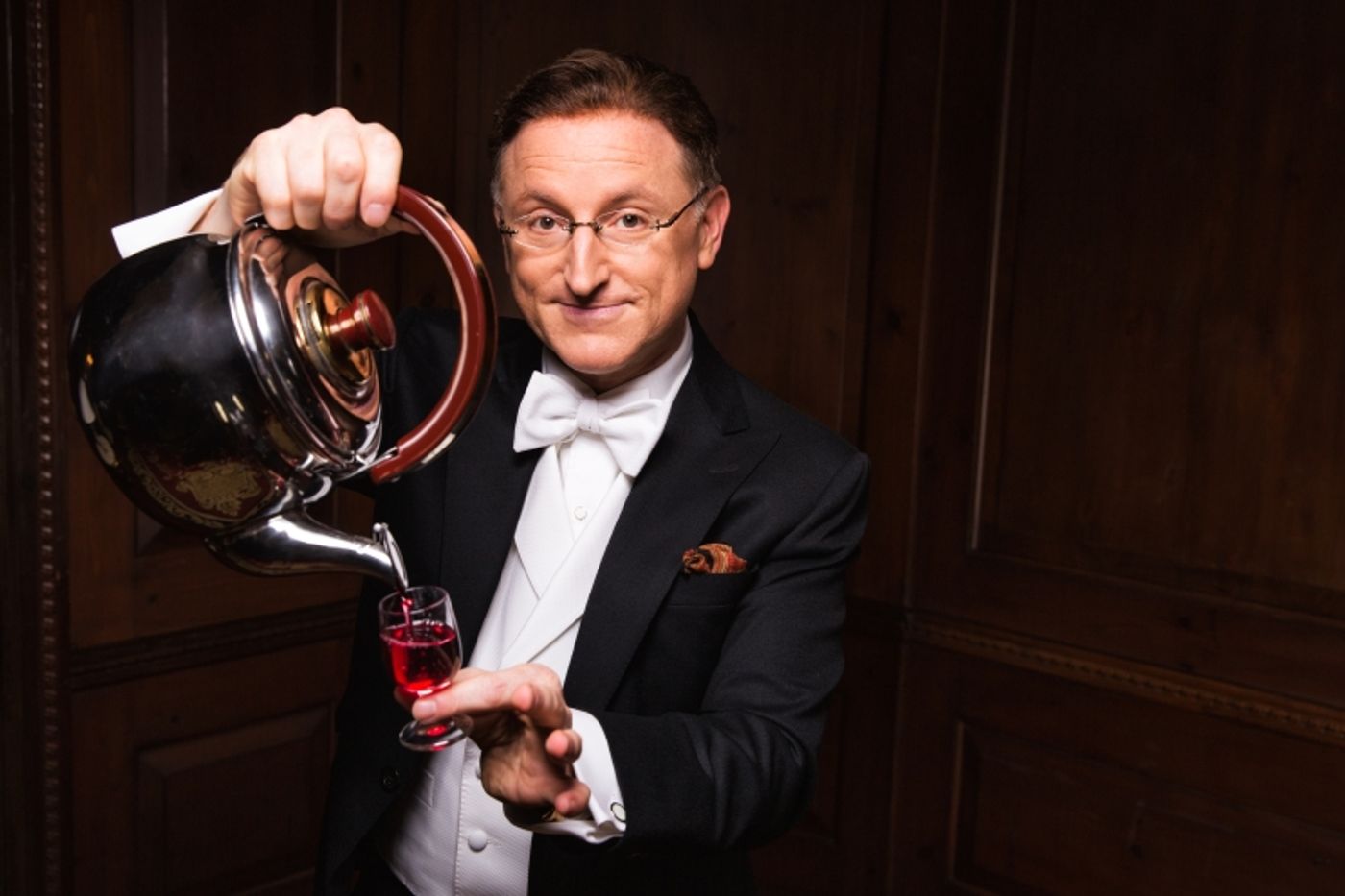
To keep people, and myself, interested, I’m always thinking about new material. When something is ready, I put it in. No set schedule. When it’s good enough, it enters the show. I usually have to pull something out, which is hard, these routines are like my children. How I come up with ideas: I research using a database from the Conjuring Arts Research Center, an online database called Ask Alexander. Members can access thousands, maybe millions, of pages of scanned, searchable PDFs of books and magazines. I can type a search term and get hundreds of instances in the literature. I take a piece here, a concept there, eliminate weaknesses, and sometimes end up with something genuinely new that would fool other magicians. Sometimes taking something away makes a trick better. Ultimately, the only way to learn is trial by fire: throw a new routine into the show, see what worked and didn’t, then tweak with Mark Levy. I’ve also hired other magicians as consultants.
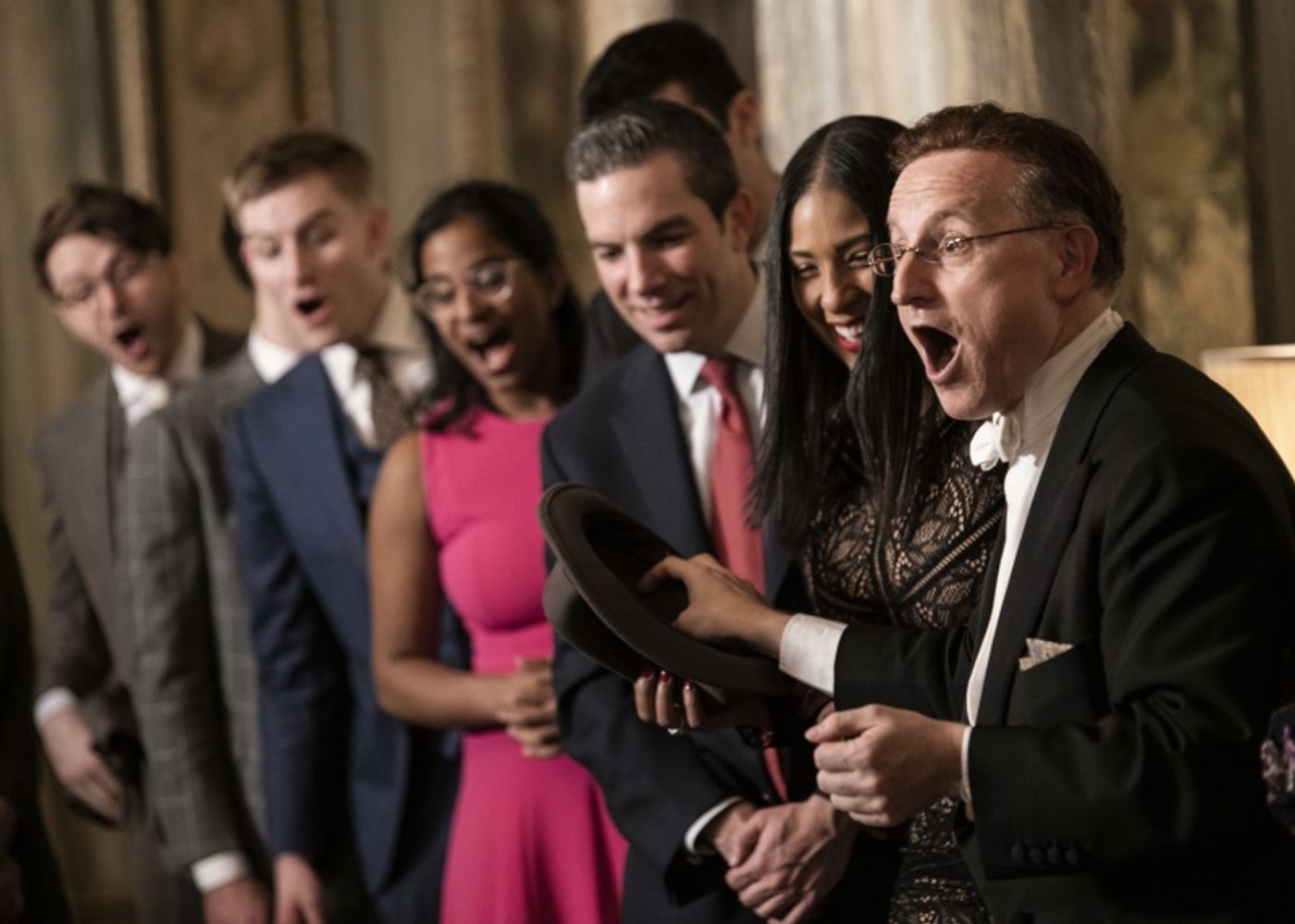
To create a routine, number one: it has to be fooling, fool you badly. You can go to a comedy show and laugh, a music performance and tap your toe; only at a magic show will you feel wonder. That’s my driving force: people walk away with a lingering feeling of wonder. Laughing and toe-tapping are moments in time; you won’t be doing that a week later. But you may still be wondering about what you saw a week, or a year, later. That said, it also has to be entertaining. My teacher, Harry Lorayne, once told me, “I don’t care if you can flap your wings and fly around the room; if you can’t entertain the audience, they’re not going to remember you.” Magic has to be powerful, housed in a way that’s enjoyable, so people don’t feel like they were hit over the head. Magic is a threatening art form. It says: what you believed is possible has limits; there’s a lot more that’s possible than you knew. I’m telling this to jaded New Yorkers, very wealthy, smart, intellectually sound. For me to stand there and say, “Nope, I know more than you; I can prove you’re wrong,” is threatening, for me and for the audience. That’s why what Harry said matters: if the audience isn’t entertained, they won’t care what you showed them.
You accomplish all three, fooling, entertainment, and wonder. My guest and I left talking about it. We're already sending people to see you. The word of mouth is strong.
Can I tell you another story? A lady came to the show a couple of years back and said when she was 11, she came to Chamber Magic. Twenty years later, at 31, she heard the show was still running. She said, “I didn’t know that was actually real. I thought I’d dreamed it.” She came back to prove to herself it wasn’t a dream. She said it was even better than she remembered.
That's fantastic. It’s like Wonderland or Oz or something.
The way I like to think of it is the mathematical word “asymptote.” You probably remember from calculus: a curve approaches a limit but never quite gets there. I like to think of a magic show as an asymptote. I’m trying to approach real magic. If there were real magic, it should look as close as possible to that limit. Some magicians stop earlier, “good enough.” It’s not good enough. Keep going until it’s skimming the surface where you feel like you’re living a dream, awake but dreaming.