Acclaimed musical artist and author Rita Indiana joins us to discuss her supernatural noir novel Asmodeus, newly translated by Achy Obejas. She will be in conversation with fellow writer and artist Gerardo Sámano Córdova, and also perform "Rimas de Asmodeo" from the book with special musical guest, Yasser Tejeda. ABOUT OUR SPEAKERS Rita Indiana is a Dominican-born writer, composer, and Global Distinguished Professor at New York University. She has written six novels including Tentacle, winner of the Grand Prize of the Association of Caribbean Writers. Her work has been translated into multiple languages. She is also a driving force in experimental Caribbean popular music. Her writing has appeared in The Boston Globe, Granta, El País, and VICE. She lives in New York City. Gerardo Sámano Córdova is a writer and artist from Mexico City living in Brooklyn. He is the author of the bestselling and critically acclaimed novel, Monstrilio, and the forthcoming novel Imps! He is currently Writer in Residence at Fordham University. Gerardo has also been known to draw little creatures. With Special Musical Guest Yasser Tejeda, award-winning Dominican composer, guitarist, vocalist, actor, and producer, His debut album, Mesclanza, was dubbed one of the 100 essential recordings of Dominican music by the Dominican National Association of Art Writers (Acroarte). Since then, Yasser's music has captivated audiences globally.
New York Public Library - Stephen A. Schwarzman Building
Attraction · Midtown
Location
476 5th Ave, New York, NY 10018 · Get Directions
New York Public Library - Stephen A. Schwarzman Building Videos
Curious about publishing? Get the tools and insights you need to share your work with the world. Are you interested in publishing a book but don't know where to start? Looking for an agent but not sure how to write a query letter? Trying to self-publish your novel? Wanting to make connections with other writers? What You’ll See on the Live Stream: Keynote Presentations: Inspiring talks and high-level industry insights from featured publishing professionals. Expert Panel Discussions: Deep-dive conversations with authors, editors, and literary agents on querying, traditional vs. self-publishing, build-your-author-brand strategies, and navigating today’s literary landscape. Please note: This live stream covers main stage keynotes and panel discussions only. On-site breakout sessions, interactive workshops, and networking rooms are exclusive to in-person attendees at the Bronx Library Center.
A bodega is much more than a neighborhood grocery store—it's a lifeline to community and culture. In Amaris Castillo's brilliant debut book, Bodega Stories, she takes readers inside Orlando Latin Market, a bodega owned and operated by her parents in St. Petersburg, Florida, to reveal a thriving local hub that bridges generations, languages, and traditions. Meet the regulars: Castillo's glamorous Tía Margarita, who has worked part-time at the bodega for years; longtime cook Alberto, who arrives early to prepare the store's rice, beans, empanadas, and croquetas; Chico, the owner of the barbershop next door; and Esther, who visits after church every Sunday for her crispy chicharrones. Through captivating and charming true stories of visitors who come looking for products from Colombia, El Salvador, Honduras, Venezuela, Cuba, and many other countries, readers get a glimpse into the lives of employees and customers as they navigate matters of immigration, love, history, food, and identity. Interwoven are snapshots of daily life, like a bulletin board outside the store where local residents post apartments for rent, messages through the bodega's Facebook page asking for hard-to-find items, and photos from the past and present. Including Castillo's own family's story from the Dominican Republic to New York to Florida, Bodega Stories is a portrait of finding home—between the cultures we inherit and the ones we embrace.
Join The New York Public Library and Limelight Poetry at the Stavros Niarchos Foundation Library (SNFL) for a World Poetry Salon event! Experience words and music from around the globe at the World Poetry Salon, a new series presented in partnership with Limelight Poetry, a local nonprofit dedicated to promoting world poetry. Each event features readings by a celebrated poet set to live music by a musician of the same cultural background. This salon will feature a reading by poet Forrest Gander accompanied by dancers Zelda and Georgia B. Smith. A printout will be available for attendees to follow along with Gander's poetry during the reading. Following the reading, Gander will be interviewed by event host Patricio Ferrari. Patricio Ferrari (polyglot poet, translator, editor) was born in Buenos Aires and left home at sixteen, when he began a lifelong journey across continents and languages. He has since shaped a multilingual poetics that explores belonging, displacement, and the in-between. In 2025, he was awarded the Fence Modern Poets Series Prize for Mud Songs, the first volume of Elsehere, a trilogy charting how each language molds and reveals a different facet of the self—what he calls heterophony, the process of self- othering through an adopted tongue. The author of twenty books of his own and as many books of translations, Forrest Gander was born in the Mojave Desert. He has degrees in geology and literature. Awarded the Pulitzer Prize and the Best Translated Book Award, Gander has been a signal voice for environmental poetics. His latest books are Mojave Ghost and the translation, Even Time Bleeds: Selected Poems of Jeannette L. Clariond. A novel, The Weight of a Frozen Moment and a selected poems, Dune Lines, are forthcoming in April 2027. Georgia b. Smith is an interdisciplinary artist with a background in dance and architectural fabrication. She was a former member of the dance company Leimay, premiering "Borders" at Brooklyn Academy of Music. Georgia b.'s “Polite Structures,” a performance in which dancers are augmented with custom prosthetics, has been staged in Berlin, Prague, and Amsterdam. She received her MFA from the University of Michigan. Since then her work has been exhibited by the Flint Institute of Arts in Michigan, Gallery 495 in NYC, Under the Roof in London, Kentucky School of Art and Design, and the University of Tokyo in Japan among other places. In 2024 Georgia b. developed a collaborative body of kinetic light -works with designer Brecht Wright Gander exhibited at Design Miami. Georgia b. and Zelda Smith’s collaborative work won “Best in Show” at Artificial Horizons, a robotic-art show in Detroit. Georgia b Smith was a Visiting Artist at Lehigh University as well as SUNY Oneonta in 2025. There she began to develop her latest collaboration with Zelda Smith, Uncanny Bodies. Georgia b Smith was on the short list for the Creative Capital grant this past cycle. Raised in the rural northeast, Zelda Smith comes from long sweeping stretches of rich black farmland and bare uncovered earth. A place tied to the notion of turnover and cycles of resilience stemming from and yielding back into the soil. Perhaps it is not entirely unexpected, then, that the earth has come to be one of the signature materials of her work. She received my BFA in 2012 from Alfred University and my MFA in 2018 from the University of Colorado Boulder, where she concentrated in temporal sculpture. In the in-between, she spent three years at the Cal-Earth Institute, training to make sustainable housing and earth architecture. Most recently, she has been a visiting artist at Lehigh University with her collaborator, Georgia b Smith. Together, they co-taught and developed a soft robotics course: Introduction to Wearable Soft Robotics. They were both Artist is Residence at SUNY Oneonta and were on the creative capital short list.
Join us for a night of art, music, and inspiration, with curator of The Met's Musical Bodies exhibit, E. Bradley Strauchen-Scherer, in conversation with cultural critic Corinna da Fonseca-Wollheim. Together, we will learn how music is intrinsic to the human experience, and share in our collective drive towards harmony. ABOUT OUR SPEAKERS Dr. Bradley Strauchen-Scherer is Curator in the Department of Musical Instruments at the Metropolitan Museum of Art, where she led the recent renovation and reinterpretation of the five permanent music galleries. Her exhibition work, publications, and teaching explore the intersections between music, instruments, art, and society. Additional research interests include historical performance practice, history of collecting, and nineteenth-century concert life. Before moving to New York, Bradley was Deputy Keeper of Musical Instruments at the Horniman Museum in London and lecturer in history of performance practice at Goldsmith’s College, University of London. She received her PhD from the University of Oxford and is an Associate of the Royal Academy of Music. Corinna da Fonseca-Wollheim is a cultural critic and audience whisperer dedicated to the art of listening. Her articles on music, books and poetry have appeared in publications including the Atlantic, the New York Times, and the Wall Street Journal. In 2019 she founded Beginner’s Ear, a listening program exploring the intersection of mindfulness and sound. Over the following five years, she presented her unique brand of meditation concerts in spaces ranging from Lincoln Center to a nature preserve and a federal prison. In print and in person, she is passionate about demystifying art and unlocking the wisdom and beauty of music.
More in Midtown
More Attractions
New York Public Library - Stephen A. Schwarzman Building News
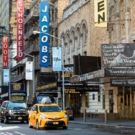
How to Get to Your Broadway Show: Transportation Tips for NYC Visitors
New York City, sprawled over 300 square miles and five boroughs, can be difficult to navigate for first-timers, but that doesn't mean that your trip to the theatre district need be a complicated one. Below, we're breaking down transportation options that will get you to your show in time for curtain!
New York Public Library Discussion with Curator and Artists of 'The Artist's Museum' Now on View at ICA/Boston
On the occasion of the publication of the catalogue accompanying The Artist's Museum, the exhibition currently on view at the Institute of Contemporary Art/Boston (ICA), the New York Public Library's An Art Book program presents artists Carol Bove, Anna Craycroft, and Sara VanDerBeek in conversation with Dan Byers, ICA's Mannion Family Senior Curator. The free public program takes place on Wednesday, December 14, in the Library's Celeste Auditorium at Fifth Avenue at 42nd Street, at 6:00 pm.
Theatre for a New Audience Teams with New York Public Library for 'FIRST FOLIO' Event
Theatre for a New Audience and The New York Public Library will mark the 400th anniversary of William Shakespeare's death with a viewing of a First Folio followed by a conversation among scholars and conservators on the Folio's innovative origins, its history as a wildly coveted (and carefully conserved) artifact, and its continued role in the robust afterlife of Shakespeare.
Theatre for a New Audience Teams with New York Public Library for 'FIRST FOLIO' Event
Theatre for a New Audience and The New York Public Library will mark the 400th anniversary of William Shakespeare's death with a viewing of a First Folio followed by a conversation among scholars and conservators on the Folio's innovative origins, its history as a wildly coveted (and carefully conserved) artifact, and its continued role in the robust afterlife of Shakespeare.
Helen Mirren Talks Shakespeare's Legacy at LIVE from the NYPL Tonight
Going back to her start with the Royal Shakespeare Company, the career of acclaimed actress Helen Mirren has been punctuated by the works of William Shakespeare. Now, to help mark the 400th anniversary of Shakespeare's death, Mirren comes to LIVE from the NYPL to reflect on the legacy of the prolific playwright.
Helen Mirren to Talk Shakespeare's Legacy at LIVE from the NYPL
Going back to her start with the Royal Shakespeare Company, the career of acclaimed actress Helen Mirren has been punctuated by the works of William Shakespeare. Now, to help mark the 400th anniversary of Shakespeare's death, Mirren comes to LIVE from the NYPL to reflect on the legacy of the prolific playwright.
Onassis Cultural Center NY Kicks Off Fall 2013 Cultural Series Today
Public dialogues led by the noted philosopher and author Simon Critchley, a new series; a tribute to celebrated filmmaker Costa-Gavras launching new conversation series 'Profiles' hosted by Paul Holdengraber; a discussion about the contest in today's world between tyranny and freedom; and a concert pairing prominent U.S. and Greek composers of the same generation, Giorgos Koumendakis and Steven Mackey, will be among the programs that the Onassis Cultural Center NY will offer in its Fall 2013 Cultural Series.
Onassis Cultural Center NY Announces Fall 2013 Cultural Series
Public dialogues led by the noted philosopher and author Simon Critchley, a new series; a tribute to celebrated filmmaker Costa-Gavras launching new conversation series 'Profiles' hosted by Paul Holdengraber; a discussion about the contest in today's world between tyranny and freedom; and a concert pairing prominent U.S. and Greek composers of the same generation, Giorgos Koumendakis and Steven Mackey, will be among the programs that the Onassis Cultural Center NY will offer in its Fall 2013 Cultural Series.
New York Public Library - Stephen A. Schwarzman Building Frequently Asked Questions
- What are the closest subway stops to New York Public Library - Stephen A. Schwarzman Building?
-
The closest subway stops to the New York Public Library - Stephen A. Schwarzman Building at 476 5th Ave are:
1. Bryant Park Station: This station is served by the B, D, F, and M trains. It is located just a short walk from the library, making it a convenient option.
2. 42nd Street - Grand Central Station: This station is served by the 4, 5, 6, 7, and S trains. From here, you can take a pleasant walk along 42nd Street to reach the library.
As for recommendations, visiting the New York Public Library is a must for any book lover or history enthusiast. The iconic building itself is a sight to behold, and the library houses an impressive collection of books, manuscripts, and artifacts. Be sure to check out the Rose Main Reading Room, which is a stunning space to study or simply admire.
While you're in the area, I recommend exploring Bryant Park, which is right behind the library. It's a beautiful park with lush greenery, a carousel, and plenty of seating areas. In the winter, you can also enjoy ice skating on the park's rink.
For subway updates and service changes, you can visit the official website of the Metropolitan Transportation Authority (MTA) at www.mta.info. They provide real-time updates on subway service and any planned maintenance or delays.
- What's the best way to get to New York Public Library - Stephen A. Schwarzman Building by bus?
-
The closest NYC bus stops to the New York Public Library - Stephen A. Schwarzman Building at 476 5th Ave are:
1. 5th Ave/W 42 St: Serviced by M1, M2, M3, M4 buses. This stop is located right in front of the library.
- [M1 Bus Schedule](http://web.mta.info/nyct/bus/schedule/manh/m001cur.pdf)
- [M2 Bus Schedule](http://web.mta.info/nyct/bus/schedule/manh/m002cur.pdf)
- [M3 Bus Schedule](http://web.mta.info/nyct/bus/schedule/manh/m003cur.pdf)
- [M4 Bus Schedule](http://web.mta.info/nyct/bus/schedule/manh/m004cur.pdf)
2. Madison Ave/E 41 St: Serviced by M1, M2, M3, M4 buses. This stop is just a short walk away from the library.
- [M1 Bus Schedule](http://web.mta.info/nyct/bus/schedule/manh/m001cur.pdf)
- [M2 Bus Schedule](http://web.mta.info/nyct/bus/schedule/manh/m002cur.pdf)
- [M3 Bus Schedule](http://web.mta.info/nyct/bus/schedule/manh/m003cur.pdf)
- [M4 Bus Schedule](http://web.mta.info/nyct/bus/schedule/manh/m004cur.pdf)
Please note that bus schedules are subject to change, so it's always a good idea to check the MTA website for the most up-to-date information. Enjoy your visit to the New York Public Library!
- How much time should I plan to spend at New York Public Library - Stephen A. Schwarzman Building?
-
The ideal length of time to plan to spend at the New York Public Library - Stephen A. Schwarzman Building depends on your interests and the amount of time you have available. If you're a book lover or history enthusiast, you could easily spend several hours exploring the vast collection and beautiful architecture of this iconic library.
If you're short on time, a quick visit to admire the grandeur of the building and snap some photos can be done in about 30 minutes. However, I highly recommend allocating at least an hour or two to fully appreciate the library's treasures.
The library offers free guided tours, which typically last around 60 minutes and provide a fascinating insight into its history and notable features. If you're interested in taking a tour, it's a good idea to check the library's website or call ahead to confirm the schedule.
Whether you're a bookworm or simply curious about this cultural landmark, the New York Public Library - Stephen A. Schwarzman Building is definitely worth a visit during your time in New York City.
- Can I bring food and drinks into New York Public Library - Stephen A. Schwarzman Building?
-
The New York Public Library - Stephen A. Schwarzman Building is a wonderful place to explore and immerse yourself in the world of literature and knowledge. While it doesn't have a specific food and drink policy, it is generally expected that visitors refrain from consuming food or beverages inside the library.
However, there is a café located in the library's Astor Hall where you can grab a bite to eat or enjoy a cup of coffee. It's a great spot to take a break and refuel during your visit.
Just remember to be respectful of the library's historic and cultural significance, and help maintain a clean and quiet environment for everyone to enjoy.
- Does New York Public Library - Stephen A. Schwarzman Building offer luggage storage?
-
The New York Public Library - Stephen A. Schwarzman Building, located on Fifth Avenue in Manhattan, does not offer luggage storage facilities. As a popular tourist attraction and research library, their primary focus is on providing access to their vast collection of books, manuscripts, and other resources.
However, if you find yourself in need of luggage storage while visiting the library or exploring the nearby area, there are several options available. Many hotels offer luggage storage services for their guests, even if you are not staying there. Additionally, there are several independent luggage storage companies located throughout the city that provide secure storage for a fee.
Before visiting the library, I recommend checking with your hotel or doing a quick search online to find the nearest luggage storage facility that suits your needs. This way, you can enjoy your visit to the New York Public Library and explore the city without the burden of carrying your bags.
- Is New York Public Library - Stephen A. Schwarzman Building a good place to visit for foreign travelers who are not native English speakers?
-
Yes, the New York Public Library's Stephen A. Schwarzman Building is definitely worth a visit for visitors from other countries, including non-English language speakers. While the library is renowned for its vast collection of books, it offers much more than just reading material.
The library itself is a stunning architectural masterpiece, with its iconic lion statues guarding the entrance on Fifth Avenue. Inside, you'll find a wealth of resources and exhibits that cater to a diverse range of interests. The library's exhibitions often explore topics of global significance, making it a fascinating destination for international visitors.
Additionally, the library offers guided tours in multiple languages, including Spanish, French, German, Italian, and Mandarin. These tours provide a great opportunity to learn about the library's history, architecture, and notable collections.
For non-English language speakers, the library also provides access to a variety of materials in different languages. You can find books, newspapers, magazines, and digital resources in languages such as Spanish, Chinese, Russian, and more. The library's staff is friendly and knowledgeable, and they are always ready to assist visitors in finding the information they need, regardless of language barriers.
So whether you're interested in exploring the library's vast collection, immersing yourself in its cultural exhibitions, or simply marveling at its grandeur, the New York Public Library's Stephen A. Schwarzman Building is a must-visit destination for visitors from other countries and non-English language speakers.
- What ages are appropriate for New York Public Library - Stephen A. Schwarzman Building?
-
The New York Public Library - Stephen A. Schwarzman Building is a fantastic destination for visitors of all ages! While it may not have specific age restrictions, the library offers a wide range of exhibits, programs, and resources that cater to various interests and age groups.
For families with young children, the Children's Center at the library is a must-visit. It features a vast collection of children's books, interactive exhibits, and engaging activities that will captivate young minds.
Teens and adults can explore the library's extensive collection of books, manuscripts, and historical artifacts. The iconic Rose Main Reading Room is a breathtaking space that is sure to inspire book lovers and history enthusiasts alike.
Additionally, the library often hosts exhibitions, lectures, and workshops that cater to different age groups. These events provide unique opportunities to learn, engage, and immerse oneself in the world of literature and knowledge.
So, whether you're a parent looking to introduce your child to the joy of reading or an adult seeking intellectual stimulation, the New York Public Library - Stephen A. Schwarzman Building has something for everyone.

.jpg?format=auto&width=365)