


Interview: Playwright Catherine Butterfield on BROWNSTONE
at Atwater Village Theatre 1/24 - 2/28
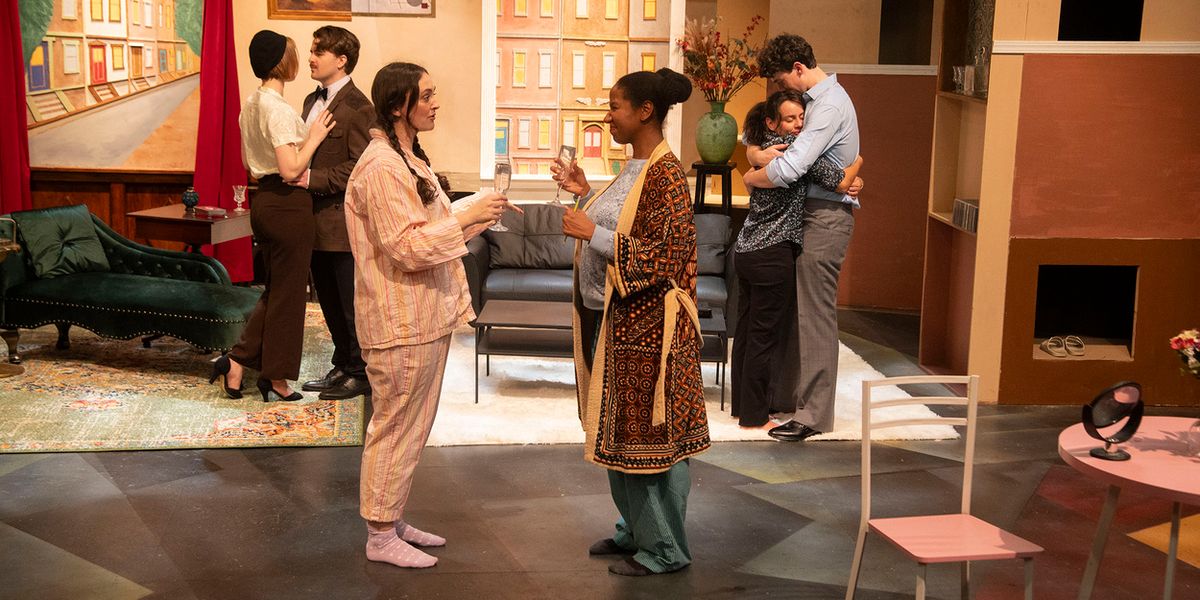
“If only these walls could talk.” Open Fist Theatre Company makes that wish a reality with the Los Angeles premiere of Brownstone, a bittersweet comedic drama by Catherine Butterfield. Ron West directs the production, opening January 24 at Atwater Village Theatre and running through February 28.
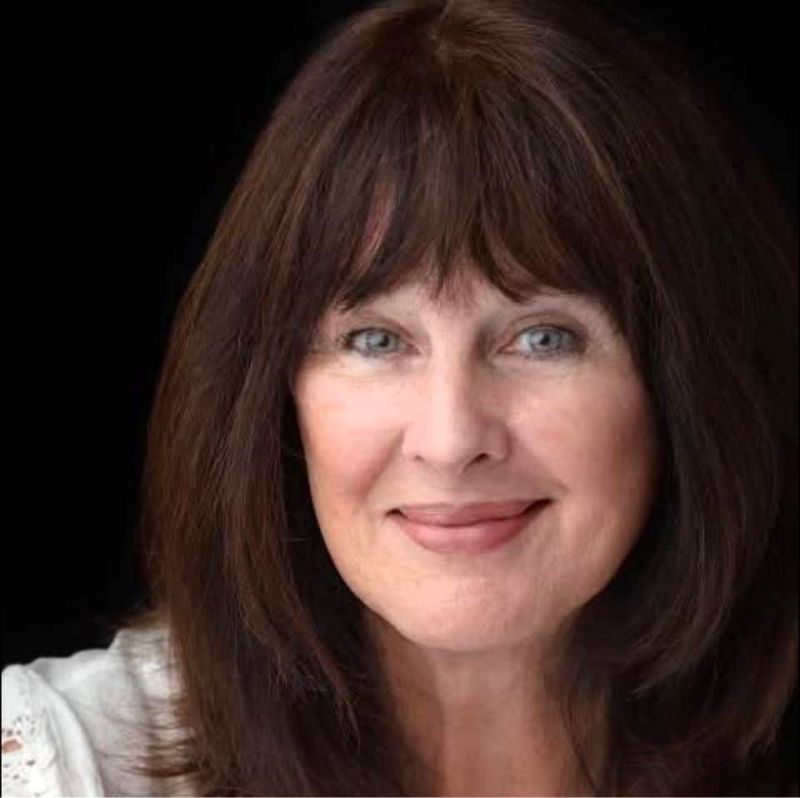
Playwright Catherine Butterfield. Photo courtesy of the artist.
Unfolding on the second floor of a classic New York brownstone at three distinct moments in its history, Brownstone’s structure is as striking as the architecture that inspired it. Three poignant, often funny stories, set in 1978, 1937 and 1999, take place in the same building, linked through time. Deena and Maureen (Rosie Byrne and Amber Tiara) are a pair of starry-eyed aspiring actresses, newly arrived to New York in the 1970s and struggling to get their big break. We meet Stephen and Davia (Matthew Goodrich and Chelsea Spirito), a pampered, rich young couple of the 1930s who long to move to Paris. Striving for success, Jason and Jessica (Isaac W. Jay and Jade Santana) are a chillingly self-absorbed “power couple” of the new millennium.
I spoke with playwright Catherine Butterfield about the development of her play, its structure and subject matter, and her fascination with brownstones.
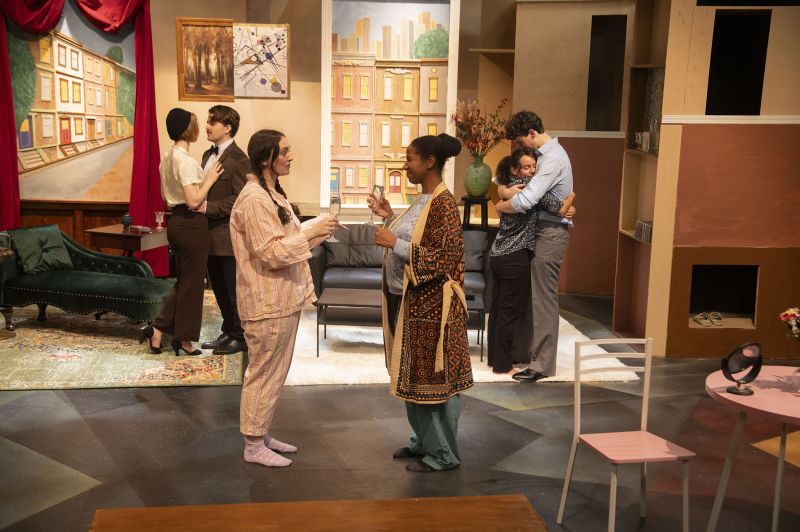
The Ensemble represents those who lived in the same brownstone in 1937, 1978 and 1999.
Photo by Erin Clendenin
Thank you for speaking with me Catherine as your play is set to open soon. I have a few questions for you about the play’s genesis, development, and its structure. First, Brownstone unfolds in one apartment across three eras. What first sparked the idea of letting a single space carry so many lives—and voices—at once?
As a child in Minnesota, we lived in a large house on a corner lot that was rather famous for its Halloween activities. The house had the feel of one that had entertained many previous lives, and it may be this house that sparked my sensation that a lived-in, loved house still carries the energy of the people who lived there. I’m not talking about ghosts — although each of us kids talked about a nice lady in a long dress who sat on the edge of our beds when we were sick, so maybe I am talking about them! At any rate, after college I moved to New York and it was there that I became acquainted with the mysterious power in some brownstones. It was kind of a slowly emerging notion that I could tell the stories from three eras in one of them.
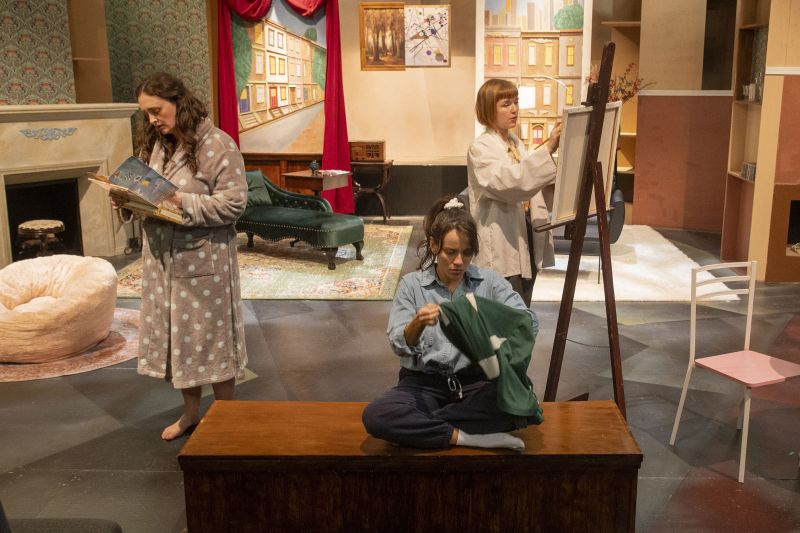
Rosie Byrne, Jade Santana, Chelsea Spirito
Photo by Erin Clendenin
How did you decide which three years—1937, 1978, and 1999—would anchor the play, and what do those moments reveal about America in transition?
The late 1930s were, of course, the years before we entered World War II. The general public had been devastated by the Depression, although the couple living in the brownstone, a young woman and her wealthy father, are fairly isolated from the harsh realities. There is a certain ignorance that goes along with being extremely wealthy, not unlike the ignorance we see in the billionaires trying to run our country right now. I believe that, particularly in the timing of this production, those echoes will be felt keenly.
The 1970s were a more innocent time, in retrospect. The peace-love era was not that long before, and those who had been children in that time were now dewy-eyed young grownups trying to make their way in a city they didn’t fully understand. This section most closely aligns with my experience as a young actress in New York. I brought my “Minnesota Nice” to New York City and it took quite a while to get my footing. You may remember that the ’70s were when New York went bankrupt. A bankrupt city has very few protections for its denizens.
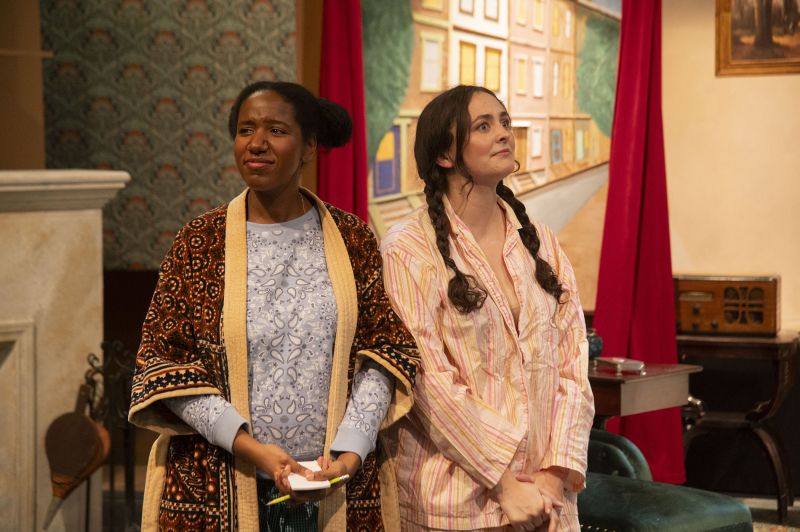
Amber Tiara and Rosie Byrne
Photo by Erin Clendenin
You experimented with the cadences and vocabulary of each era. What was the most surprising difference you found between these periods as you wrote?
I didn’t make a lingual study of each time; I went with my gut instinct for how they would talk based on my remembrance of the ’70s and the watching of many 1930s movies and newsreels. Also, as an actress, I adored doing Coward plays. That certainly affected some of the verbal badinage of the 1930s couple.
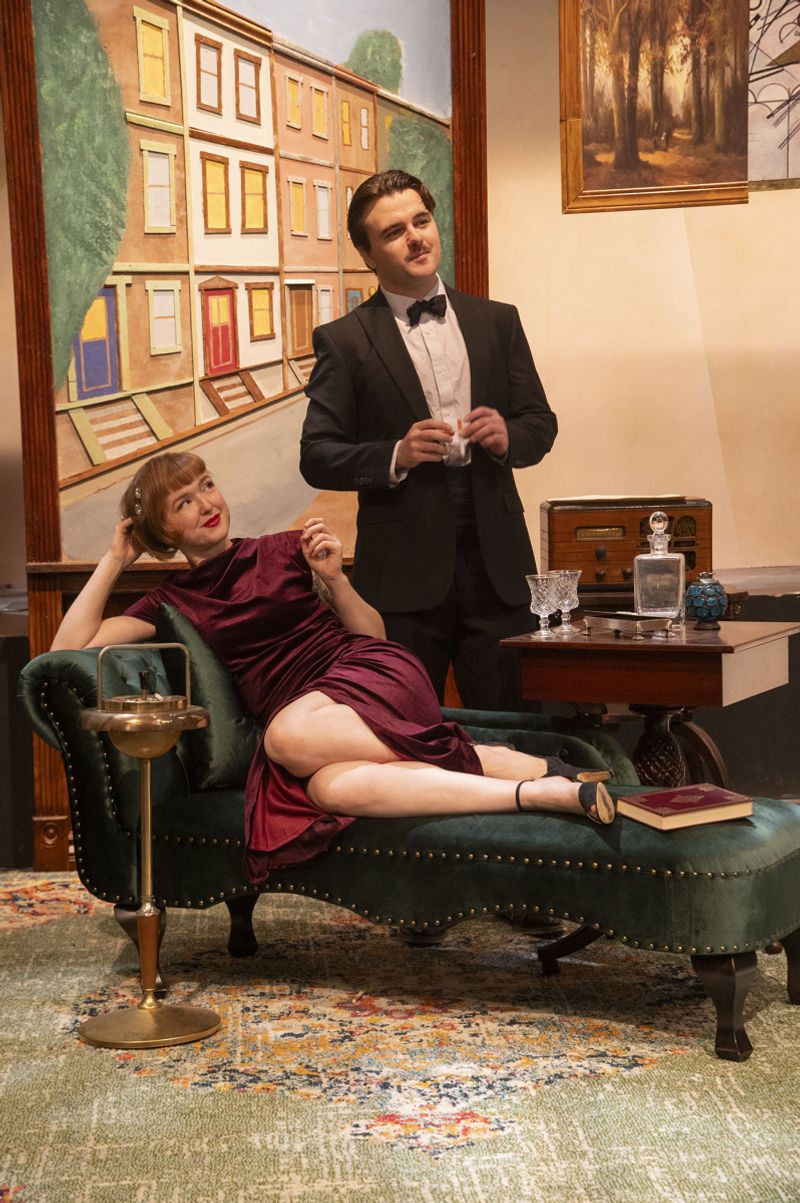
Chelsea Spirito and Matthew Goodrich
Photo by Erin Clendenin
Brownstones have a “supernatural feel” for you. Do you see buildings as witnesses, or even characters, in our lives?
I think we endow them with those qualities. When someone bought our beloved Minnesota house and gutted it to make it into a hideous six garage mega-mansion, my sister and I truly grieved. The pictures are painful to look at. We had fantasized about trying to buy the house at the time it went on sale, and it felt like we were trying to save a living thing. You can’t stop time, though, or the notion of progress. That is discussed in the last scene of the play.

Jade Santana and Isaac W. Jay
Photo by Erin Clendenin
When you imagine the apartment “reverberating with the past,” what theatrical tools excite you most for making that sensation palpable onstage?
The set is so perfect, it’s just what I envisioned and I truly thank Jan Monroe for his wizardry. The Atwater stage goes deep, which allows us to occasionally keep characters from one era on stage at the same time as others so you can feel their energy even as another scene is playing. Another aspect is Gavan Wyrick’s lighting, which allows us to emphasize and de-emphasize whichever scene is the most immediate, lend a golden hue to the ’30s, and electrify the 2000s. The third element is sound — the later eras get a lot more traffic noise! And finally, Mylette Nora’s costumes just knock me out. How did she find them? She’ll never tell.
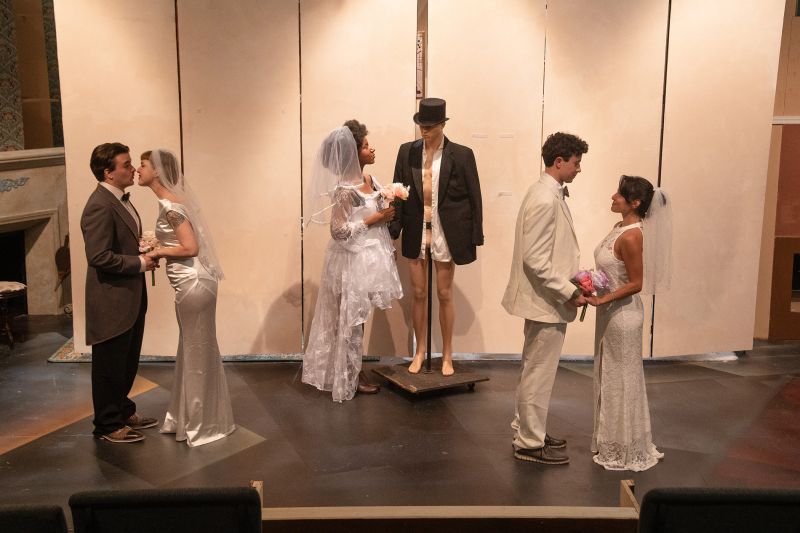
Matthew Goodrich, Chelsea Spirito, Amber Tiara with mannequin, Isaac W. Jay and Jade Santana. Photo by Erin Clendenin
Each couple arrives with big dreams of reinvention. Do you see Brownstone as a play about optimism, disillusionment, or the uneasy space between?
Each couple is in their early 20s, a time when one really has the luxury of dreaming about the future. There’s also a certain anxiety at that age, with so many crossroads, and the fear that you might take the wrong one. I love the youthful, boundless energy of youth - I’m seeing it right now in the two kittens we just adopted. There is something very seductive about watching people start out and hoping things go well with them, but knowing there are going to be massive road bumps along the way. It’s like raising a child, actually.
The characters often share the stage across time without “seeing” one another. What does that simultaneity allow you to say that a linear narrative could not?
That time has no meaning, really. We are all here at all moments. Time is just a construct to keep us from going crazy.
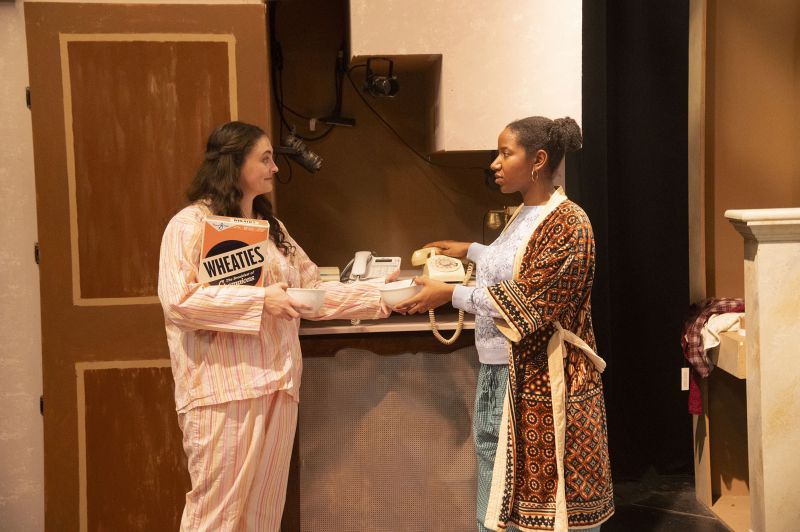
Rosie Byrne and Amber Tiara
Photo by Erin Clendenin
How does comedy function in a play that’s also about ghosts, memory, and the inevitability of change?
That’s where Ron West comes in. Brownstone is not a laugh riot, although it has its humorous moments for sure. Ron is known for being a gifted comedy director, and many of the cast are excellent comedians. We all know great comic actors who are surprisingly good at drama. Brownstone has benefited from that lightness of tone and sharpness of wit in the creation of this production. Ron should do more drama! (But maybe not Medea.)
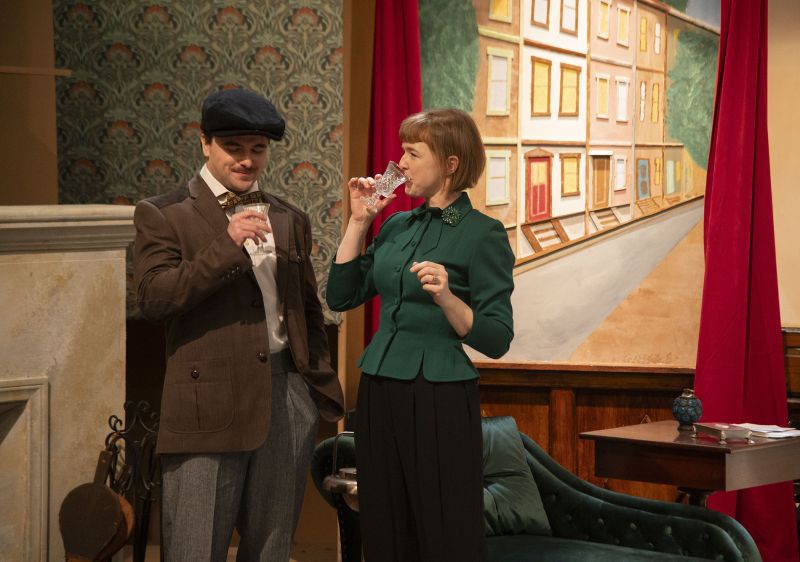
Matthew Goodrich and Chelsea Spirito
Photo by Erin Clendenin
You’ve written for stage, screen, and television. What does the theater uniquely offer a story like Brownstone?
The fact that you are there, in the house with us, breathing along, is exciting - although this is not a sense-surround production. Maybe that should be the next step! Seat audience members on velvet divans, leather sofas, and bean bag chairs.
Your husband, Ron West, is directing this production. How does that creative partnership shape the rehearsal room and your relationship to the work?
He’s being very nice to me. He saves his sighs of exasperation at my bossiness for home.
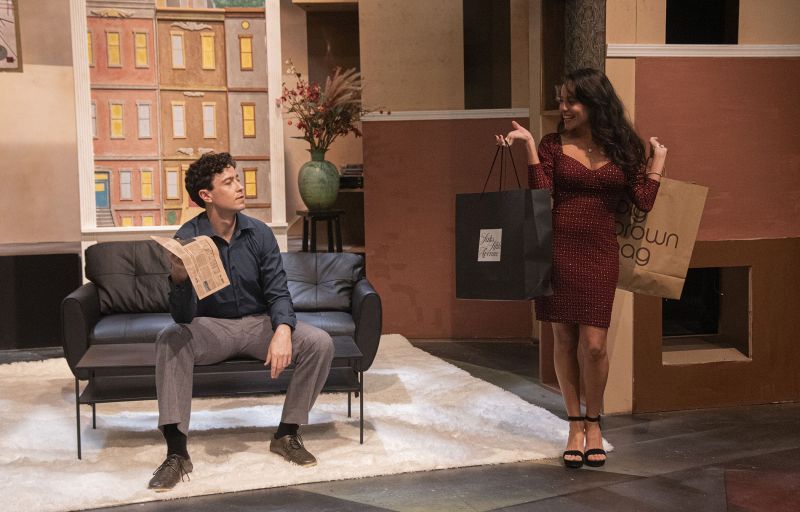
Isaac W. Jay and Jade Santana
Photo by Erin Clendenin
Having Brownstone receive its Los Angeles premiere with Open Fist Theatre Company, how does this production feel different from earlier incarnations of the play?
The Laguna Playhouse commissioned me to write the play in 2010, and I directed that production. I was deeply proud of the excellent cast and the work we did, but was consistently stymied by the very wide proscenium at Laguna. I had to roll furniture in on palettes from either side of the stage, and though it looked kind of cool, it didn’t achieve the feeling that everything was happening all the time in one space. In this production, I think you will get that feeling, and I’m so happy about that!
Is there anything else about yourself or the play you would like to add?
I’m delighted to have this opportunity to breathe new life into Brownstone!
Thanks so much!
Thank you, Shari!
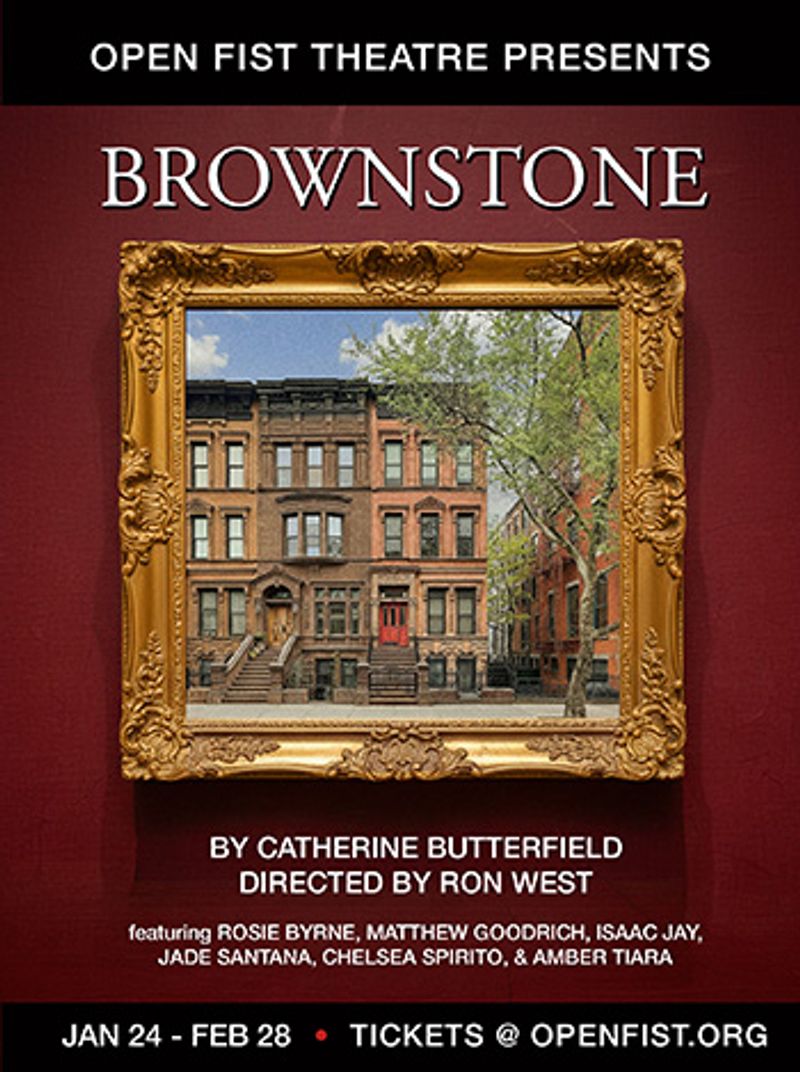
Produced by Open Fist Theatre Company, the creative team includes scenic consultant Jan Munroe; lighting designer Gavan Wyrick; sound designer Kermit Frisbee; Costume Designer Mylette Nora; and properties designers Bruce Dickenson and Ina Shumaker. Carmella Jenkins and Beth Robbins co-produce for Open Fist Theatre Company. The production stage manager is John Dimitri.
Brownstone opens on Saturday, January 24 at 8 p.m., with performances thereafter set for Fridays and Saturdays at 8 p.m. and Sundays at 2 p.m. through February 28. Tickets range from $26 to $40, including fees, except opening night (Jan. 24) for which tickets are $54.75 and include a champagne reception following the performance.
Atwater Village Theatre is located at 3269 Casitas Ave., Los Angeles, CA 90039. Parking is free is in the ATX (Atwater Crossing) parking lot one block south of the theater. To purchase tickets and for more information call (323) 882-6912 or go to openfist.org


Sign up for all the news on the Fall season, discounts & more...

|
CLUB27 Jaxx Theatre (10/01-10/30) |

|
Crone Creed El Portal Theatre (9/30-10/17) |
|
Good Night, Oscar North Coast Repertory (9/16-10/11) |

|
The Cottage North Coast Repertory (10/28-11/22) |

|
Woof Odyssey Theatre (10/03-11/08) |

|
Adam Pascal Feinstein's at the Nikko (10/23-10/24) |

|
CHAÏR The Elysian Theater (10/17-10/17) |

|
Catch Me If You Can Colony Theatre (9/17-10/18) |

|
EVITA Valverde Annex (10/17-10/25) |

|
Gershwin and the Golden Age The Soraya (10/11-10/11) |
